42 cameras · 8 brands · 13 spherical · ~$69–$1,049 · updated September 2026
The fraction on the box, turned into a number you can compare
Action camera sensors are sold as “1/2.3-inch” and “1/1.3-inch”, names inherited from video tubes that describe nothing and hide a factor of six in light-collecting area. Every camera here carries its sensor area in square millimetres instead, every 360 camera carries what a reframed clip is actually worth, and every battery claim is printed next to the setting it was measured at.
- Largest sensor
- 116 mm²GoPro MISSION 1 PRO
- Deepest bare
- 20 mGoPro MISSION 1
- Longest claim
- 7 hSJCAM C400
- Lightest
- 39 gInsta360 GO 3S
Every camera we track
Filter by brand, type, sensor size, resolution, price, and the features that actually change what a camera can do. Tick up to three and their spec sheets line up in one table.
42 cameras found · page 1 of 2
GoPro
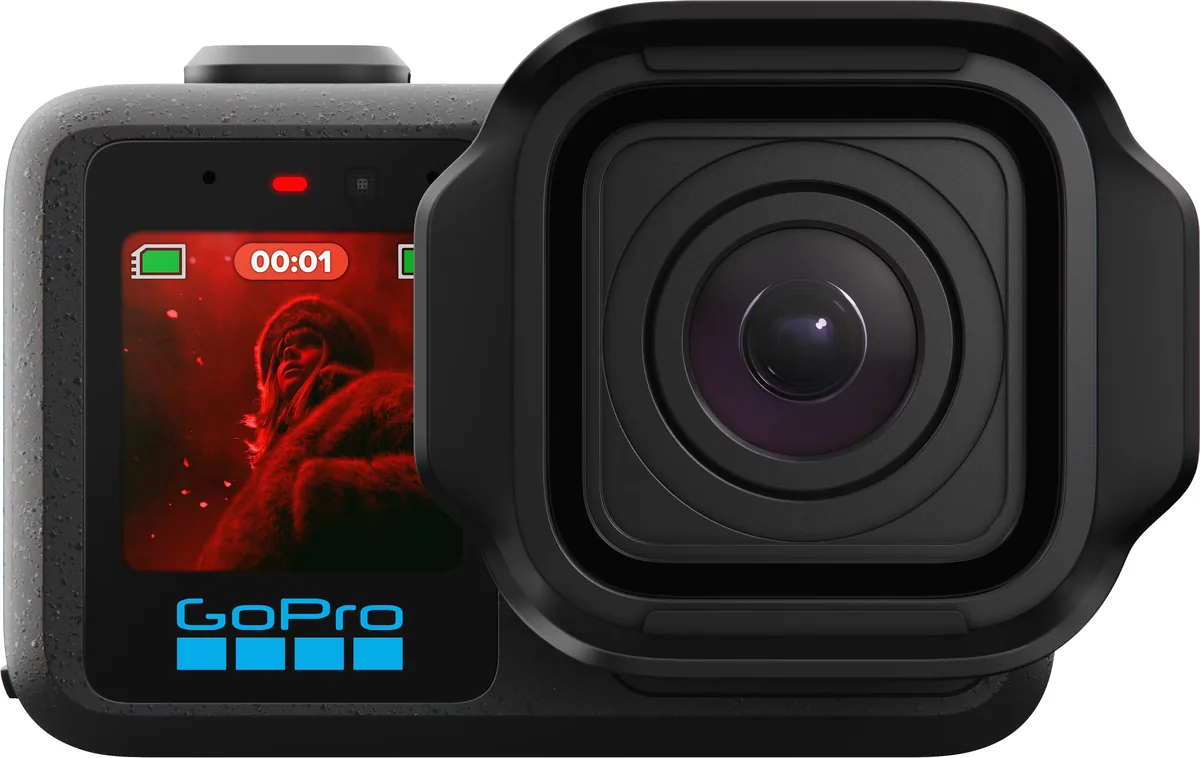
GoPro MISSION 1 PRO
The 1-inch sensor is the whole argument. At 116 mm² it is more than three times the imaging area of a Hero 13's chip, and it is the largest in this catalogue outside the Osmo Pocket 3 — in a body that is still waterproof to 20 m and still takes GoPro fingers. 8K60 open-gate, 4K at 240 fps, 50 MP stills, 240 Mbps and GP-Log2 with a LUT put it squarely between an action camera and a small cine body, which is exactly where GoPro aimed it. Two practical notes: the 2150 mAh battery that runs five hours at 1080p30 on the base MISSION 1 does not go nearly as far feeding an 8K pipeline, and the interchangeable-lens version of this camera is not waterproof at all, so the fixed lens here is a feature rather than a limitation.
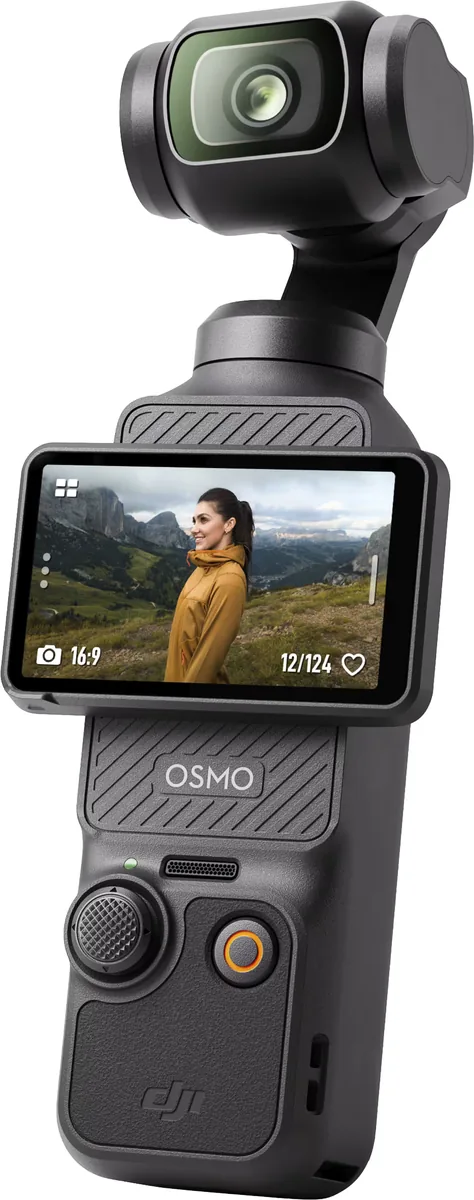
Not an action camera, and it lands in this catalogue because it is the thing people cross-shop against one and then buy instead. The reason is the 1-inch sensor — 116 mm², the largest here — behind a three-axis mechanical gimbal rather than a software crop. Mechanical stabilisation costs nothing in resolution and produces a specific look: a floating, locked-off glide that digital stabilisation approximates but never quite reaches. The rotating 2-inch screen flips to vertical and the camera reconfigures the whole interface, which is why it took over travel vlogging. The trade is everything that makes an action camera an action camera. There is no waterproofing at all, the exposed gimbal is fragile, it is rated only to 0 °C, and nothing mounts to it but a tripod thread.
Ricoh
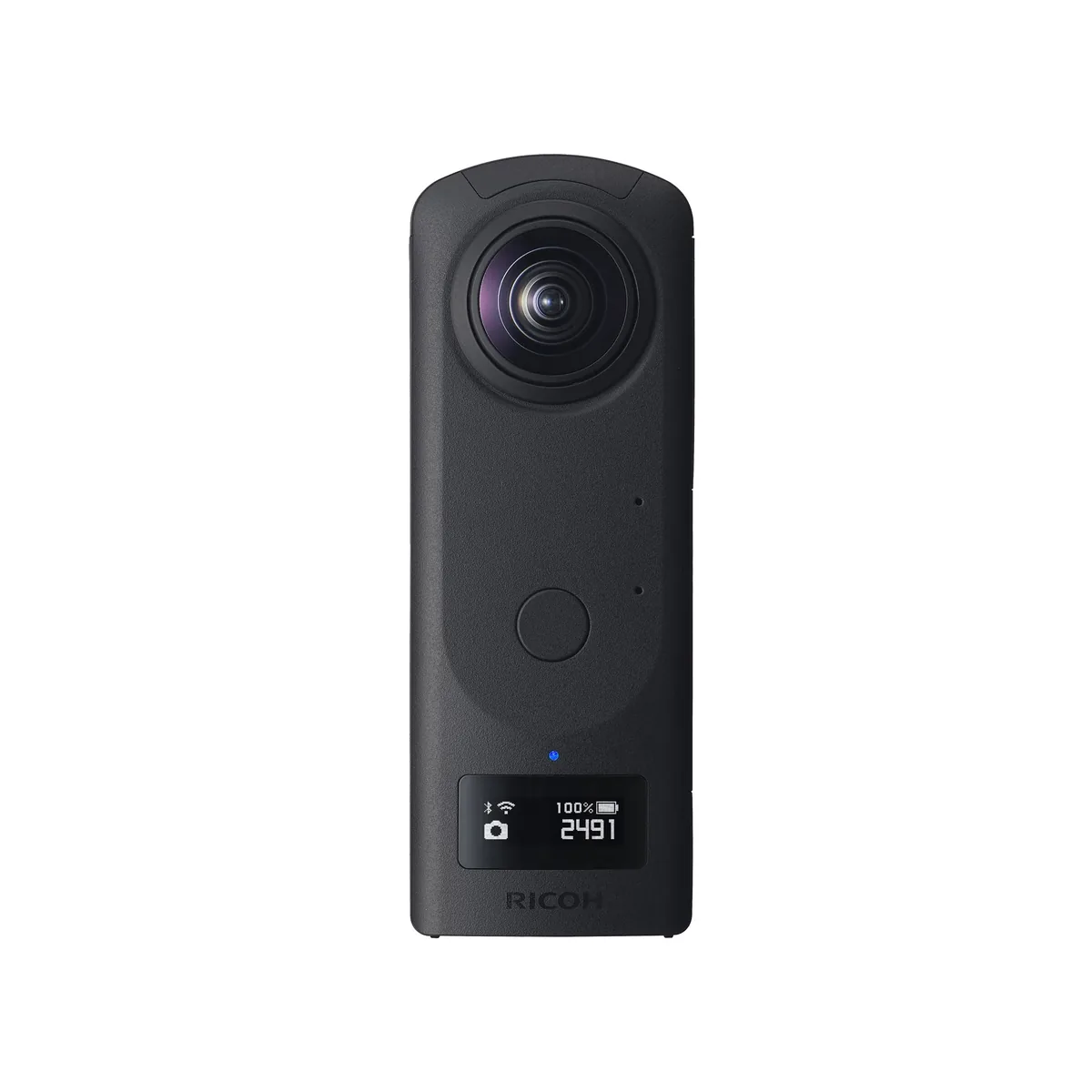
Ricoh THETA Z1 51GB
Dual one-inch sensors and a selectable aperture — f/2.1, f/3.5 or f/5.6 — are things no other 360 camera here has, and they are the reason this 2021 camera still sells for a thousand dollars. It is a stills instrument: 23 MP spherical RAW files out of sensors more than twice the area per lens of an Insta360 X6's, which is what professional virtual-tour shooters buy it for, and the selectable aperture is how they control depth of field and diffraction in an interior. Everything else about it is dated and deliberately so. Video caps at 4K30, storage is 51 GB fixed with no card slot, there is no screen beyond a small status OLED, and there is no waterproofing. As an action camera it makes no sense; as the highest-image-quality one-shot 360 stills camera on sale, it is still unmatched.
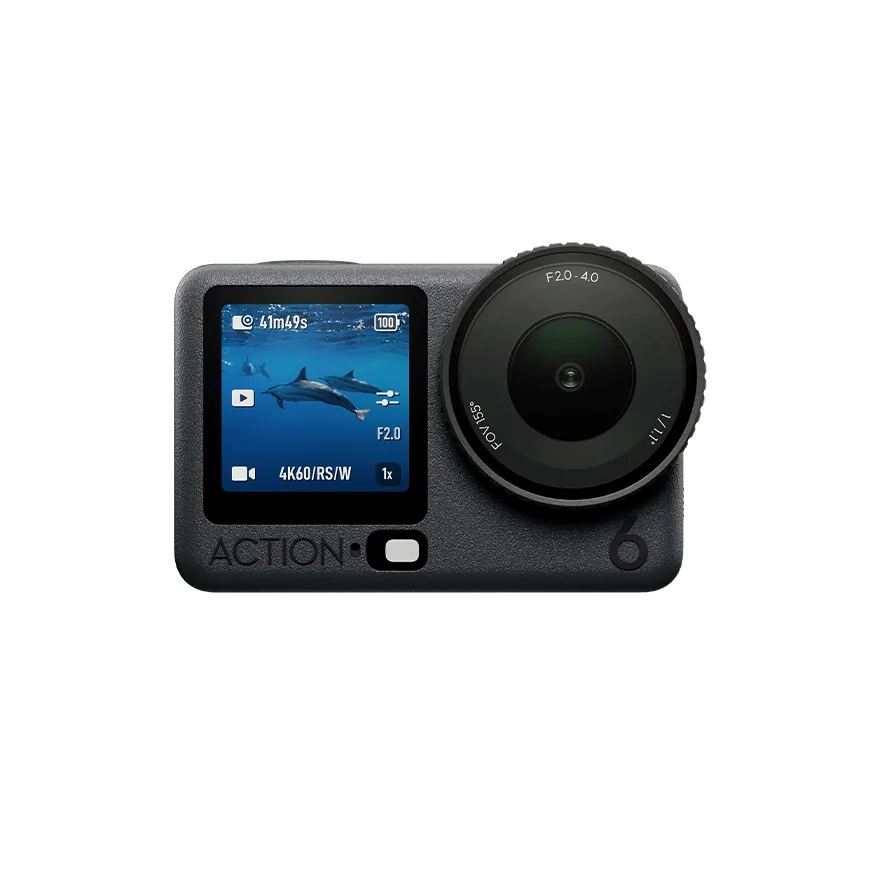
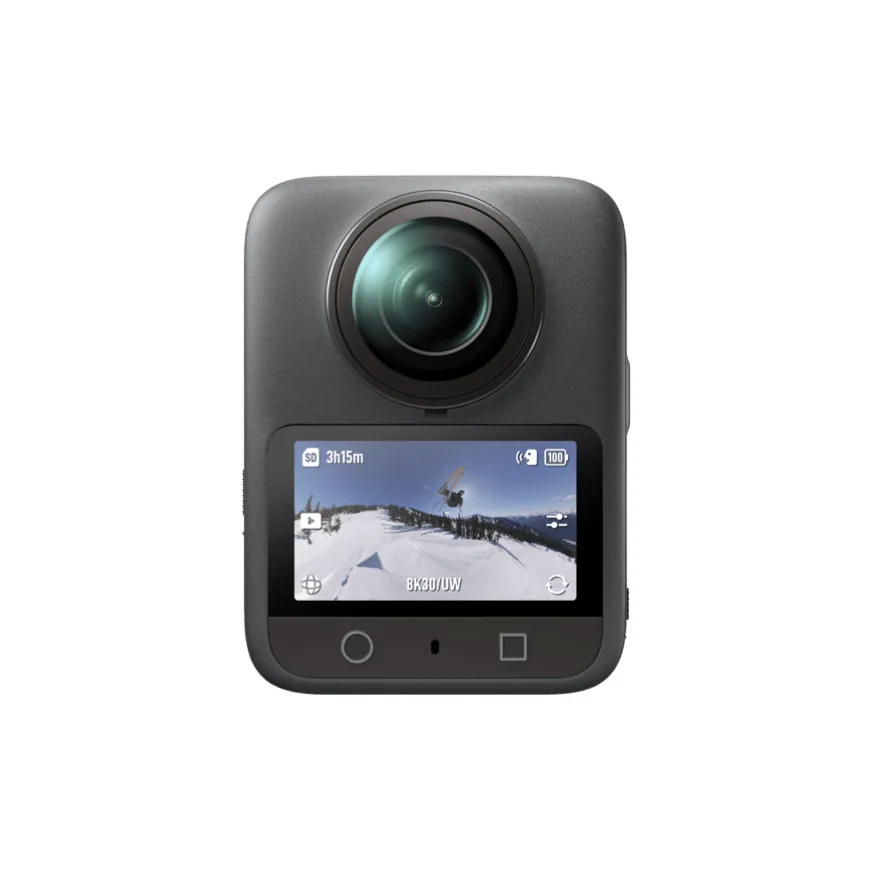
Two firsts arrived on the same body: a variable aperture on an action camera, and a square 1:1 sensor instead of the usual 4:3. The aperture stepping f/2.0 to f/4.0 matters most in bright conditions, where every other action camera has to throw away light with a shutter it cannot slow down or an ND filter you have to remember to bring. The square sensor matters in the edit — the camera measures the full 1:1 frame, so a widescreen crop and a vertical crop come out of one take without either being a stretched afterthought. DJI puts the imaging area at a 4:3 one-inch equivalent; worked off the standard optical-format table the named 1/1.1-inch format gives about 96 mm², still roughly triple a GoPro Hero 13's. Add 8K30, 20 m of bare waterproofing, 64 GB of internal storage and a four-hour battery rating and it is the most complete spec sheet in the category.
DJI
DJI Osmo 360
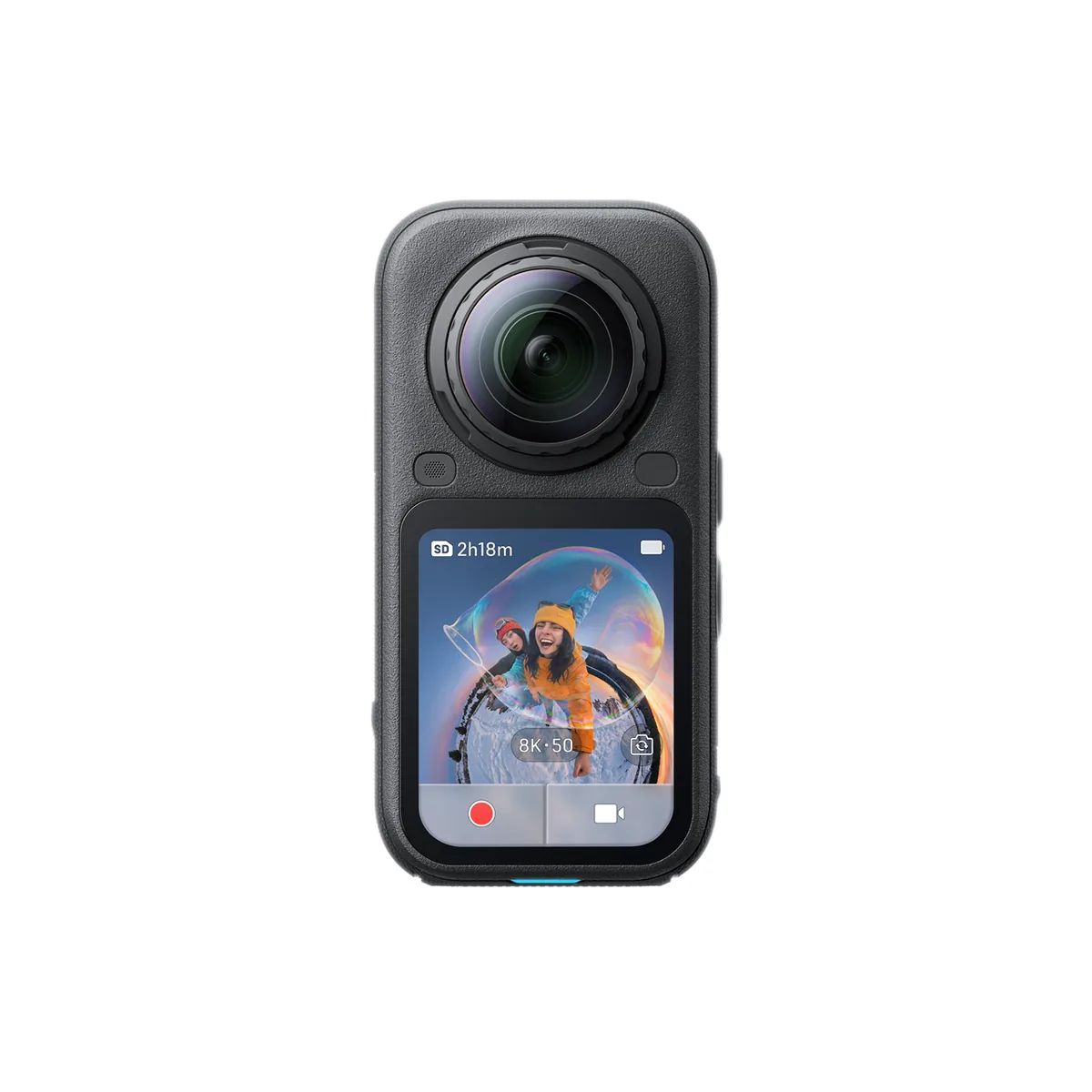
DJI's first 360 camera arrived with the two square 1:1 sensors from the Action 6 programme, which is the most interesting thing about it: a square sensor wastes less of the lens's circular image than a 4:3 one, so more of the light the fisheye collects ends up in the sphere. The result is 8K at 50 fps — the only 360 camera here that gets past 30 at 8K — 170 Mbps, 10-bit across every format, D-Log M, 120 MP panoramas, and a single-lens mode that runs 4K120 with a 155° field of view. It is also the only 360 camera in the catalogue with more than 100 GB of internal storage, which removes the write-speed argument that sinks so many 360 shoots. Against the Insta360 X6 it gives away half the bare waterproof depth, and DJI's reframing app is younger than Insta360's.
Insta360
Insta360 X6
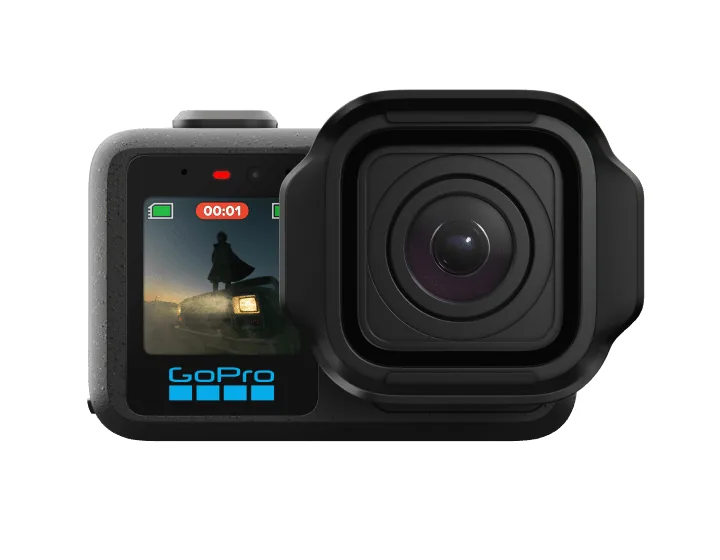
Two things separate this from every other 360 camera on sale. It shoots 8K at 50 fps rather than 30, which is what makes reframed slow motion possible instead of theoretical; and it is the only one that publishes a colour bit depth at all — 10-bit, with I-Log and in-camera Dolby Vision. The 2600 mAh Xtreme battery is rated at 140 minutes of 8K30, more than double what the GoPro MAX2 claims, and 20 m of bare waterproofing is four times MAX2's. A note on the sensors: Insta360 markets these as one-inch, and the spec sheet says 1/1.1-inch, which on the standard optical-format table works out around 92 mm² per lens rather than a true one-inch's 116. That is still the largest per-lens area in the 360 class, and it is why the low-light gap to the X5 is as visible as it is.
GoPro
GoPro MISSION 1
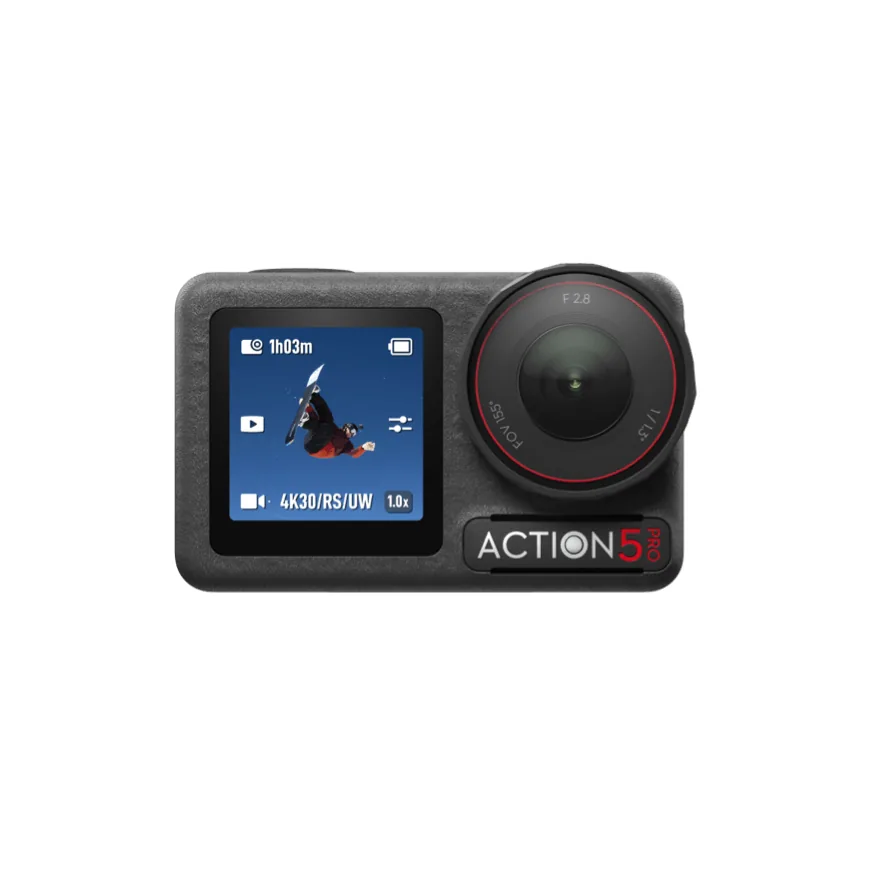
GoPro calls the MISSION line cinema cameras, and the marketing is doing some work — this is a rugged, mountable, 20 m-waterproof body with GoPro fingers, a magnetic latch and HyperSmooth, which is an action camera by any reasonable definition. What has actually changed is the class of everything inside: a 1/1.3-inch sensor twice the area of the Hero 13's, a 240 Mbps ceiling, GP-Log2 with a supplied LUT, 4K at 240 fps and 1080p at 480, and a 2150 mAh cell rated for five hours at 1080p30. The cost is size and money: at 207 g and 80 mm long it is a different object on a helmet, and $599 is a different budget. If you have been hitting the ceiling of what a Hero can grade to, this is the answer; if you have not, it is a lot of camera to strap to a bike.
Now that the Action 6 has taken the flagship slot, this is the value argument in the whole category: a 1/1.3-inch sensor with more than twice the area of a GoPro Hero 13's, 20 m of bare waterproofing, 47 GB of internal storage and a genuinely long-running battery, for around three hundred dollars. It gives up the Action 6's variable aperture and square readout and caps at 4K rather than 8K — which matters less than the spec gap suggests, because 4K120 covers almost everything an action camera is actually used for. In an independent four-camera drain test it ran 2 hours 14 minutes, well behind DJI's 1080p24 headline of four hours but comfortably ahead of the Insta360 Ace Pro 2.
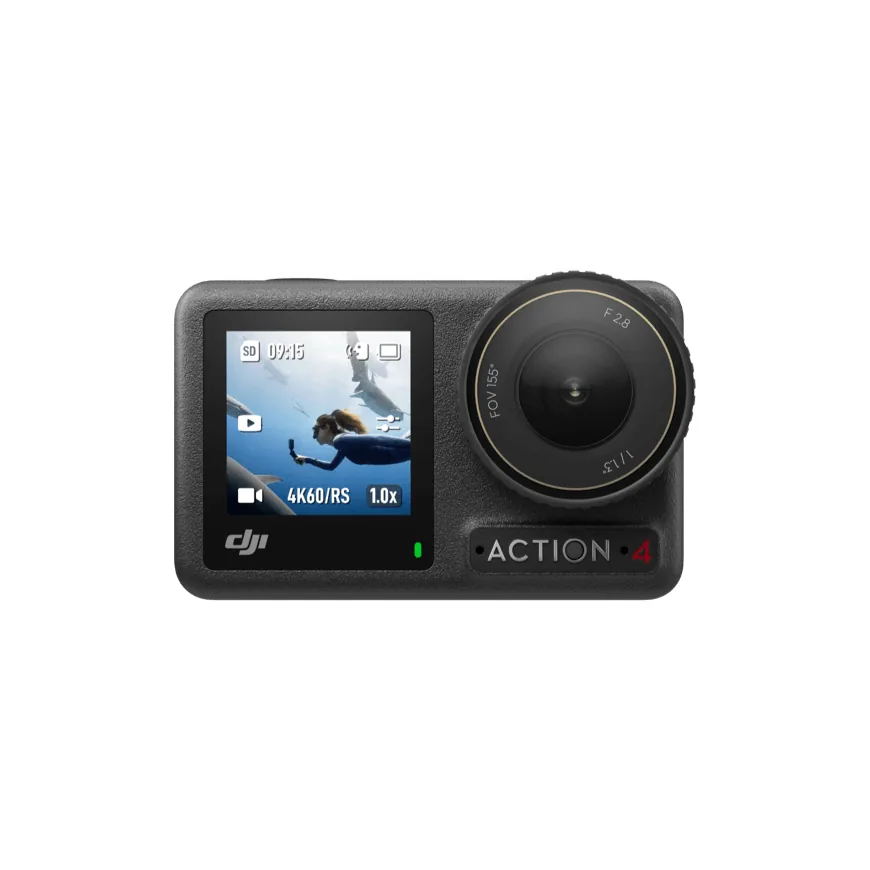
The camera that made a large sensor normal at this price, and it is still on sale two generations later because the fundamentals have not aged. Same 1/1.3-inch chip as the Action 5 Pro, same 4K120, same 10-bit D-Log M, same magnetic mount, 18 m waterproof against the newer model's 20. Where it falls short is the stills sensor readout — 10 MP against 40 — the smaller rear screen, and the absence of internal storage. The 130 Mbps ceiling is actually a touch higher than the Action 5 Pro's. At a street price around $229 it is the cheapest way to get a sensor this size into a waterproof body, and for anyone who mostly shoots video rather than photos the compromises are close to invisible.
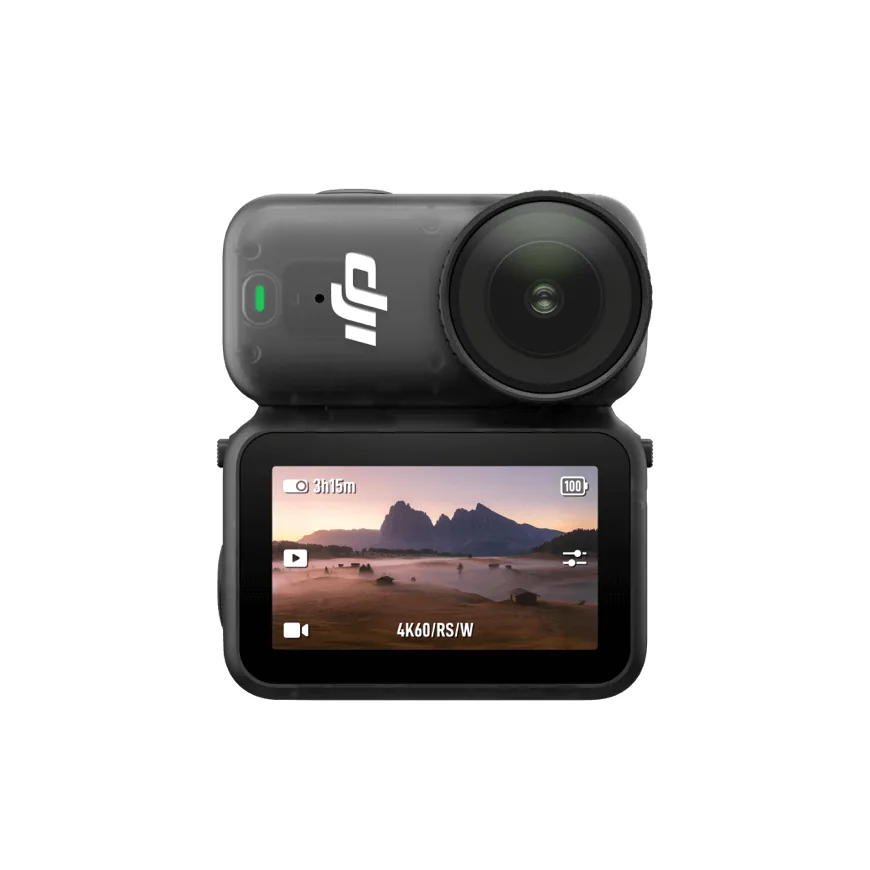
Fifty-two grams, and a 1/1.3-inch sensor inside them — the same size chip DJI puts in a full-size Osmo Action. That is the trick here, and it is why the Nano reads differently from every other tiny camera in the category, all of which shrink the sensor along with the body. It splits in two: the camera module clips onto a magnet under a shirt or on a helmet, and the Vision Dock adds an OLED screen, a second battery and a microSD slot when you want to frame a shot or run long. Alone the module is waterproof to 10 m and lasts about 90 minutes; docked, DJI rates the pair at 200 at 1080p24. What it does not have is full horizon lock — HorizonBalancing corrects tilt, not rotation — and the magnetic pendant is a trust exercise at speed.
Insta360
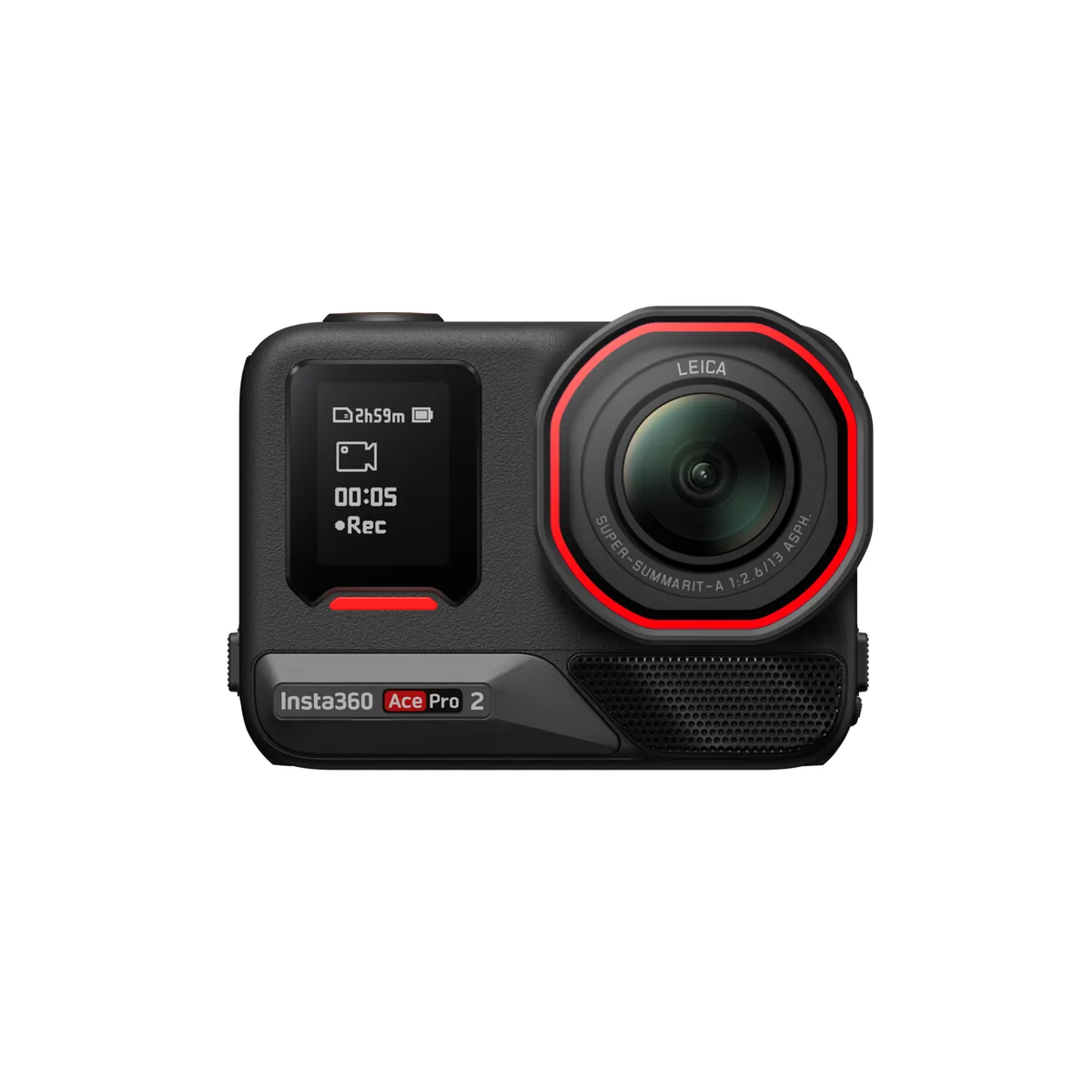
Insta360 Ace Pro 2
The flip-up screen is the feature that sells it. Every other action camera makes you guess at framing when the camera is facing you or mount a second screen; the Ace Pro 2's 2.5-inch rear panel hinges upward so it can be read from in front of the lens, which is why this is the vlogging pick in a category built around helmets. Behind that sits a Leica-co-engineered f/2.6 lens over a 1/1.3-inch sensor, 8K30, 4K120, a 180 Mbps ceiling and I-Log with a supplied LUT. Waterproofing is 12 m bare, and the dive case takes it to 60 m. The catch is endurance: in an independent four-camera drain test the Ace Pro 2 was first to die at 1 hour 44 minutes, thirty minutes behind the DJI and nearly an hour behind the GoPro, and its 180-minute headline number is quoted at 1080p24 with a power-saving mode enabled.
Insta360
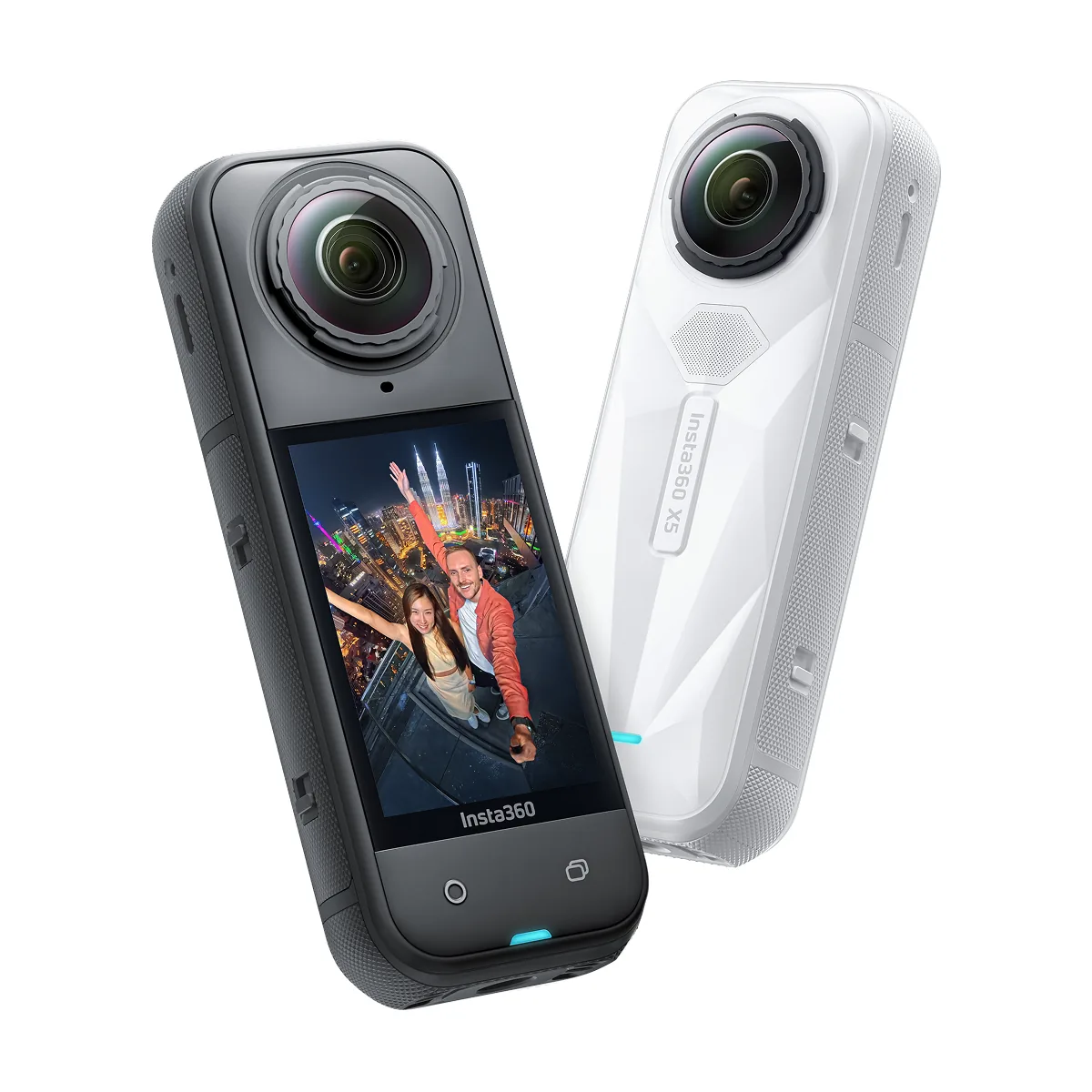
Insta360 X5
Replaceable lenses arrived here first, and they changed the economics of owning a 360 camera. The fisheye glass on any spherical camera sticks out past the body and gets scratched — it is the category's defining failure mode — and on the X5 a scratched lens is a twenty-minute swap with a part you can keep in a bag. Around that, dual 1/1.28-inch sensors with roughly 2.4× the area of the X4's drive 8K30 supersampled down from an 11K capture, and a triple-chip stack runs PureVideo for low light. Fifteen metres of bare waterproofing, 2400 mAh, 135 minutes at 5.7K30. Against the newer X6 it gives up 8K50, 10-bit and 5 m of depth; against everything else, it is still the 360 camera most people should buy.
Insta360
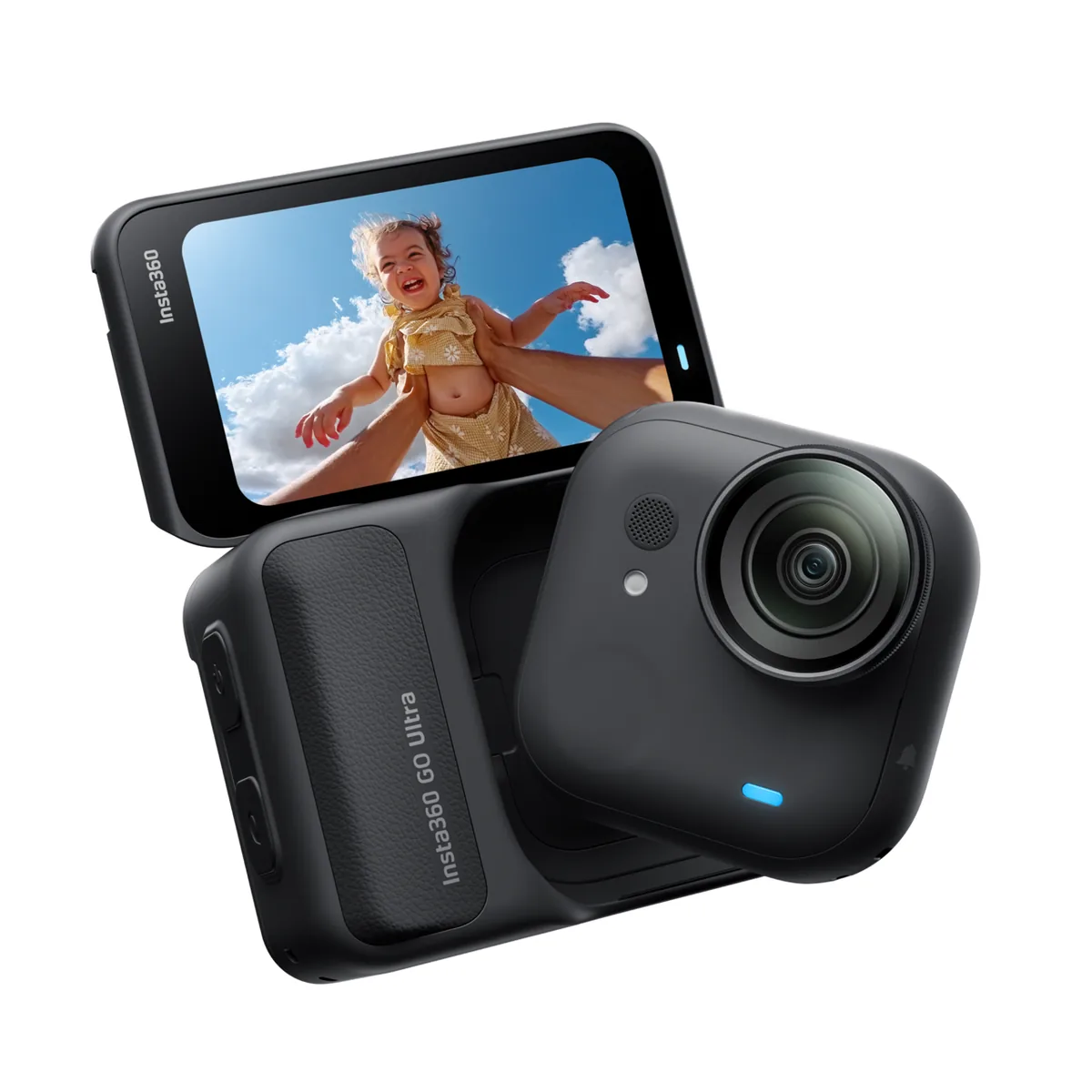
Insta360 GO Ultra
Insta360 put a 1/1.28-inch sensor — the same size as the X5's lenses use — into a 53 g magnetic puck, and then charged more for it than a GoPro Hero 13. That pricing is the single most argued-about thing about this camera, and it is fair: at $449 it is the most expensive non-360 camera in this catalogue, above two flagships that out-spec it on resolution and waterproofing. What it buys is a camera you genuinely forget you are wearing, clipped magnetically under a shirt or on a cap, streaming a live preview to a flip-screen Action Pod you leave in a pocket. The module is waterproof to 10 m; the Action Pod with the screen is not, which limits the whole system around water more than the headline suggests.
Kandao
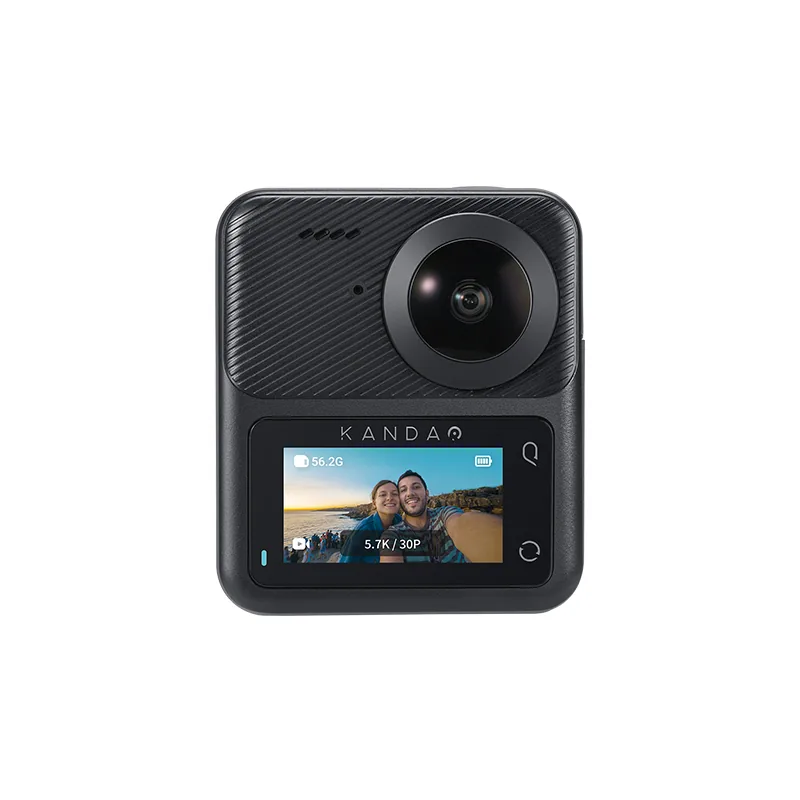
Kandao QooCam 3
An odd and rather appealing camera: dual 1/1.55-inch sensors — 65 % more area per lens than the Insta360 X3 it competes with on price — behind the same F/1.6 glass as the Ultra, wrapped in a squat body that looks nothing like an X-series stick. Video caps at 5.7K30, which reframes to roughly 1.3K of usable 16:9, so the resolution ceiling is real. Where it earns its keep is stills: 62 MP spherical photos out of fast lenses and decent-sized sensors make it a credible virtual-tour camera for a third of what a Ricoh Theta X costs. Fifty-eight minutes of recording and no internal storage are the practical limits, and the 1.9-inch screen is small enough to be fiddly.
Kandao
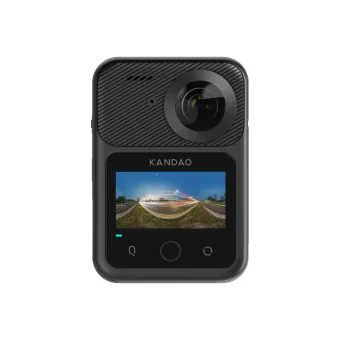
Kandao QooCam 3 Ultra
Kandao is the small manufacturer in this category and it competes the only way a small manufacturer can: by shipping specs the big three charge more for. F/1.6 lenses — the fastest glass in the catalogue — over dual 1/1.7-inch sensors, 10-bit HLG and a K-Log profile, 96 MP spherical stills, 150 Mbps, 128 GB of internal storage and built-in GPS, all under the price of an Insta360 X6. The costs are physical and logistical. At 336 g it is by a wide margin the heaviest camera here, nearly double an X6, and at 10 m bare it is the shallowest of the big-sensor 360 cameras. Fifty minutes of 8K 10-bit recording is short. And the software ecosystem around it — reframing, mobile editing, firmware cadence — is thinner than Insta360's, which is the part of the purchase a spec sheet cannot show you.
Insta360
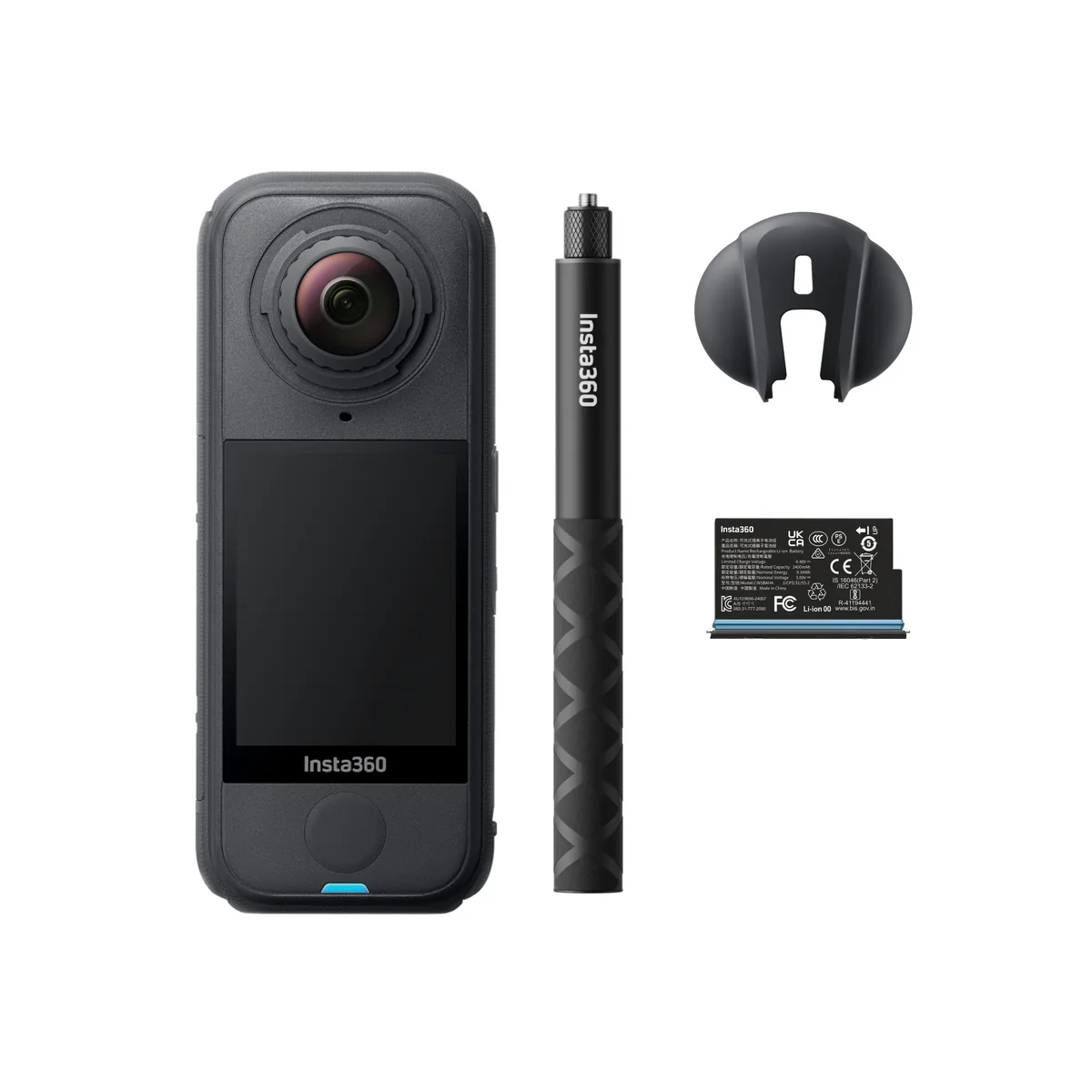
Insta360 X4 Air
Lightest 8K 360 camera Insta360 has built, at 165 g — 35 g under the X5 and 31 g under the X6 — and that number is the whole pitch. On a helmet or the end of a selfie stick, thirty grams is the difference between a rig that stays put and one that wobbles. It keeps the things that matter most from the X5: replaceable lenses, 15 m of bare waterproofing, magnetic mounting. The sensors step down to 1/1.8-inch, roughly half the X5's area, and the frame-rate ceiling drops to 4K50 in single-lens mode against the X5's 4K120. Against the X4 it is the better camera in every way except peak bitrate, at a lower price, which makes the older model a hard recommend now.
GoPro
GoPro HERO13 Black
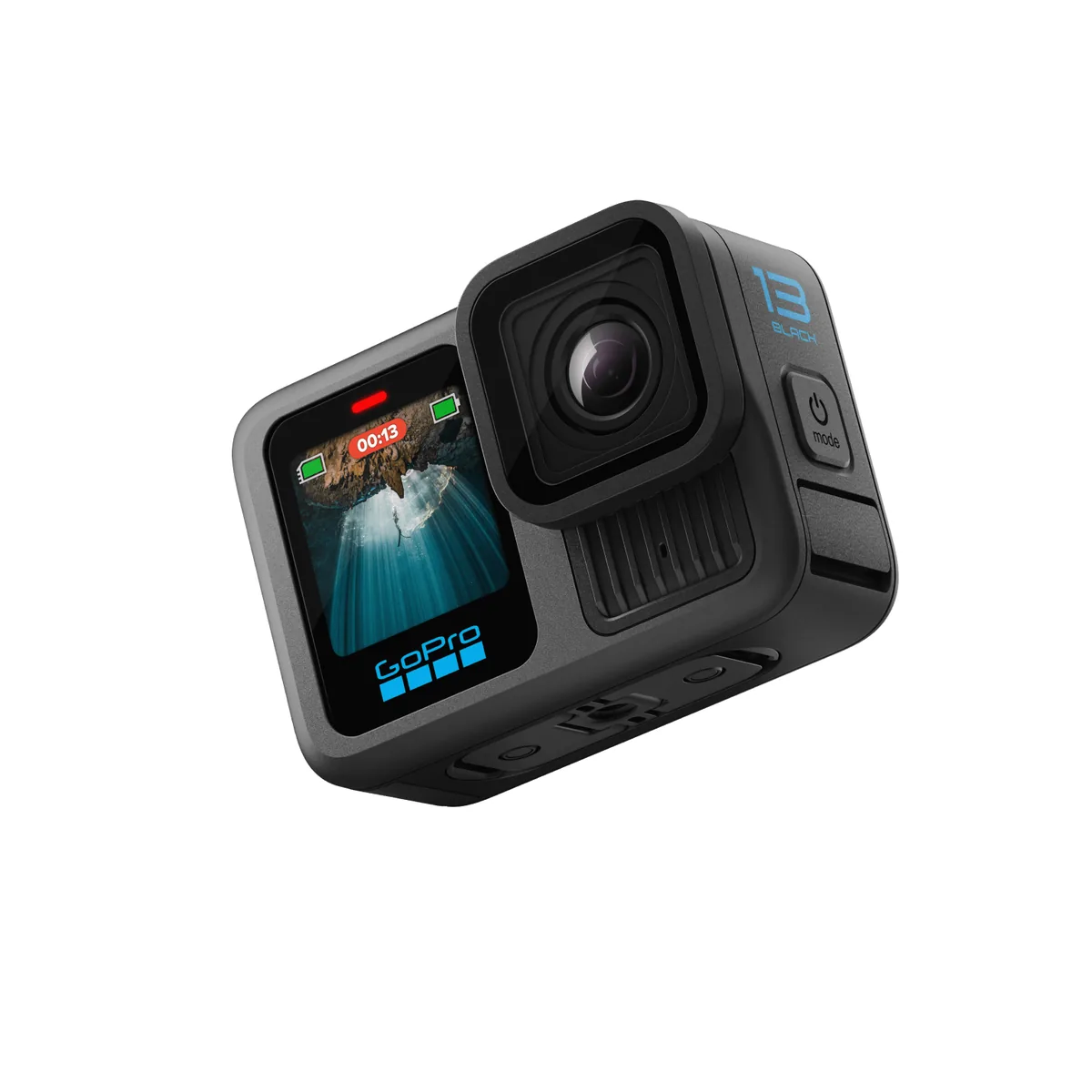
Four generations of the same 1/1.9-inch sensor have gone into this body, and GoPro spent the thirteenth on everything around it instead: a magnetic latch that replaces the fold-out fingers, a 1900 mAh Enduro cell, and the HB-series lens mods the camera recognises and reconfigures itself for. That is the honest shape of the Hero 13. Image quality sits roughly where the Hero 12 left it, the sensor is small next to what DJI and Insta360 now ship, and the stabilisation is still the best in the category by a margin nobody has closed. In a group test that ran four cameras to shutdown side by side, this was the only one that hit its published runtime. The mount ecosystem is the other argument: a decade of GoPro-fingered clamps, chest harnesses, helmet mounts and third-party rigs all still bolt straight on, which is why it stays the default on a motorcycle fairing or a ski helmet even when a rival's spec sheet reads better.
GoPro
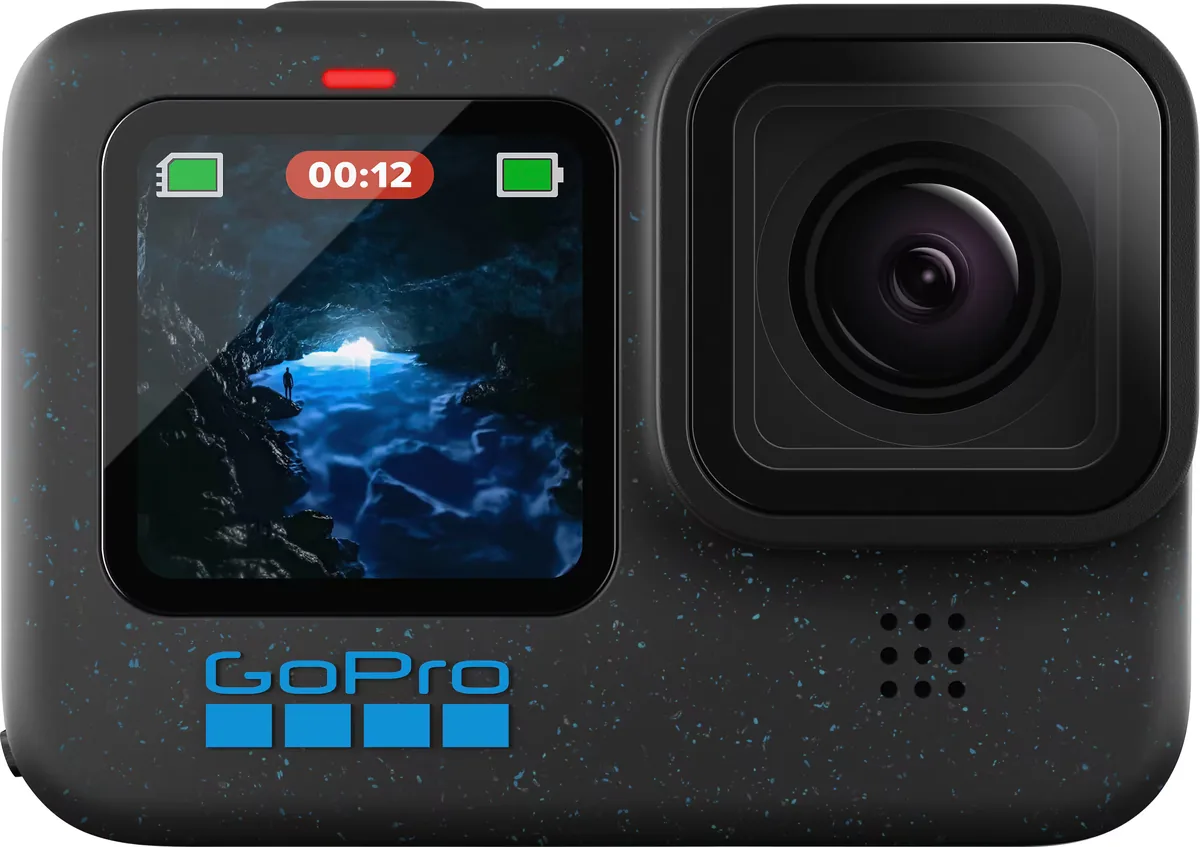
GoPro HERO12 Black
Clearance pricing has turned last year's flagship into the value pick of the GoPro line, and the gap to the Hero 13 is narrower than the generation number suggests. Same 1/1.9-inch sensor, same 5.3K60 and 4K120, same 10-bit GP-Log, same HyperSmooth 6.0 with full horizon lock. What you give up is the magnetic latch, the HB lens-mod system, roughly 180 mAh of battery — and GPS, which GoPro dropped on this generation and restored on the next. That last one is the deciding spec for anyone who wants speed, altitude or route data burned into the footage; for everyone else the Hero 12 is a Hero 13 that costs eighty dollars less and takes the same mounts. It also carries a 1/4-20 thread in the base, which the Hero 11 did not.
GoPro
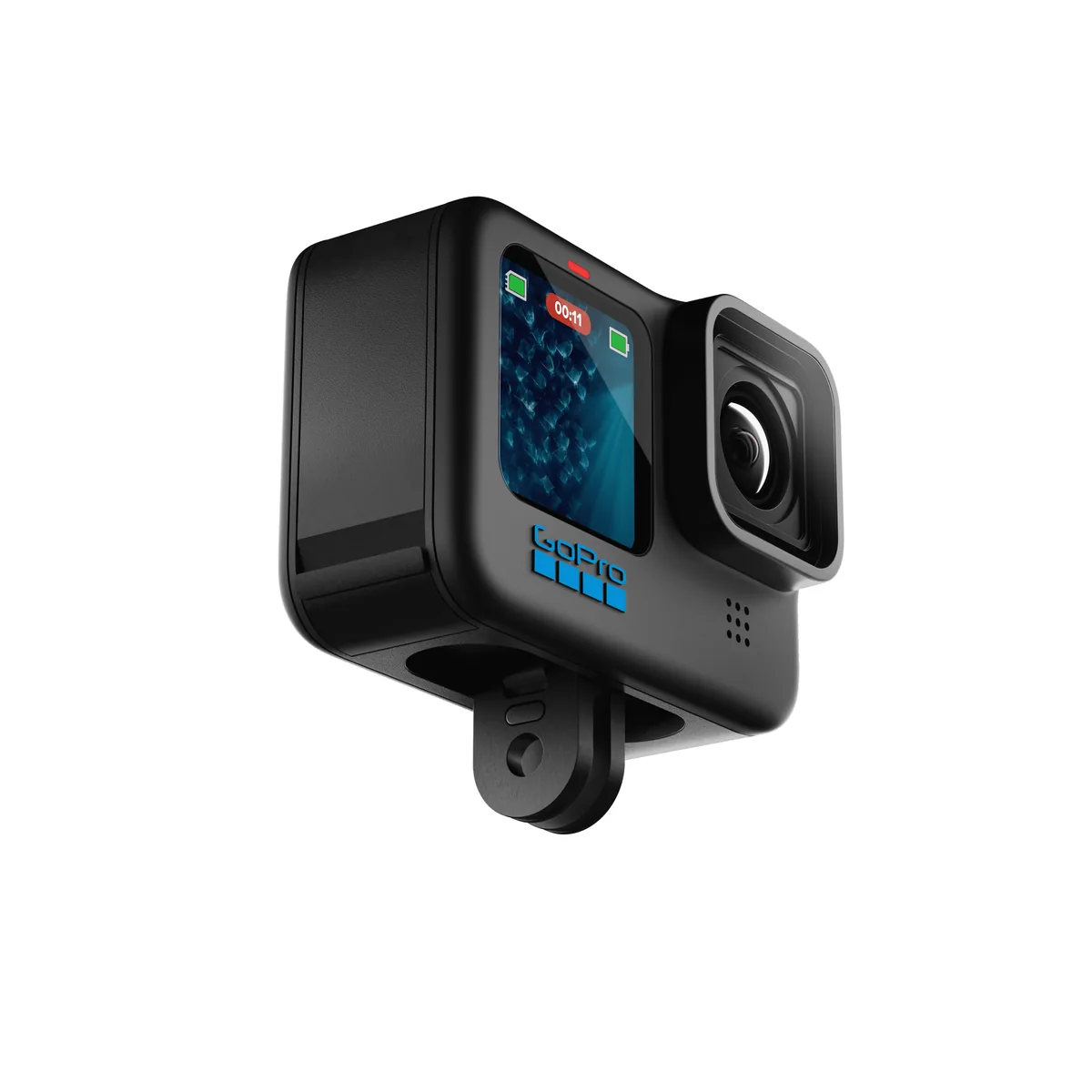
GoPro HERO11 Black
This is the camera that introduced the tall 8:7 sensor readout, and it is the reason the Hero body has barely changed since. Shooting the full 27 MP frame and cropping to 16:9, 9:16 or 4:5 in the edit is a workflow rather than a spec, and it is still the single most useful thing GoPro has added in five years. The Hero 11 keeps GPS, which the Hero 12 dropped, and the older HyperSmooth 5.0 is a hair behind 6.0 without being visibly worse. Where it falls behind is GP-Log, which arrived a generation later, and the 1/4-20 thread, which did not. GoPro still lists it on its own store, and at a street price under $250 it is the cheapest route into 5.3K60 with full horizon lock.
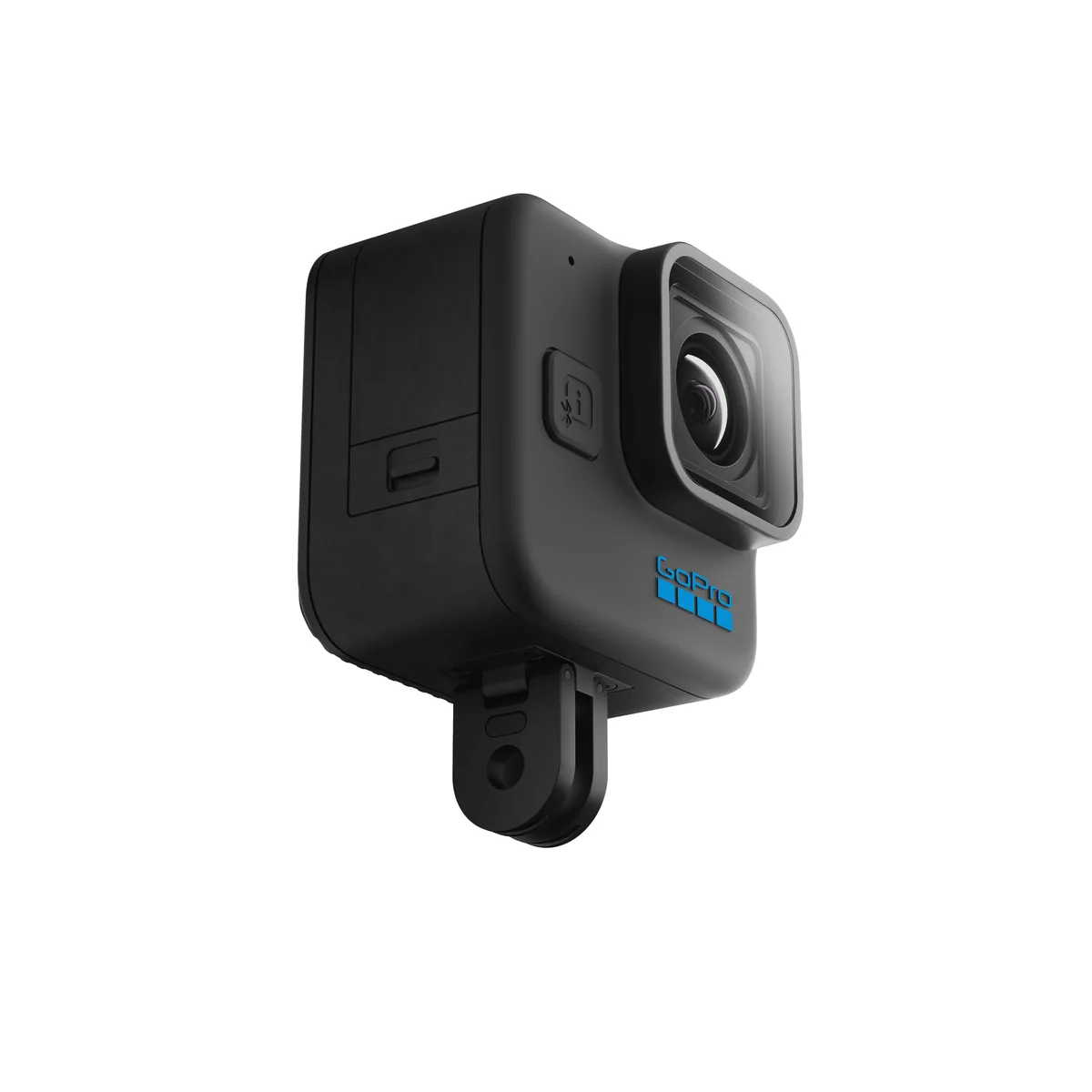
Take a Hero 11, delete the screens, the stereo mics, the GPS and the removable battery, and add a second set of mounting fingers on the back — that is the Mini, and it is a far more coherent product than the subtraction list suggests. One button starts and stops recording. There is no menu to fumble with cold hands, no screen to crack, and two mounting axes so it sits flat against a helmet or a chest harness in either orientation. The imaging is unchanged: the same 5.3K60, the same 8:7 sensor, the same horizon lock. What you lose is any ability to frame a shot or swap a dead battery, which rules it out as anyone's only camera and makes it a very good second one.
GoPro
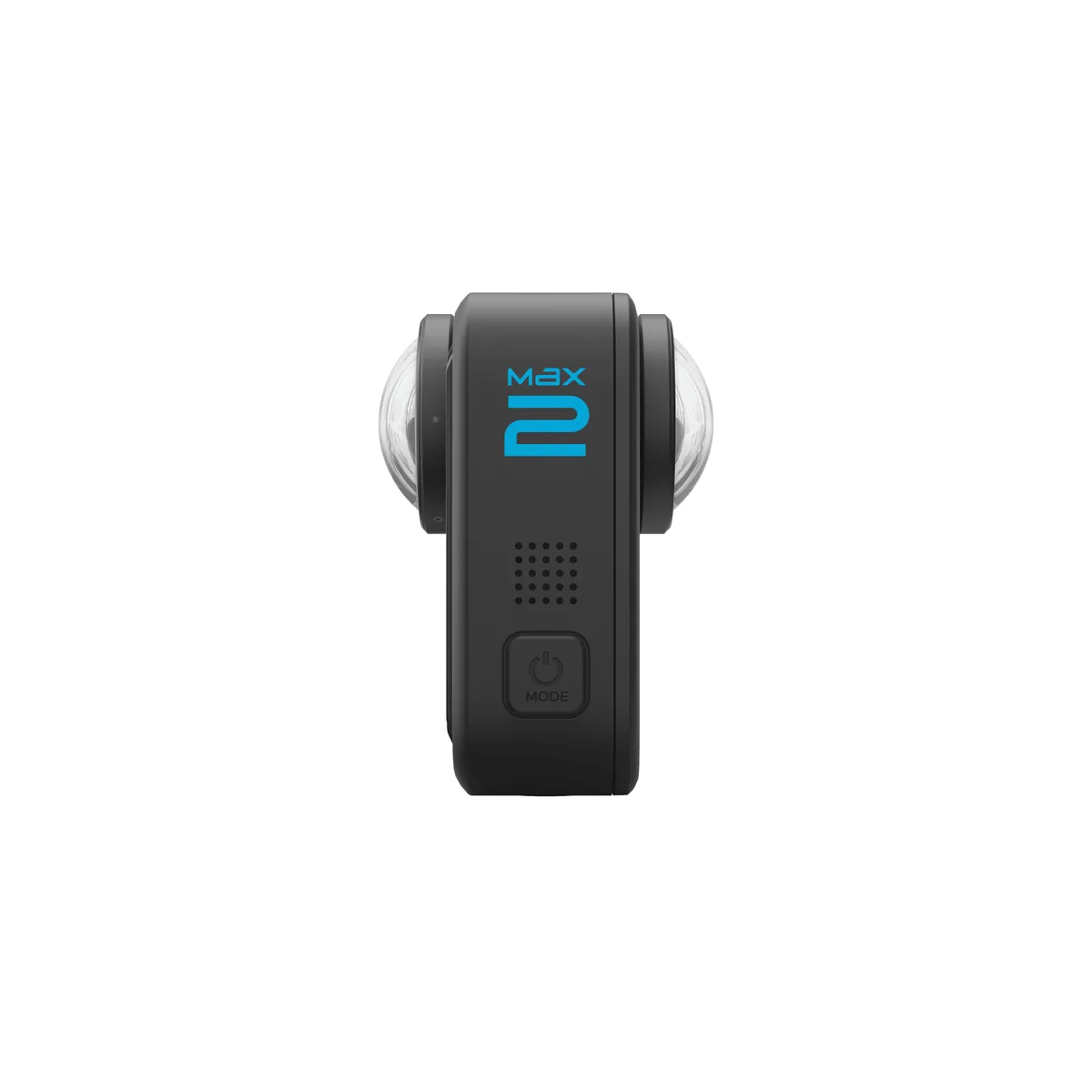
GoPro MAX2
Six years after the first MAX, GoPro finally shipped a successor, and the twist-off lens covers are the headline that matters. Every 360 camera lives or dies on scratched glass — the lenses bulge out past the body by design and there is no guarding them properly — and the MAX2 is the first one where replacing them is a field job rather than a service ticket. Around that sits true 8K spherical at 30 fps with 10-bit colour, a 300 Mbps ceiling that is the highest in the category, GP-Log for grading, and a six-microphone array. It is also the only 360 camera with built-in GPS. The two compromises are real: 5 m of bare waterproofing is the shallowest of any current 360 camera, and 66 minutes at 8K30 is less than half what the Insta360 X6 claims.
Insta360
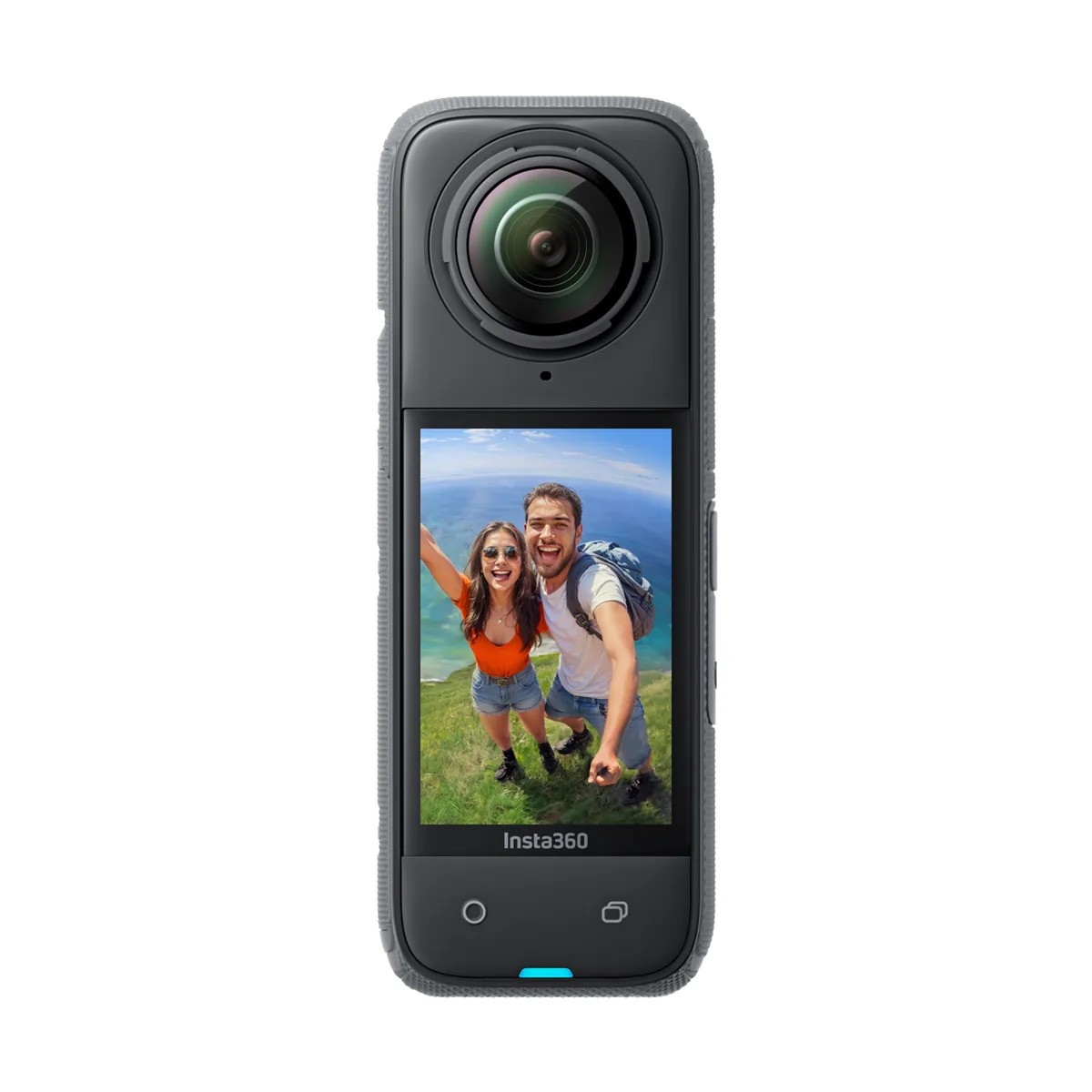
Insta360 X4
First of the X-series to shoot 8K, and the model that made spherical capture mainstream on bike handlebars and ski poles. The 200 Mbps ceiling is actually the highest of any X-series camera except the X6 — Insta360 spent the bitrate on holding detail through the stitch. What the X4 does not have is the thing the X5 introduced: its lenses are fixed, and a scratched fisheye is a service job. The sensors are 1/2-inch, less than half the X5's area, which is exactly where the two cameras separate once the light drops. Bought as a daylight camera at its current price, it is a lot of resolution for the money; bought expecting the X5's night performance, it will disappoint.
Insta360
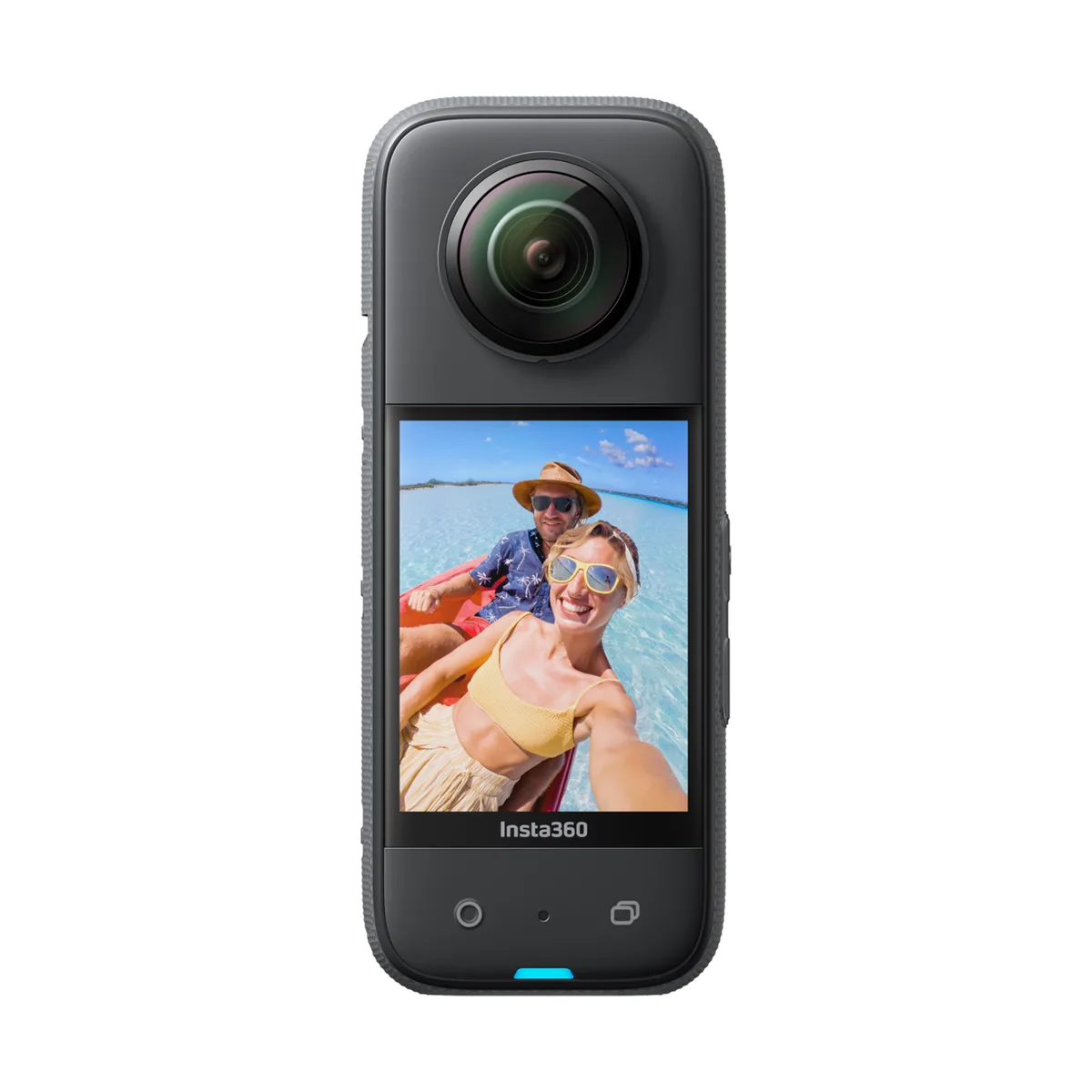
Insta360 X3
Four years old and still on sale, because the entry price into spherical capture has not really moved below it. 5.7K30 is the ceiling — this is the generation before the X-series went 8K — and reframed to a normal 16:9 shot that leaves roughly 1.3K of usable width at a typical field of view, which is the honest number the marketing never quotes. What it does well is exactly what it did in 2022: throw it on a selfie stick, shoot everything, decide where to point later, and let FlowState make the result watchable. The 2.29-inch screen was the first usable one on a 360 camera, and the invisible selfie stick trick still reads as magic to anyone who has not seen it.
Ricoh
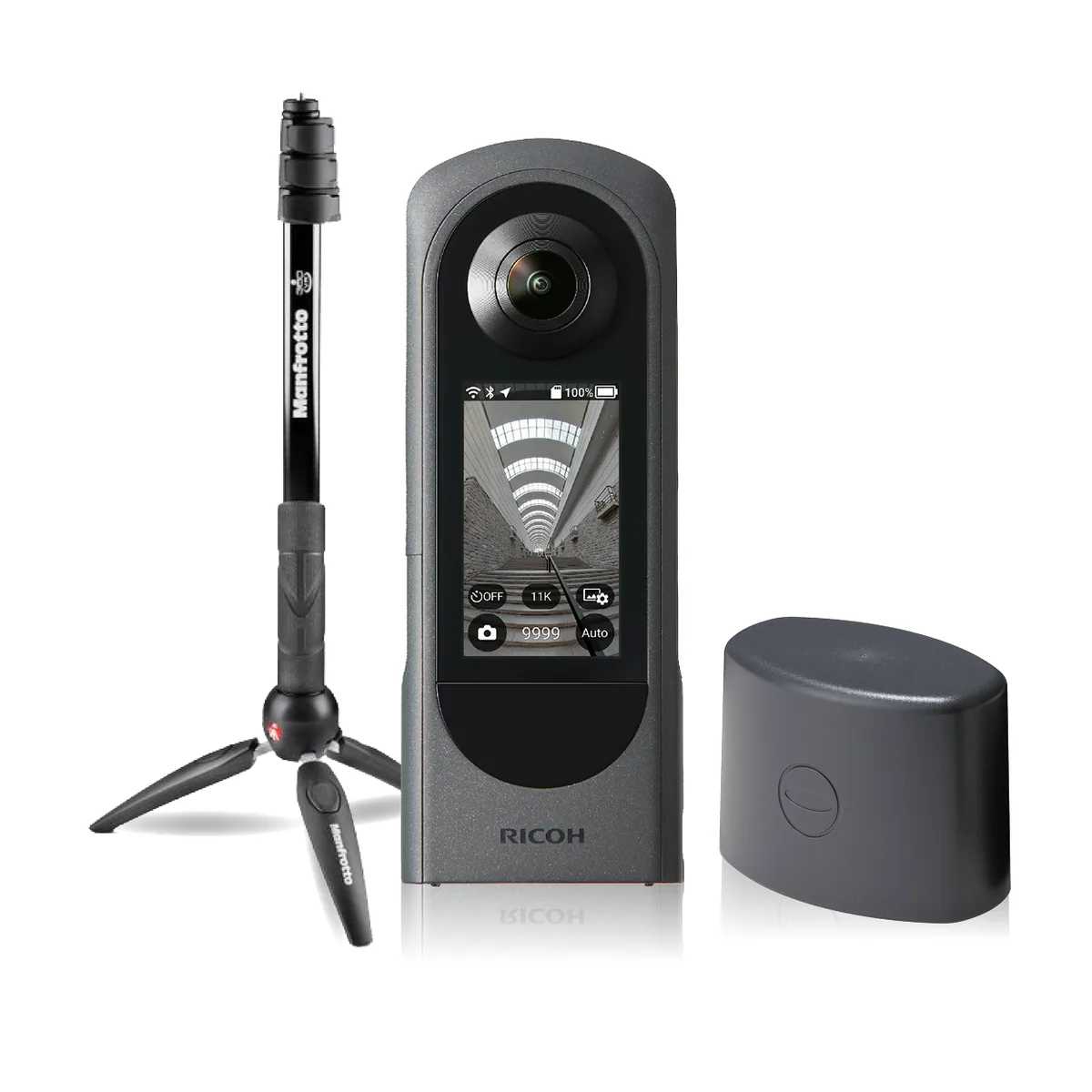
Ricoh THETA X
Ricoh has been making 360 cameras longer than anyone else here and aims them somewhere else entirely: real-estate tours, insurance surveys and construction documentation, not helmets. The THETA X reflects that — 60 MP spherical stills with the best stitch quality in the category, built-in GPS to tag where each shot was taken, a swappable DB-110 battery so a surveyor can work all day, and a 2.25-inch touchscreen for checking frames on site. It is also not an action camera in any meaningful sense. There is no waterproof rating, nothing mounts to it but a tripod thread, it is rated only to 0 °C, and 5.7K30 video is a secondary feature rather than the point. If you want one camera for both a ski trip and a property listing, this is the wrong half of that pair.
What people ask before the first one arrives
The questions owner discussion keeps circling back to, answered against the numbers in the catalogue above.
What is the single spec that decides low-light performance?
Sensor area, and the fraction printed on the box hides it. The optical format names — 1/2.3-inch, 1/1.3-inch, 1-inch — are inherited from video camera tubes and describe nothing about the sensor's real dimensions. Converted to square millimetres, this catalogue runs from 18 mm² to 116 mm², a factor of 6 in light-collecting area between the smallest sensor here and the largest. Price is not a reliable proxy for it: the smallest sensor in this catalogue is not in the cheapest camera. Every card, table and detail page on this site carries the derived number, and the education page shows the table it comes from. Sensor area, explained →
Why does my action camera overheat and shut down?
Because waterproofing and cooling pull against each other. A camera sealed well enough to go underwater cannot have a vent or a fan, and the processor doing 5.3K or 8K encoding generates heat continuously with almost nowhere to put it. It is a physics limit rather than a fault, and the four things that reliably extend recording time are moving air, a lower resolution, keeping it out of direct sun, and turning the rear screen off. It is the most repeated complaint in owner discussion, and it is not distributed evenly across brands. Why action cameras overheat →
Is an 8K 360 camera really 8K?
Not once you reframe it. A 360 camera spreads its full width across a complete circle, so a normal 16:9 clip pulled out of it uses only the slice its field of view covers. At a typical 80-degree reframe, an 8K sphere yields roughly 1,700 pixels of usable width — under 2K. The GoPro MAX2 records 7,680 pixels around and reframes to about 1.7K. That is still the best reframed footage available, and it is not what the marketing number implies. The reframing arithmetic →
What does horizon lock do, and do I need it?
It rotates the image so the horizon stays level no matter how the camera turns, which is separate from stabilisation removing shake. Full 360-degree lock survives a complete roll; the 45-degree kind only corrects lean and gives up beyond that; many budget cameras have neither. If the camera is going on a handlebar, a helmet, or anything that can twist on its mount, it is the single feature that most decides whether the footage is watchable. What horizon lock actually does →
Are the battery runtime figures on the box real?
They are real at the setting they were measured at, which is almost never the setting you shoot in. Most makers quote 1080p at 24 frames a second with the radios off; the split-body cameras quote the figure with their battery handle or dock attached. This site prints the setting next to every claim, and where a named third party has run its own test we print that too, with its conditions. Runtime with the setting attached →
Which cameras are waterproof without a case?
Fewer than the packaging suggests. A large part of the budget tier advertises a depth that belongs to the plastic housing in the box, not to the camera. Across this catalogue the bare ratings run from 1 m to 20 m — and the 1 m end is a splash rating, not a swimming one — while 11 of the 42 cameras have no bare rating at all, 3 of them 360 cameras. The bare figure is the one that decides whether rain stops you. Bare depth, ranked →
Do I have to pay a subscription?
It depends on the brand. GoPro sells a $49.99-a-year plan gating cloud upload, unlimited storage and camera replacement, with its best stabilisation mode held behind a $99.99 tier. Insta360 sells a cheaper plan gating cloud storage and a replacement scheme. DJI sells nothing of the kind. None of them is required to use the camera, but the difference is real enough that this site carries a year-one cost figure that adds the plan where the plan gates something. What the plans actually gate →
Why won't my camera record in 4K?
Almost always the microSD card. 4K needs a sustained write speed that a slower card cannot hold, and most cameras let you select the mode and then simply fail — without saying why. Buy a card rated V30 or UHS Speed Class 3 at minimum, from a brand you recognise, and format it in the camera rather than on a computer. Counterfeit cards from marketplace listings are a common cause of this too. Which card to buy →
How long will an action camera last?
Several seasons is normal, and cameras still working after five years are common. What ends them is rarely the sensor: it is scratched lens glass, a battery-door seal that stopped sealing, a swollen battery, or cumulative damage from repeatedly running to a thermal shutdown. Three of those four are avoidable with a lens guard, a seal check before every water session, and not recording in the top mode in still air. What actually kills them →
Is a two-year-old flagship better than a new budget camera?
At the same money, usually yes, and by a wide margin. A discounted previous-generation body from a major brand typically carries two to four times the sensor area of a new sub-$150 camera, plus working horizon lock, a bare water rating, a log profile and a mount ecosystem. The budget tier's advantage is that it comes with two batteries and a box of mounts, and that losing one does not hurt. Low light on a budget →