DJI
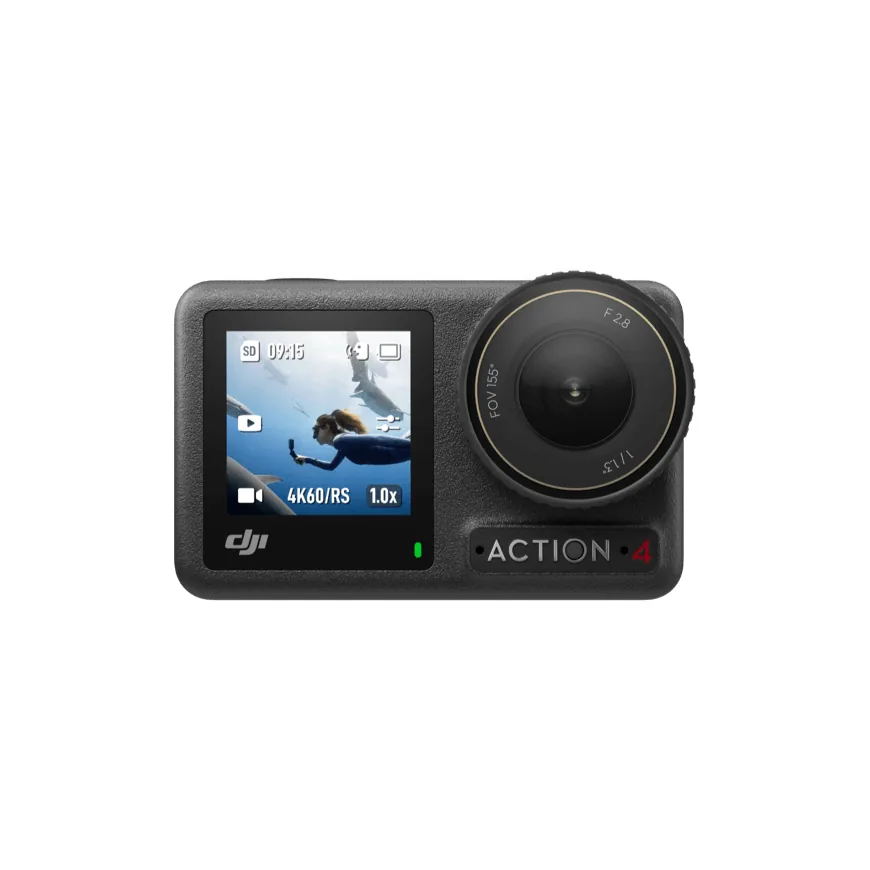
DJI Osmo Action 4
The camera that made a large sensor normal at this price, and it is still on sale two generations later because the fundamentals have not aged. Same 1/1.3-inch chip as the Action 5 Pro, same 4K120, same 10-bit D-Log M, same magnetic mount, 18 m waterproof against the newer model's 20. Where it falls short is the stills sensor readout — 10 MP against 40 — the smaller rear screen, and the absence of internal storage. The 130 Mbps ceiling is actually a touch higher than the Action 5 Pro's. At a street price around $229 it is the cheapest way to get a sensor this size into a waterproof body, and for anyone who mostly shoots video rather than photos the compromises are close to invisible.
Sensor area against the rest of the catalogue
Derived from the standard optical-format table rather than copied off a spec sheet, because makers print a fraction that hides it. The table and the arithmetic.
Battery, with the small print
- Maker’s claim
- 2 h 40 min at 1080p24 with RockSteady on, Wi-Fi off
- Third-party test
- None collected. We publish a tested figure only where a named outlet has run one and stated its conditions.
Specifications
Features
- ●1/1.3-inch sensor shared with the Action 5 Pro
- ●4K120 and 1080p240
- ●10-bit colour with D-Log M
- ●130 Mbps ceiling
- ●Waterproof to 18 m bare
- ●Magnetic quick-release mount
- ●Rated to −20 °C
Strengths
- +Same 72 mm² sensor as DJI's current mid-range, for a hundred dollars less
- +130 Mbps ceiling, slightly above the newer Action 5 Pro
- +18 m bare waterproofing still beats every GoPro Hero
- +Takes the same magnetic mounts and batteries as the Action 5 Pro
- +Owners consistently rate the colour science as the most natural of the three major brands
Drawbacks
- −10 MP stills against 40 MP on the newer body — this is the real generational gap
- −No internal storage
- −Smaller 2.25-inch rear screen
- −RockSteady 3.0 rather than 3.0+, a small step back on hard vibration
- −No 1/4-20 thread, so tripod use means carrying the mount adapter
What owners say
Summarised from owner discussions and published long-term reviews.
Two generations old and still the camera that wins the most arguments about value. It carries the same 1/1.3-inch sensor as the Action 5 Pro, the same 4K120, the same 10-bit D-Log M, and 18 metres of bare waterproofing — all of which put it ahead of the GoPro it was launched against. That comparison comes up constantly in the discussion and the conclusion is usually the same.
The gap to the newer DJI is narrower than the model numbers imply and lands almost entirely on stills and screen. Ten-megapixel photos against forty is a real difference if you take photographs; if you shoot video it is close to invisible. There is no internal storage, and the rear screen is smaller.
Owners buying at current prices generally describe it as the most sensor area per dollar in the catalogue, with the caveat that it is a video camera rather than a stills one.
What owners like
- +A recurring conclusion in cross-shopping threads is that this camera beats the GoPro Hero 12 on most measurable specs at a similar or lower price
- +Same 1/1.3-inch sensor as the Action 5 Pro, so low-light performance is in the same class for less money
- +The 130 Mbps ceiling is slightly higher than the newer Action 5 Pro's
- +Eighteen metres bare still beats every GoPro Hero
Common complaints
- −Ten-megapixel stills against 40 on the newer model — this is the real generational gap and it catches people out
- −No internal storage, so a card is mandatory
- −The 2.25-inch rear screen is smaller and dimmer than the Action 5 Pro's OLED
- −No GPS, and the same magnetic-only mounting
Questions owners keep asking
Is the Action 4 still worth buying?
Action 4 or GoPro Hero 12?
Why are the photos only 10 MP?
DJI Osmo Action 4, head to head
Cameras people look at alongside it
More from DJI →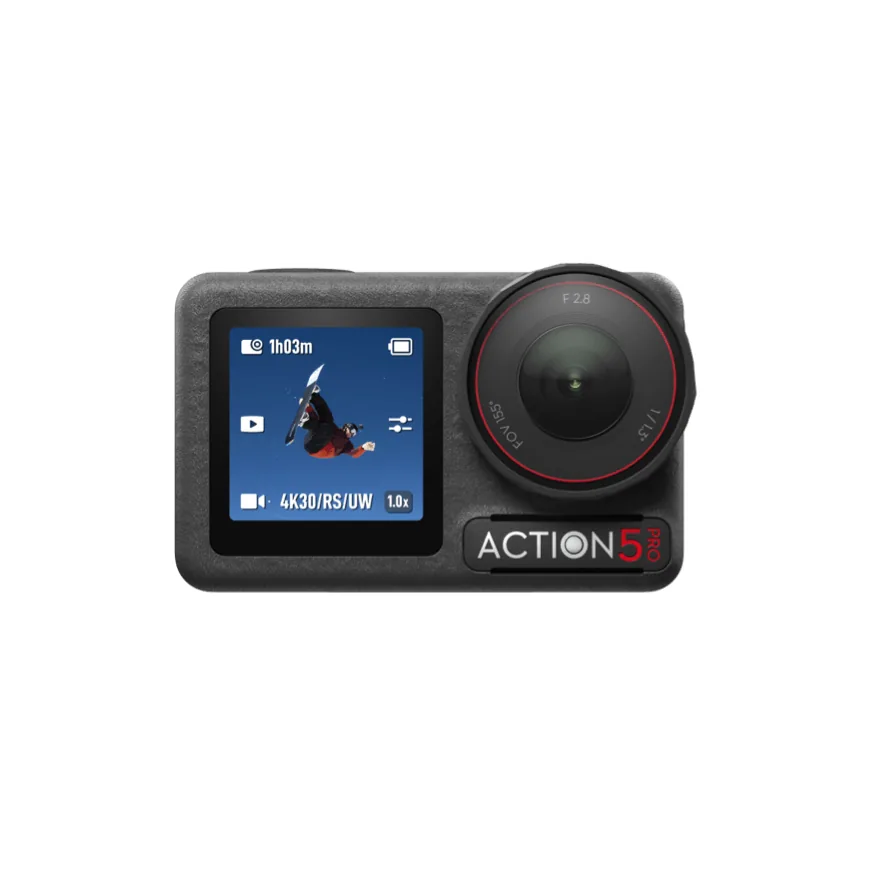
Now that the Action 6 has taken the flagship slot, this is the value argument in the whole category: a 1/1.3-inch sensor with more than twice the area of a GoPro Hero 13's, 20 m of bare waterproofing, 47 GB of internal storage and a genuinely long-running battery, for around three hundred dollars. It gives up the Action 6's variable aperture and square readout and caps at 4K rather than 8K — which matters less than the spec gap suggests, because 4K120 covers almost everything an action camera is actually used for. In an independent four-camera drain test it ran 2 hours 14 minutes, well behind DJI's 1080p24 headline of four hours but comfortably ahead of the Insta360 Ace Pro 2.
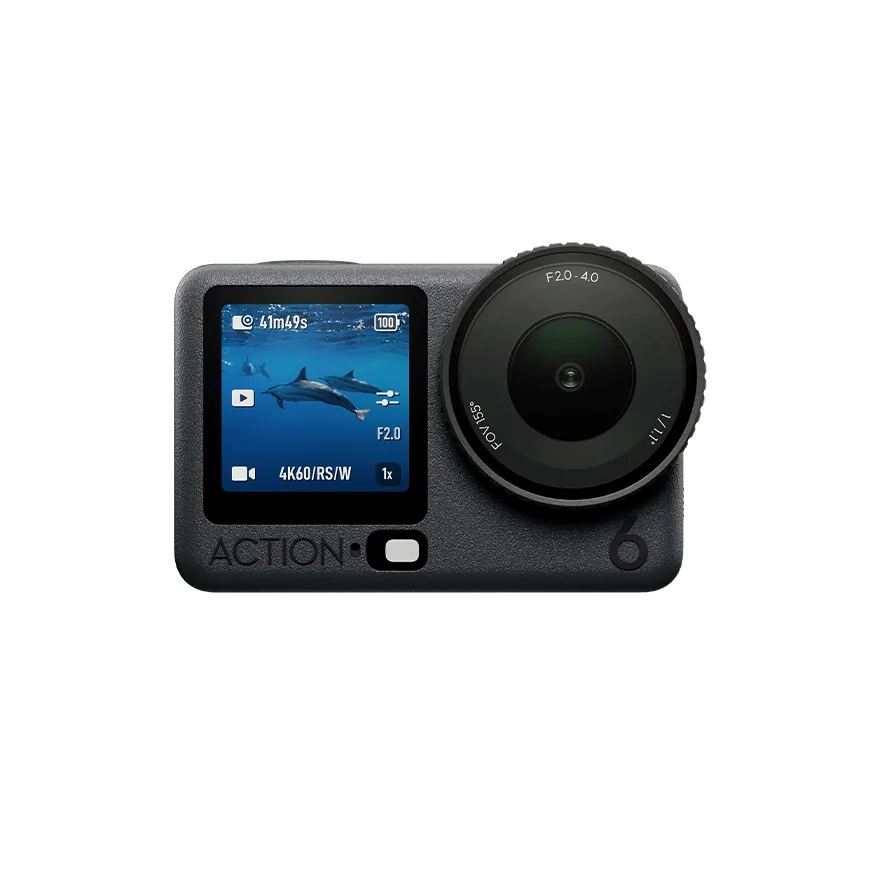
Two firsts arrived on the same body: a variable aperture on an action camera, and a square 1:1 sensor instead of the usual 4:3. The aperture stepping f/2.0 to f/4.0 matters most in bright conditions, where every other action camera has to throw away light with a shutter it cannot slow down or an ND filter you have to remember to bring. The square sensor matters in the edit — the camera measures the full 1:1 frame, so a widescreen crop and a vertical crop come out of one take without either being a stretched afterthought. DJI puts the imaging area at a 4:3 one-inch equivalent; worked off the standard optical-format table the named 1/1.1-inch format gives about 96 mm², still roughly triple a GoPro Hero 13's. Add 8K30, 20 m of bare waterproofing, 64 GB of internal storage and a four-hour battery rating and it is the most complete spec sheet in the category.
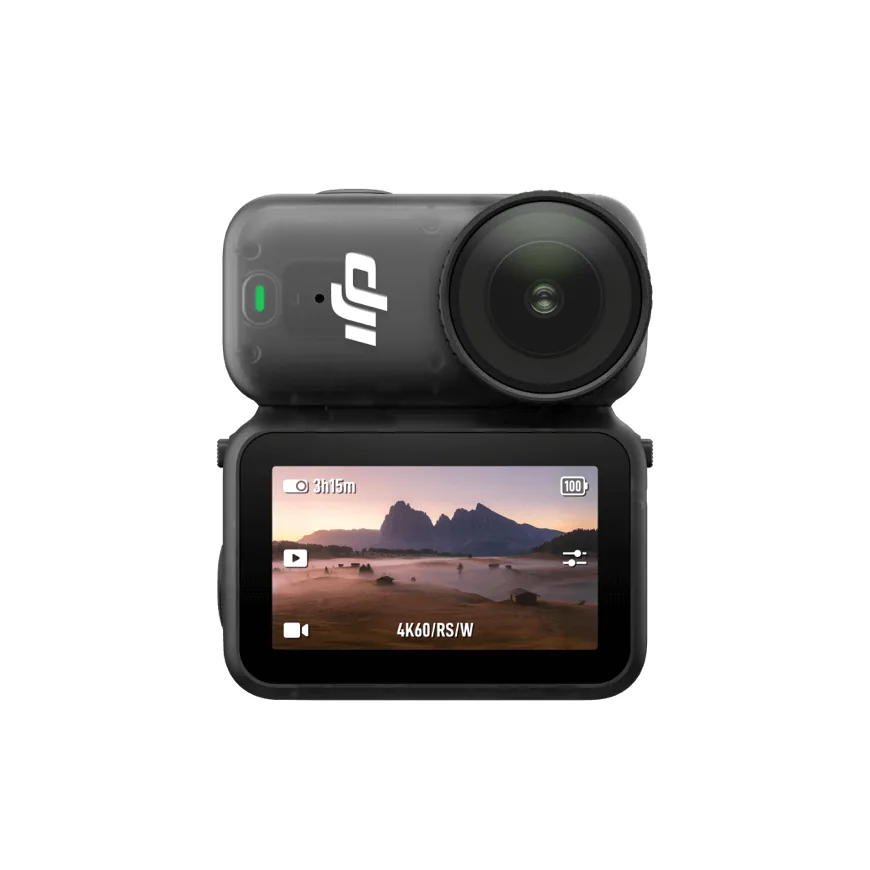
Fifty-two grams, and a 1/1.3-inch sensor inside them — the same size chip DJI puts in a full-size Osmo Action. That is the trick here, and it is why the Nano reads differently from every other tiny camera in the category, all of which shrink the sensor along with the body. It splits in two: the camera module clips onto a magnet under a shirt or on a helmet, and the Vision Dock adds an OLED screen, a second battery and a microSD slot when you want to frame a shot or run long. Alone the module is waterproof to 10 m and lasts about 90 minutes; docked, DJI rates the pair at 200 at 1080p24. What it does not have is full horizon lock — HorizonBalancing corrects tilt, not rotation — and the magnetic pendant is a trust exercise at speed.