Insta360 action and 360 cameras
Insta360 has 8 cameras in this catalogue, priced from ~$279 to ~$669, across 3 types. The largest sensor in the lineup belongs to the Insta360 X6 at 92 mm², and the cheapest is the Insta360 X3 at ~$279.
Insta360
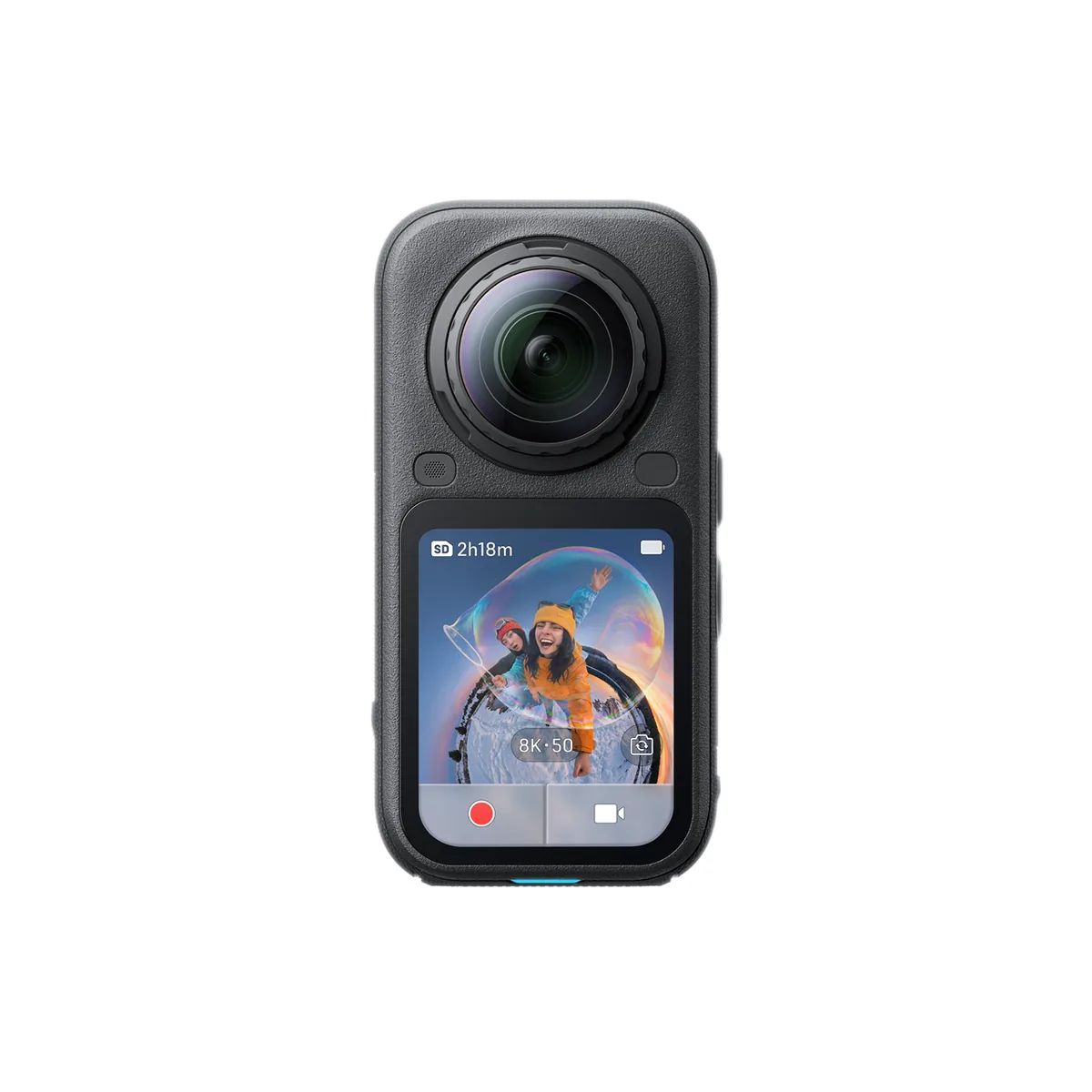
Insta360 X6
Two things separate this from every other 360 camera on sale. It shoots 8K at 50 fps rather than 30, which is what makes reframed slow motion possible instead of theoretical; and it is the only one that publishes a colour bit depth at all — 10-bit, with I-Log and in-camera Dolby Vision. The 2600 mAh Xtreme battery is rated at 140 minutes of 8K30, more than double what the GoPro MAX2 claims, and 20 m of bare waterproofing is four times MAX2's. A note on the sensors: Insta360 markets these as one-inch, and the spec sheet says 1/1.1-inch, which on the standard optical-format table works out around 92 mm² per lens rather than a true one-inch's 116. That is still the largest per-lens area in the 360 class, and it is why the low-light gap to the X5 is as visible as it is.
Insta360
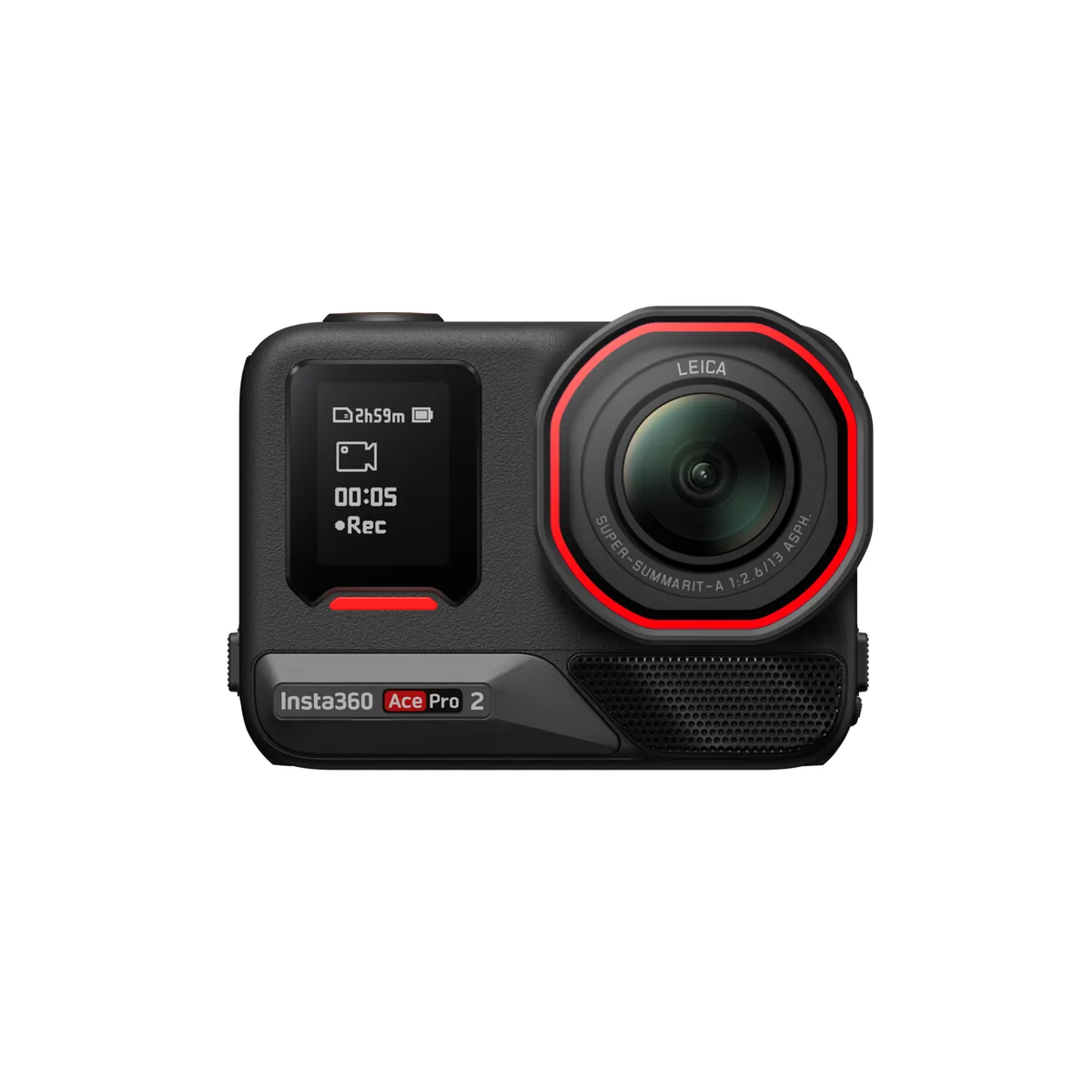
Insta360 Ace Pro 2
The flip-up screen is the feature that sells it. Every other action camera makes you guess at framing when the camera is facing you or mount a second screen; the Ace Pro 2's 2.5-inch rear panel hinges upward so it can be read from in front of the lens, which is why this is the vlogging pick in a category built around helmets. Behind that sits a Leica-co-engineered f/2.6 lens over a 1/1.3-inch sensor, 8K30, 4K120, a 180 Mbps ceiling and I-Log with a supplied LUT. Waterproofing is 12 m bare, and the dive case takes it to 60 m. The catch is endurance: in an independent four-camera drain test the Ace Pro 2 was first to die at 1 hour 44 minutes, thirty minutes behind the DJI and nearly an hour behind the GoPro, and its 180-minute headline number is quoted at 1080p24 with a power-saving mode enabled.
Insta360
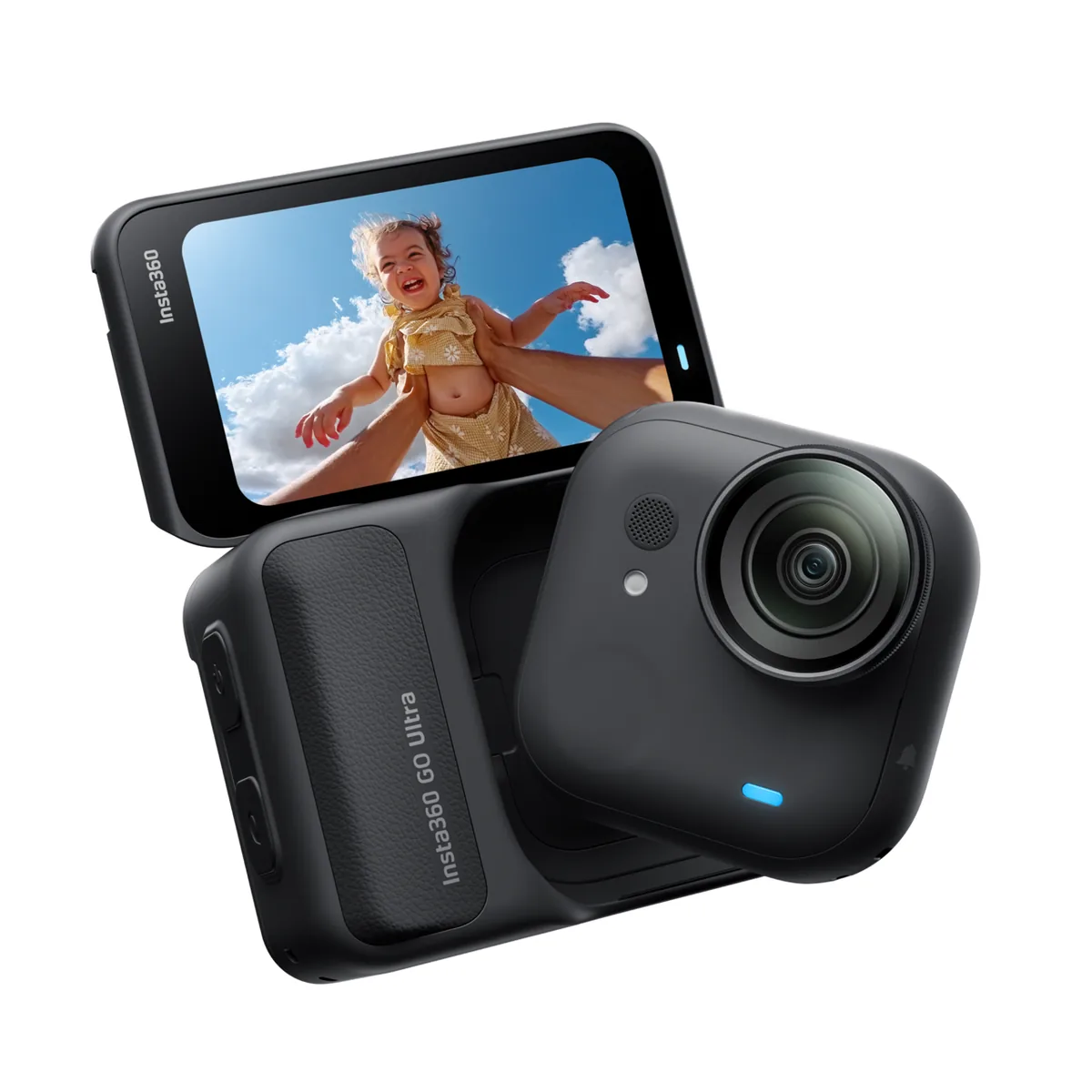
Insta360 GO Ultra
Insta360 put a 1/1.28-inch sensor — the same size as the X5's lenses use — into a 53 g magnetic puck, and then charged more for it than a GoPro Hero 13. That pricing is the single most argued-about thing about this camera, and it is fair: at $449 it is the most expensive non-360 camera in this catalogue, above two flagships that out-spec it on resolution and waterproofing. What it buys is a camera you genuinely forget you are wearing, clipped magnetically under a shirt or on a cap, streaming a live preview to a flip-screen Action Pod you leave in a pocket. The module is waterproof to 10 m; the Action Pod with the screen is not, which limits the whole system around water more than the headline suggests.
Insta360
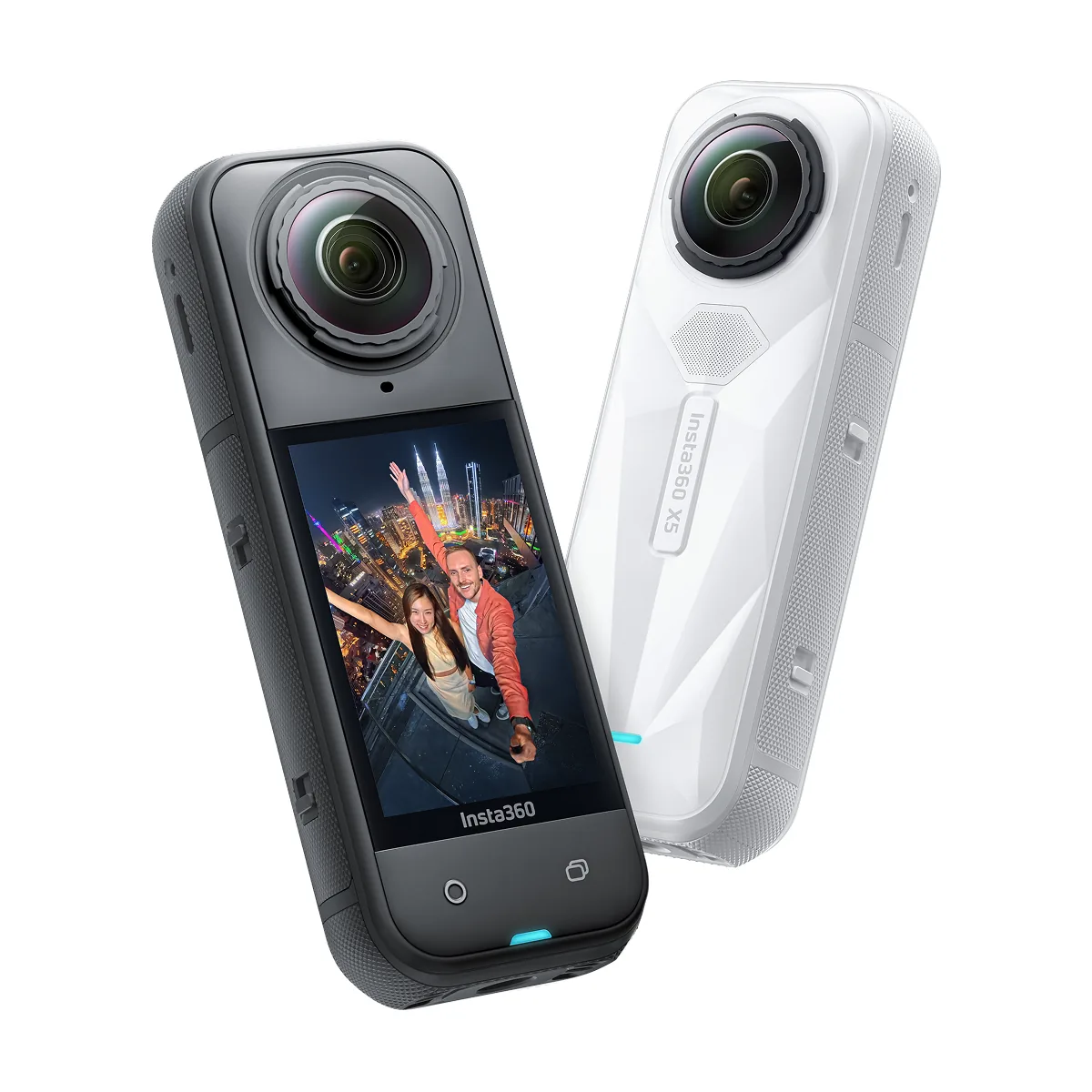
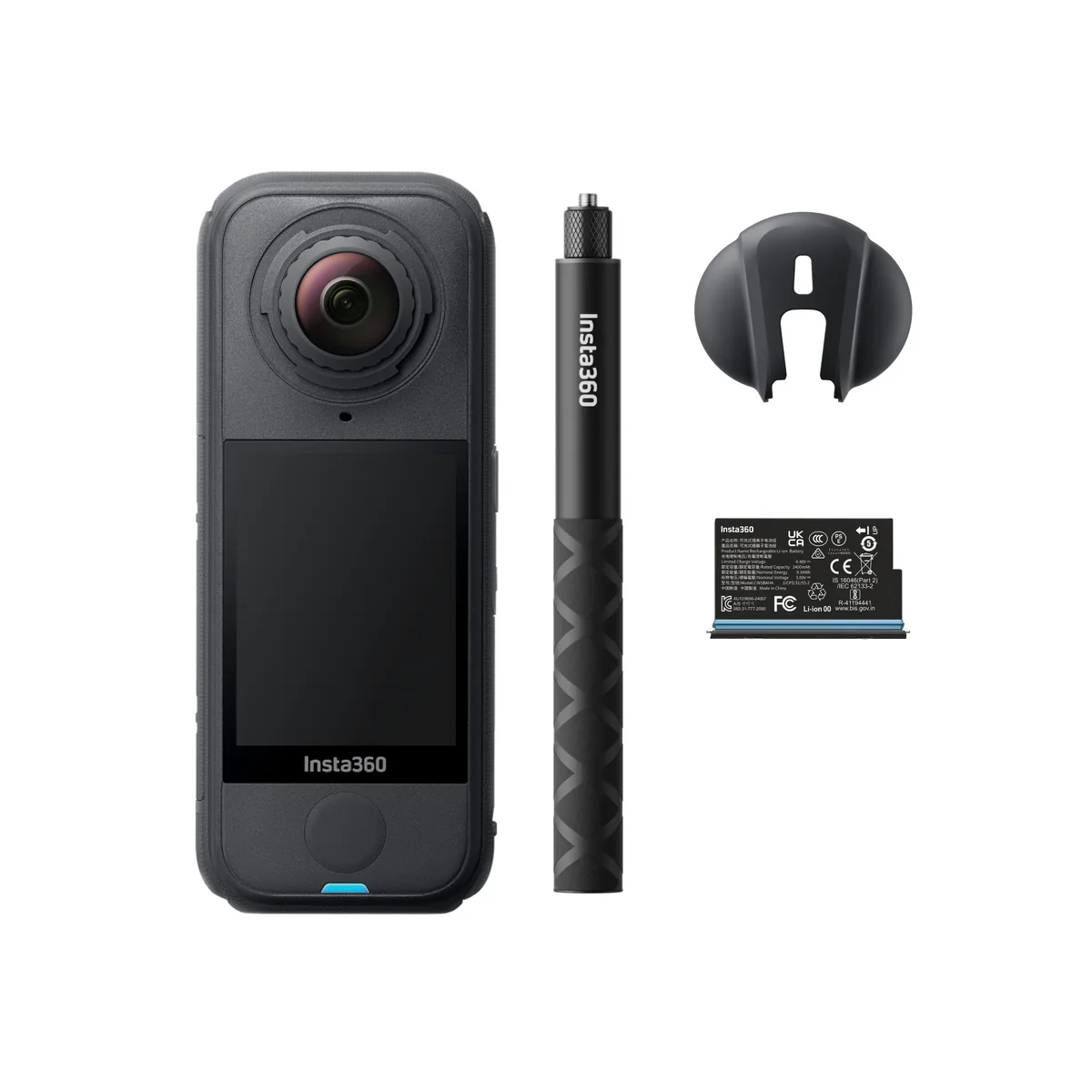
Insta360 X5
Replaceable lenses arrived here first, and they changed the economics of owning a 360 camera. The fisheye glass on any spherical camera sticks out past the body and gets scratched — it is the category's defining failure mode — and on the X5 a scratched lens is a twenty-minute swap with a part you can keep in a bag. Around that, dual 1/1.28-inch sensors with roughly 2.4× the area of the X4's drive 8K30 supersampled down from an 11K capture, and a triple-chip stack runs PureVideo for low light. Fifteen metres of bare waterproofing, 2400 mAh, 135 minutes at 5.7K30. Against the newer X6 it gives up 8K50, 10-bit and 5 m of depth; against everything else, it is still the 360 camera most people should buy.
Insta360
Insta360 X4 Air
Lightest 8K 360 camera Insta360 has built, at 165 g — 35 g under the X5 and 31 g under the X6 — and that number is the whole pitch. On a helmet or the end of a selfie stick, thirty grams is the difference between a rig that stays put and one that wobbles. It keeps the things that matter most from the X5: replaceable lenses, 15 m of bare waterproofing, magnetic mounting. The sensors step down to 1/1.8-inch, roughly half the X5's area, and the frame-rate ceiling drops to 4K50 in single-lens mode against the X5's 4K120. Against the X4 it is the better camera in every way except peak bitrate, at a lower price, which makes the older model a hard recommend now.
Insta360
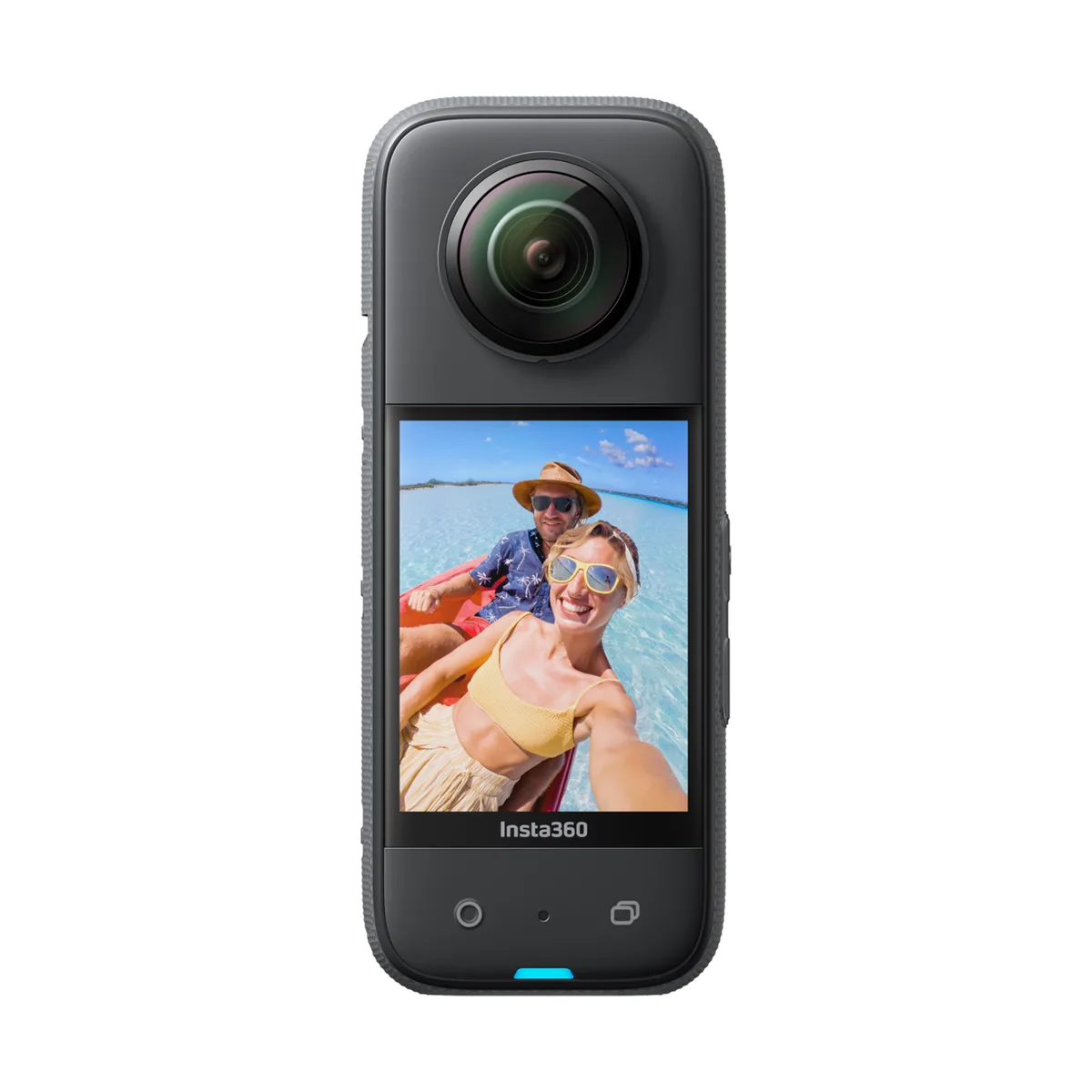
Insta360 X3
Four years old and still on sale, because the entry price into spherical capture has not really moved below it. 5.7K30 is the ceiling — this is the generation before the X-series went 8K — and reframed to a normal 16:9 shot that leaves roughly 1.3K of usable width at a typical field of view, which is the honest number the marketing never quotes. What it does well is exactly what it did in 2022: throw it on a selfie stick, shoot everything, decide where to point later, and let FlowState make the result watchable. The 2.29-inch screen was the first usable one on a 360 camera, and the invisible selfie stick trick still reads as magic to anyone who has not seen it.
Insta360
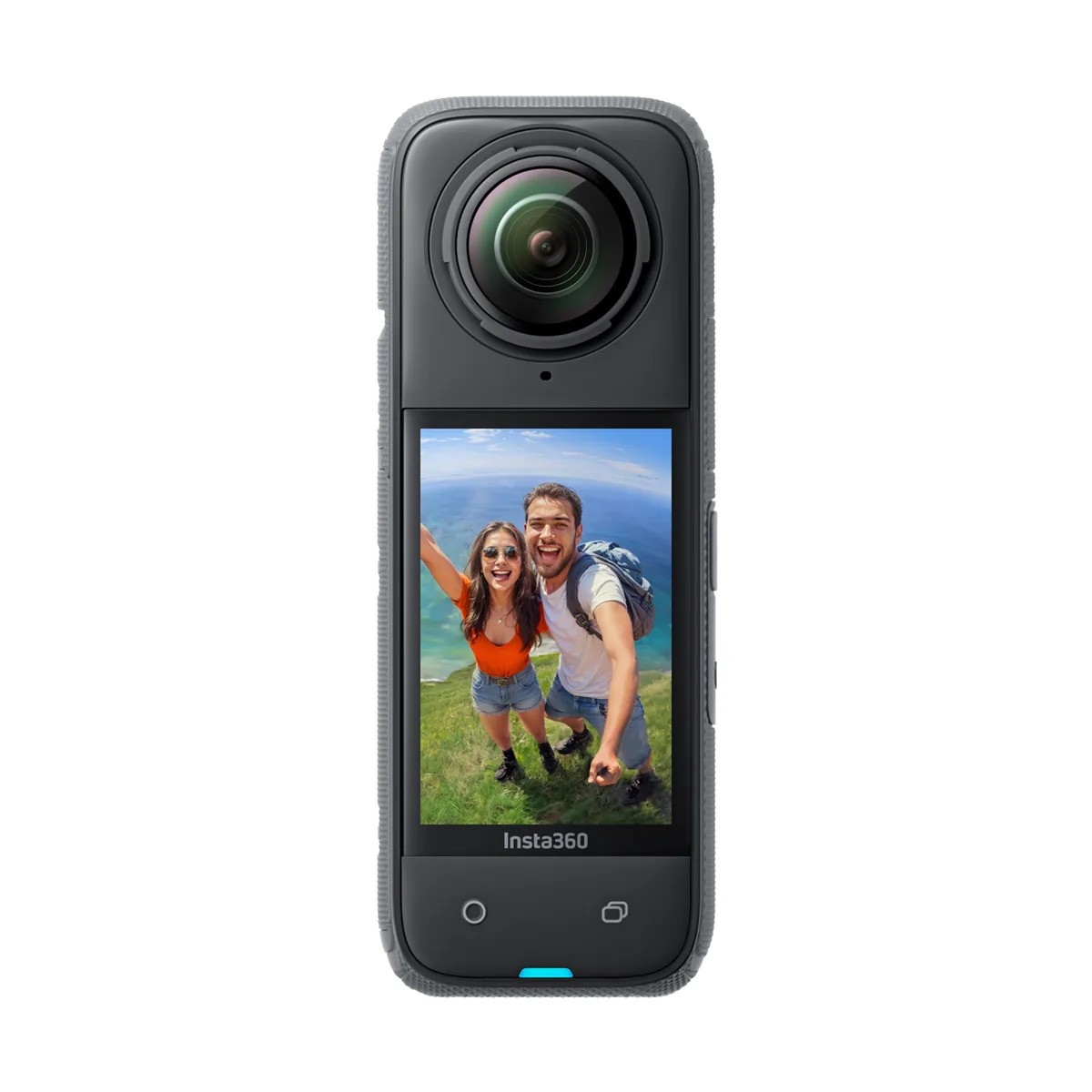
Insta360 X4
First of the X-series to shoot 8K, and the model that made spherical capture mainstream on bike handlebars and ski poles. The 200 Mbps ceiling is actually the highest of any X-series camera except the X6 — Insta360 spent the bitrate on holding detail through the stitch. What the X4 does not have is the thing the X5 introduced: its lenses are fixed, and a scratched fisheye is a service job. The sensors are 1/2-inch, less than half the X5's area, which is exactly where the two cameras separate once the light drops. Bought as a daylight camera at its current price, it is a lot of resolution for the money; bought expecting the X5's night performance, it will disappoint.
Insta360
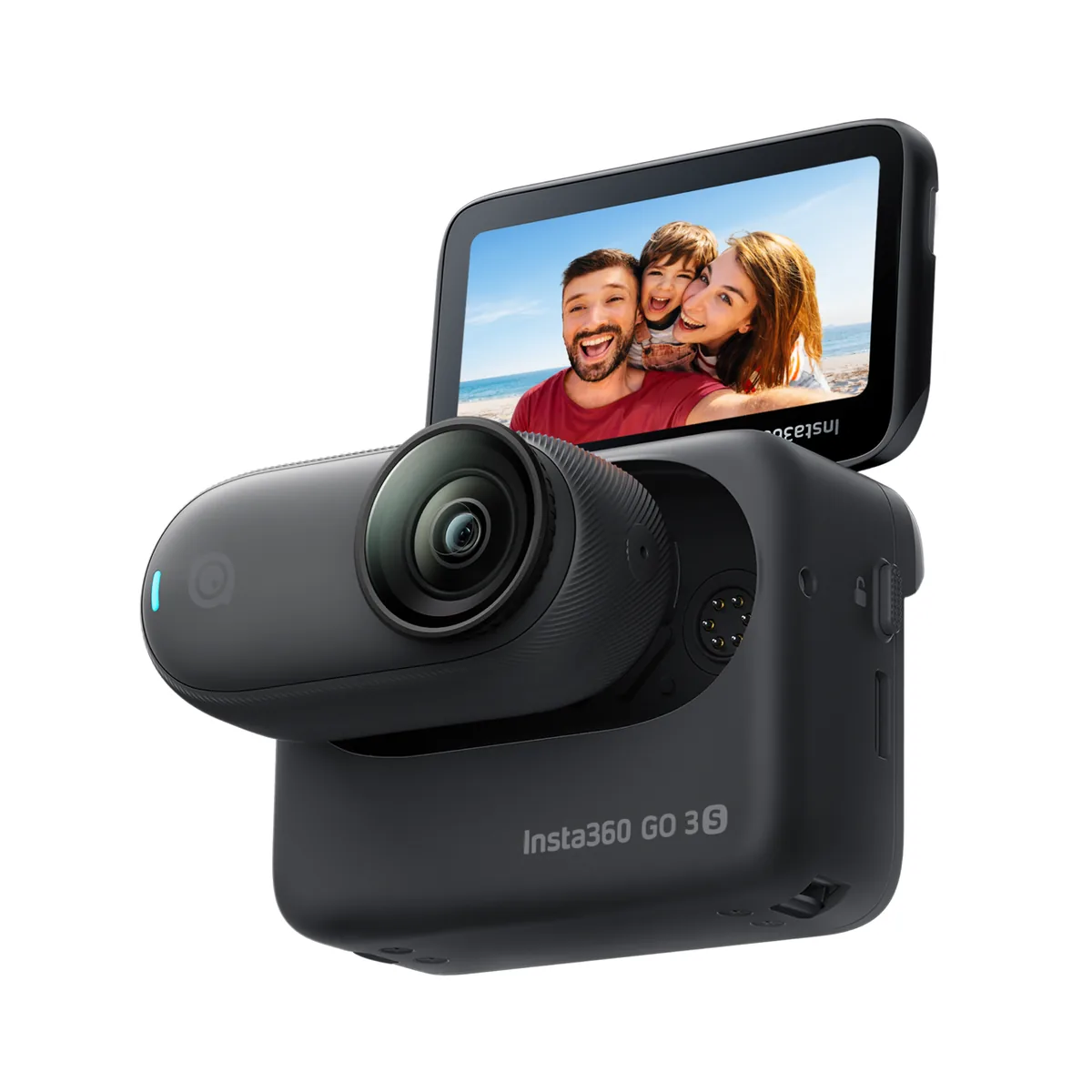
Insta360 GO 3S
Thirty-nine grams, which is lighter than most phone cases, and it is still the smallest camera here that shoots real 4K. The GO line's idea has always been that a camera small enough to clip to a cap brim or magnet under a t-shirt gets used in situations where a GoPro stays in a bag, and the 3S is the version where the image finally stopped being the compromise — 4K30 rather than the GO 3's 2.7K, and 10 m of waterproofing rather than 5. The 310 mAh cell in the module runs 38 minutes on its own; everything past that comes from the Action Pod, which carries the screen, the second battery and, importantly, only splash resistance. Now sitting below the GO Ultra in the line, it is the cheaper way into the same wearable idea.