GoPro
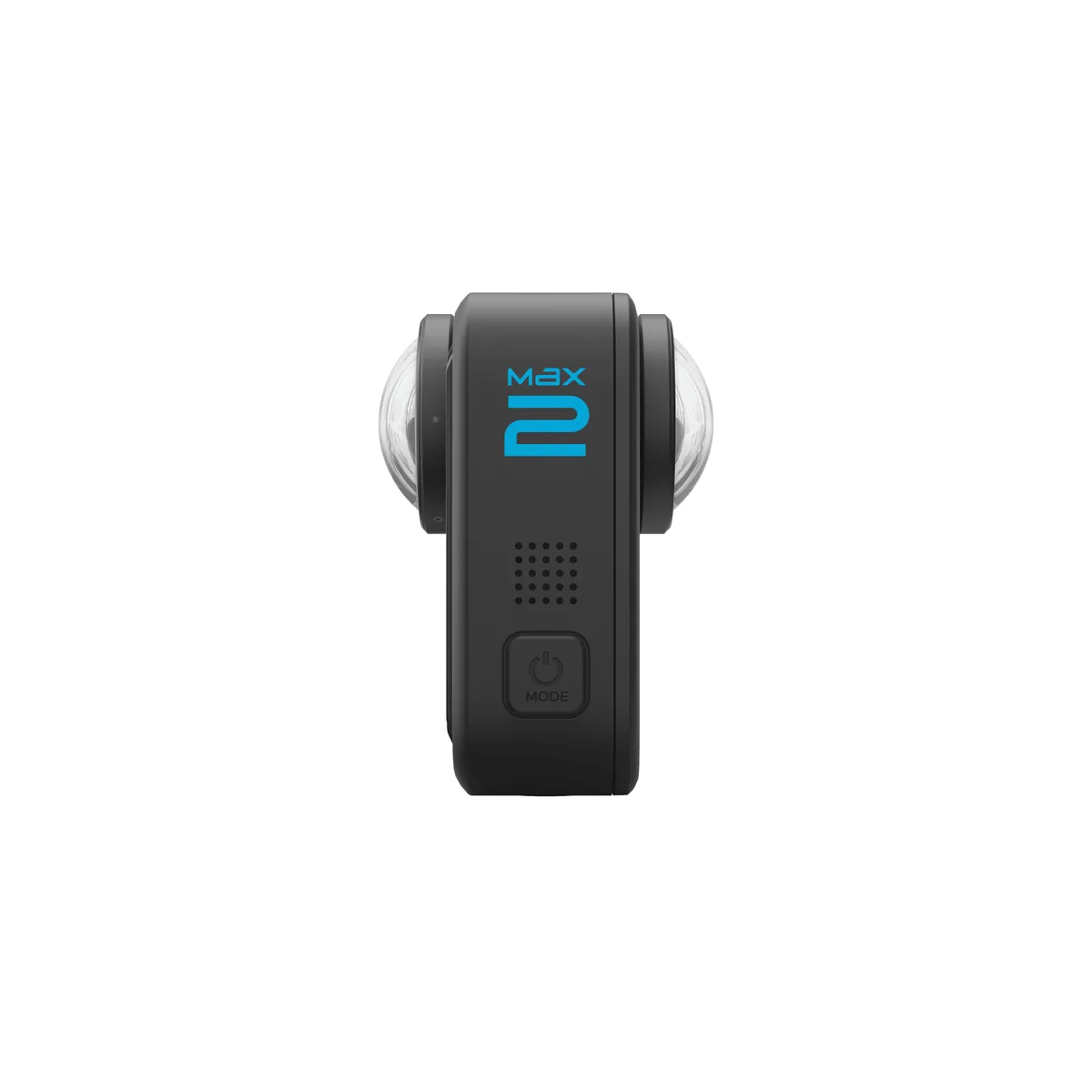
GoPro MAX2
Six years after the first MAX, GoPro finally shipped a successor, and the twist-off lens covers are the headline that matters. Every 360 camera lives or dies on scratched glass — the lenses bulge out past the body by design and there is no guarding them properly — and the MAX2 is the first one where replacing them is a field job rather than a service ticket. Around that sits true 8K spherical at 30 fps with 10-bit colour, a 300 Mbps ceiling that is the highest in the category, GP-Log for grading, and a six-microphone array. It is also the only 360 camera with built-in GPS. The two compromises are real: 5 m of bare waterproofing is the shallowest of any current 360 camera, and 66 minutes at 8K30 is less than half what the Insta360 X6 claims.
Sensor area against the rest of the catalogue
Derived from the standard optical-format table rather than copied off a spec sheet, because makers print a fraction that hides it. The table and the arithmetic.
Battery, with the small print
- Maker’s claim
- 1 h 6 min at 8K30 spherical, ideal conditions
- Third-party test
- None collected. We publish a tested figure only where a named outlet has run one and stated its conditions.
What a reframed clip is worth
This camera records 7,680 px across a full 360°. A normal 16:9 clip pulled out of it uses only the slice its field of view covers, so at a typical 80° reframe the usable width is about 1,707 px — roughly 1.7K.
7,680 × (80 ÷ 360) = 1,707 px
An estimate. Stitching, supersampling and the projection move it by a few per cent either way. How this works.
Specifications
What the GoPro Premium plan gates
~$49.99 a year, which is why the year-one figure on this page is ~$549 rather than ~$499.
- •Unlimited cloud storage and automatic upload for GoPro footage
- •Guaranteed camera replacement, no questions asked
- •Up to 50% off GoPro accessories
Features
- ●True 8K spherical video at 30 fps
- ●Twist-off replaceable lens covers, swappable in the field
- ●300 Mbps ceiling and 10-bit colour with GP-Log
- ●Only 360 camera with built-in GPS
- ●Six-microphone array for 360 audio
- ●In-camera POV and selfie modes that skip the reframing step
- ●Magnetic latch, folding fingers and a 1/4-20 thread
Strengths
- +Lens covers twist off and cost far less than a repair — the single biggest running cost of a 360 camera solved
- +300 Mbps is the highest bitrate in the 360 class, and it shows in fast-motion detail
- +GP-Log and 10-bit put it a grading tier above every other 360 camera
- +Built-in GPS, which no competing 360 camera offers
- +Records a straight POV or selfie clip in-camera, so easy shots skip reframing entirely
- +Six microphones give it the best spatial audio of any camera in this catalogue
Drawbacks
- −5 m of bare waterproofing, a quarter of what the Insta360 X6 manages
- −66 minutes at 8K30 against the X6's claimed 140
- −The 1/1.9-inch sensors are small for a 360 camera in 2026
- −GoPro's desktop and mobile 360 reframing tools are slower than Insta360 Studio
- −The fisheye glass still protrudes far enough that a guard or a cap is not really optional
What owners say
Summarised from owner discussions and published long-term reviews.
GoPro's return to 360 lands as a serious camera with one very good idea. The lens covers twist off and are sold as parts, which addresses the failure mode every 360 owner eventually meets: the fisheye glass bulges past the body, cannot really be protected, and scratches. Owners treat that as the single most useful thing any 360 camera maker has done recently.
Around it sit genuinely high specifications — true 8K spherical, 10-bit, GP-Log, a 300 Mbps ceiling nothing else in the class reaches, six microphones, and the only built-in GPS in a 360 camera. The in-camera POV and selfie modes matter more than they sound, because reframing every clip is the hidden cost of owning a 360 camera and this skips it for the easy shots.
Where owners are less enthusiastic is water and endurance. Five metres bare is shallow for the category, and 66 minutes at 8K means a spare battery is not optional. The other repeated theme is software: people who have used Insta360's reframing tools find GoPro's slower, and that comparison comes up in almost every MAX2-versus-X6 thread.
What owners like
- +Twist-off replaceable lenses are the change owners rate highest — scratched glass has always been the running cost of a 360 camera and this turns it into a part
- +The single-lens POV and selfie modes let easy shots skip reframing entirely, which owners describe as the feature that gets the camera used on ordinary days
- +Built-in GPS is unique among 360 cameras and matters to anyone overlaying speed or route data
- +10-bit with GP-Log and a 300 Mbps ceiling put it a grading tier above the rest of the 360 field
Common complaints
- −Five metres of bare waterproofing is the shallowest of any current 360 camera, and owners coming from an Insta360 X-series notice immediately
- −Around 66 minutes at 8K30 is roughly half what the Insta360 X6 claims, and owners plan around spare batteries because of it
- −GoPro's reframing tools are slower and less capable than Insta360 Studio, and owners who have used both say so plainly
- −It arrived six years after the original MAX, and a recurring question in the discussion is what niche it is actually meant to fill
Questions owners keep asking
How deep can the MAX2 go without a housing?
Are the replaceable lenses worth it?
How long does it record at 8K?
Do I still have to reframe everything?
GoPro MAX2, head to head
Cameras people look at alongside it
More from GoPro →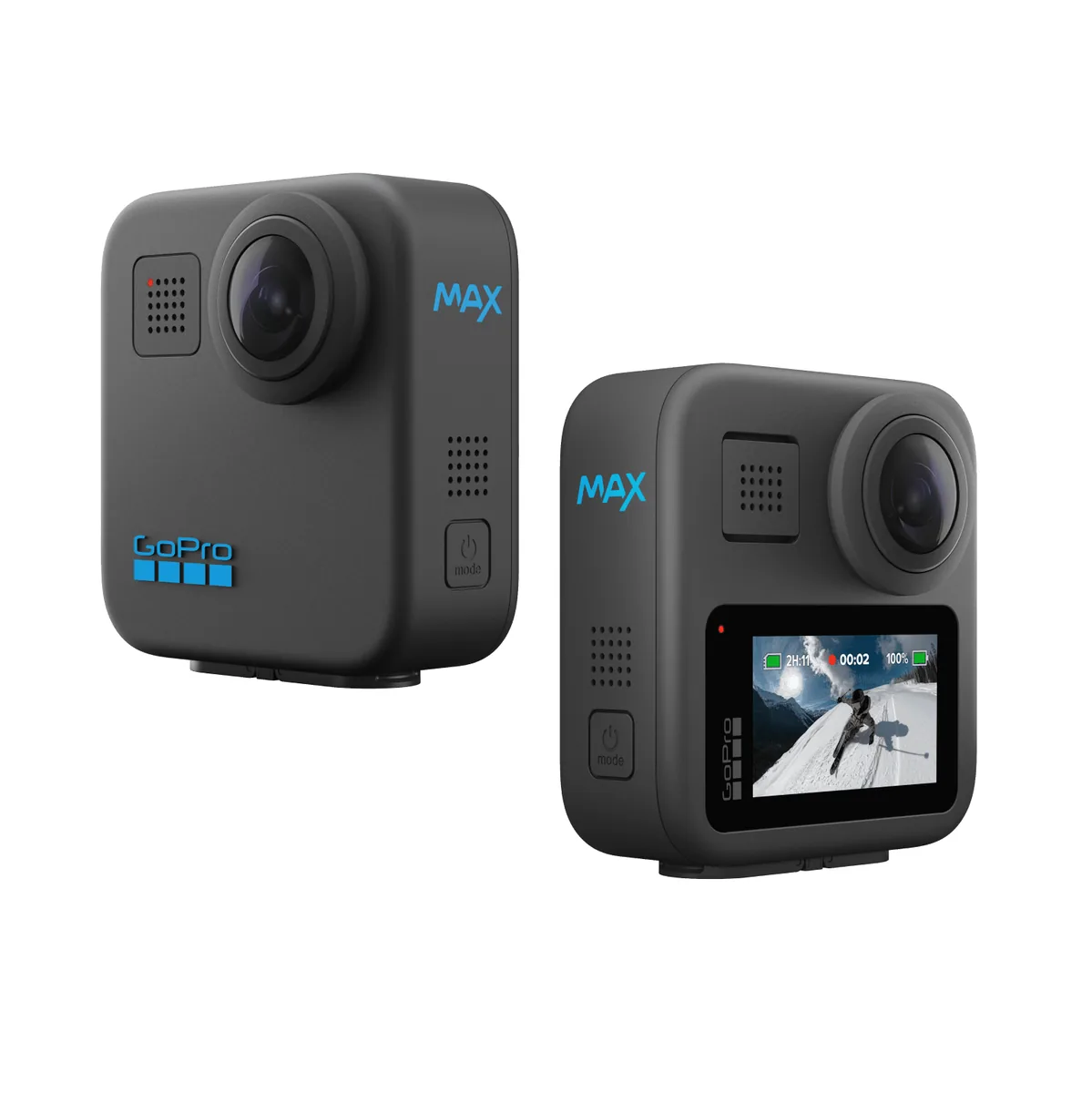
GoPro
GoPro MAX
A 2019 camera that GoPro quietly refreshed in 2025 with an Enduro battery and a 1/4-20 mount, and which survives because of one thing its successor charges $150 more for: it also works as a normal action camera. Point it forward, pick a digital lens, and the front sensor alone shoots 1440p or 1080p with Max HyperSmooth — historically the most aggressive stabilisation GoPro has ever shipped, because the second lens gives it a bigger picture to steal from. The spherical side is dated: 5.6K30, 8-bit, 78 Mbps, and lenses that cannot be replaced when they scratch. Treat it as a cheap dual-purpose camera with a very good stabilised single-lens mode, not as a current 360 camera.
GoPro
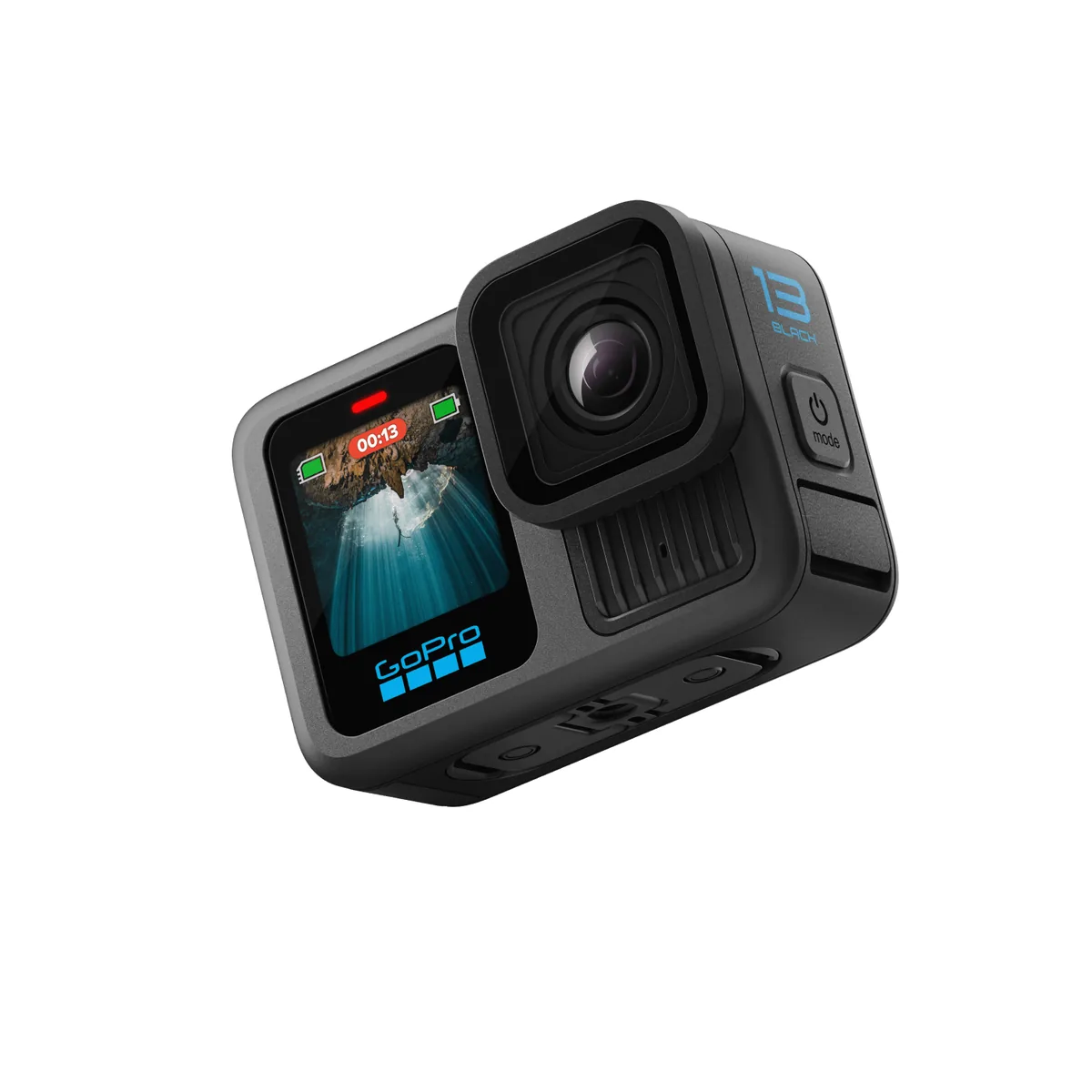
GoPro HERO13 Black
Four generations of the same 1/1.9-inch sensor have gone into this body, and GoPro spent the thirteenth on everything around it instead: a magnetic latch that replaces the fold-out fingers, a 1900 mAh Enduro cell, and the HB-series lens mods the camera recognises and reconfigures itself for. That is the honest shape of the Hero 13. Image quality sits roughly where the Hero 12 left it, the sensor is small next to what DJI and Insta360 now ship, and the stabilisation is still the best in the category by a margin nobody has closed. In a group test that ran four cameras to shutdown side by side, this was the only one that hit its published runtime. The mount ecosystem is the other argument: a decade of GoPro-fingered clamps, chest harnesses, helmet mounts and third-party rigs all still bolt straight on, which is why it stays the default on a motorcycle fairing or a ski helmet even when a rival's spec sheet reads better.
GoPro
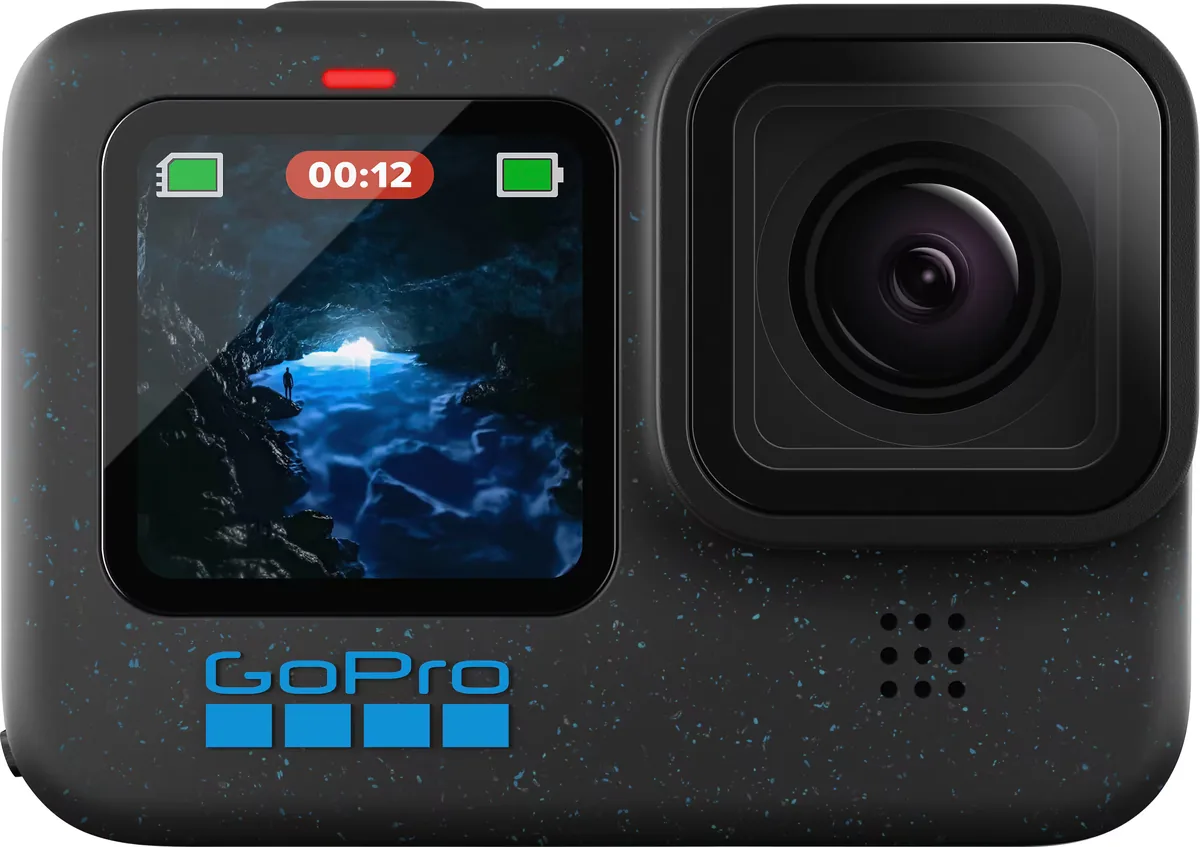
GoPro HERO12 Black
Clearance pricing has turned last year's flagship into the value pick of the GoPro line, and the gap to the Hero 13 is narrower than the generation number suggests. Same 1/1.9-inch sensor, same 5.3K60 and 4K120, same 10-bit GP-Log, same HyperSmooth 6.0 with full horizon lock. What you give up is the magnetic latch, the HB lens-mod system, roughly 180 mAh of battery — and GPS, which GoPro dropped on this generation and restored on the next. That last one is the deciding spec for anyone who wants speed, altitude or route data burned into the footage; for everyone else the Hero 12 is a Hero 13 that costs eighty dollars less and takes the same mounts. It also carries a 1/4-20 thread in the base, which the Hero 11 did not.