GoPro
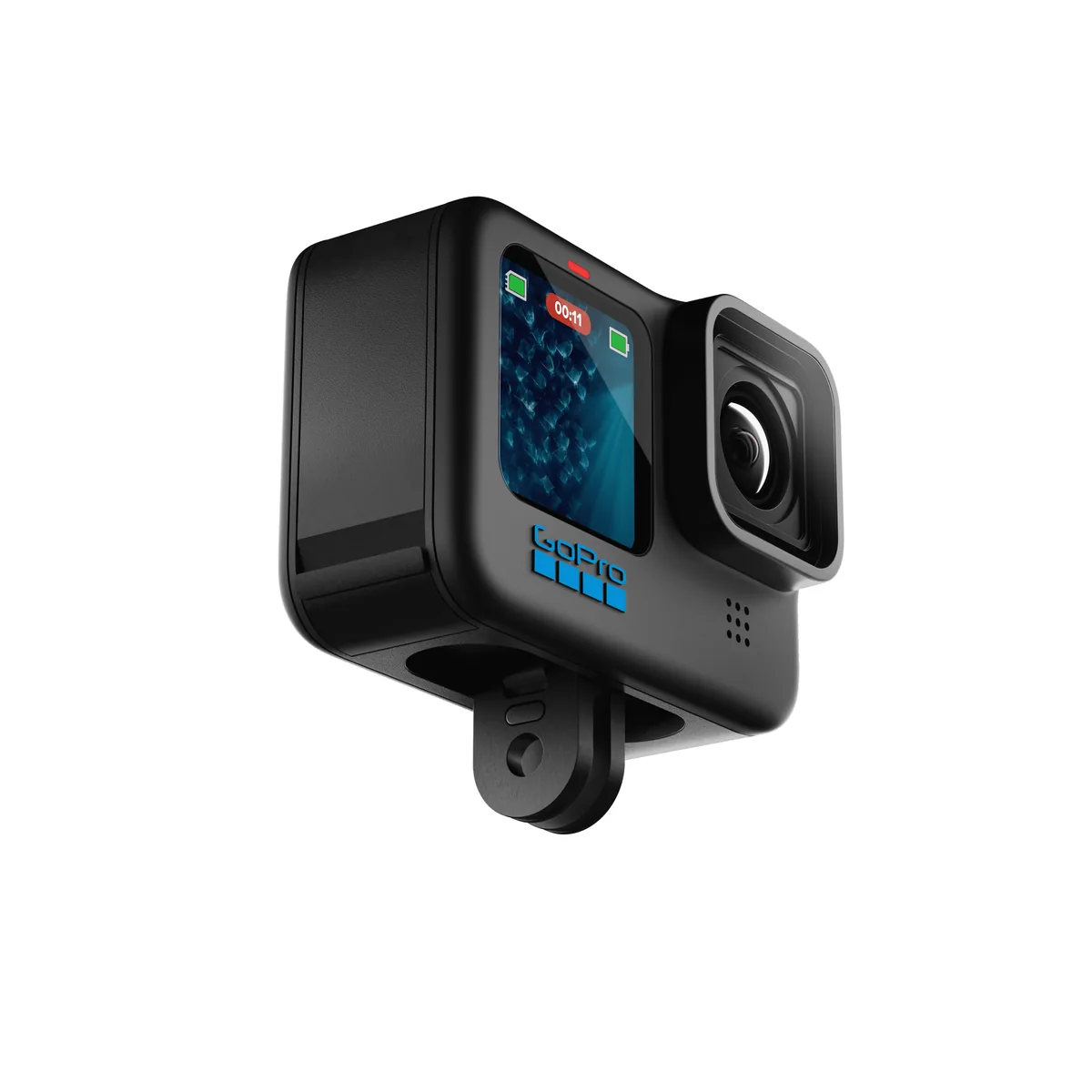
GoPro HERO11 Black
This is the camera that introduced the tall 8:7 sensor readout, and it is the reason the Hero body has barely changed since. Shooting the full 27 MP frame and cropping to 16:9, 9:16 or 4:5 in the edit is a workflow rather than a spec, and it is still the single most useful thing GoPro has added in five years. The Hero 11 keeps GPS, which the Hero 12 dropped, and the older HyperSmooth 5.0 is a hair behind 6.0 without being visibly worse. Where it falls behind is GP-Log, which arrived a generation later, and the 1/4-20 thread, which did not. GoPro still lists it on its own store, and at a street price under $250 it is the cheapest route into 5.3K60 with full horizon lock.
Sensor area against the rest of the catalogue
Derived from the standard optical-format table rather than copied off a spec sheet, because makers print a fraction that hides it. The table and the arithmetic.
Battery, with the small print
- Maker’s claim
- 1 h at 5.3K60 continuous, Enduro battery
- Third-party test
- None collected. We publish a tested figure only where a named outlet has run one and stated its conditions.
Specifications
What the GoPro Premium plan gates
~$49.99 a year, which is why the year-one figure on this page is ~$299 rather than ~$249.
- •Unlimited cloud storage and automatic upload for GoPro footage
- •Guaranteed camera replacement, no questions asked
- •Up to 50% off GoPro accessories
Features
- ●8:7 full-sensor capture for reframing to any aspect ratio in the edit
- ●HyperSmooth 5.0 with 360° Horizon Lock
- ●5.3K60, 4K120 and 1080p240
- ●10-bit colour and HLG HDR
- ●Built-in GPS
- ●Enduro 1720 mAh battery
Strengths
- +8:7 capture means one recording feeds both a widescreen edit and a vertical cut
- +Keeps GPS, which the newer Hero 12 does not have
- +Under $250 for the same 5.3K60 the current flagship shoots
- +360° horizon lock in-camera, not a phone-app afterthought
Drawbacks
- −No GP-Log, so grading headroom is limited to the 10-bit HLG profile
- −No 1/4-20 thread in the body
- −HyperSmooth 5.0 trails the current version on hard vibration
- −GoPro no longer promotes it, so accessory bundles and firmware attention go elsewhere
What owners say
Summarised from owner discussions and published long-term reviews.
The Hero 11 introduced the tall 8:7 sensor readout, and that is still the feature owners talk about. Shooting the whole frame and deciding the aspect ratio in the edit turned out to matter more to people posting to both YouTube and vertical feeds than any resolution bump since.
It is also the cheapest current route into 5.3K60 with full 360-degree horizon lock, and it has GPS, which the Hero 12 dropped. What it lacks is GP-Log — that arrived a generation later — and the tripod thread. Owners who grade their footage properly feel the first absence; nobody seems to miss the second much once they own one adapter.
What owners like
- +The 8:7 full-sensor capture is what owners point to most: one take feeds a widescreen edit and a vertical cut, with real framing latitude in both
- +It keeps GPS, which makes it the cheaper of the two GoPro generations that have it
- +Long-term owners report it holding up for several seasons, and the used and refurbished market for it is large and cheap
- +Takes the same batteries, doors and mounts as the Hero 12 and 13
Common complaints
- −No GP-Log, so grading is limited to the 10-bit HLG profile — owners who grade heavily notice
- −No 1/4-20 thread in the body, unlike the two generations after it
- −HyperSmooth 5.0 is a step behind the current version on hard vibration, which shows on rough trails
- −Heat shutdowns come up as often for this generation as any other
- −GoPro no longer promotes it, so firmware attention and bundle deals go elsewhere
Questions owners keep asking
What does 8:7 capture actually do for me?
Should I buy a Hero 11 or a Hero 12?
Is a used Hero 11 a safe buy?
How long do these cameras last?
GoPro HERO11 Black, head to head
Cameras people look at alongside it
More from GoPro →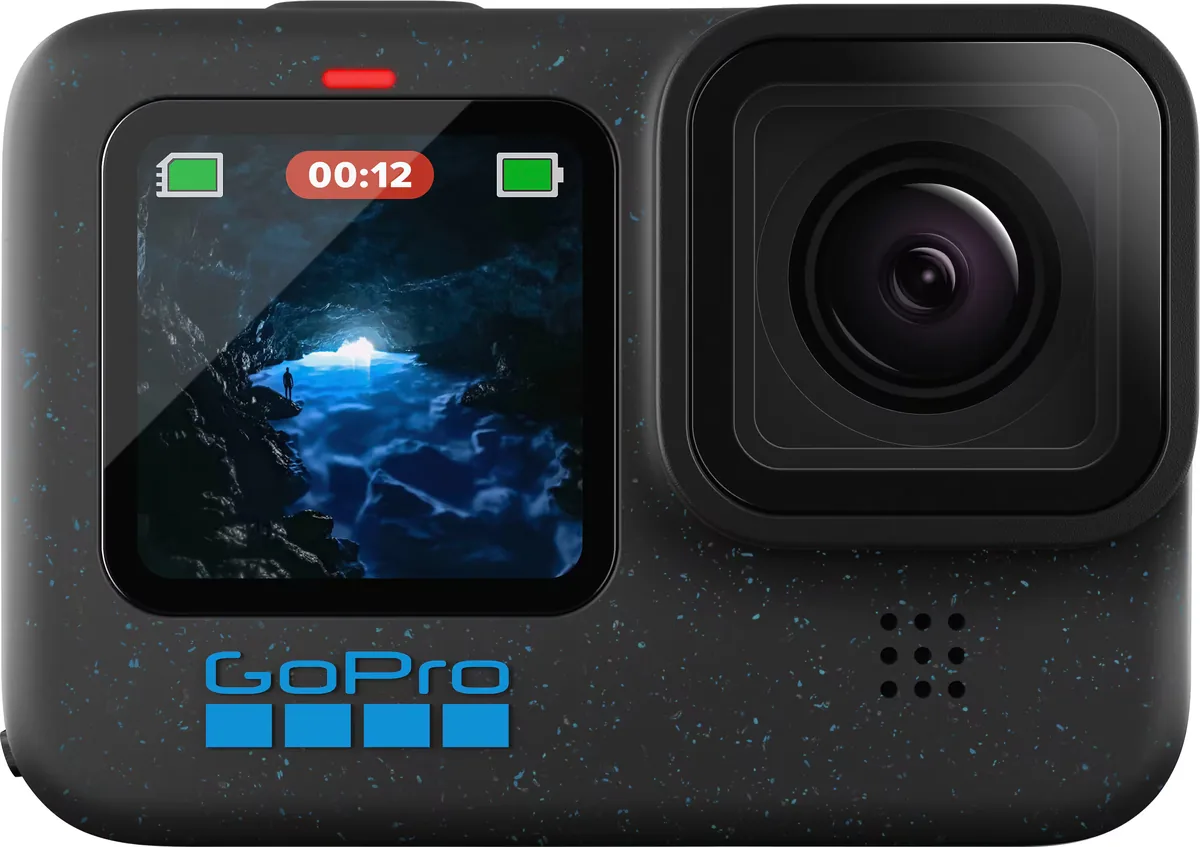
GoPro
GoPro HERO12 Black
Clearance pricing has turned last year's flagship into the value pick of the GoPro line, and the gap to the Hero 13 is narrower than the generation number suggests. Same 1/1.9-inch sensor, same 5.3K60 and 4K120, same 10-bit GP-Log, same HyperSmooth 6.0 with full horizon lock. What you give up is the magnetic latch, the HB lens-mod system, roughly 180 mAh of battery — and GPS, which GoPro dropped on this generation and restored on the next. That last one is the deciding spec for anyone who wants speed, altitude or route data burned into the footage; for everyone else the Hero 12 is a Hero 13 that costs eighty dollars less and takes the same mounts. It also carries a 1/4-20 thread in the base, which the Hero 11 did not.
GoPro
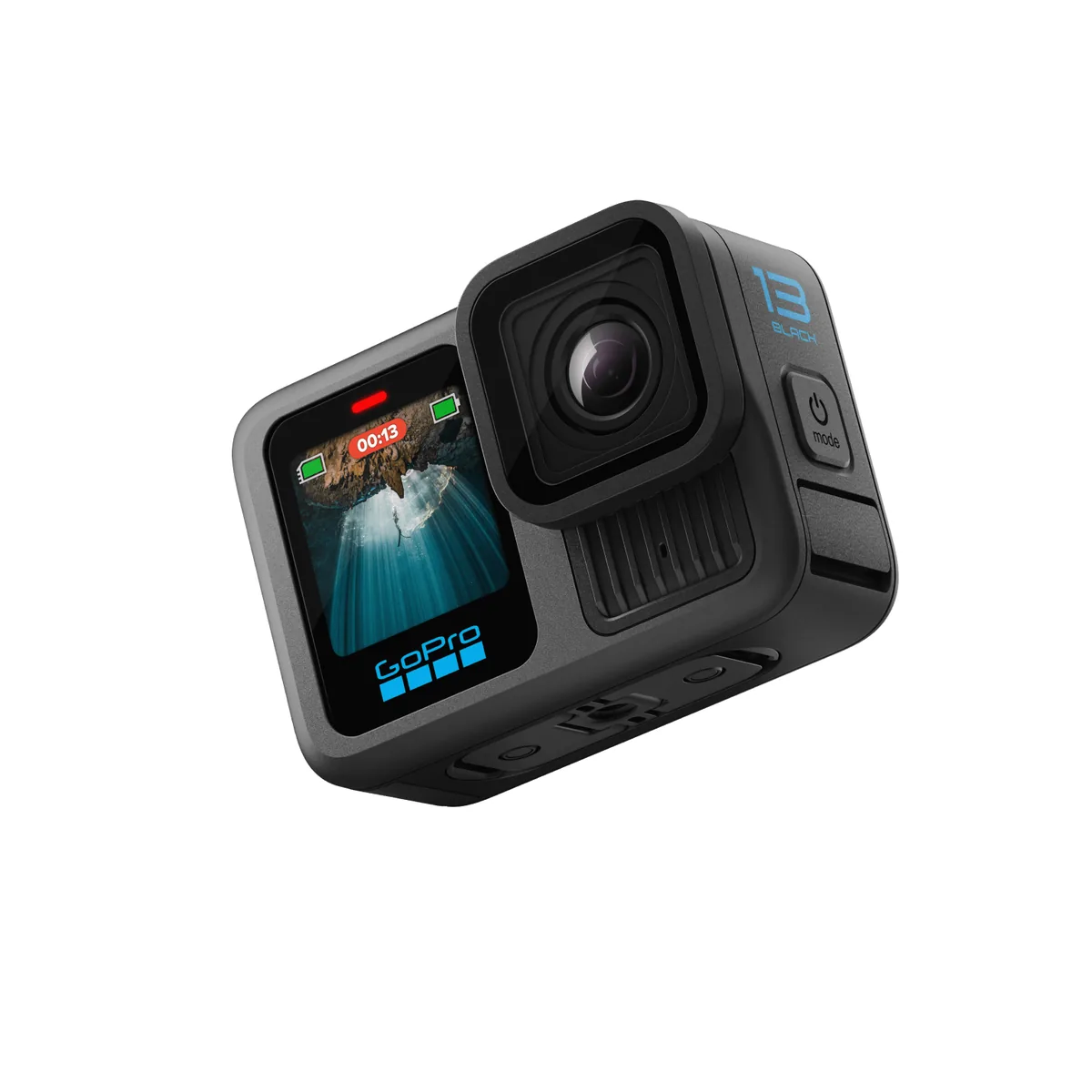
GoPro HERO13 Black
Four generations of the same 1/1.9-inch sensor have gone into this body, and GoPro spent the thirteenth on everything around it instead: a magnetic latch that replaces the fold-out fingers, a 1900 mAh Enduro cell, and the HB-series lens mods the camera recognises and reconfigures itself for. That is the honest shape of the Hero 13. Image quality sits roughly where the Hero 12 left it, the sensor is small next to what DJI and Insta360 now ship, and the stabilisation is still the best in the category by a margin nobody has closed. In a group test that ran four cameras to shutdown side by side, this was the only one that hit its published runtime. The mount ecosystem is the other argument: a decade of GoPro-fingered clamps, chest harnesses, helmet mounts and third-party rigs all still bolt straight on, which is why it stays the default on a motorcycle fairing or a ski helmet even when a rival's spec sheet reads better.
GoPro
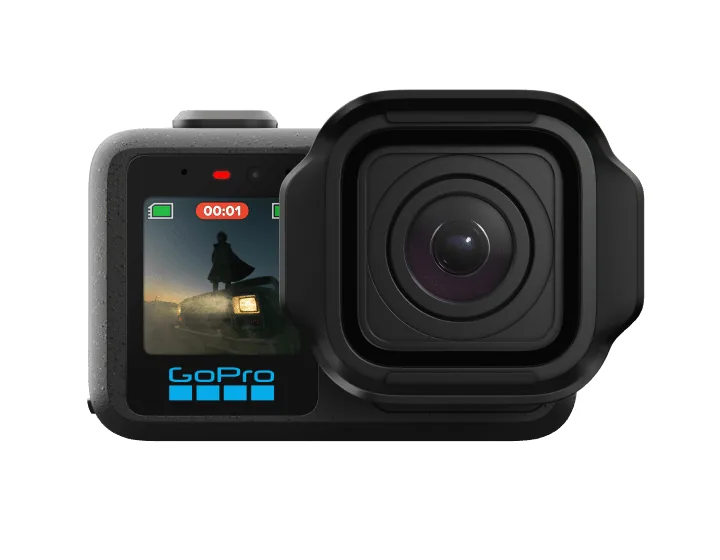
GoPro MISSION 1
GoPro calls the MISSION line cinema cameras, and the marketing is doing some work — this is a rugged, mountable, 20 m-waterproof body with GoPro fingers, a magnetic latch and HyperSmooth, which is an action camera by any reasonable definition. What has actually changed is the class of everything inside: a 1/1.3-inch sensor twice the area of the Hero 13's, a 240 Mbps ceiling, GP-Log2 with a supplied LUT, 4K at 240 fps and 1080p at 480, and a 2150 mAh cell rated for five hours at 1080p30. The cost is size and money: at 207 g and 80 mm long it is a different object on a helmet, and $599 is a different budget. If you have been hitting the ceiling of what a Hero can grade to, this is the answer; if you have not, it is a lot of camera to strap to a bike.