Insta360
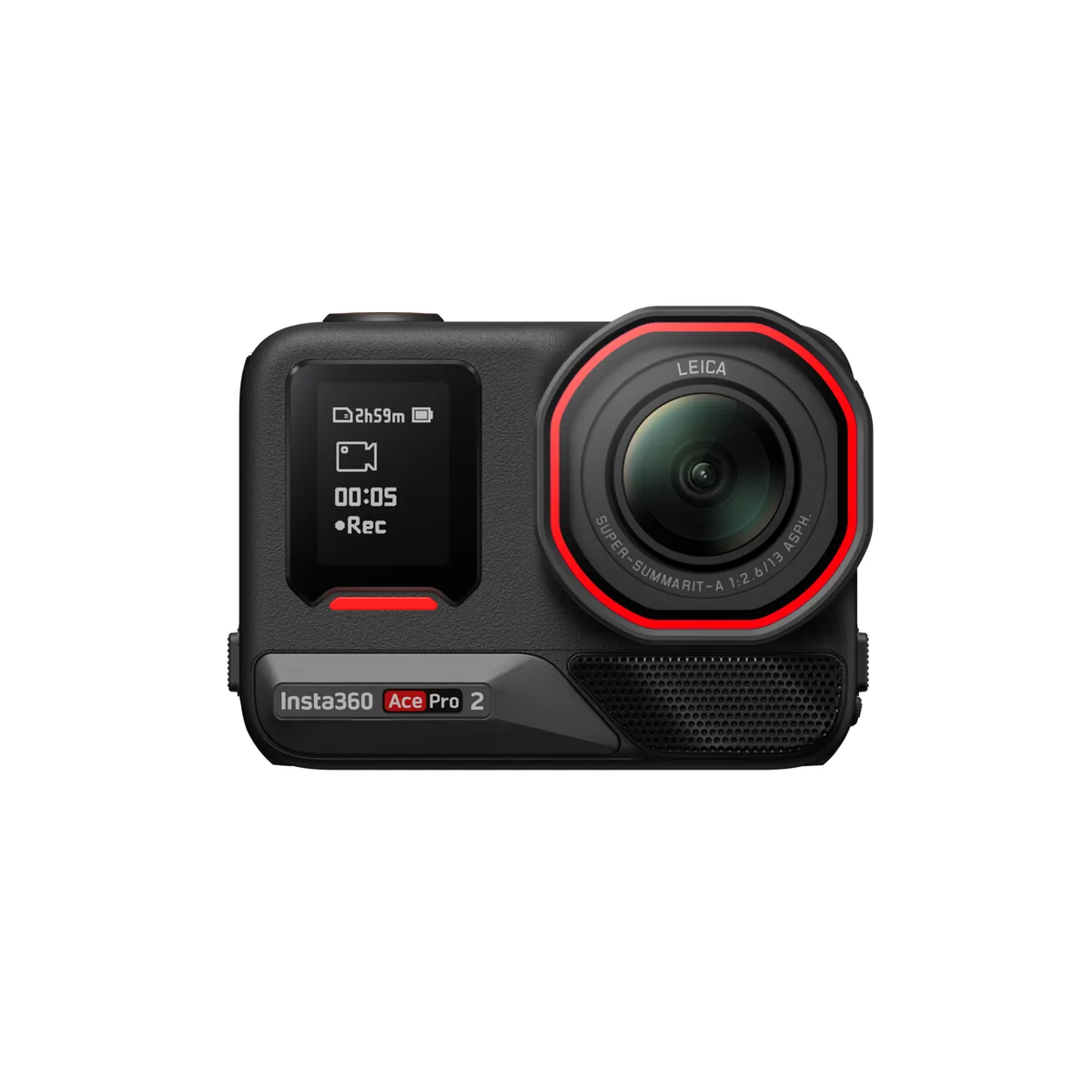
Insta360 Ace Pro 2
The flip-up screen is the feature that sells it. Every other action camera makes you guess at framing when the camera is facing you or mount a second screen; the Ace Pro 2's 2.5-inch rear panel hinges upward so it can be read from in front of the lens, which is why this is the vlogging pick in a category built around helmets. Behind that sits a Leica-co-engineered f/2.6 lens over a 1/1.3-inch sensor, 8K30, 4K120, a 180 Mbps ceiling and I-Log with a supplied LUT. Waterproofing is 12 m bare, and the dive case takes it to 60 m. The catch is endurance: in an independent four-camera drain test the Ace Pro 2 was first to die at 1 hour 44 minutes, thirty minutes behind the DJI and nearly an hour behind the GoPro, and its 180-minute headline number is quoted at 1080p24 with a power-saving mode enabled.
Sensor area against the rest of the catalogue
Derived from the standard optical-format table rather than copied off a spec sheet, because makers print a fraction that hides it. The table and the arithmetic.
Battery, with the small print
- Maker’s claim
- 3 h at 1080p24 with Endurance Mode on
- Third-party test
- 1 h 44 min — continuous recording to shutdown, four cameras run simultaneously at one matched resolution (resolution not published). Published by road.cc action camera group test.
Specifications
What the Insta360+ plan gates
~$23.88 a year, which is why the year-one figure on this page is ~$423 rather than ~$399.
- •Cloud storage from 200 GB up
- •Free camera replacement through Insta360 Care / FlexiCare
- •A free extra year of warranty
- •Priority shipping from the Insta360 store
Features
- ●2.5-inch flip-up rear touchscreen, readable from in front of the lens
- ●Leica SUMMARIT f/2.6 lens over a 1/1.3-inch sensor
- ●8K30 and 4K120
- ●180 Mbps ceiling with I-Log and a supplied LUT
- ●PureVideo low-light mode with AI noise reduction
- ●Waterproof to 12 m bare, 60 m in the dive case
- ●Built-in wind guard for the microphones
Strengths
- +Only flagship here with a screen that flips to face the lens — vlogging stops being guesswork
- +8K30 at 180 Mbps out of a 1/1.3-inch sensor, a resolution GoPro's Hero line does not reach
- +12 m of bare waterproofing sits between GoPro's 10 and DJI's 20
- +I-Log with a supplied LUT makes grading straightforward rather than a guessing game
- +50 MP stills are the highest of any non-360 camera here
Drawbacks
- −Worst battery life of the flagships — first to die in a same-conditions four-camera test, by half an hour
- −Insta360 does not publish a colour bit depth for this camera, unlike the X6
- −182 g and 38 mm deep, the chunkiest of the flagship action cameras
- −The hinged screen is another moving part in a category that punishes them
- −No GPS
What owners say
Summarised from owner discussions and published long-term reviews.
One feature sells this camera and owners are direct about it: the screen flips up so you can see yourself while the lens is pointing at you. In a category built around helmet mounts that sounds minor, and in practice it is the difference between vlogging with this camera and vlogging with a phone. Around it sits a Leica-co-engineered f/2.6 lens over a 1/1.3-inch sensor, 8K30, and the low-light performance owners rate most highly in the flagship class.
The complaints are not about the picture. Endurance is first — in a test where four cameras ran simultaneously until they stopped, this was the first to go, and owners report the same pattern out in the field. The absence of 10-bit is the second, raised by reviewers comparing it directly against a Hero 13, and Insta360 does not publish a colour bit depth for this camera at all, which does not help.
The third is the purchase itself. There is a persistent run of complaints about ordering direct, about returns, and about which sellers Insta360 recognises as authorised. Buying from a retailer you already trust is the advice owners give each other most often.
What owners like
- +The flip-up screen is the reason most owners bought it — vlogging to camera stops being guesswork, and nothing else in the flagship class has one
- +Low-light footage draws consistent praise, including from owners who tested it side by side with a GoPro Hero 13 at night and in woodland
- +8K30 out of a 1/1.3-inch sensor at 180 Mbps gives real cropping room in the edit
- +I-Log with a supplied LUT makes grading straightforward rather than a guessing game
- +Twelve metres of bare waterproofing sits usefully between GoPro's ten and DJI's twenty
Common complaints
- −Battery life is the standing complaint: in a four-camera test run to shutdown it died first, half an hour before the DJI and nearly an hour before the GoPro
- −Owners and reviewers both note the absence of 10-bit colour, and Insta360 publishes no bit depth for this camera at all
- −Buying direct or through Amazon has generated a long run of complaints about fulfilment, returns and authorised-dealer status
- −The Insta360 app draws repeated criticism, including for in-app advertising
- −At 182 g and 38 mm deep it is the chunkiest of the flagship action cameras
Questions owners keep asking
How is the battery life in practice?
Is the Ace Pro 2 10-bit?
Is the flip screen worth it?
Where should I buy it?
How deep can it go without the dive case?
Insta360 Ace Pro 2, head to head
Cameras people look at alongside it
More from Insta360 →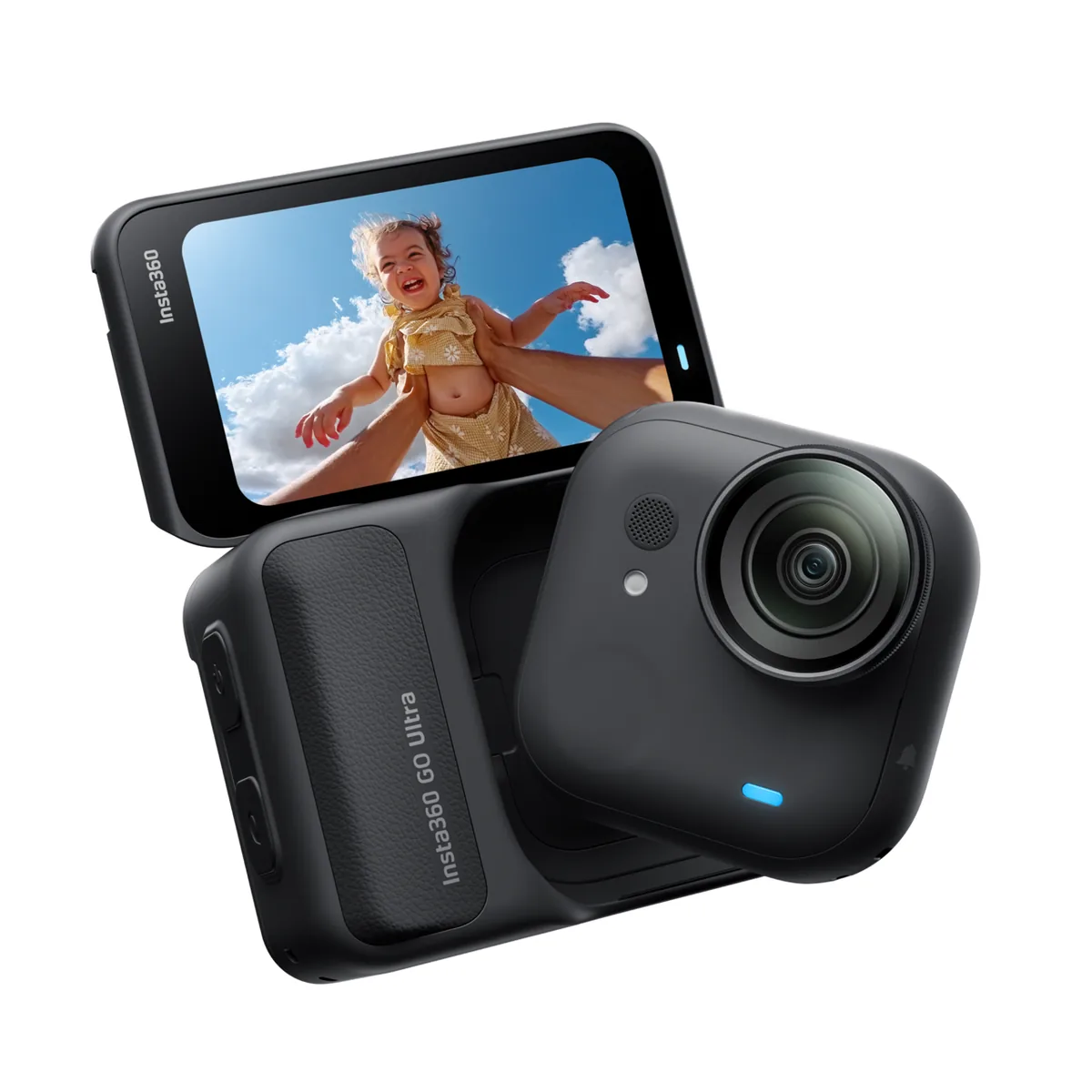
Insta360
Insta360 GO Ultra
Insta360 put a 1/1.28-inch sensor — the same size as the X5's lenses use — into a 53 g magnetic puck, and then charged more for it than a GoPro Hero 13. That pricing is the single most argued-about thing about this camera, and it is fair: at $449 it is the most expensive non-360 camera in this catalogue, above two flagships that out-spec it on resolution and waterproofing. What it buys is a camera you genuinely forget you are wearing, clipped magnetically under a shirt or on a cap, streaming a live preview to a flip-screen Action Pod you leave in a pocket. The module is waterproof to 10 m; the Action Pod with the screen is not, which limits the whole system around water more than the headline suggests.
Insta360
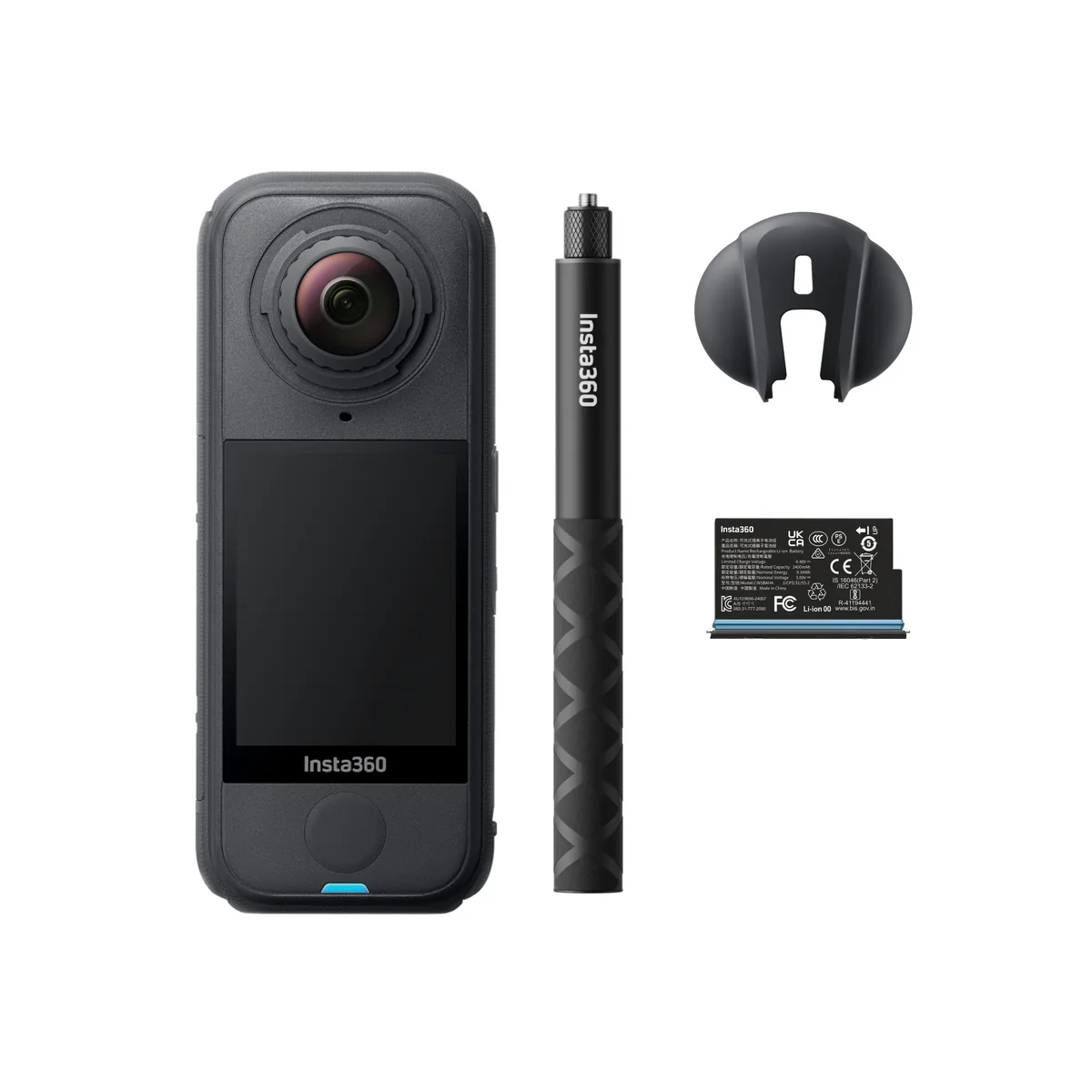
Insta360 X4 Air
Lightest 8K 360 camera Insta360 has built, at 165 g — 35 g under the X5 and 31 g under the X6 — and that number is the whole pitch. On a helmet or the end of a selfie stick, thirty grams is the difference between a rig that stays put and one that wobbles. It keeps the things that matter most from the X5: replaceable lenses, 15 m of bare waterproofing, magnetic mounting. The sensors step down to 1/1.8-inch, roughly half the X5's area, and the frame-rate ceiling drops to 4K50 in single-lens mode against the X5's 4K120. Against the X4 it is the better camera in every way except peak bitrate, at a lower price, which makes the older model a hard recommend now.
Insta360
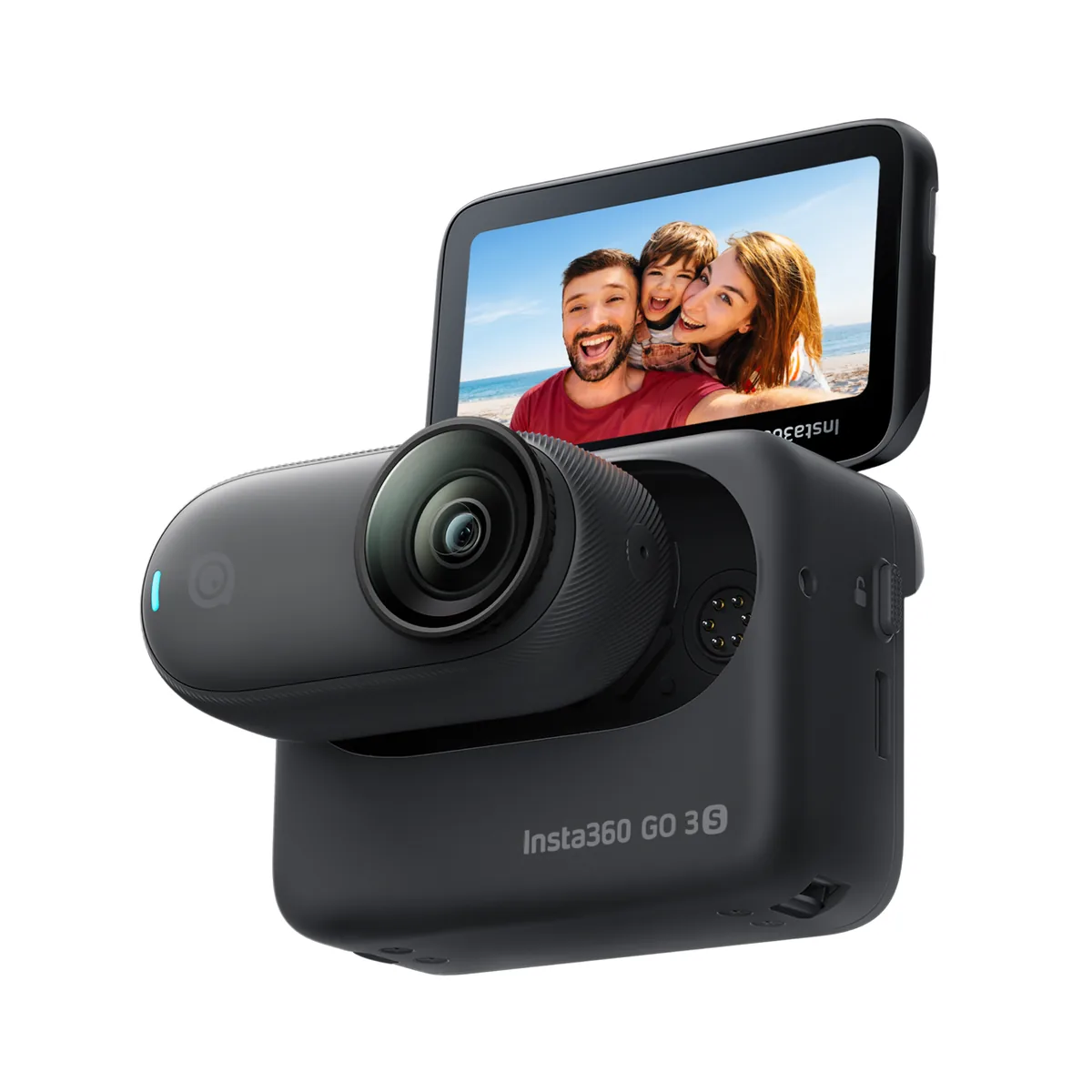
Insta360 GO 3S
Thirty-nine grams, which is lighter than most phone cases, and it is still the smallest camera here that shoots real 4K. The GO line's idea has always been that a camera small enough to clip to a cap brim or magnet under a t-shirt gets used in situations where a GoPro stays in a bag, and the 3S is the version where the image finally stopped being the compromise — 4K30 rather than the GO 3's 2.7K, and 10 m of waterproofing rather than 5. The 310 mAh cell in the module runs 38 minutes on its own; everything past that comes from the Action Pod, which carries the screen, the second battery and, importantly, only splash resistance. Now sitting below the GO Ultra in the line, it is the cheaper way into the same wearable idea.