Insta360
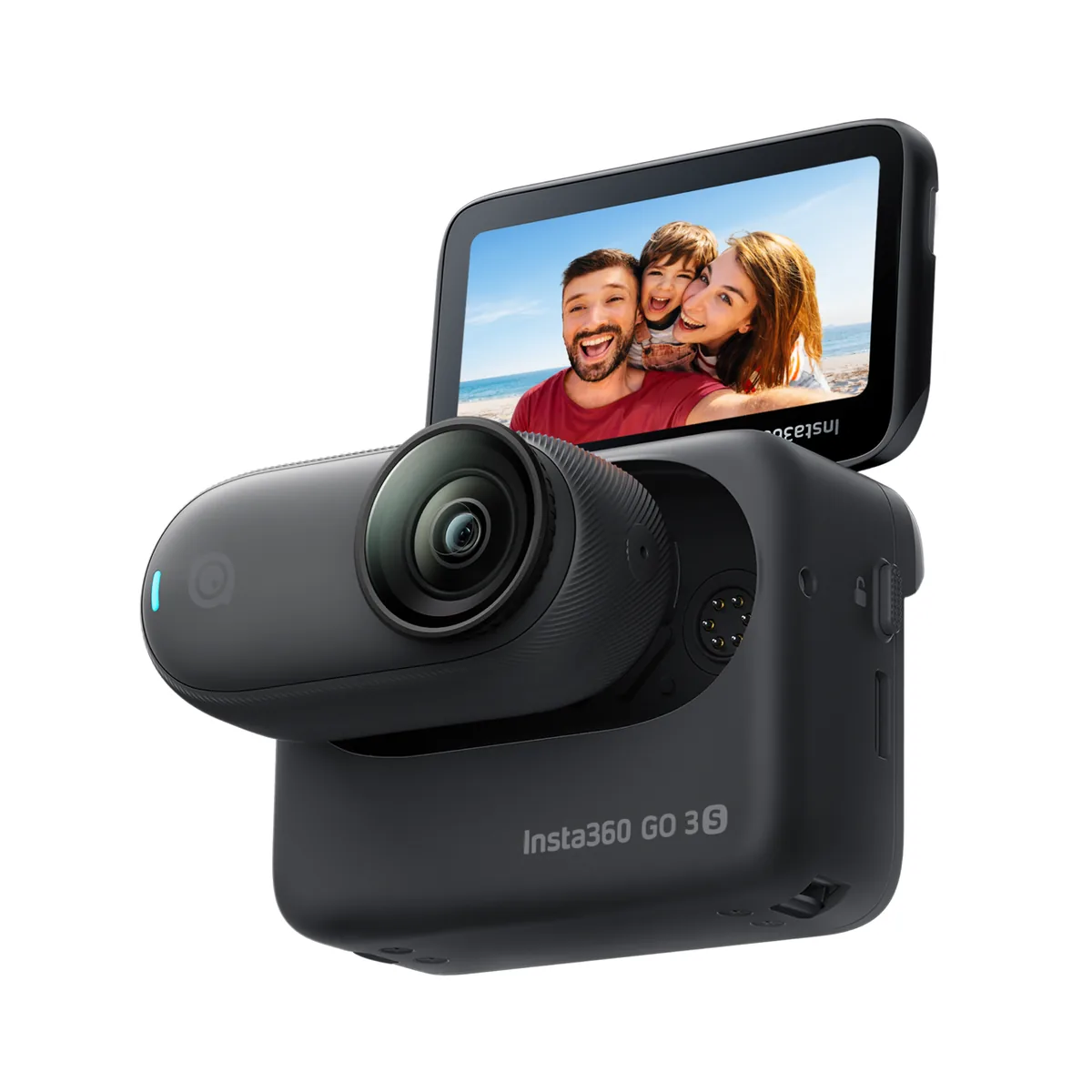
Insta360 GO 3S
Thirty-nine grams, which is lighter than most phone cases, and it is still the smallest camera here that shoots real 4K. The GO line's idea has always been that a camera small enough to clip to a cap brim or magnet under a t-shirt gets used in situations where a GoPro stays in a bag, and the 3S is the version where the image finally stopped being the compromise — 4K30 rather than the GO 3's 2.7K, and 10 m of waterproofing rather than 5. The 310 mAh cell in the module runs 38 minutes on its own; everything past that comes from the Action Pod, which carries the screen, the second battery and, importantly, only splash resistance. Now sitting below the GO Ultra in the line, it is the cheaper way into the same wearable idea.
Sensor area against the rest of the catalogue
Derived from the standard optical-format table rather than copied off a spec sheet, because makers print a fraction that hides it. The table and the arithmetic.
Battery, with the small print
- Maker’s claim
- 2 h 20 min at 1080p30 with the Action Pod attached
- Third-party test
- None collected. We publish a tested figure only where a named outlet has run one and stated its conditions.
Specifications
What the Insta360+ plan gates
~$23.88 a year, which is why the year-one figure on this page is ~$423 rather than ~$399.
- •Cloud storage from 200 GB up
- •Free camera replacement through Insta360 Care / FlexiCare
- •A free extra year of warranty
- •Priority shipping from the Insta360 store
Features
- ●39 g camera module, the lightest 4K camera here
- ●4K30 and 1080p200 slow motion
- ●Waterproof to 10 m without the Action Pod
- ●Action Pod with a 2.2-inch flip screen and a 1270 mAh battery
- ●Magnetic pendant worn under clothing
- ●32, 64 or 128 GB of internal storage — no card needed
Strengths
- +At 39 g it clips to a cap brim or a collar and genuinely disappears
- +Internal storage means there is no card to lose or outrun
- +10 m waterproof for the module, double the GO 3's
- +FlowState with full 360° horizon lock on a camera this size
Drawbacks
- −38 minutes from the module alone — the 140-minute figure needs the Action Pod
- −4K caps at 30 fps
- −The Action Pod is splash-resistant only, so the screen stays out of the water
- −1/2.3-inch sensor, a quarter of the GO Ultra's area
- −Magnetic pendant mounting needs the safety cord at any real speed
What owners say
Summarised from owner discussions and published long-term reviews.
Thirty-nine grams, real 4K, and a magnet. Owners use this camera for the things a GoPro never gets strapped to — a dog's harness, a cap brim, a shirt collar — and the reports are consistently positive about exactly that. The GO 3S was the generation where the image stopped being the compromise, moving to 4K30 and doubling the water rating to ten metres.
Two things temper it. Owners upgrading from the GO 3 report that horizon lock and rotation handling were pared back, which is an unusual direction and generates its own threads. And the split-body design means the module alone runs 38 minutes; everything past that comes from the Action Pod, which carries the screen and the second battery and is only splash-resistant.
The most quoted assessment in the discussion is from an owner who calls the GO line a toy rather than a tool. That is fair as a description of where it fits: as a second or third angle it is delightful, and as anyone's main camera it is not what the people who own one recommend.
What owners like
- +At 39 g it clips to a cap brim or a collar and disappears, which is the entire reason owners buy it and the thing they are happiest with
- +Internal storage means there is no card to lose, fill or outrun
- +Ten metres of waterproofing for the module, double the GO 3's
- +Now positioned below the GO Ultra, it is the cheaper way into the same wearable idea
Common complaints
- −Owners report that horizon lock and rotation handling were reduced compared with the GO 3, and there are threads specifically about FlowState behaving differently
- −Thirty-eight minutes from the module alone — the 140-minute figure needs the Action Pod attached
- −The Action Pod is splash-resistant only, so the screen stays out of the water
- −One widely-read owner review calls the whole GO line a toy rather than a tool, and the thread largely agrees for professional use
- −A quarter of the GO Ultra's sensor area, which shows indoors and at dusk
Questions owners keep asking
How long does the camera run without the Action Pod?
Did the GO 3S lose horizon lock compared with the GO 3?
Can I take the whole thing swimming?
GO 3S or GO Ultra?
Insta360 GO 3S, head to head
Cameras people look at alongside it
More from Insta360 →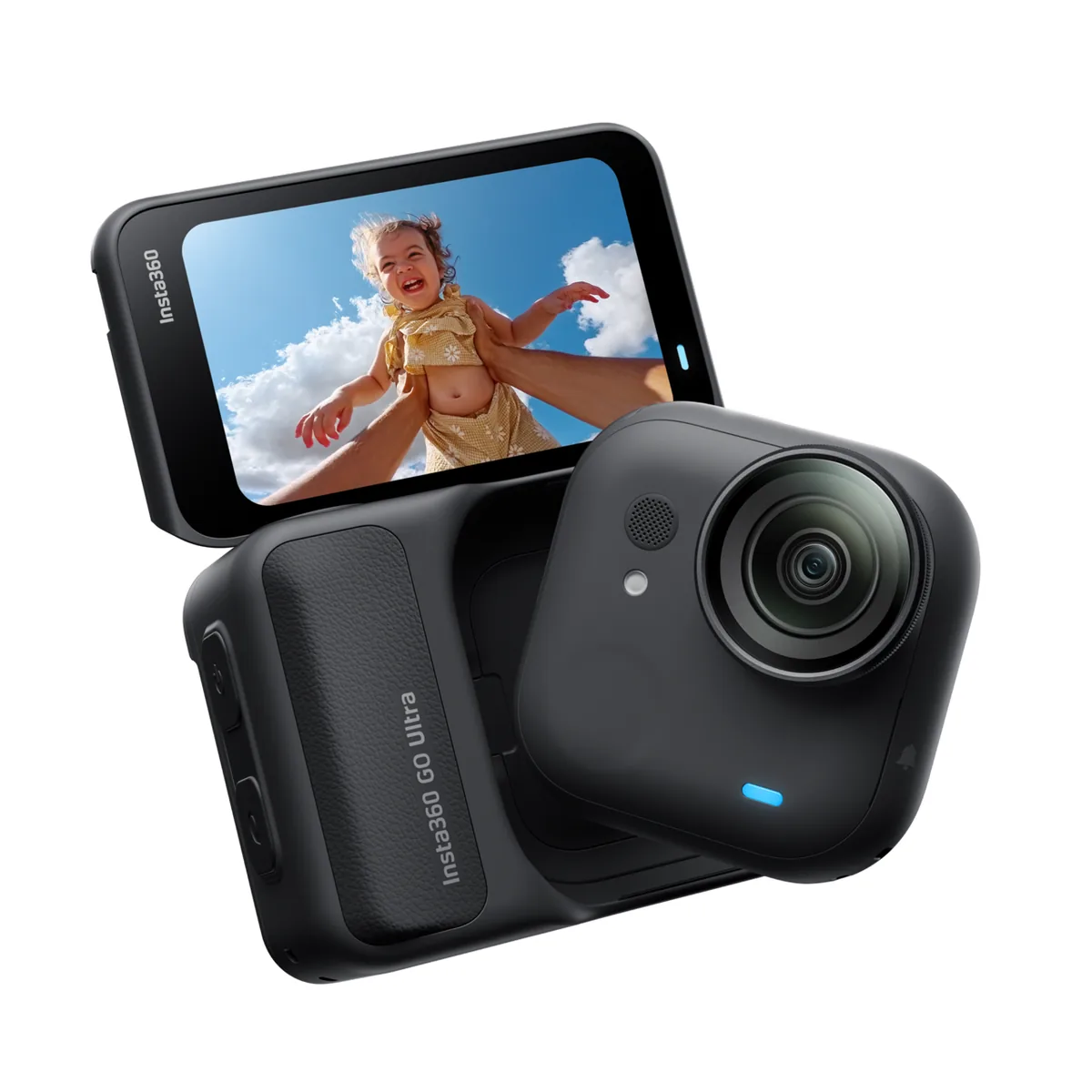
Insta360
Insta360 GO Ultra
Insta360 put a 1/1.28-inch sensor — the same size as the X5's lenses use — into a 53 g magnetic puck, and then charged more for it than a GoPro Hero 13. That pricing is the single most argued-about thing about this camera, and it is fair: at $449 it is the most expensive non-360 camera in this catalogue, above two flagships that out-spec it on resolution and waterproofing. What it buys is a camera you genuinely forget you are wearing, clipped magnetically under a shirt or on a cap, streaming a live preview to a flip-screen Action Pod you leave in a pocket. The module is waterproof to 10 m; the Action Pod with the screen is not, which limits the whole system around water more than the headline suggests.
Insta360
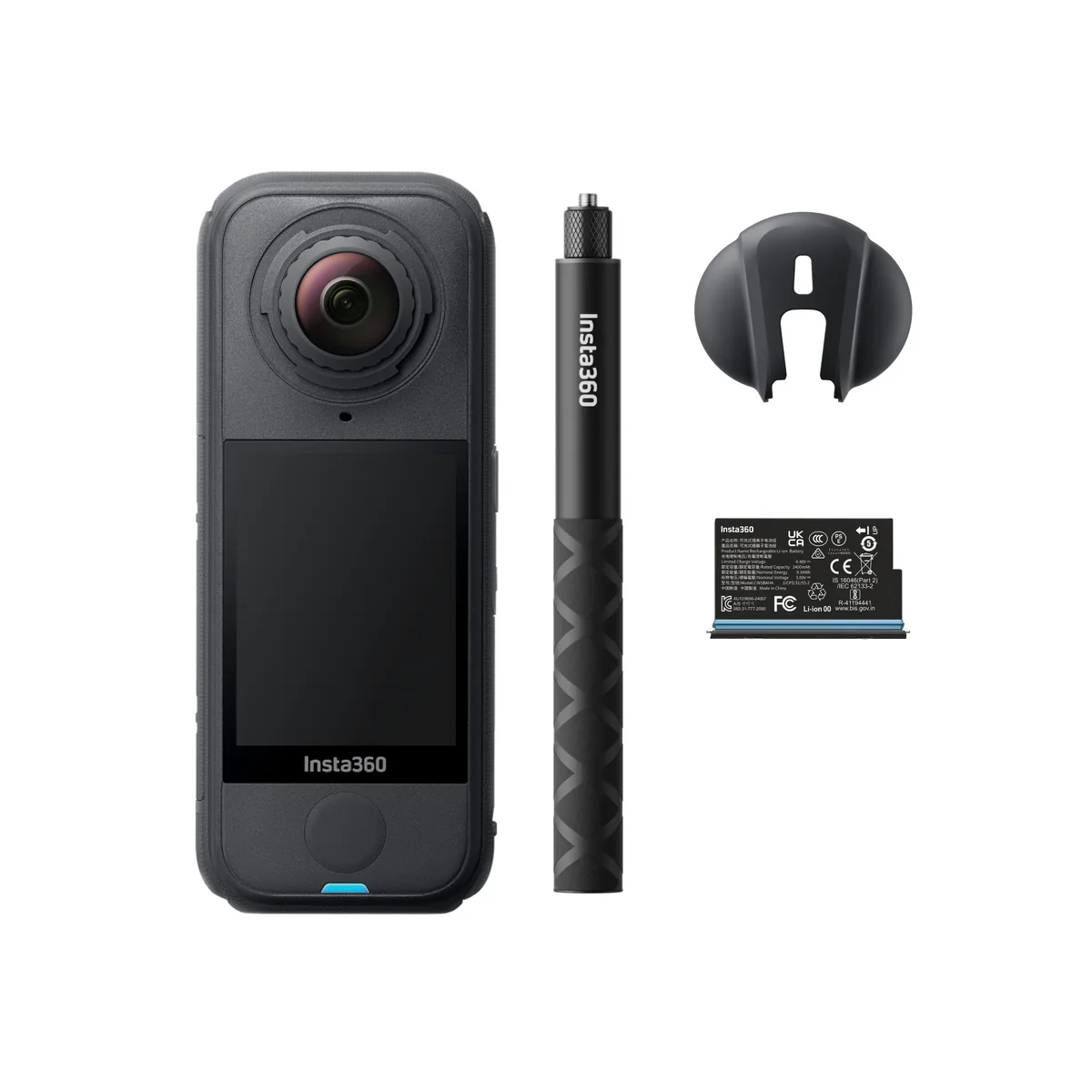
Insta360 X4 Air
Lightest 8K 360 camera Insta360 has built, at 165 g — 35 g under the X5 and 31 g under the X6 — and that number is the whole pitch. On a helmet or the end of a selfie stick, thirty grams is the difference between a rig that stays put and one that wobbles. It keeps the things that matter most from the X5: replaceable lenses, 15 m of bare waterproofing, magnetic mounting. The sensors step down to 1/1.8-inch, roughly half the X5's area, and the frame-rate ceiling drops to 4K50 in single-lens mode against the X5's 4K120. Against the X4 it is the better camera in every way except peak bitrate, at a lower price, which makes the older model a hard recommend now.
Insta360
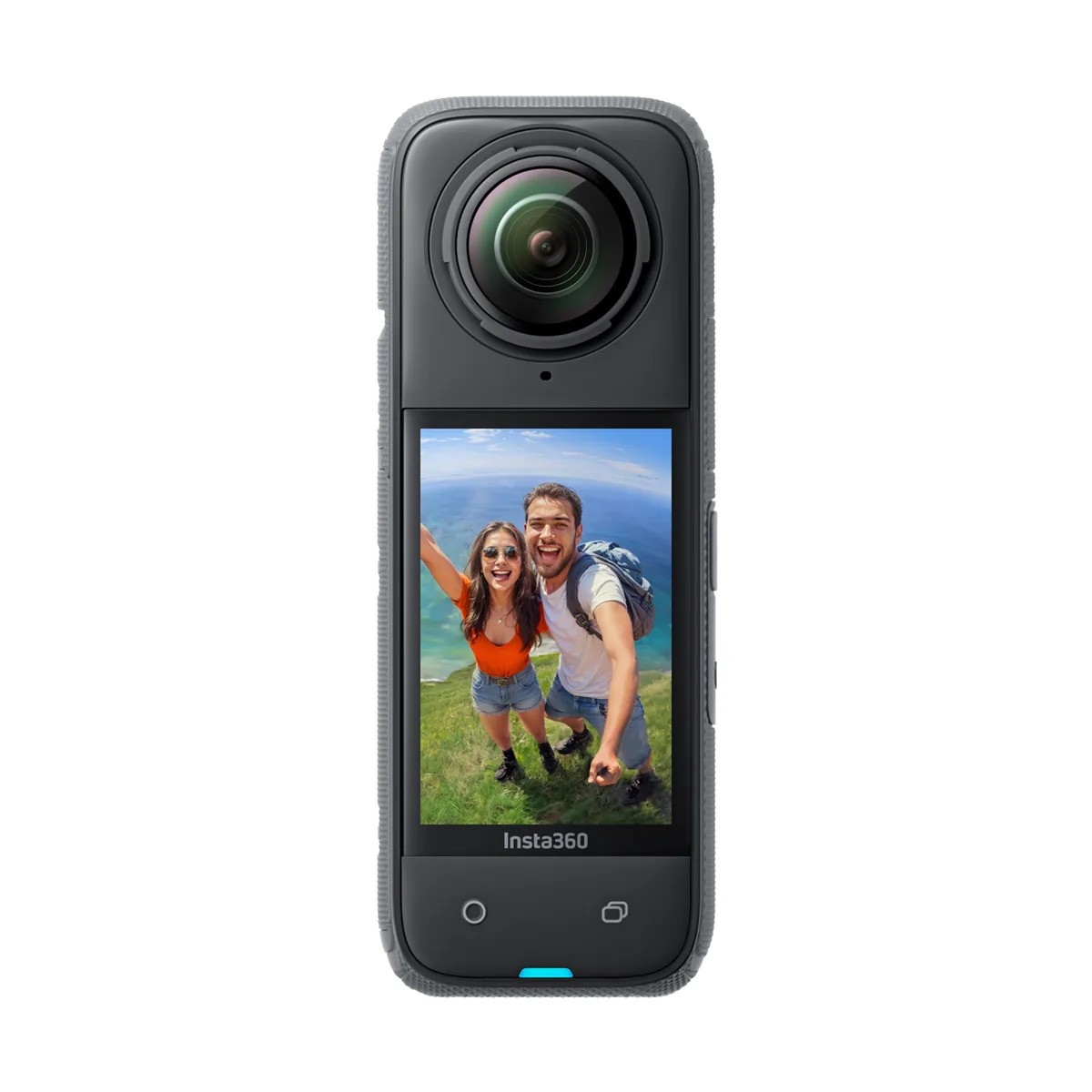
Insta360 X4
First of the X-series to shoot 8K, and the model that made spherical capture mainstream on bike handlebars and ski poles. The 200 Mbps ceiling is actually the highest of any X-series camera except the X6 — Insta360 spent the bitrate on holding detail through the stitch. What the X4 does not have is the thing the X5 introduced: its lenses are fixed, and a scratched fisheye is a service job. The sensors are 1/2-inch, less than half the X5's area, which is exactly where the two cameras separate once the light drops. Bought as a daylight camera at its current price, it is a lot of resolution for the money; bought expecting the X5's night performance, it will disappoint.