360 cameras
Two fisheye lenses, back to back, recording the whole sphere so you choose the angle afterwards. The pitch is real and so is the cost: every clip needs a reframing pass before it is watchable, and the reframed result is far lower resolution than the headline implies, because the marketing number is spread across a full circle rather than across your frame. The specifications that separate these cameras are per-lens sensor area, bare waterproof depth, whether the front glass is a replaceable part, and how fast the camera can run its top resolution — because everything except one model stops at 30 frames a second at 8K, which rules out slow motion.
We track 13 360 cameras from 6 brands, priced ~$199 to ~$1,049. The largest sensor of them is in the Ricoh THETA Z1 51GB at 116 mm², and the least expensive is the AKASO 360 at ~$199.
Ricoh
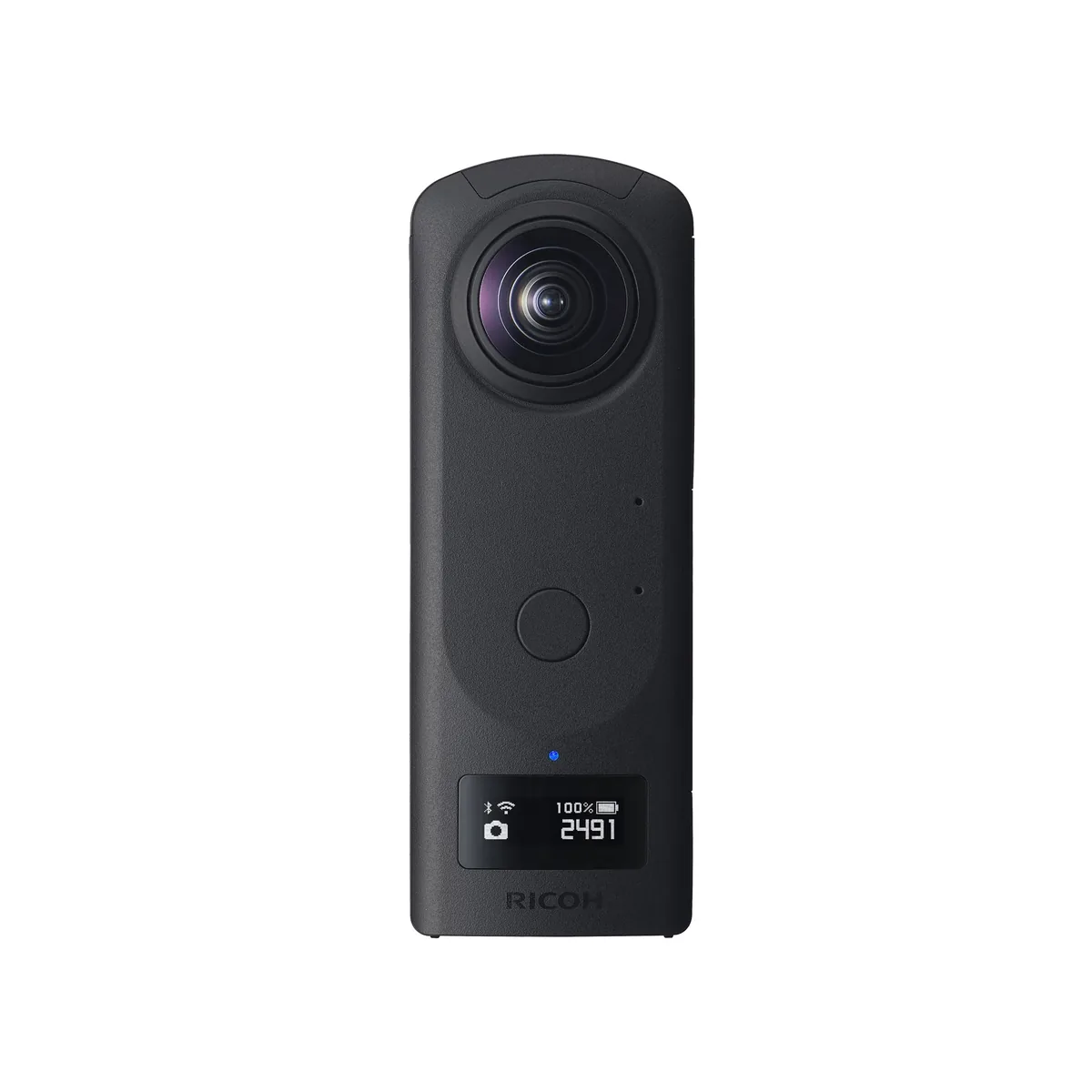
Ricoh THETA Z1 51GB
Dual one-inch sensors and a selectable aperture — f/2.1, f/3.5 or f/5.6 — are things no other 360 camera here has, and they are the reason this 2021 camera still sells for a thousand dollars. It is a stills instrument: 23 MP spherical RAW files out of sensors more than twice the area per lens of an Insta360 X6's, which is what professional virtual-tour shooters buy it for, and the selectable aperture is how they control depth of field and diffraction in an interior. Everything else about it is dated and deliberately so. Video caps at 4K30, storage is 51 GB fixed with no card slot, there is no screen beyond a small status OLED, and there is no waterproofing. As an action camera it makes no sense; as the highest-image-quality one-shot 360 stills camera on sale, it is still unmatched.
DJI
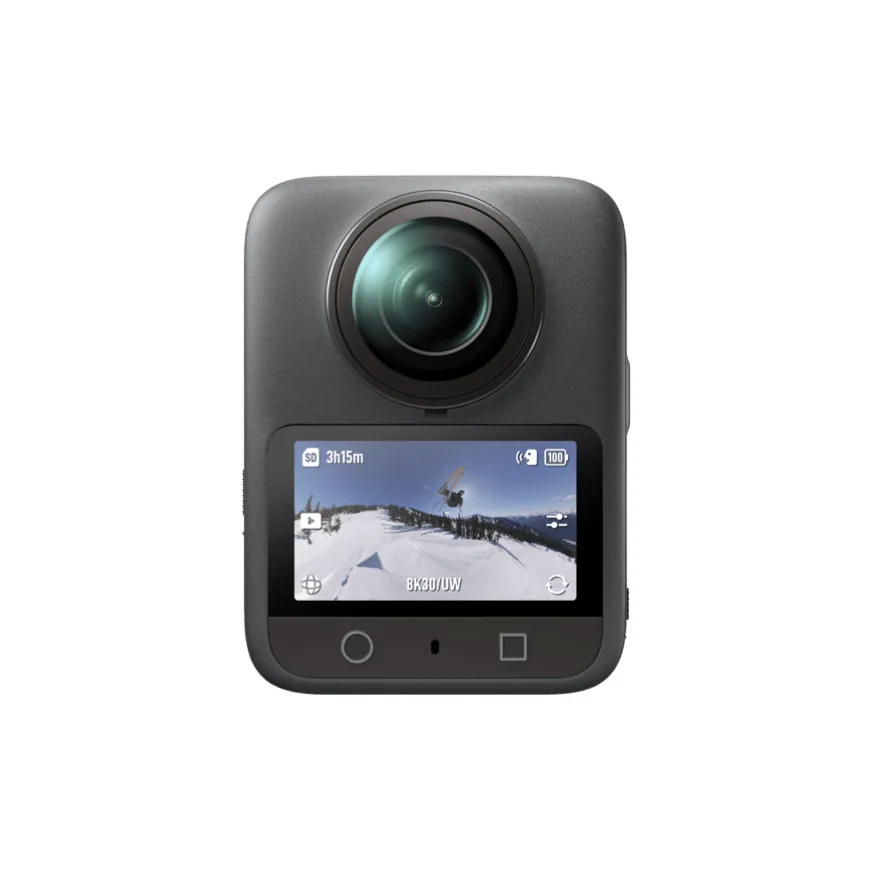
DJI Osmo 360
DJI's first 360 camera arrived with the two square 1:1 sensors from the Action 6 programme, which is the most interesting thing about it: a square sensor wastes less of the lens's circular image than a 4:3 one, so more of the light the fisheye collects ends up in the sphere. The result is 8K at 50 fps — the only 360 camera here that gets past 30 at 8K — 170 Mbps, 10-bit across every format, D-Log M, 120 MP panoramas, and a single-lens mode that runs 4K120 with a 155° field of view. It is also the only 360 camera in the catalogue with more than 100 GB of internal storage, which removes the write-speed argument that sinks so many 360 shoots. Against the Insta360 X6 it gives away half the bare waterproof depth, and DJI's reframing app is younger than Insta360's.
Insta360
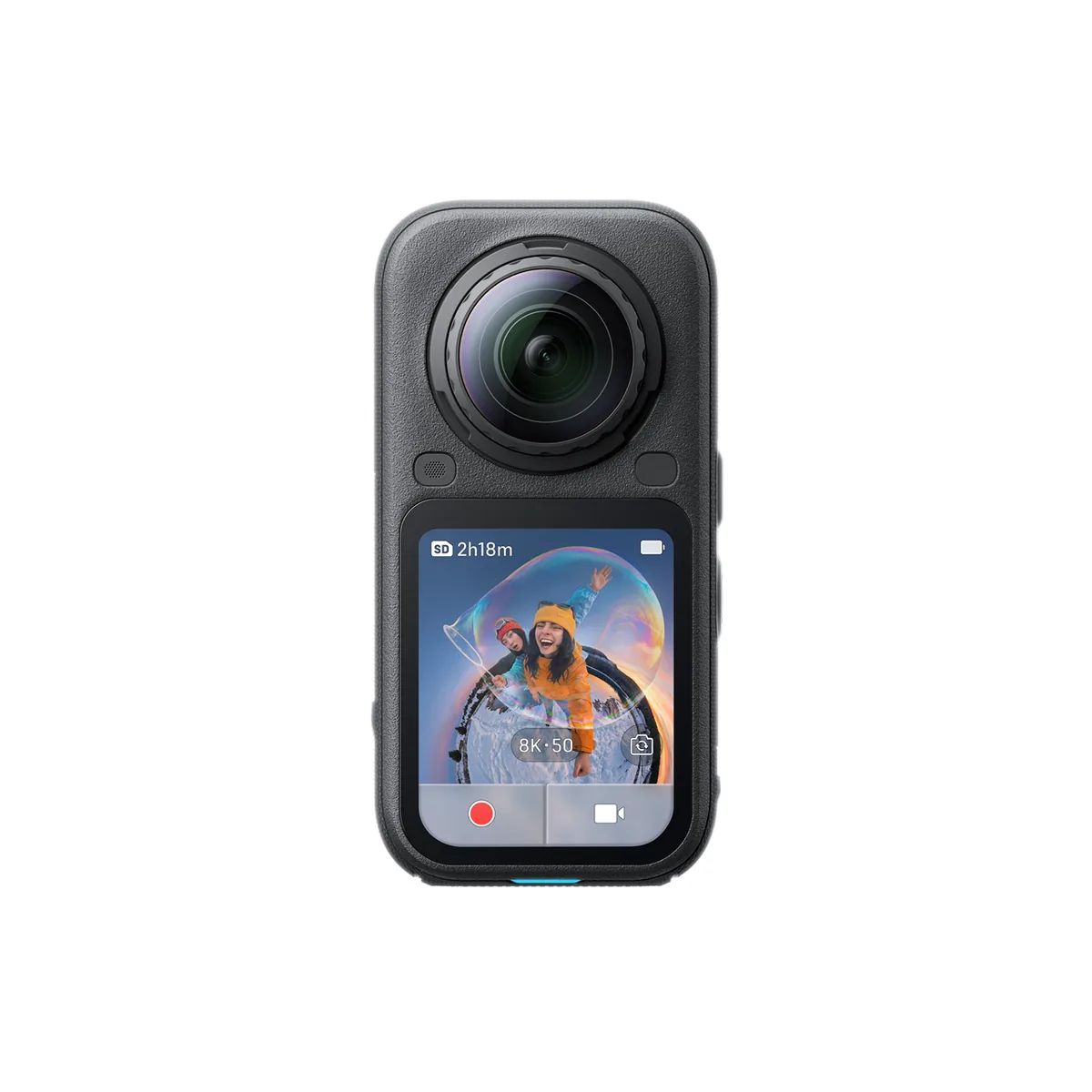
Insta360 X6
Two things separate this from every other 360 camera on sale. It shoots 8K at 50 fps rather than 30, which is what makes reframed slow motion possible instead of theoretical; and it is the only one that publishes a colour bit depth at all — 10-bit, with I-Log and in-camera Dolby Vision. The 2600 mAh Xtreme battery is rated at 140 minutes of 8K30, more than double what the GoPro MAX2 claims, and 20 m of bare waterproofing is four times MAX2's. A note on the sensors: Insta360 markets these as one-inch, and the spec sheet says 1/1.1-inch, which on the standard optical-format table works out around 92 mm² per lens rather than a true one-inch's 116. That is still the largest per-lens area in the 360 class, and it is why the low-light gap to the X5 is as visible as it is.
Insta360
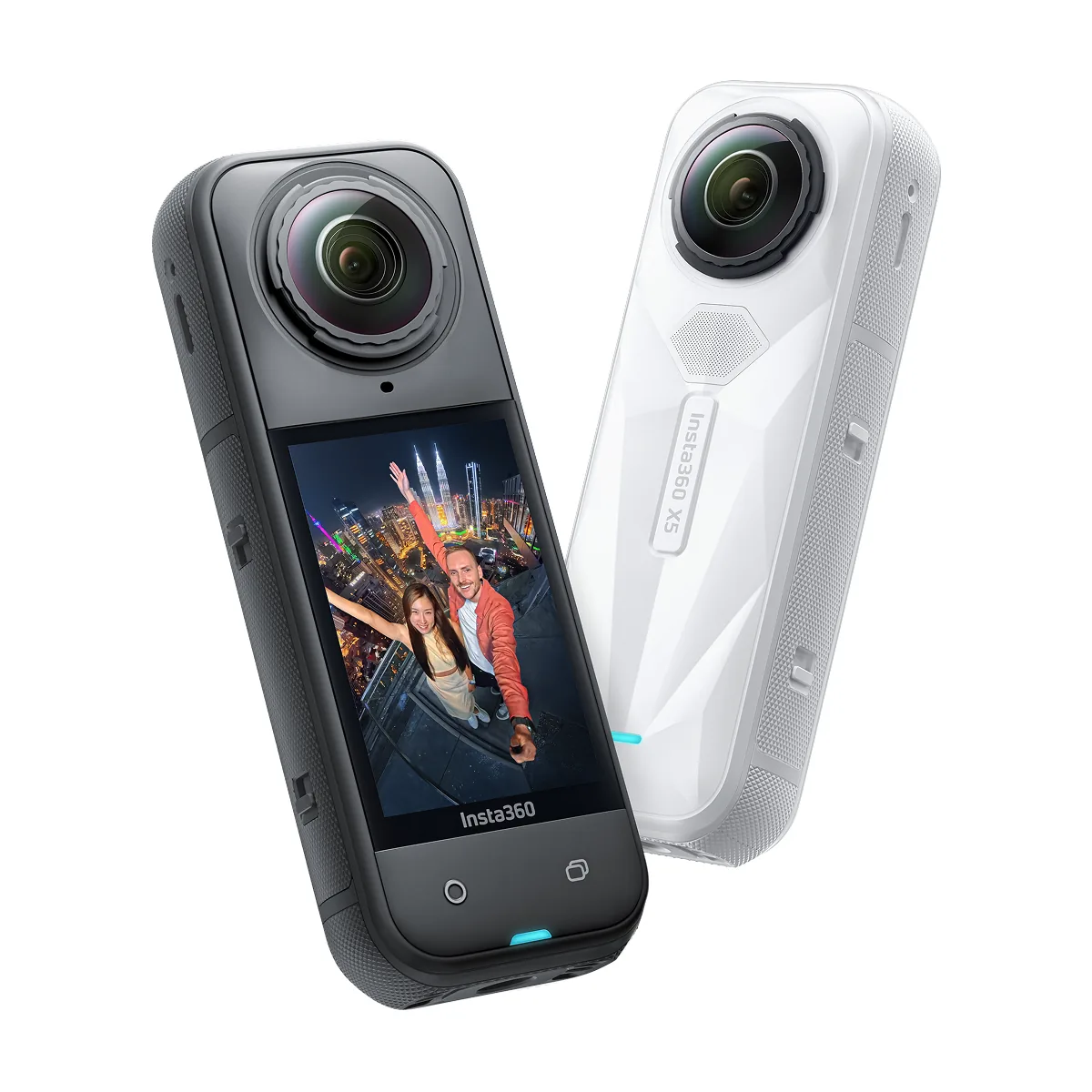
Insta360 X5
Replaceable lenses arrived here first, and they changed the economics of owning a 360 camera. The fisheye glass on any spherical camera sticks out past the body and gets scratched — it is the category's defining failure mode — and on the X5 a scratched lens is a twenty-minute swap with a part you can keep in a bag. Around that, dual 1/1.28-inch sensors with roughly 2.4× the area of the X4's drive 8K30 supersampled down from an 11K capture, and a triple-chip stack runs PureVideo for low light. Fifteen metres of bare waterproofing, 2400 mAh, 135 minutes at 5.7K30. Against the newer X6 it gives up 8K50, 10-bit and 5 m of depth; against everything else, it is still the 360 camera most people should buy.
Kandao
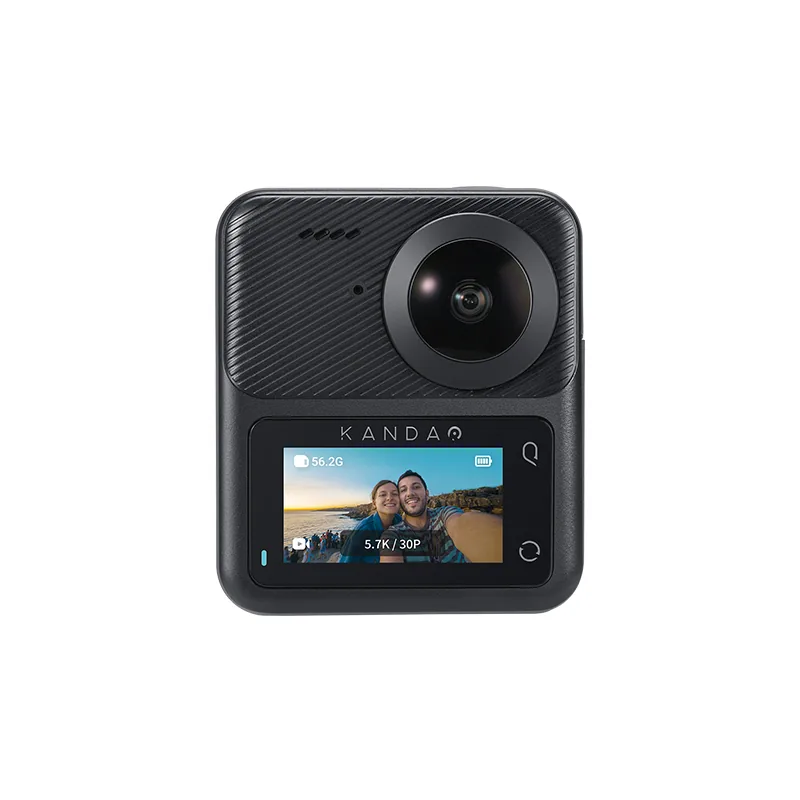
Kandao QooCam 3
An odd and rather appealing camera: dual 1/1.55-inch sensors — 65 % more area per lens than the Insta360 X3 it competes with on price — behind the same F/1.6 glass as the Ultra, wrapped in a squat body that looks nothing like an X-series stick. Video caps at 5.7K30, which reframes to roughly 1.3K of usable 16:9, so the resolution ceiling is real. Where it earns its keep is stills: 62 MP spherical photos out of fast lenses and decent-sized sensors make it a credible virtual-tour camera for a third of what a Ricoh Theta X costs. Fifty-eight minutes of recording and no internal storage are the practical limits, and the 1.9-inch screen is small enough to be fiddly.
Kandao
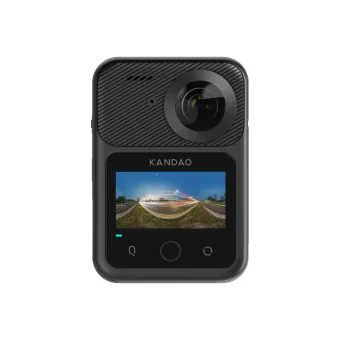
Kandao QooCam 3 Ultra
Kandao is the small manufacturer in this category and it competes the only way a small manufacturer can: by shipping specs the big three charge more for. F/1.6 lenses — the fastest glass in the catalogue — over dual 1/1.7-inch sensors, 10-bit HLG and a K-Log profile, 96 MP spherical stills, 150 Mbps, 128 GB of internal storage and built-in GPS, all under the price of an Insta360 X6. The costs are physical and logistical. At 336 g it is by a wide margin the heaviest camera here, nearly double an X6, and at 10 m bare it is the shallowest of the big-sensor 360 cameras. Fifty minutes of 8K 10-bit recording is short. And the software ecosystem around it — reframing, mobile editing, firmware cadence — is thinner than Insta360's, which is the part of the purchase a spec sheet cannot show you.
Insta360
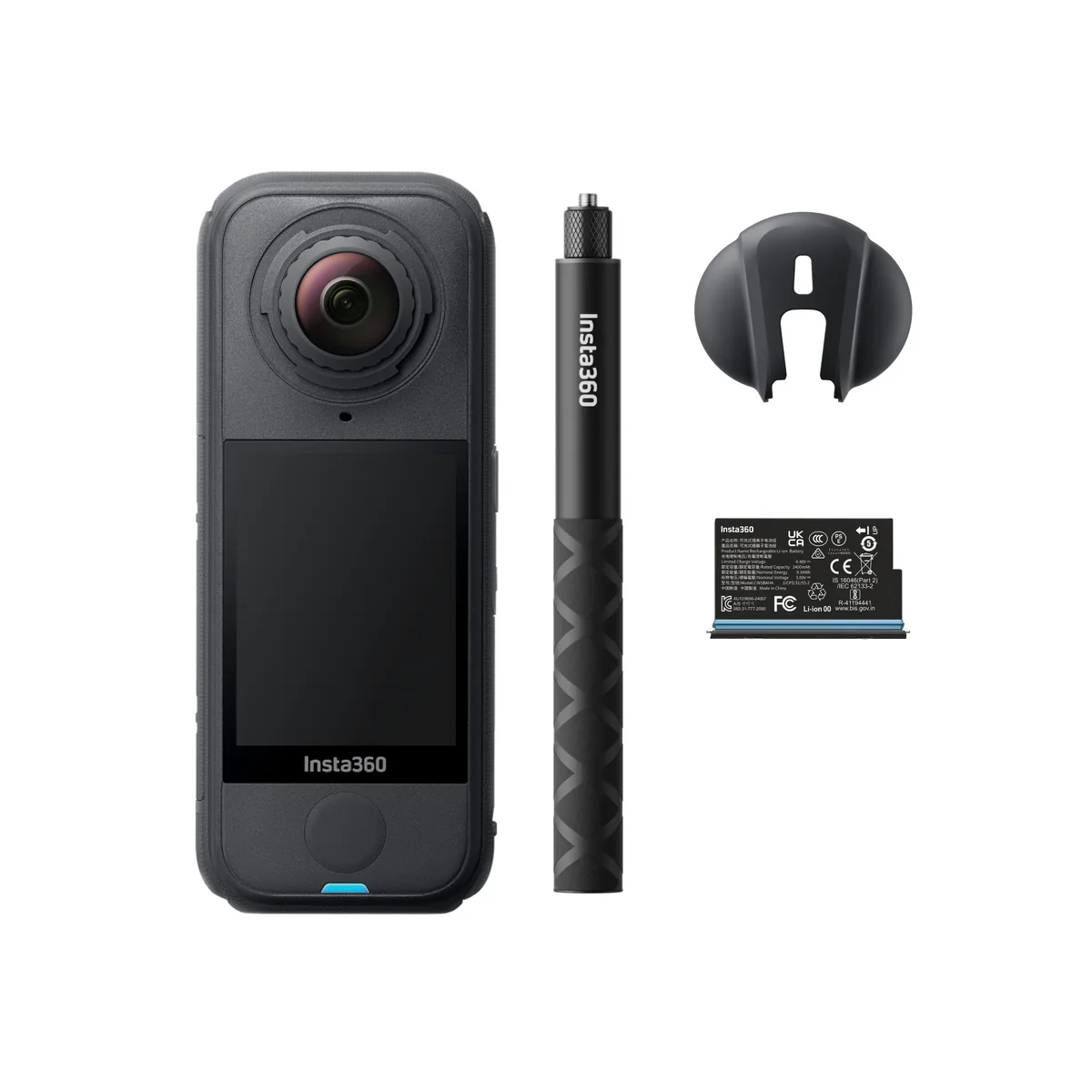
Insta360 X4 Air
Lightest 8K 360 camera Insta360 has built, at 165 g — 35 g under the X5 and 31 g under the X6 — and that number is the whole pitch. On a helmet or the end of a selfie stick, thirty grams is the difference between a rig that stays put and one that wobbles. It keeps the things that matter most from the X5: replaceable lenses, 15 m of bare waterproofing, magnetic mounting. The sensors step down to 1/1.8-inch, roughly half the X5's area, and the frame-rate ceiling drops to 4K50 in single-lens mode against the X5's 4K120. Against the X4 it is the better camera in every way except peak bitrate, at a lower price, which makes the older model a hard recommend now.
GoPro
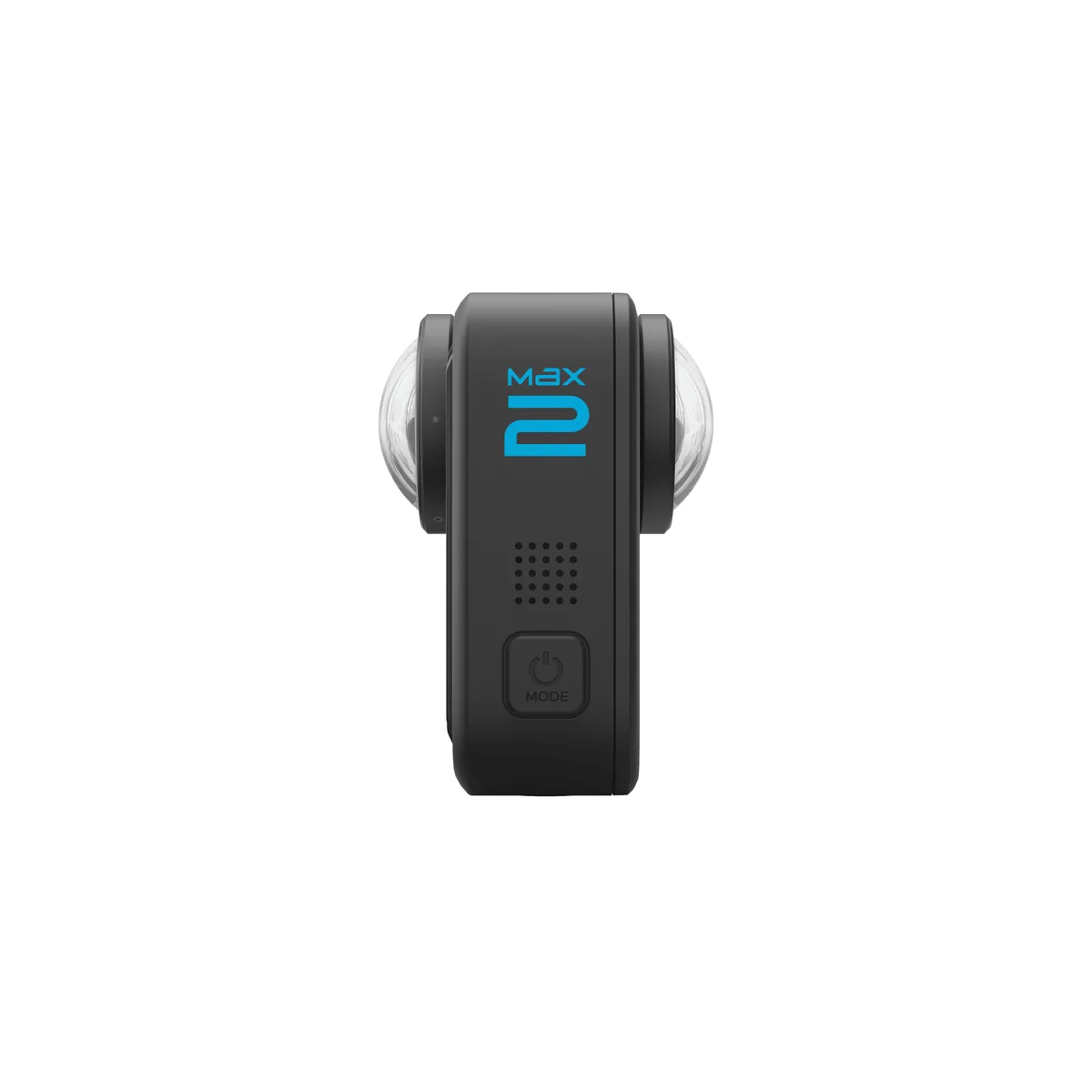
GoPro MAX2
Six years after the first MAX, GoPro finally shipped a successor, and the twist-off lens covers are the headline that matters. Every 360 camera lives or dies on scratched glass — the lenses bulge out past the body by design and there is no guarding them properly — and the MAX2 is the first one where replacing them is a field job rather than a service ticket. Around that sits true 8K spherical at 30 fps with 10-bit colour, a 300 Mbps ceiling that is the highest in the category, GP-Log for grading, and a six-microphone array. It is also the only 360 camera with built-in GPS. The two compromises are real: 5 m of bare waterproofing is the shallowest of any current 360 camera, and 66 minutes at 8K30 is less than half what the Insta360 X6 claims.
AKASO
AKASO 360
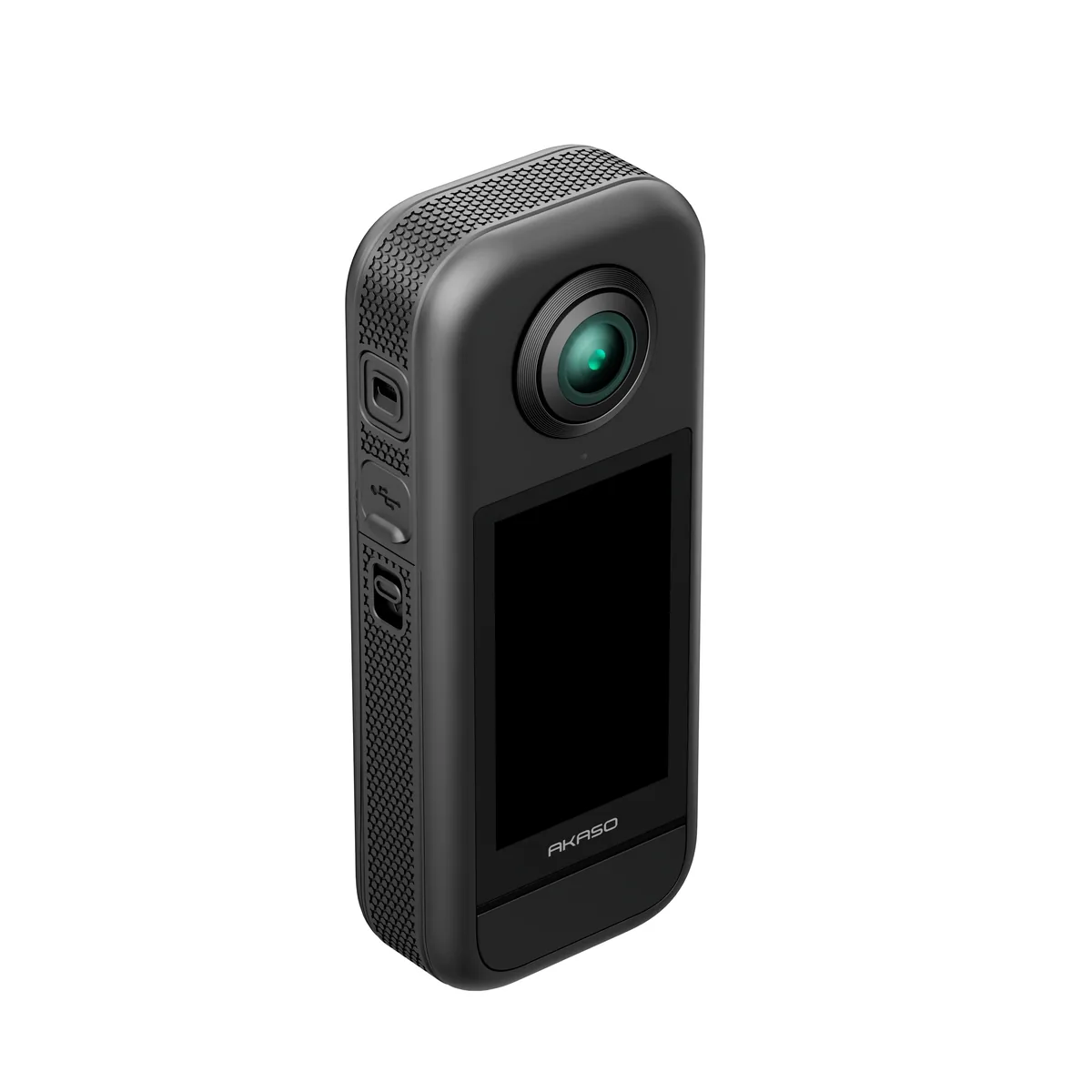
Two hundred dollars for a 360 camera with 5.7K spherical capture, 72 MP photos, invisible-selfie-stick reframing and full horizon lock — roughly a third of what an Insta360 X6 costs and a hundred under an X3. The specs it matches are the ones that are cheap to match; the one it does not is the one that matters most outdoors. This camera is weather-resistant, not waterproof, with no depth rating at all and no dive case offered, which rules out the water shooting that half of 360 buying is about. Sixty minutes of recording is short, the lenses are fixed and exposed, and the reframing app is early. As a very cheap way to find out whether you actually like shooting 360, it is defensible; as a camera to keep, less so.
Insta360
Insta360 X3
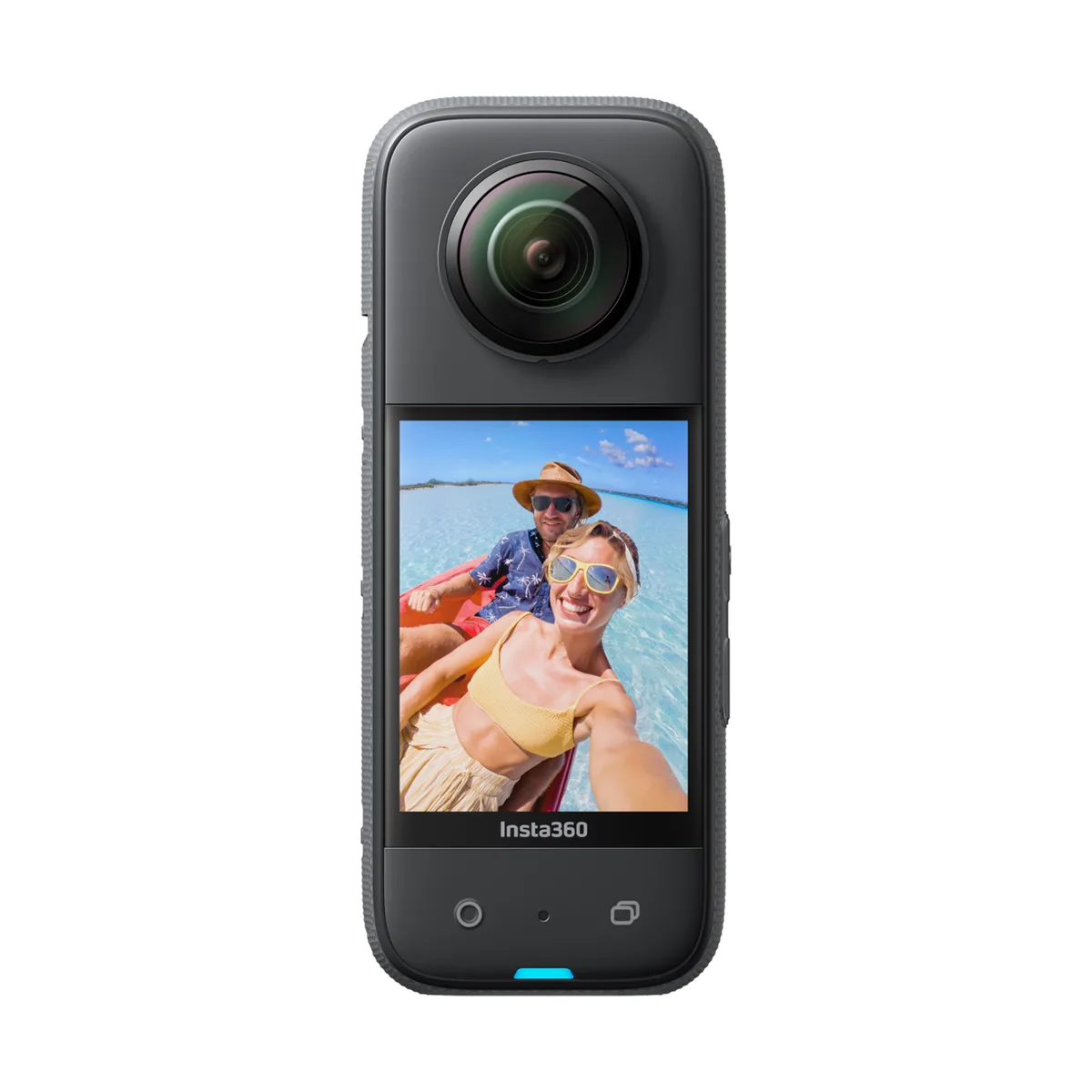
Four years old and still on sale, because the entry price into spherical capture has not really moved below it. 5.7K30 is the ceiling — this is the generation before the X-series went 8K — and reframed to a normal 16:9 shot that leaves roughly 1.3K of usable width at a typical field of view, which is the honest number the marketing never quotes. What it does well is exactly what it did in 2022: throw it on a selfie stick, shoot everything, decide where to point later, and let FlowState make the result watchable. The 2.29-inch screen was the first usable one on a 360 camera, and the invisible selfie stick trick still reads as magic to anyone who has not seen it.
Insta360
Insta360 X4
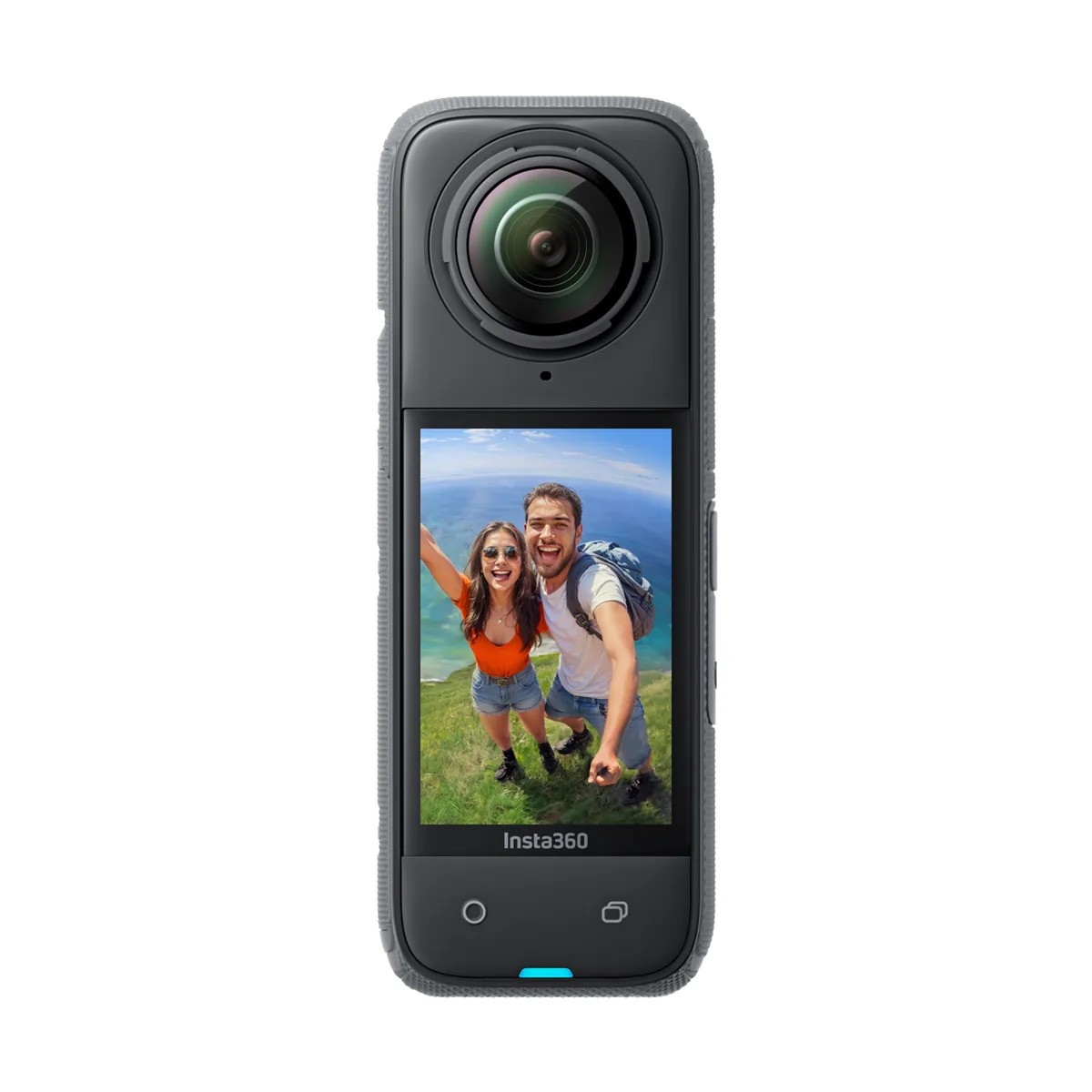
First of the X-series to shoot 8K, and the model that made spherical capture mainstream on bike handlebars and ski poles. The 200 Mbps ceiling is actually the highest of any X-series camera except the X6 — Insta360 spent the bitrate on holding detail through the stitch. What the X4 does not have is the thing the X5 introduced: its lenses are fixed, and a scratched fisheye is a service job. The sensors are 1/2-inch, less than half the X5's area, which is exactly where the two cameras separate once the light drops. Bought as a daylight camera at its current price, it is a lot of resolution for the money; bought expecting the X5's night performance, it will disappoint.
Ricoh
Ricoh THETA X
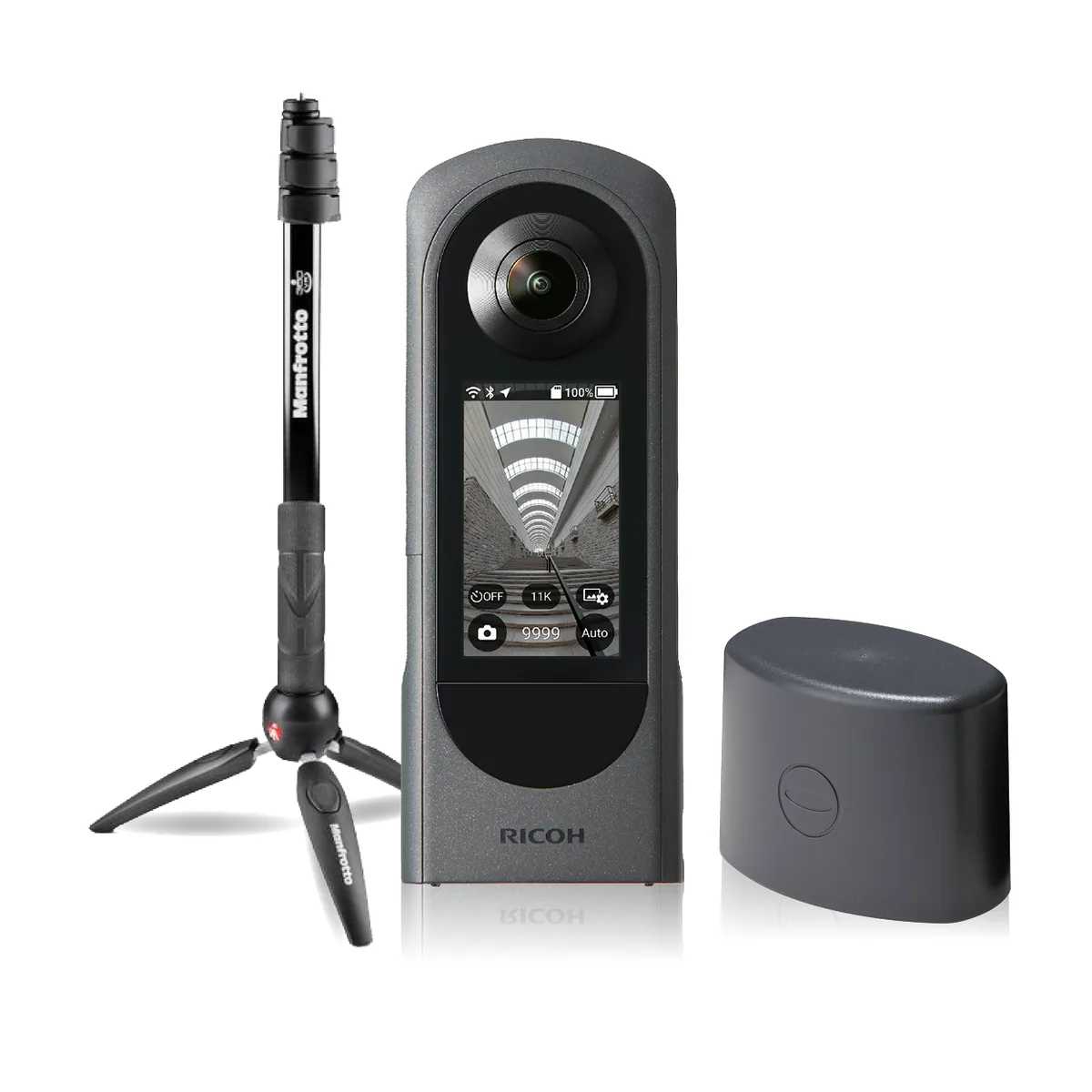
Ricoh has been making 360 cameras longer than anyone else here and aims them somewhere else entirely: real-estate tours, insurance surveys and construction documentation, not helmets. The THETA X reflects that — 60 MP spherical stills with the best stitch quality in the category, built-in GPS to tag where each shot was taken, a swappable DB-110 battery so a surveyor can work all day, and a 2.25-inch touchscreen for checking frames on site. It is also not an action camera in any meaningful sense. There is no waterproof rating, nothing mounts to it but a tripod thread, it is rated only to 0 °C, and 5.7K30 video is a secondary feature rather than the point. If you want one camera for both a ski trip and a property listing, this is the wrong half of that pair.
GoPro
GoPro MAX
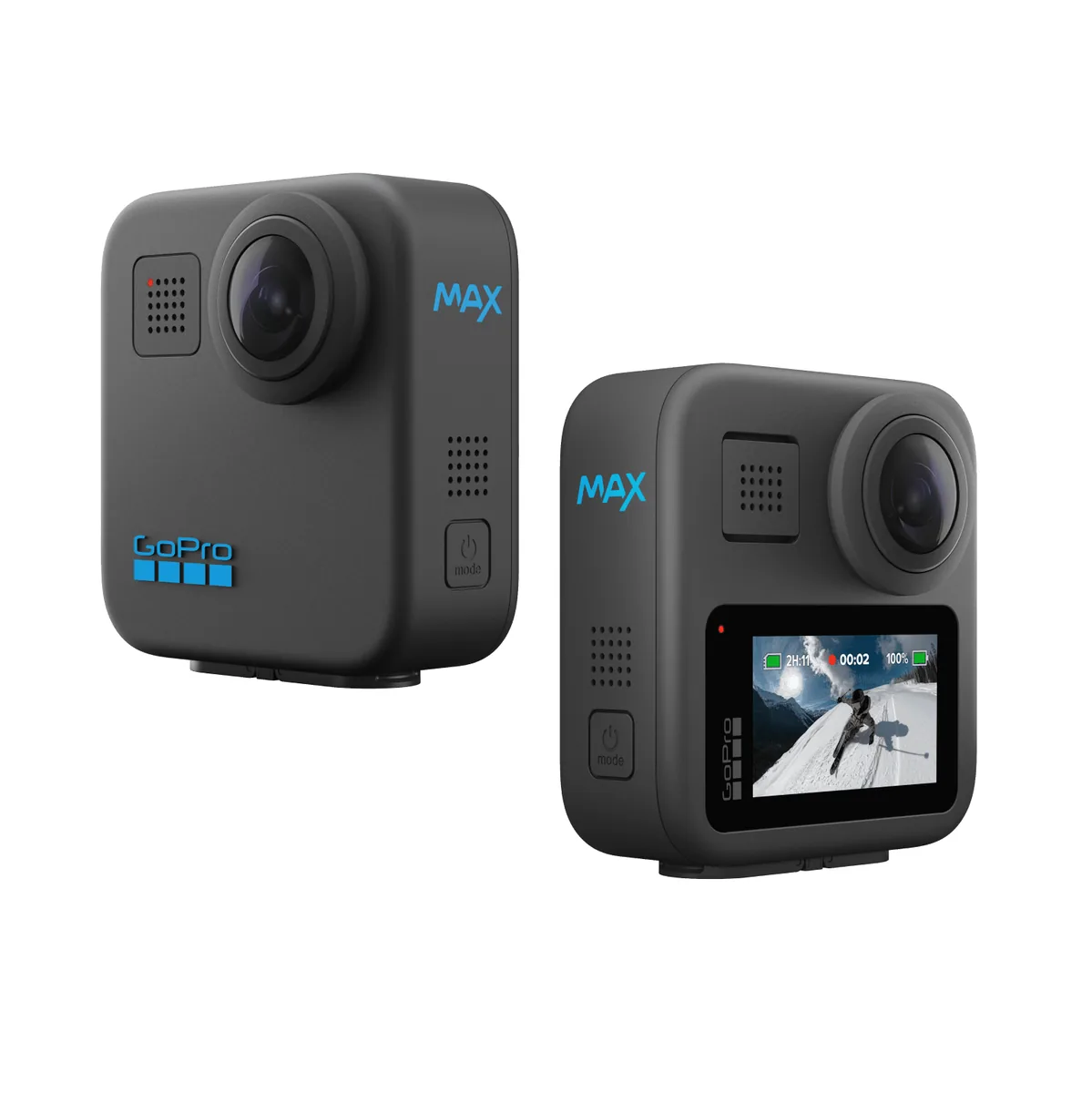
A 2019 camera that GoPro quietly refreshed in 2025 with an Enduro battery and a 1/4-20 mount, and which survives because of one thing its successor charges $150 more for: it also works as a normal action camera. Point it forward, pick a digital lens, and the front sensor alone shoots 1440p or 1080p with Max HyperSmooth — historically the most aggressive stabilisation GoPro has ever shipped, because the second lens gives it a bigger picture to steal from. The spherical side is dated: 5.6K30, 8-bit, 78 Mbps, and lenses that cannot be replaced when they scratch. Treat it as a cheap dual-purpose camera with a very good stabilised single-lens mode, not as a current 360 camera.