Kandao
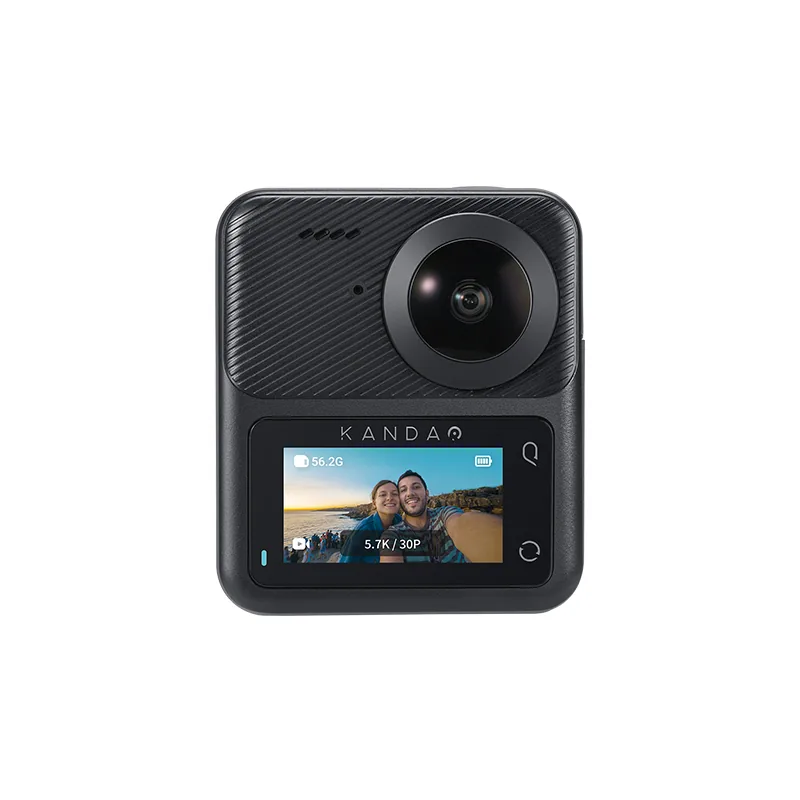
Kandao QooCam 3
An odd and rather appealing camera: dual 1/1.55-inch sensors — 65 % more area per lens than the Insta360 X3 it competes with on price — behind the same F/1.6 glass as the Ultra, wrapped in a squat body that looks nothing like an X-series stick. Video caps at 5.7K30, which reframes to roughly 1.3K of usable 16:9, so the resolution ceiling is real. Where it earns its keep is stills: 62 MP spherical photos out of fast lenses and decent-sized sensors make it a credible virtual-tour camera for a third of what a Ricoh Theta X costs. Fifty-eight minutes of recording and no internal storage are the practical limits, and the 1.9-inch screen is small enough to be fiddly.
Sensor area against the rest of the catalogue
Derived from the standard optical-format table rather than copied off a spec sheet, because makers print a fraction that hides it. The table and the arithmetic.
Battery, with the small print
- Maker’s claim
- 58 min at 5.7K30 360 recording, standard settings
- Third-party test
- None collected. We publish a tested figure only where a named outlet has run one and stated its conditions.
What a reframed clip is worth
This camera records 5,760 px across a full 360°. A normal 16:9 clip pulled out of it uses only the slice its field of view covers, so at a typical 80° reframe the usable width is about 1,280 px — roughly 1.3K.
5,760 × (80 ÷ 360) = 1,280 px
An estimate. Stitching, supersampling and the projection move it by a few per cent either way. How this works.
Specifications
Features
- ●Dual 1/1.55-inch sensors, larger than the Insta360 X3's or X4's
- ●F/1.6 lenses
- ●62 MP spherical stills in JPG and DNG
- ●5.7K30 spherical video, 2.8K60 single-lens
- ●IP68 to 10 m with no housing
- ●189 g body without the battery
Strengths
- +Bigger sensors per lens than the Insta360 X3 or X4 at a similar price
- +F/1.6 lenses and DNG output make it a genuine stills camera
- +IP68 to 10 m with no housing
- +62 MP spherical photos are enough resolution for real-estate tours
Drawbacks
- −5.7K video reframes to about 1.3K of usable 16:9
- −58 minutes of recording per charge and no internal storage
- −1.9-inch screen is small and fiddly with cold hands
- −No GPS, no log profile, and no published colour bit depth
- −2.8K single-lens mode is the lowest flat resolution of any 360 camera here
The strengths and drawbacks above are drawn from the manufacturer’s specifications and published reviews. No body of owner reports for this camera has been read, so nothing here claims to speak for its owners.
What owners say
No owner discussion has been collected for the Kandao QooCam 3 yet. The pros and cons above come from the manufacturer’s specifications and published reviews. Rather than fill this space with invented sentiment, it stays empty until there is something real to put in it.
Kandao QooCam 3, head to head
Cameras people look at alongside it
More from Kandao →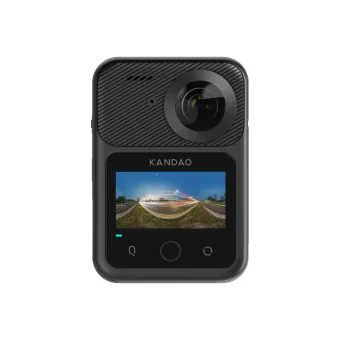
Kandao
Kandao QooCam 3 Ultra
Kandao is the small manufacturer in this category and it competes the only way a small manufacturer can: by shipping specs the big three charge more for. F/1.6 lenses — the fastest glass in the catalogue — over dual 1/1.7-inch sensors, 10-bit HLG and a K-Log profile, 96 MP spherical stills, 150 Mbps, 128 GB of internal storage and built-in GPS, all under the price of an Insta360 X6. The costs are physical and logistical. At 336 g it is by a wide margin the heaviest camera here, nearly double an X6, and at 10 m bare it is the shallowest of the big-sensor 360 cameras. Fifty minutes of 8K 10-bit recording is short. And the software ecosystem around it — reframing, mobile editing, firmware cadence — is thinner than Insta360's, which is the part of the purchase a spec sheet cannot show you.
GoPro
GoPro MAX
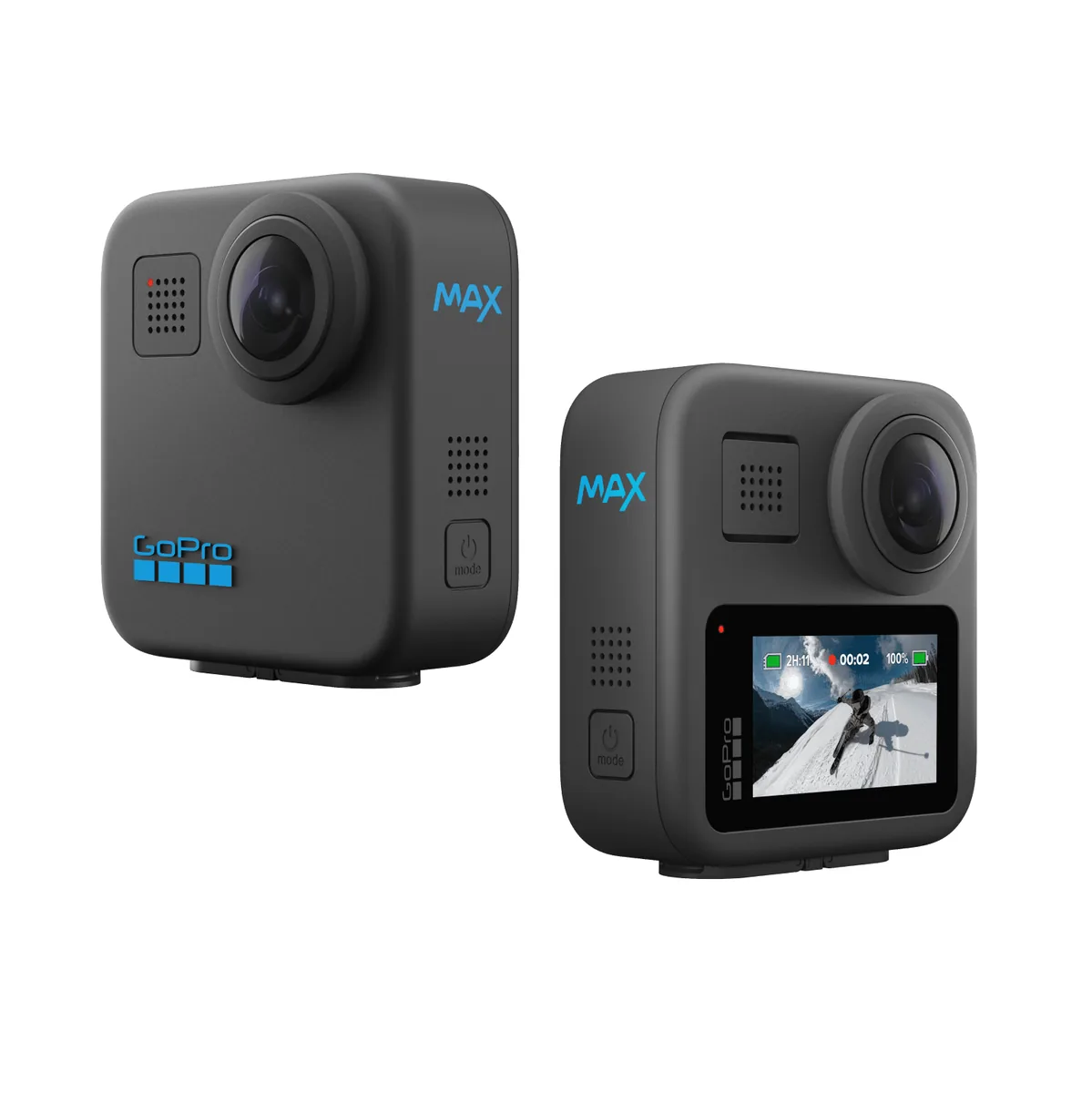
A 2019 camera that GoPro quietly refreshed in 2025 with an Enduro battery and a 1/4-20 mount, and which survives because of one thing its successor charges $150 more for: it also works as a normal action camera. Point it forward, pick a digital lens, and the front sensor alone shoots 1440p or 1080p with Max HyperSmooth — historically the most aggressive stabilisation GoPro has ever shipped, because the second lens gives it a bigger picture to steal from. The spherical side is dated: 5.6K30, 8-bit, 78 Mbps, and lenses that cannot be replaced when they scratch. Treat it as a cheap dual-purpose camera with a very good stabilised single-lens mode, not as a current 360 camera.
Insta360
Insta360 X4 Air
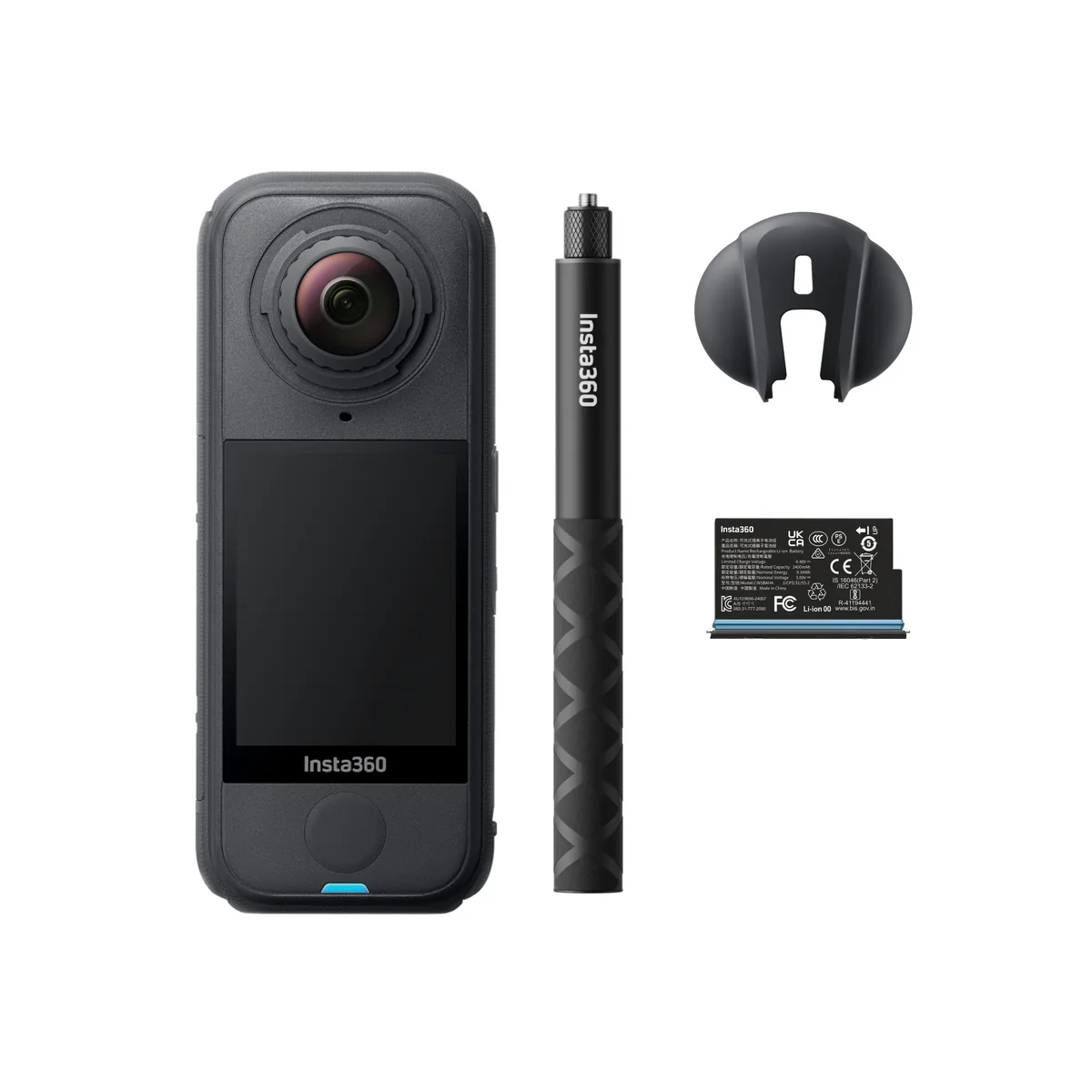
Lightest 8K 360 camera Insta360 has built, at 165 g — 35 g under the X5 and 31 g under the X6 — and that number is the whole pitch. On a helmet or the end of a selfie stick, thirty grams is the difference between a rig that stays put and one that wobbles. It keeps the things that matter most from the X5: replaceable lenses, 15 m of bare waterproofing, magnetic mounting. The sensors step down to 1/1.8-inch, roughly half the X5's area, and the frame-rate ceiling drops to 4K50 in single-lens mode against the X5's 4K120. Against the X4 it is the better camera in every way except peak bitrate, at a lower price, which makes the older model a hard recommend now.