Flagship action cameras
The full-size, full-price cameras: a sealed waterproof body, a mount on the bottom, a screen on the back, and the current generation of stabilisation. This is where the three major brands actually compete, and the competition has stopped being about resolution. GoPro holds a stabilisation and accessory lead nobody has closed; DJI ships sensors two to three times the area and battery life to match; Insta360 puts a screen that flips to face the lens on a body neither of the others matches for vlogging. All of them shoot more resolution than most people deliver, and all of them get hot if you run the top mode in still air.
We track 9 flagship action cameras from 3 brands, priced ~$229 to ~$699. The largest sensor of them is in the GoPro MISSION 1 PRO at 116 mm², and the least expensive is the DJI Osmo Action 4 at ~$229.
GoPro
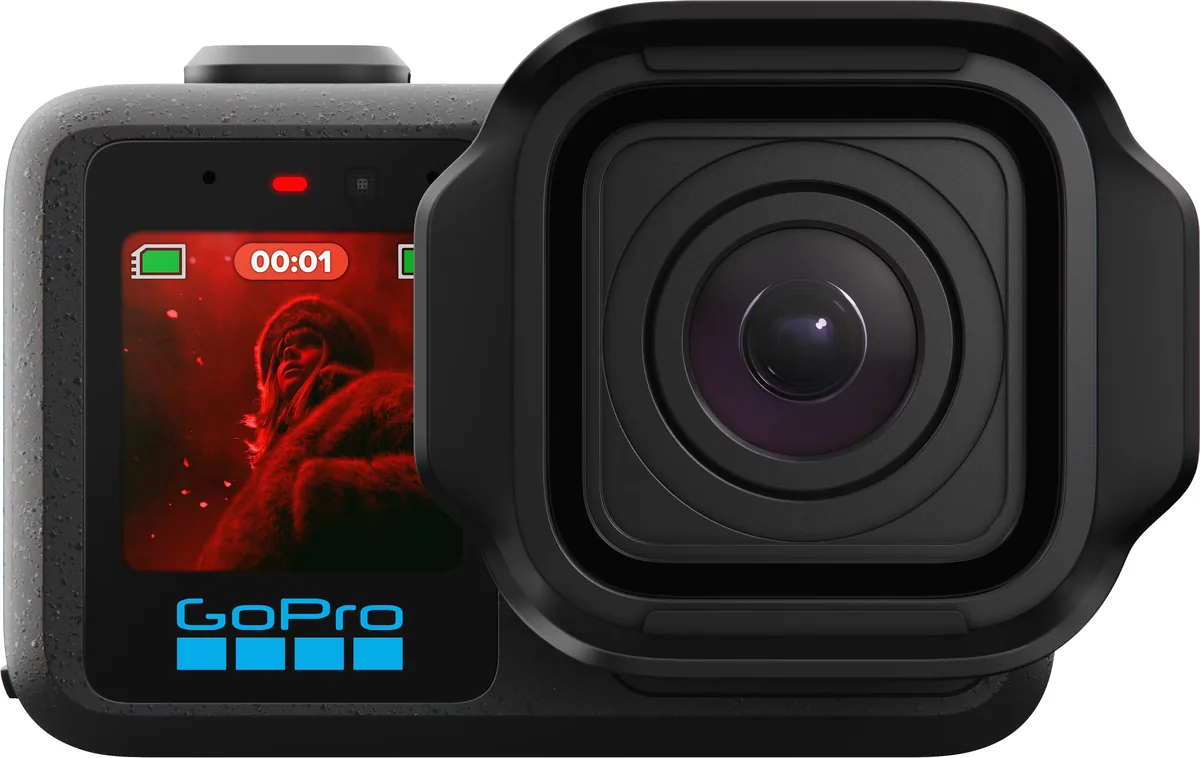
GoPro MISSION 1 PRO
The 1-inch sensor is the whole argument. At 116 mm² it is more than three times the imaging area of a Hero 13's chip, and it is the largest in this catalogue outside the Osmo Pocket 3 — in a body that is still waterproof to 20 m and still takes GoPro fingers. 8K60 open-gate, 4K at 240 fps, 50 MP stills, 240 Mbps and GP-Log2 with a LUT put it squarely between an action camera and a small cine body, which is exactly where GoPro aimed it. Two practical notes: the 2150 mAh battery that runs five hours at 1080p30 on the base MISSION 1 does not go nearly as far feeding an 8K pipeline, and the interchangeable-lens version of this camera is not waterproof at all, so the fixed lens here is a feature rather than a limitation.
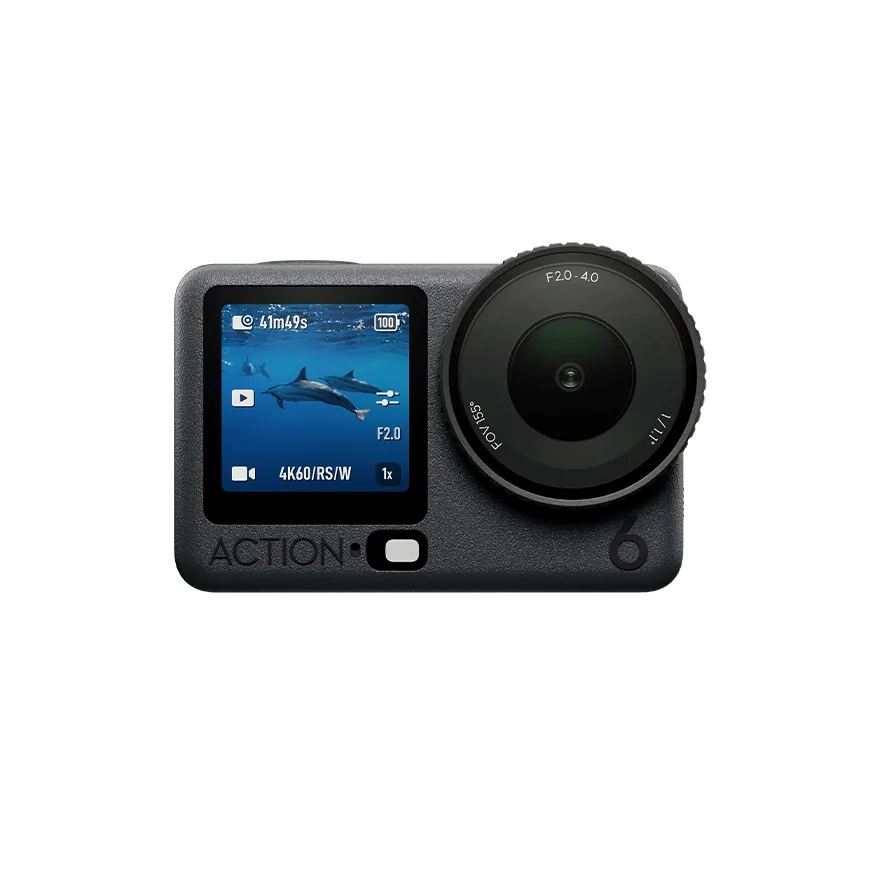
Two firsts arrived on the same body: a variable aperture on an action camera, and a square 1:1 sensor instead of the usual 4:3. The aperture stepping f/2.0 to f/4.0 matters most in bright conditions, where every other action camera has to throw away light with a shutter it cannot slow down or an ND filter you have to remember to bring. The square sensor matters in the edit — the camera measures the full 1:1 frame, so a widescreen crop and a vertical crop come out of one take without either being a stretched afterthought. DJI puts the imaging area at a 4:3 one-inch equivalent; worked off the standard optical-format table the named 1/1.1-inch format gives about 96 mm², still roughly triple a GoPro Hero 13's. Add 8K30, 20 m of bare waterproofing, 64 GB of internal storage and a four-hour battery rating and it is the most complete spec sheet in the category.
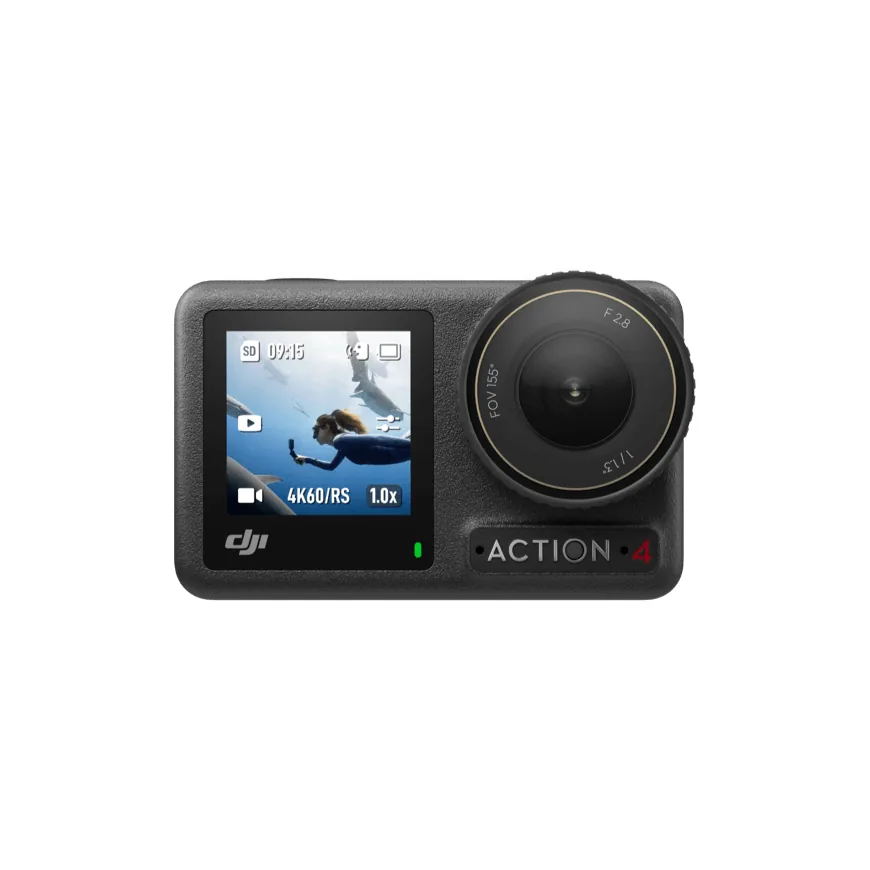
The camera that made a large sensor normal at this price, and it is still on sale two generations later because the fundamentals have not aged. Same 1/1.3-inch chip as the Action 5 Pro, same 4K120, same 10-bit D-Log M, same magnetic mount, 18 m waterproof against the newer model's 20. Where it falls short is the stills sensor readout — 10 MP against 40 — the smaller rear screen, and the absence of internal storage. The 130 Mbps ceiling is actually a touch higher than the Action 5 Pro's. At a street price around $229 it is the cheapest way to get a sensor this size into a waterproof body, and for anyone who mostly shoots video rather than photos the compromises are close to invisible.
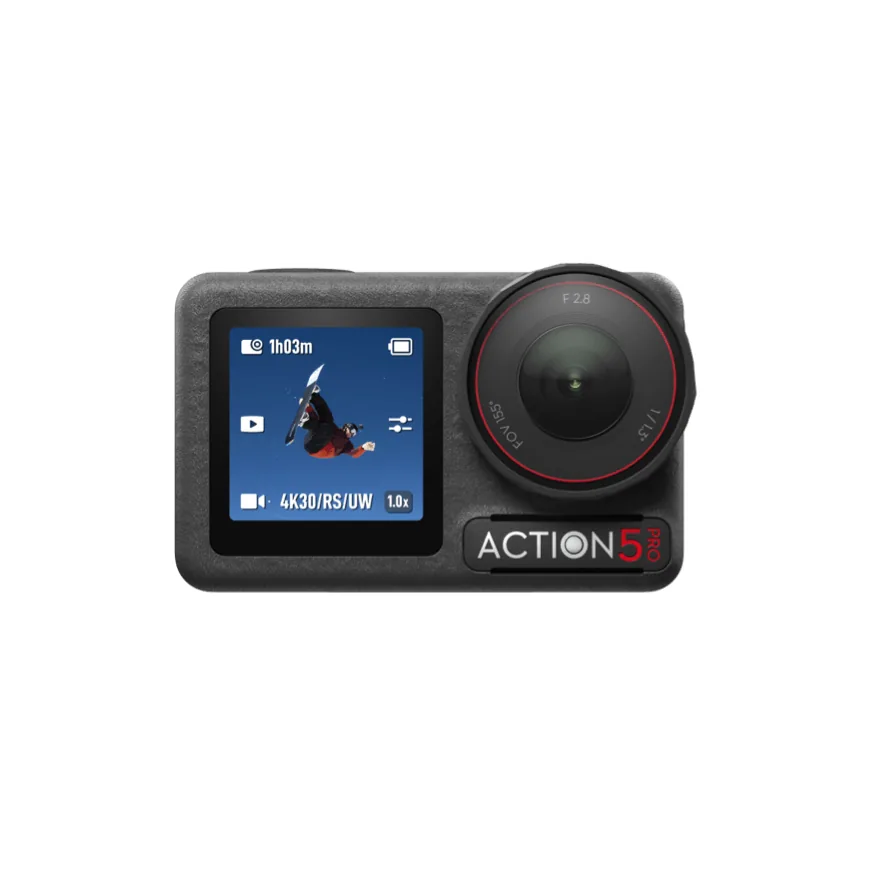
Now that the Action 6 has taken the flagship slot, this is the value argument in the whole category: a 1/1.3-inch sensor with more than twice the area of a GoPro Hero 13's, 20 m of bare waterproofing, 47 GB of internal storage and a genuinely long-running battery, for around three hundred dollars. It gives up the Action 6's variable aperture and square readout and caps at 4K rather than 8K — which matters less than the spec gap suggests, because 4K120 covers almost everything an action camera is actually used for. In an independent four-camera drain test it ran 2 hours 14 minutes, well behind DJI's 1080p24 headline of four hours but comfortably ahead of the Insta360 Ace Pro 2.
Insta360
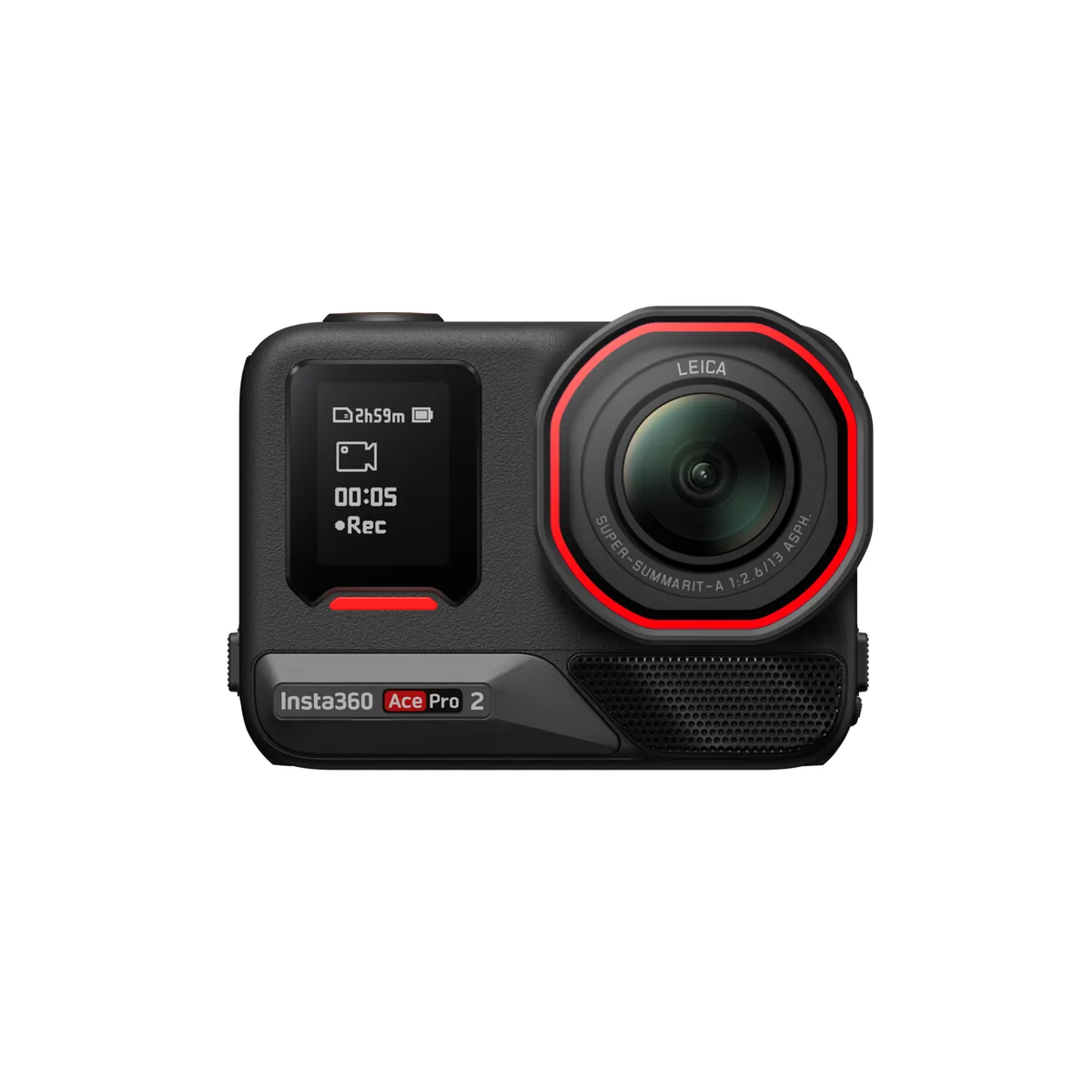
Insta360 Ace Pro 2
The flip-up screen is the feature that sells it. Every other action camera makes you guess at framing when the camera is facing you or mount a second screen; the Ace Pro 2's 2.5-inch rear panel hinges upward so it can be read from in front of the lens, which is why this is the vlogging pick in a category built around helmets. Behind that sits a Leica-co-engineered f/2.6 lens over a 1/1.3-inch sensor, 8K30, 4K120, a 180 Mbps ceiling and I-Log with a supplied LUT. Waterproofing is 12 m bare, and the dive case takes it to 60 m. The catch is endurance: in an independent four-camera drain test the Ace Pro 2 was first to die at 1 hour 44 minutes, thirty minutes behind the DJI and nearly an hour behind the GoPro, and its 180-minute headline number is quoted at 1080p24 with a power-saving mode enabled.
GoPro
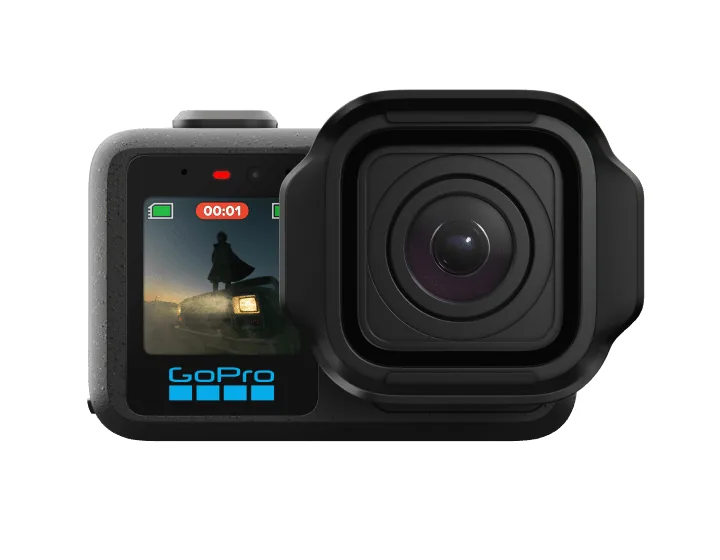
GoPro MISSION 1
GoPro calls the MISSION line cinema cameras, and the marketing is doing some work — this is a rugged, mountable, 20 m-waterproof body with GoPro fingers, a magnetic latch and HyperSmooth, which is an action camera by any reasonable definition. What has actually changed is the class of everything inside: a 1/1.3-inch sensor twice the area of the Hero 13's, a 240 Mbps ceiling, GP-Log2 with a supplied LUT, 4K at 240 fps and 1080p at 480, and a 2150 mAh cell rated for five hours at 1080p30. The cost is size and money: at 207 g and 80 mm long it is a different object on a helmet, and $599 is a different budget. If you have been hitting the ceiling of what a Hero can grade to, this is the answer; if you have not, it is a lot of camera to strap to a bike.
GoPro
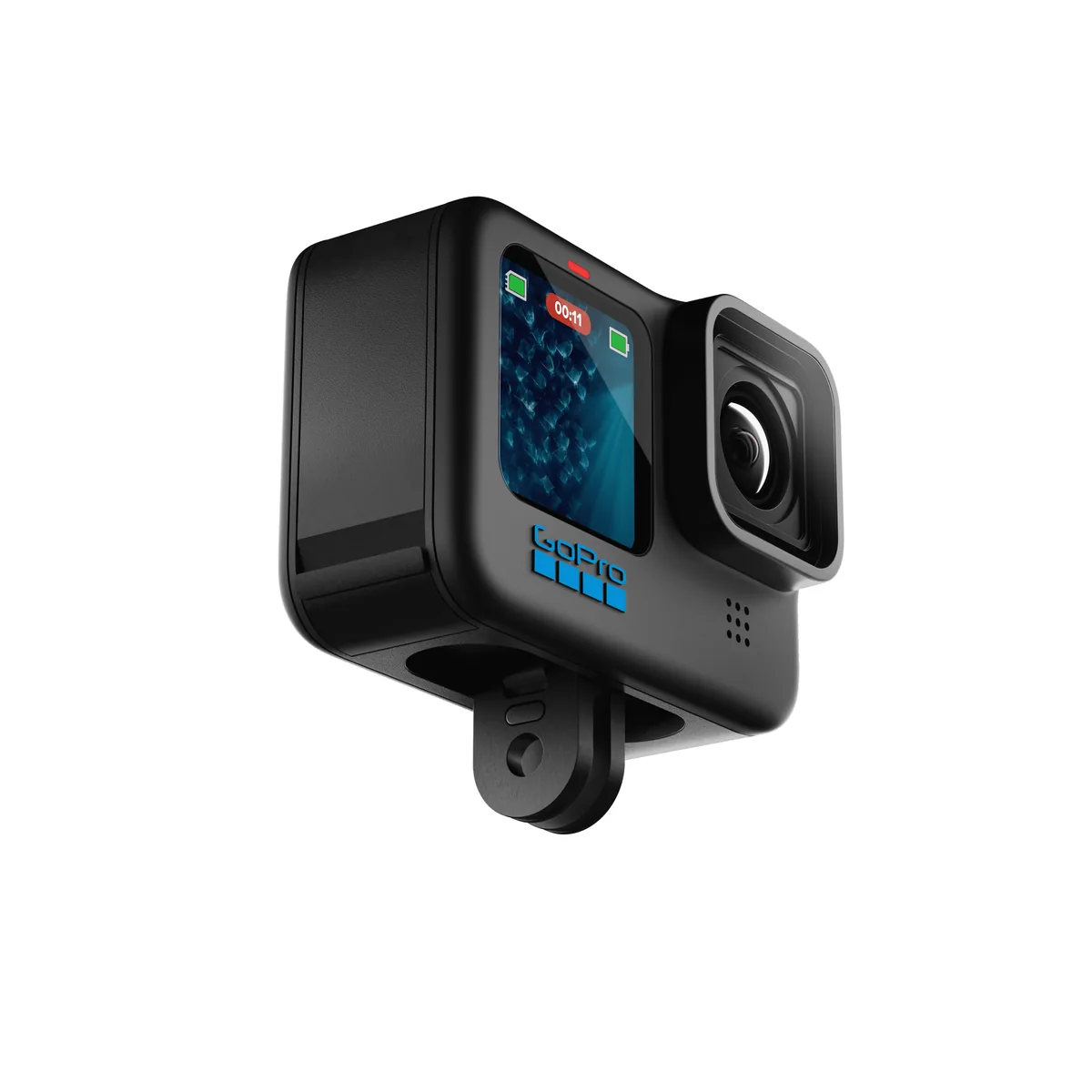
GoPro HERO11 Black
This is the camera that introduced the tall 8:7 sensor readout, and it is the reason the Hero body has barely changed since. Shooting the full 27 MP frame and cropping to 16:9, 9:16 or 4:5 in the edit is a workflow rather than a spec, and it is still the single most useful thing GoPro has added in five years. The Hero 11 keeps GPS, which the Hero 12 dropped, and the older HyperSmooth 5.0 is a hair behind 6.0 without being visibly worse. Where it falls behind is GP-Log, which arrived a generation later, and the 1/4-20 thread, which did not. GoPro still lists it on its own store, and at a street price under $250 it is the cheapest route into 5.3K60 with full horizon lock.
GoPro
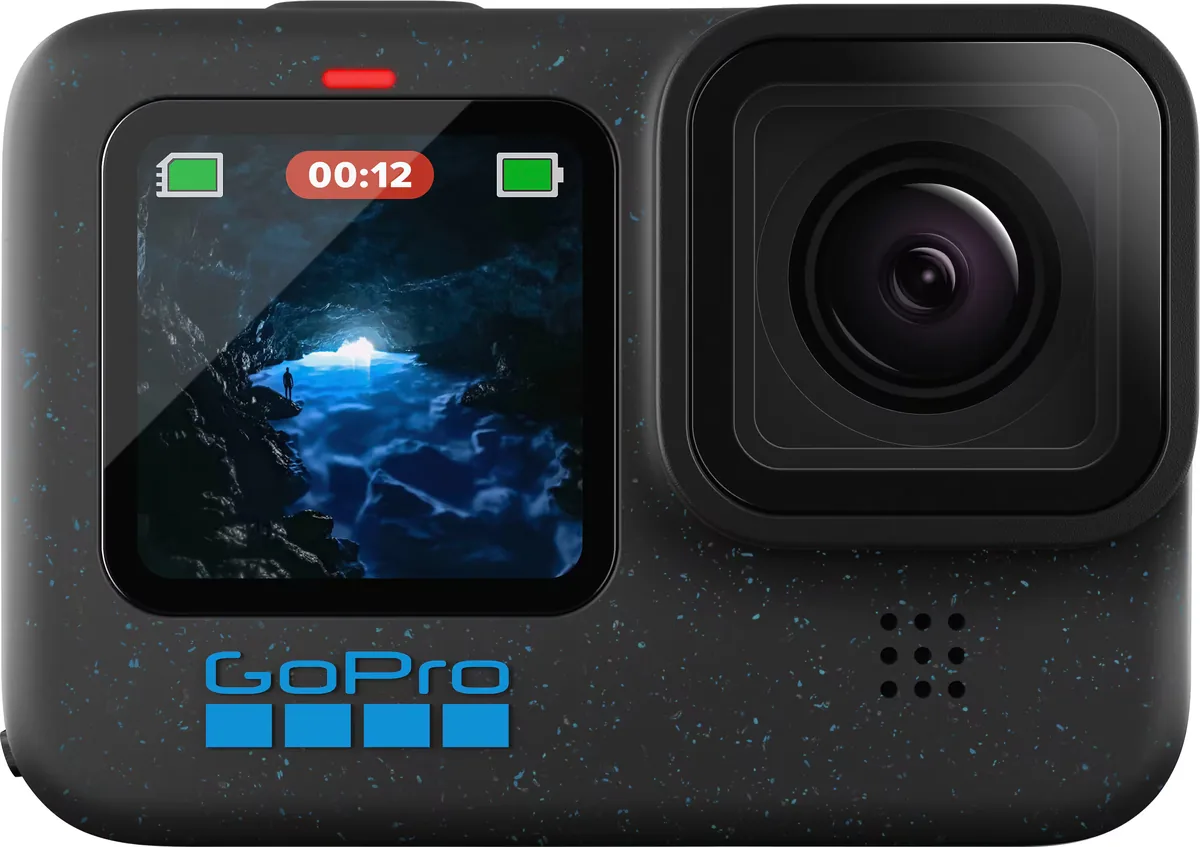
GoPro HERO12 Black
Clearance pricing has turned last year's flagship into the value pick of the GoPro line, and the gap to the Hero 13 is narrower than the generation number suggests. Same 1/1.9-inch sensor, same 5.3K60 and 4K120, same 10-bit GP-Log, same HyperSmooth 6.0 with full horizon lock. What you give up is the magnetic latch, the HB lens-mod system, roughly 180 mAh of battery — and GPS, which GoPro dropped on this generation and restored on the next. That last one is the deciding spec for anyone who wants speed, altitude or route data burned into the footage; for everyone else the Hero 12 is a Hero 13 that costs eighty dollars less and takes the same mounts. It also carries a 1/4-20 thread in the base, which the Hero 11 did not.
GoPro
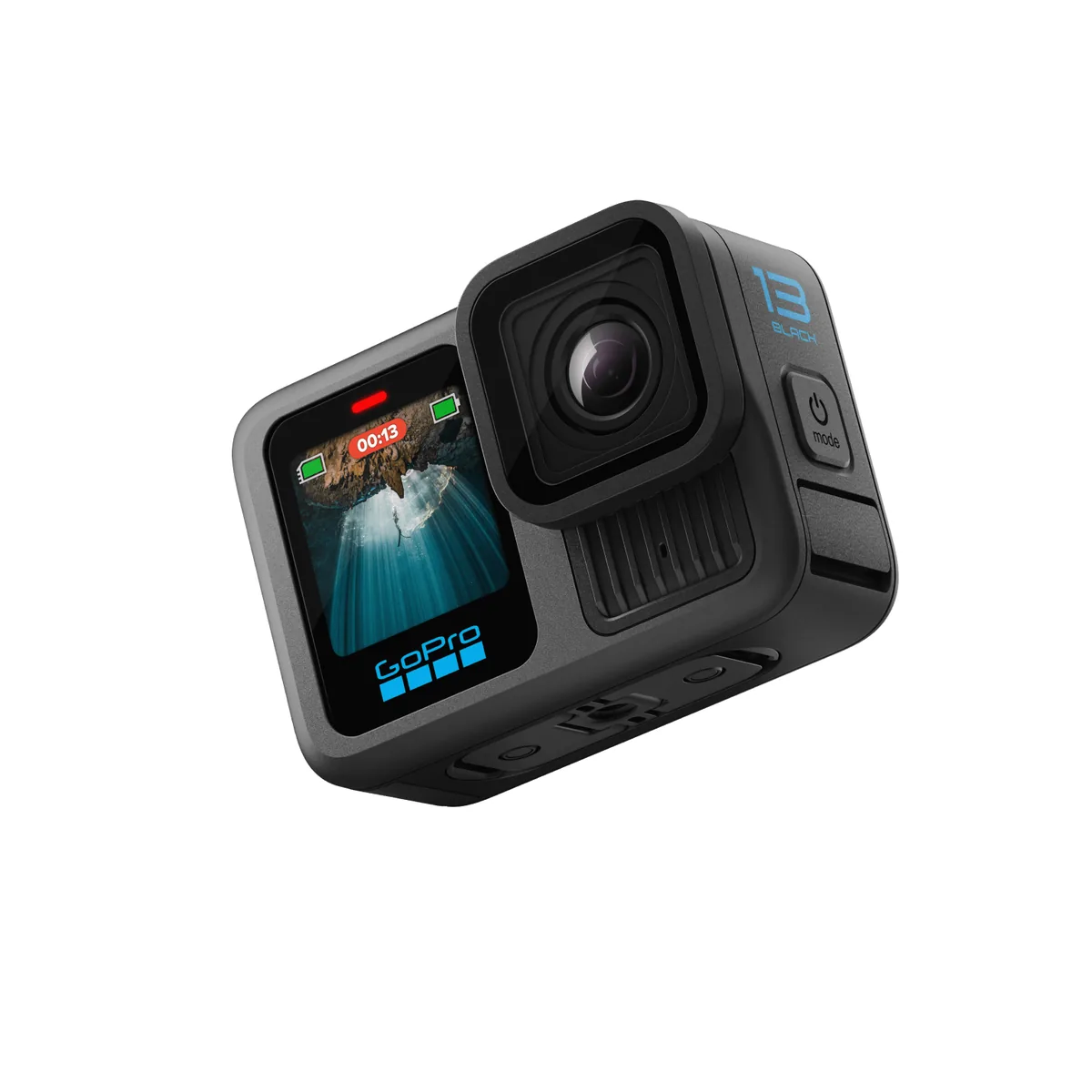
GoPro HERO13 Black
Four generations of the same 1/1.9-inch sensor have gone into this body, and GoPro spent the thirteenth on everything around it instead: a magnetic latch that replaces the fold-out fingers, a 1900 mAh Enduro cell, and the HB-series lens mods the camera recognises and reconfigures itself for. That is the honest shape of the Hero 13. Image quality sits roughly where the Hero 12 left it, the sensor is small next to what DJI and Insta360 now ship, and the stabilisation is still the best in the category by a margin nobody has closed. In a group test that ran four cameras to shutdown side by side, this was the only one that hit its published runtime. The mount ecosystem is the other argument: a decade of GoPro-fingered clamps, chest harnesses, helmet mounts and third-party rigs all still bolt straight on, which is why it stays the default on a motorcycle fairing or a ski helmet even when a rival's spec sheet reads better.