GoPro
GoPro MISSION 1
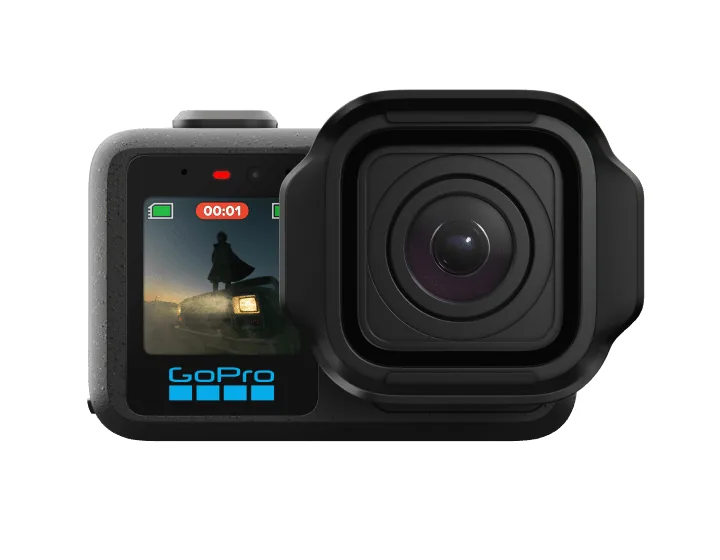
GoPro calls the MISSION line cinema cameras, and the marketing is doing some work — this is a rugged, mountable, 20 m-waterproof body with GoPro fingers, a magnetic latch and HyperSmooth, which is an action camera by any reasonable definition. What has actually changed is the class of everything inside: a 1/1.3-inch sensor twice the area of the Hero 13's, a 240 Mbps ceiling, GP-Log2 with a supplied LUT, 4K at 240 fps and 1080p at 480, and a 2150 mAh cell rated for five hours at 1080p30. The cost is size and money: at 207 g and 80 mm long it is a different object on a helmet, and $599 is a different budget. If you have been hitting the ceiling of what a Hero can grade to, this is the answer; if you have not, it is a lot of camera to strap to a bike.
Sensor area against the rest of the catalogue
Derived from the standard optical-format table rather than copied off a spec sheet, because makers print a fraction that hides it. The table and the arithmetic.
Battery, with the small print
- Maker’s claim
- 5 h at 1080p30 continuous, Enduro 2 battery
- Third-party test
- None collected. We publish a tested figure only where a named outlet has run one and stated its conditions.
Specifications
What the GoPro Premium plan gates
~$49.99 a year, which is why the year-one figure on this page is ~$649 rather than ~$599.
- •Unlimited cloud storage and automatic upload for GoPro footage
- •$100 off the camera at gopro.com for existing subscribers
- •Guaranteed camera replacement, no questions asked
- •Up to 50% off GoPro accessories
Features
- ●1/1.3-inch sensor, roughly double the Hero 13's imaging area
- ●240 Mbps ceiling and 10-bit GP-Log2 with a supplied LUT
- ●4K120, 1080p480 and 960 fps burst slow motion
- ●Waterproof to 20 m with no housing
- ●2150 mAh Enduro 2 battery, five hours at 1080p30
- ●2.59-inch rear OLED plus a front screen
- ●Magnetic latch, folding fingers and a 1/4-20 thread
Strengths
- +The sensor jump is the largest GoPro has made in years, and it shows in shadows and skies
- +240 Mbps and GP-Log2 put it in a different grading class from every Hero
- +20 m bare waterproofing, double the Hero 13 and the best of any GoPro
- +Five hours at 1080p30 from a 2150 mAh battery is the longest-running GoPro made
- +Still takes the GoPro mount ecosystem despite the larger body
Drawbacks
- −207 g and 80 mm long — noticeably more mass on a helmet than a Hero
- −$599 before a single accessory, and $100 of that is only refunded to subscribers
- −4K tops out at 120 fps; there is no 5.3K or 8K mode
- −Shipped mid-2026, so nobody has yet run one through a full season of field abuse
- −GoPro's published sales for the line are weak enough to raise a real question about how long accessories and firmware get attention
What owners say
Summarised from owner discussions and published long-term reviews.
GoPro calls this a cinema camera and sells it in a body that is waterproof to 20 metres and takes GoPro fingers, which makes it an action camera with a much larger sensor. Owners who bought it for image quality generally get what they came for: roughly twice the sensor area of a Hero 13, 240 Mbps, GP-Log2 with a supplied LUT, and battery life no Hero approaches.
The reception has been mixed in a way that is worth knowing before buying. There is a steady thread of owners reporting disappointment against expectations, and GoPro's own results show the MISSION line selling far below what a flagship launch normally does. Several owners have found heavy discounting at retail within weeks of release, which changes the value calculation considerably.
The practical objection is size. At 207 g and 80 mm long it dominates a helmet mount in a way a Hero does not, and owners who mount rather than hold their camera often end up using a Hero for that work and the MISSION 1 for everything else.
What owners like
- +The sensor jump is the thing owners notice first — roughly double a Hero 13's imaging area, and it shows in shadows and skies
- +Twenty metres of bare waterproofing is the deepest of any GoPro and removes the housing from most diving
- +Runtime is exceptional: owners report the five-hour 1080p30 rating as broadly believable, which no Hero comes near
- +It still takes GoPro fingers and the magnetic latch, so the existing accessory collection carries over
- +Early owners retail-watching have found steep discounts within weeks of launch, which has made it much better value than the list price
Common complaints
- −Owners repeatedly report being disappointed relative to expectations, and GoPro's own quarterly numbers show the line selling poorly
- −At 207 g and 80 mm long it is a different object on a helmet, and several owners say they went back to a Hero for mounted work
- −4K tops out at 120 fps and there is no 5.3K or 8K mode, which reads oddly on a camera at this price
- −Launched in 2026, so long-term reliability is still unknown
Questions owners keep asking
Is the MISSION 1 an action camera or a cinema camera?
Is it too big for a helmet?
How is the battery life?
Should I wait for a discount?
GoPro MISSION 1, head to head
Cameras people look at alongside it
More from GoPro →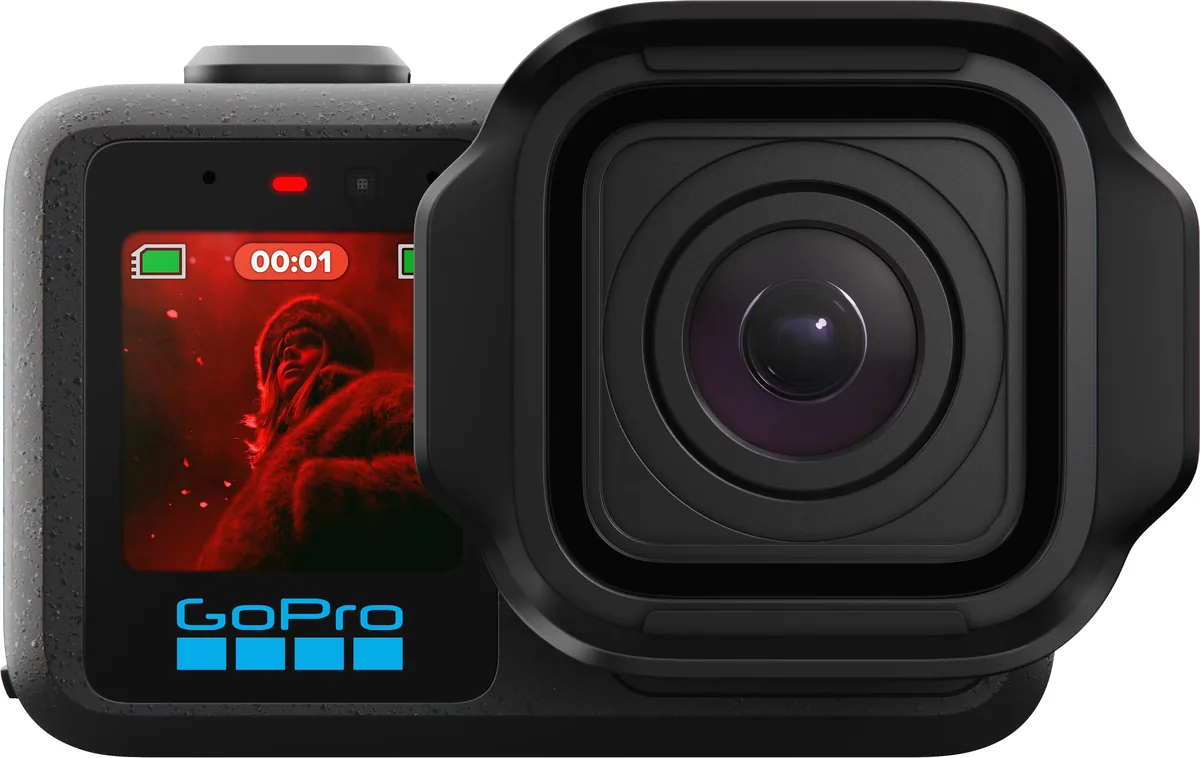
GoPro
GoPro MISSION 1 PRO
The 1-inch sensor is the whole argument. At 116 mm² it is more than three times the imaging area of a Hero 13's chip, and it is the largest in this catalogue outside the Osmo Pocket 3 — in a body that is still waterproof to 20 m and still takes GoPro fingers. 8K60 open-gate, 4K at 240 fps, 50 MP stills, 240 Mbps and GP-Log2 with a LUT put it squarely between an action camera and a small cine body, which is exactly where GoPro aimed it. Two practical notes: the 2150 mAh battery that runs five hours at 1080p30 on the base MISSION 1 does not go nearly as far feeding an 8K pipeline, and the interchangeable-lens version of this camera is not waterproof at all, so the fixed lens here is a feature rather than a limitation.
GoPro
GoPro HERO13 Black
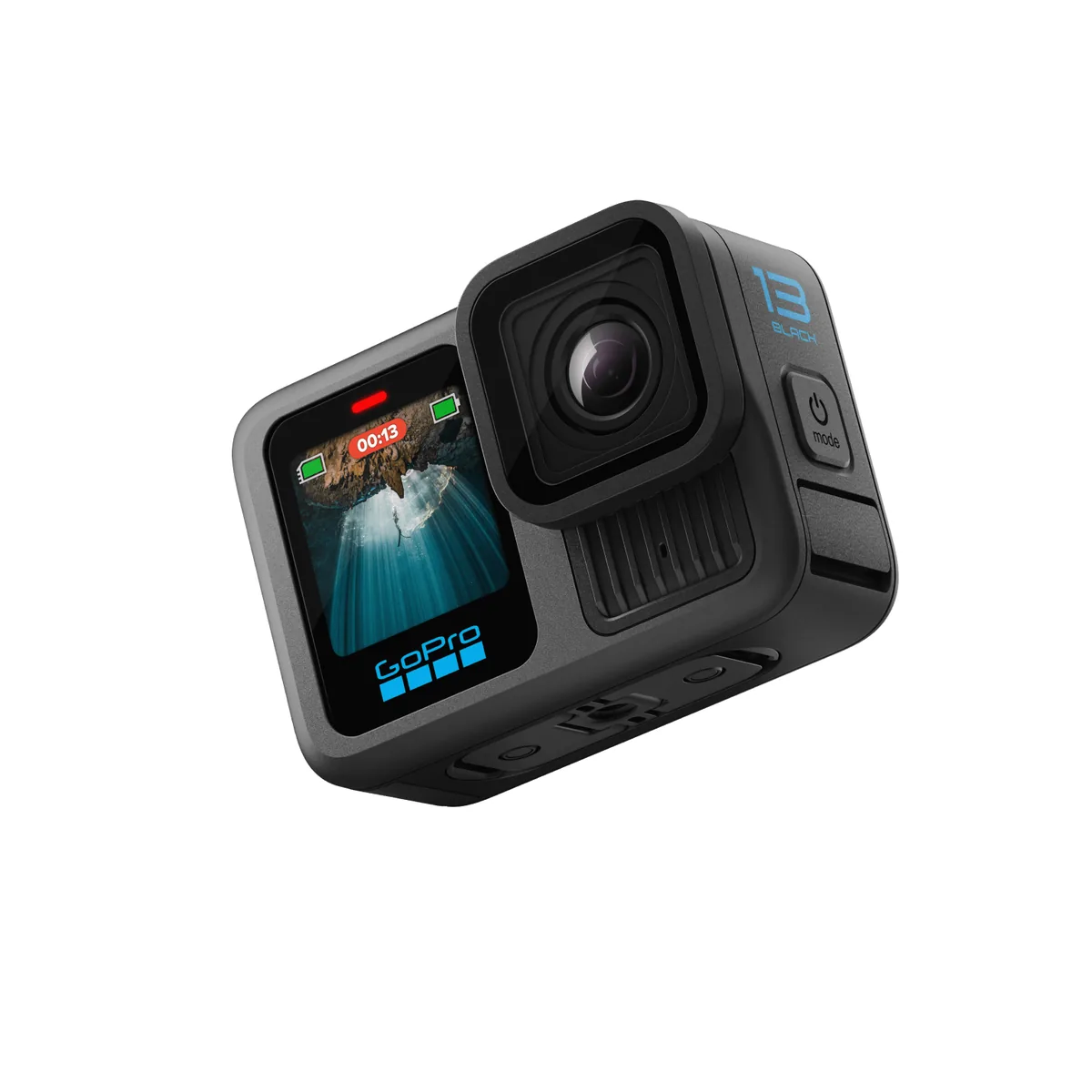
Four generations of the same 1/1.9-inch sensor have gone into this body, and GoPro spent the thirteenth on everything around it instead: a magnetic latch that replaces the fold-out fingers, a 1900 mAh Enduro cell, and the HB-series lens mods the camera recognises and reconfigures itself for. That is the honest shape of the Hero 13. Image quality sits roughly where the Hero 12 left it, the sensor is small next to what DJI and Insta360 now ship, and the stabilisation is still the best in the category by a margin nobody has closed. In a group test that ran four cameras to shutdown side by side, this was the only one that hit its published runtime. The mount ecosystem is the other argument: a decade of GoPro-fingered clamps, chest harnesses, helmet mounts and third-party rigs all still bolt straight on, which is why it stays the default on a motorcycle fairing or a ski helmet even when a rival's spec sheet reads better.
GoPro
GoPro HERO12 Black
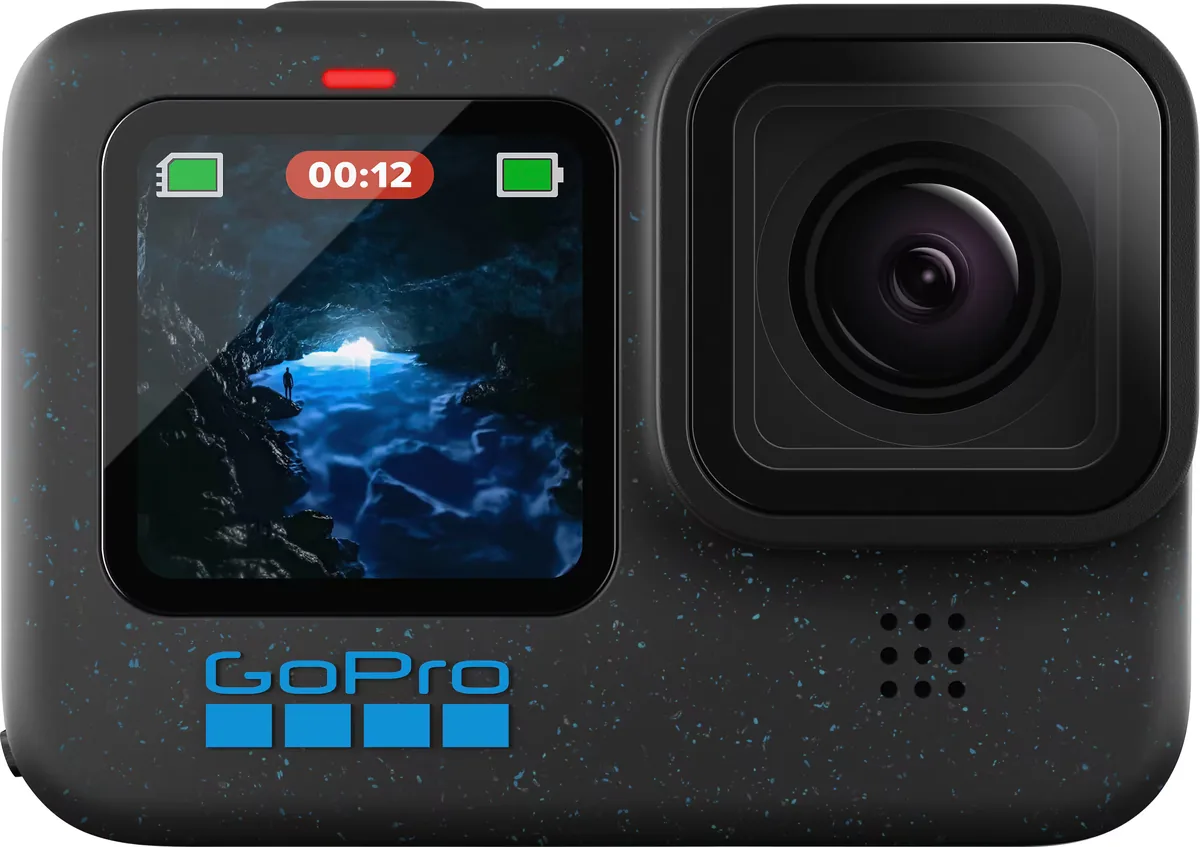
Clearance pricing has turned last year's flagship into the value pick of the GoPro line, and the gap to the Hero 13 is narrower than the generation number suggests. Same 1/1.9-inch sensor, same 5.3K60 and 4K120, same 10-bit GP-Log, same HyperSmooth 6.0 with full horizon lock. What you give up is the magnetic latch, the HB lens-mod system, roughly 180 mAh of battery — and GPS, which GoPro dropped on this generation and restored on the next. That last one is the deciding spec for anyone who wants speed, altitude or route data burned into the footage; for everyone else the Hero 12 is a Hero 13 that costs eighty dollars less and takes the same mounts. It also carries a 1/4-20 thread in the base, which the Hero 11 did not.