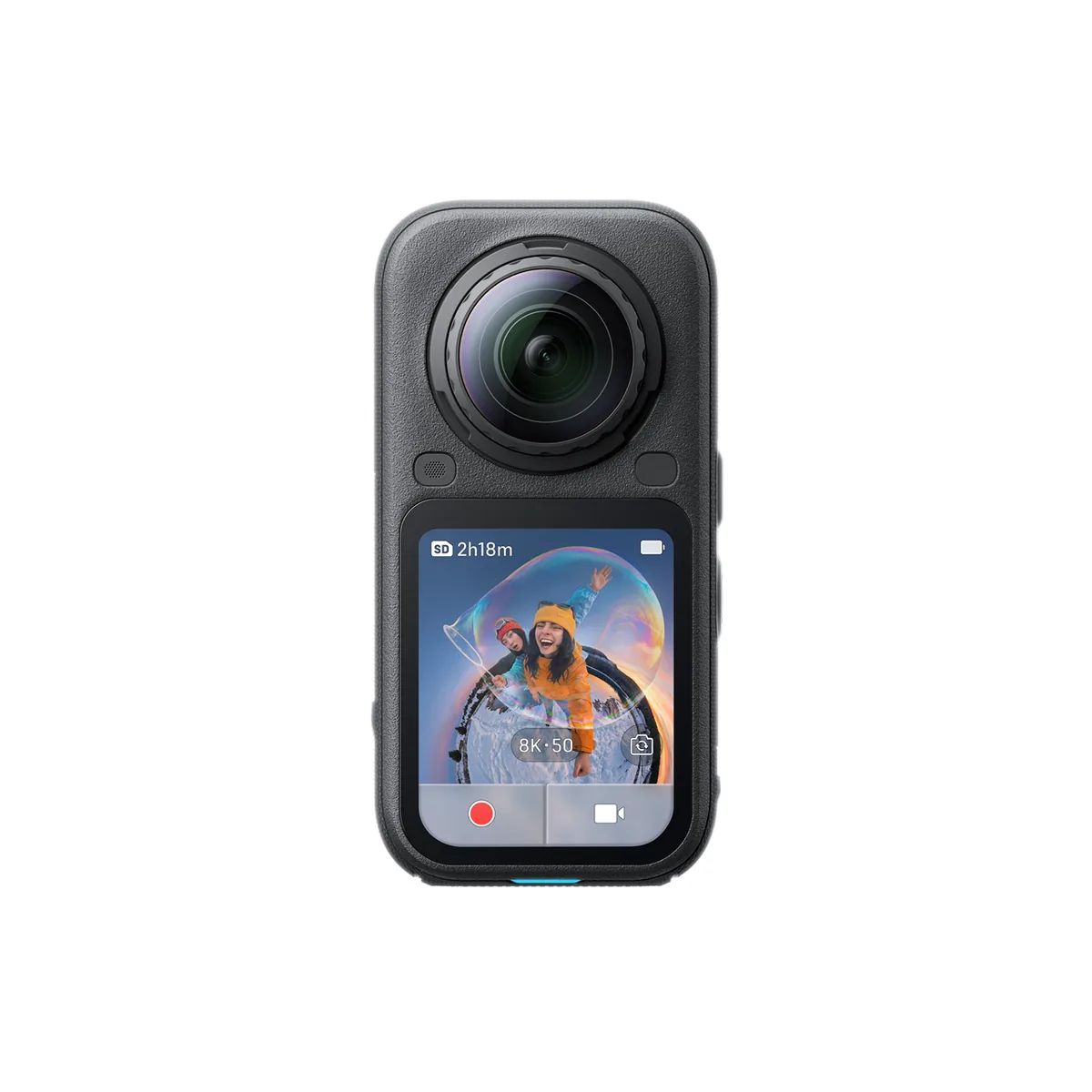
Insta360
Insta360 X6
Two things separate this from every other 360 camera on sale. It shoots 8K at 50 fps rather than 30, which is what makes reframed slow motion possible instead of theoretical; and it is the only one that publishes a colour bit depth at all — 10-bit, with I-Log and in-camera Dolby Vision. The 2600 mAh Xtreme battery is rated at 140 minutes of 8K30, more than double what the GoPro MAX2 claims, and 20 m of bare waterproofing is four times MAX2's. A note on the sensors: Insta360 markets these as one-inch, and the spec sheet says 1/1.1-inch, which on the standard optical-format table works out around 92 mm² per lens rather than a true one-inch's 116. That is still the largest per-lens area in the 360 class, and it is why the low-light gap to the X5 is as visible as it is.
Sensor area against the rest of the catalogue
Derived from the standard optical-format table rather than copied off a spec sheet, because makers print a fraction that hides it. The table and the arithmetic.
Battery, with the small print
- Maker’s claim
- 2 h 20 min at 8K30 360 video, Xtreme battery
- Third-party test
- None collected. We publish a tested figure only where a named outlet has run one and stated its conditions.
What a reframed clip is worth
This camera records 7,680 px across a full 360°. A normal 16:9 clip pulled out of it uses only the slice its field of view covers, so at a typical 80° reframe the usable width is about 1,707 px — roughly 1.7K.
7,680 × (80 ÷ 360) = 1,707 px
An estimate. Stitching, supersampling and the projection move it by a few per cent either way. How this works.
Specifications
What the Insta360+ plan gates
~$35.88 a year, which is why the year-one figure on this page is ~$705 rather than ~$669.
- •Cloud storage from 200 GB up (X-series cameras need the Premium tier)
- •Free camera replacement through Insta360 Care / FlexiCare
- •A free extra year of warranty
- •Priority shipping from the Insta360 store
Features
- ●8K 360 video at 50 fps
- ●10-bit colour with I-Log and in-camera Dolby Vision
- ●Single-lens mode at 4K120 and 5K60 in 4:3
- ●Replaceable Lenses 2.0 — the fisheye glass is a user-swappable part
- ●Waterproof to 20 m bare, 60 m in the dive case
- ●2600 mAh Xtreme battery, 140 minutes at 8K30
- ●120 MP spherical stills and a 16K timelapse mode
- ●47 GB of usable internal storage plus microSD
Strengths
- +8K at 50 fps means reframed footage can actually be slowed down without looking like a slideshow
- +The only 360 camera here that publishes a bit depth, and it is 10-bit with Dolby Vision
- +140 minutes at 8K30 is more than twice what the GoPro MAX2 claims
- +20 m bare waterproofing, four times MAX2's and double the DJI Osmo 360's
- +Replaceable lenses mean a scratched fisheye is a part, not a write-off
- +Insta360 Studio is still the most capable reframing software in the category
Drawbacks
- −$669, the most expensive 360 camera in this catalogue
- −Insta360 calls the sensors one-inch; the spec sheet says 1/1.1-inch, which is about 20 % less area
- −No GPS, so speed and route overlays need a phone or a watch
- −Reframing every clip is a real time cost that no 360 camera avoids
- −Reframing 8K spherical footage is heavy work on any machine, and the files are very large
What owners say
Summarised from owner discussions and published long-term reviews.
The X6 is the 360 camera most owners recommend to someone buying their first one, and the two specifications behind that are 8K at 50 fps and 20 metres of bare waterproofing. The frame rate is the more interesting of the two: every other 8K 360 camera stops at 30, which makes reframed slow motion impossible, and this one does not.
It is also the only 360 camera in this catalogue that publishes a colour bit depth at all, with 10-bit, I-Log and in-camera Dolby Vision. Replaceable lenses carry over from the X5, which owners consider the single most important feature of a 360 camera because exposed fisheye glass is what eventually ends one.
Two cautions run through the discussion. Owners who already have an X5 mostly talk each other out of upgrading, and the price gap to DJI's Osmo 360 is large enough that it comes up in almost every thread. The third is not about the camera at all: editing 8K spherical footage is slow, disk-hungry work, and it is the reason a fair number of 360 cameras end up unused.
What owners like
- +8K at 50 fps is the upgrade owners weighing it against an X5 keep landing on — reframed slow motion becomes possible rather than theoretical
- +It is the only 360 camera here with a published colour bit depth, and it is 10-bit with I-Log and Dolby Vision
- +Twenty metres bare is the deepest in the 360 class, and owners who dive treat that as the deciding number
- +Replaceable lenses carry over from the X5, which owners regard as the most important thing about owning a 360 camera
- +Insta360 Studio's reframing and tracking remain the best software in the category, and owners cross-shopping DJI say so
Common complaints
- −Owners already on an X5 frequently conclude the upgrade is not worth it, and threads asking that question get more 'keep the X5' answers than not
- −Insta360 markets the sensors as one-inch while the spec sheet says 1/1.1-inch, which is about 20 % less area — a distinction owners have noticed
- −DJI's Osmo 360 undercuts it by a wide margin, and price is the most common objection raised
- −Working with 8K spherical footage in post is described by owners as a genuine time cost — one widely-agreed thread calls it hellish
Questions owners keep asking
Is the X6 worth upgrading to from an X5?
Are the sensors really one inch?
What does 8K 360 actually give me after reframing?
How hard is 360 footage to edit?
X6 or DJI Osmo 360?
Insta360 X6, head to head
Cameras people look at alongside it
More from Insta360 →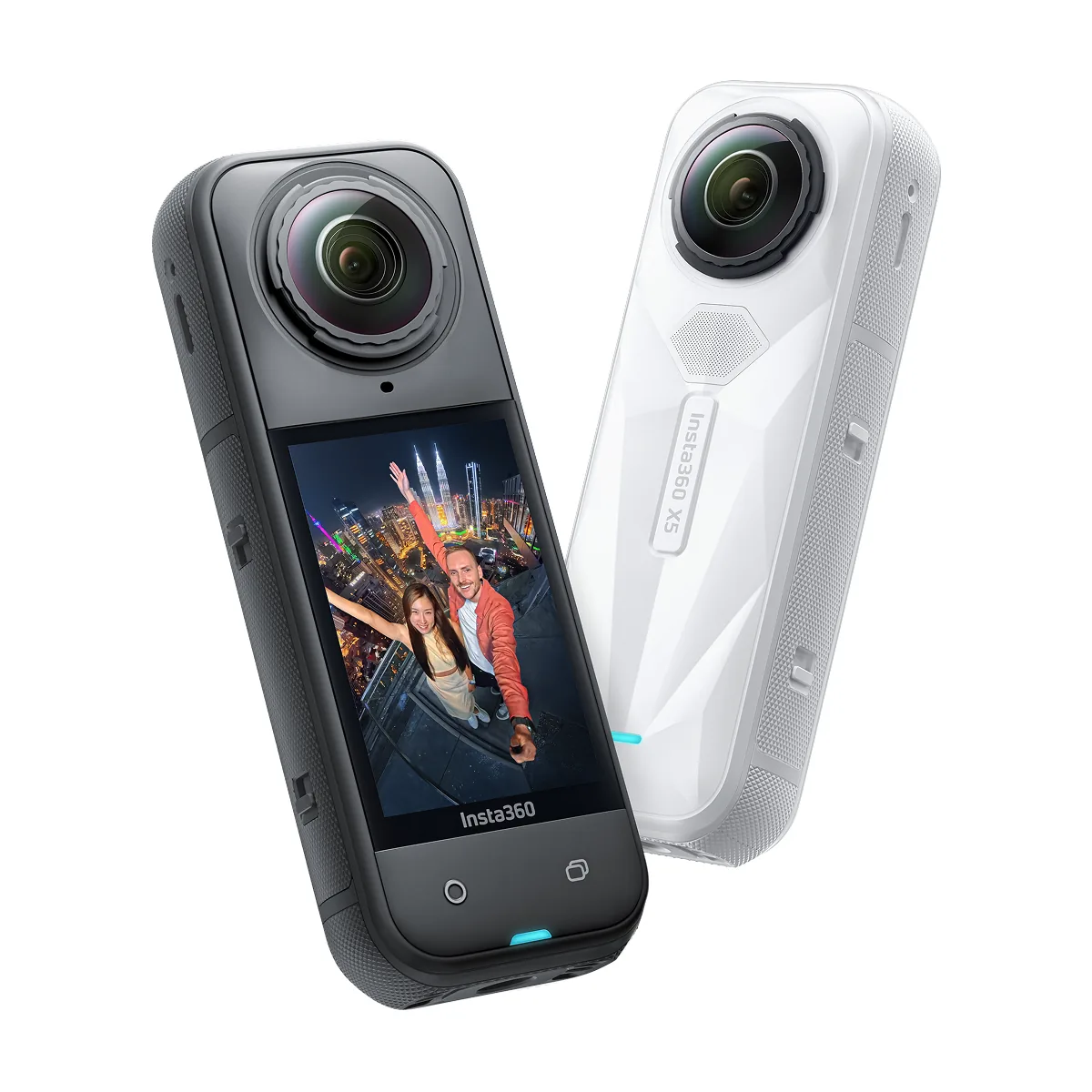
Insta360
Insta360 X5
Replaceable lenses arrived here first, and they changed the economics of owning a 360 camera. The fisheye glass on any spherical camera sticks out past the body and gets scratched — it is the category's defining failure mode — and on the X5 a scratched lens is a twenty-minute swap with a part you can keep in a bag. Around that, dual 1/1.28-inch sensors with roughly 2.4× the area of the X4's drive 8K30 supersampled down from an 11K capture, and a triple-chip stack runs PureVideo for low light. Fifteen metres of bare waterproofing, 2400 mAh, 135 minutes at 5.7K30. Against the newer X6 it gives up 8K50, 10-bit and 5 m of depth; against everything else, it is still the 360 camera most people should buy.
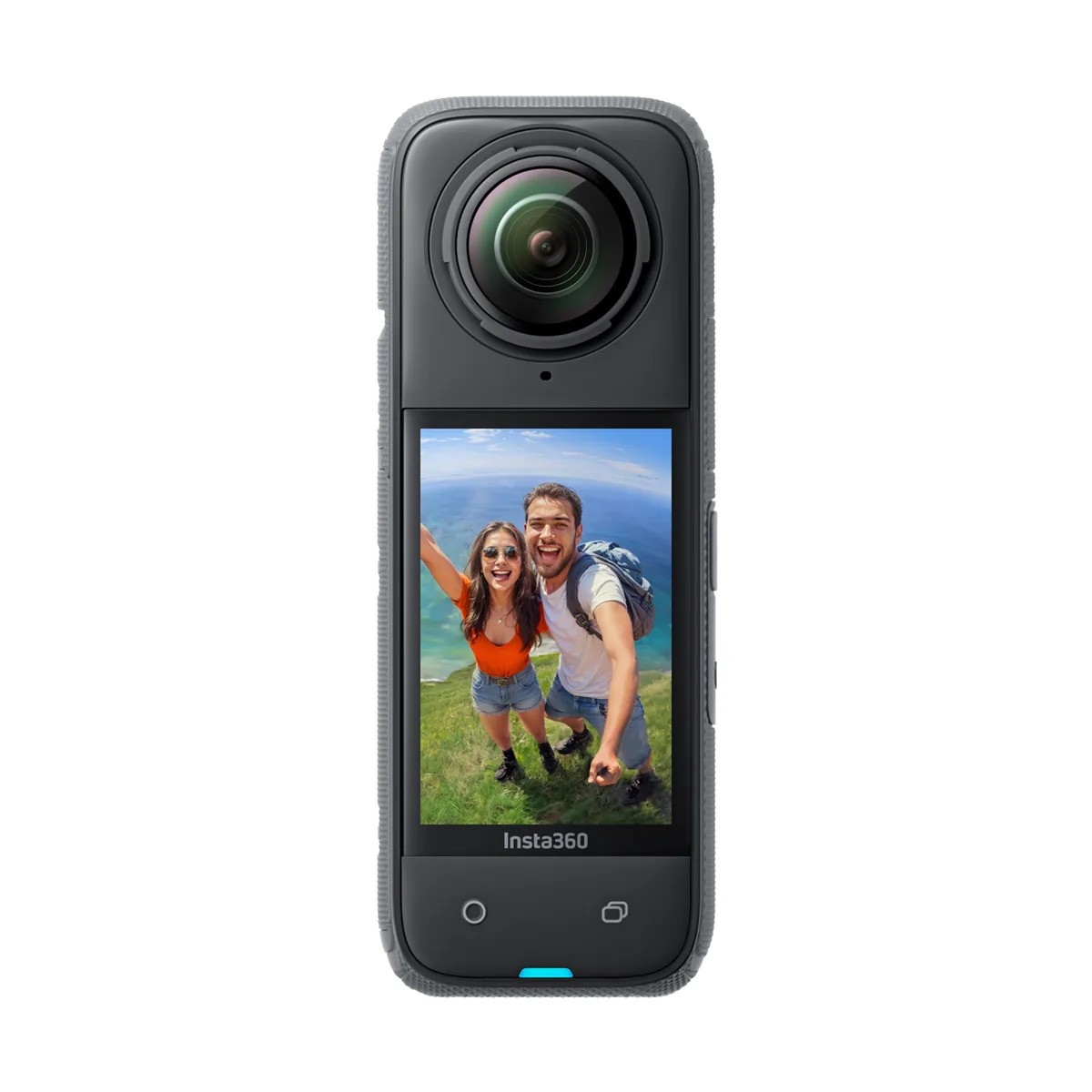
Insta360
Insta360 X4
First of the X-series to shoot 8K, and the model that made spherical capture mainstream on bike handlebars and ski poles. The 200 Mbps ceiling is actually the highest of any X-series camera except the X6 — Insta360 spent the bitrate on holding detail through the stitch. What the X4 does not have is the thing the X5 introduced: its lenses are fixed, and a scratched fisheye is a service job. The sensors are 1/2-inch, less than half the X5's area, which is exactly where the two cameras separate once the light drops. Bought as a daylight camera at its current price, it is a lot of resolution for the money; bought expecting the X5's night performance, it will disappoint.
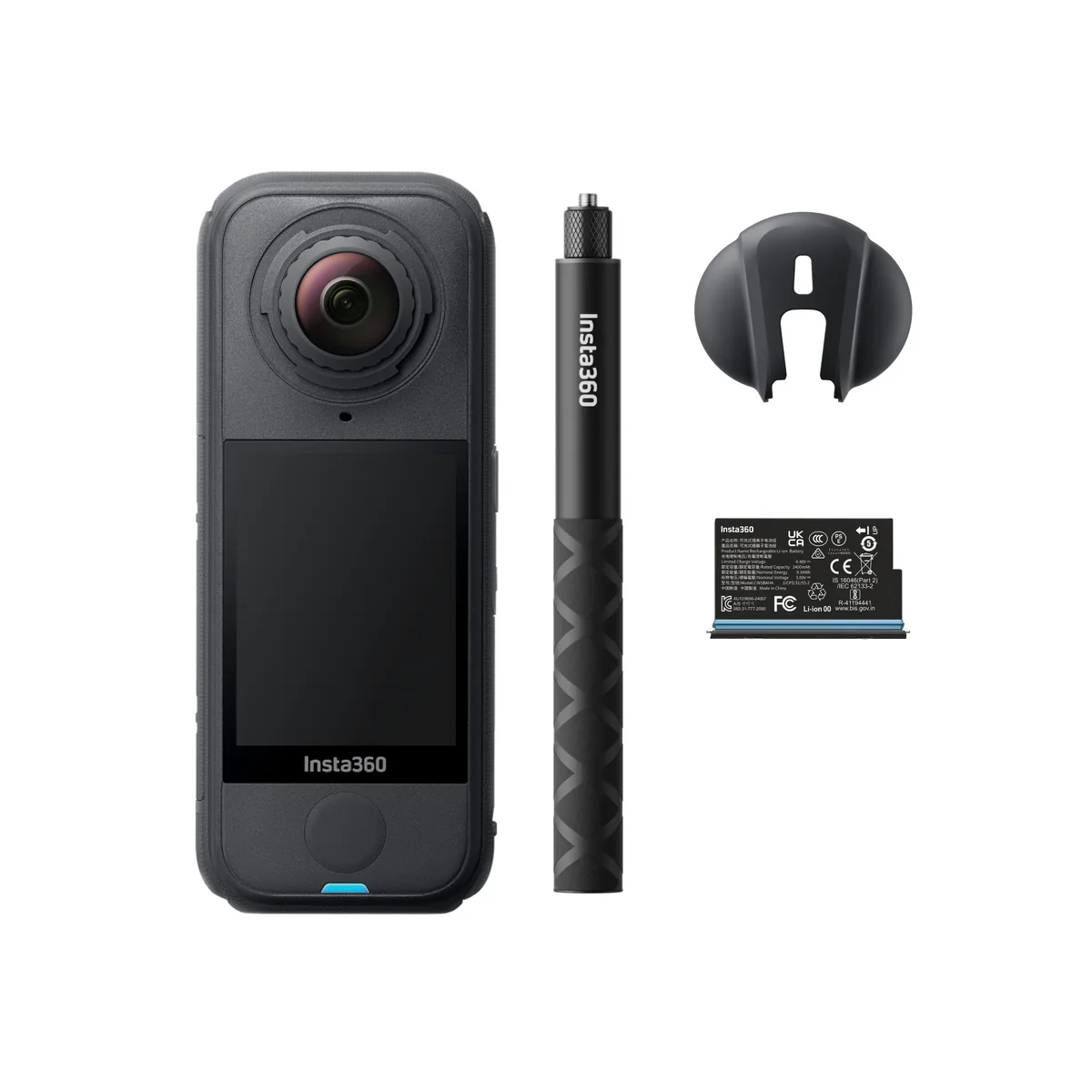
Insta360
Insta360 X4 Air
Lightest 8K 360 camera Insta360 has built, at 165 g — 35 g under the X5 and 31 g under the X6 — and that number is the whole pitch. On a helmet or the end of a selfie stick, thirty grams is the difference between a rig that stays put and one that wobbles. It keeps the things that matter most from the X5: replaceable lenses, 15 m of bare waterproofing, magnetic mounting. The sensors step down to 1/1.8-inch, roughly half the X5's area, and the frame-rate ceiling drops to 4K50 in single-lens mode against the X5's 4K120. Against the X4 it is the better camera in every way except peak bitrate, at a lower price, which makes the older model a hard recommend now.