GoPro
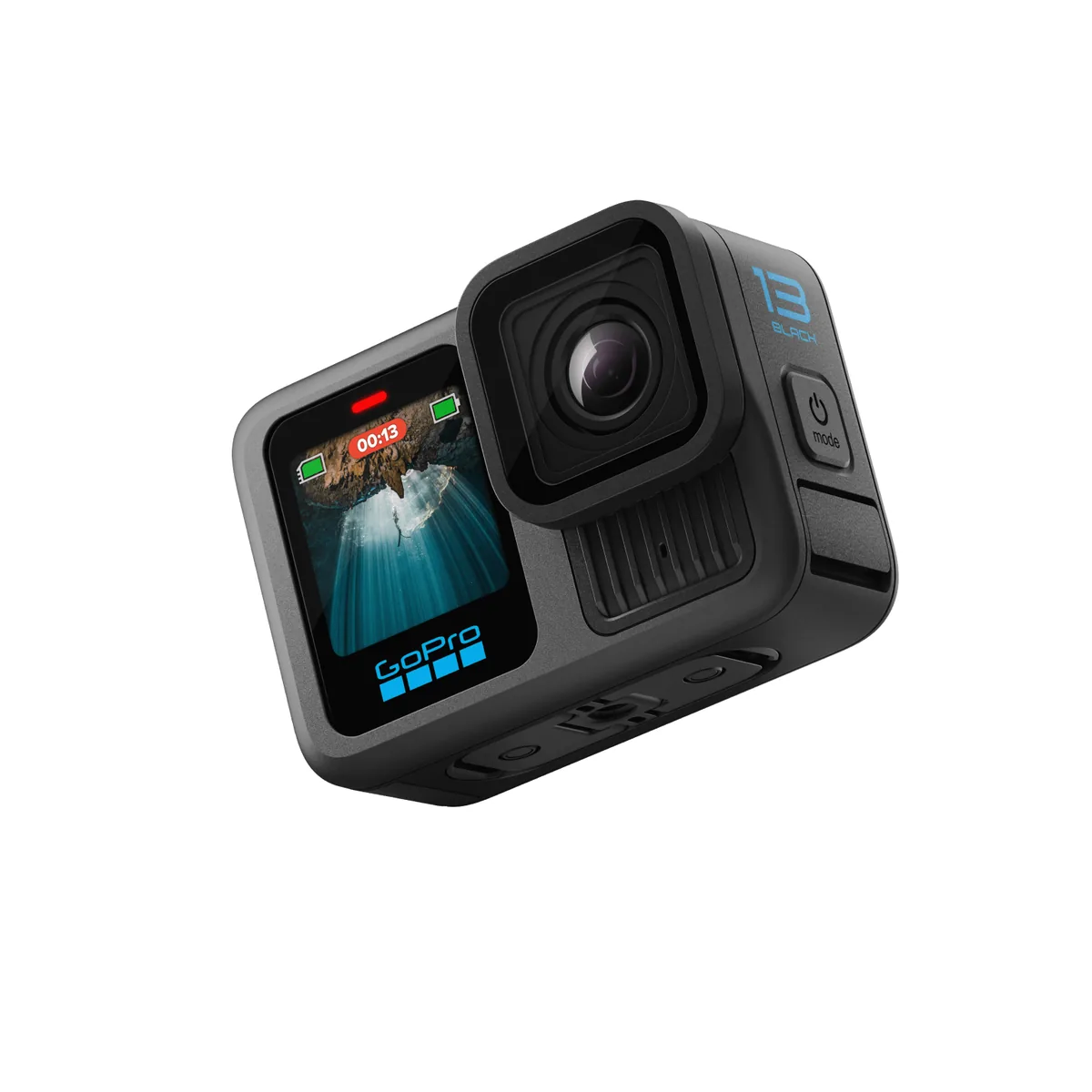
GoPro HERO13 Black
Three generations of the same 1/1.9-inch sensor have gone into this body, and GoPro spent the thirteenth on everything around it instead: a magnetic latch that replaces the fold-out fingers, a 1900 mAh Enduro cell, and the HB-series lens mods the camera recognises and reconfigures itself for. That is the honest shape of the Hero 13. Image quality sits roughly where the Hero 12 left it, the sensor is small next to what DJI and Insta360 now ship, and the stabilisation is still the best in the category by a margin nobody has closed. In a group test that ran four cameras to shutdown side by side, this was the only one that hit its published runtime. The mount ecosystem is the other argument: a decade of GoPro-fingered clamps, chest harnesses, helmet mounts and third-party rigs all still bolt straight on, which is why it stays the default on a motorcycle fairing or a ski helmet even when a rival's spec sheet reads better.
Sensor area against the rest of the catalogue
Derived from the standard optical-format table rather than copied off a spec sheet, because makers print a fraction that hides it. The table and the arithmetic.
Battery, with the small print
- Maker’s claim
- 2 h 30 min at 1080p30 continuous, Enduro battery
- Third-party test
- 2 h 39 min — continuous recording to shutdown, four cameras run simultaneously at one matched resolution (resolution not published). Published by road.cc action camera group test.
Specifications
What the GoPro Premium plan gates
~$59.99 a year, which is why the year-one figure on this page is ~$459 rather than ~$399.
- •Unlimited cloud storage and automatic upload for GoPro footage
- •Guaranteed camera replacement, no questions asked
- •Up to 50% off GoPro accessories
Features
- ●HyperSmooth 6.0 with full 360° Horizon Lock
- ●HB-series lens mods (Macro, Ultra Wide, Anamorphic) auto-detected by the camera
- ●10-bit colour and GP-Log for grading
- ●5.3K60, 4K120 and 2.7K240 slow motion
- ●Magnetic latch mount plus the classic folding fingers
- ●Built-in GPS with data overlays
- ●1900 mAh Enduro battery rated for cold
Strengths
- +Stabilisation nobody has matched — full horizon lock holds through barrel rolls, not just tilts
- +Only camera in a four-way group test that reached its published battery runtime
- +HB lens mods genuinely change what the camera is, and it reconfigures itself when you fit one
- +Every GoPro mount made since 2014 still fits, which is most of the aftermarket
- +GP-Log and 10-bit give real grading headroom at this price
Drawbacks
- −The 1/1.9-inch sensor is now the smallest among the flagships, and it shows after dusk
- −Runtime at 5.3K30 drops to roughly an hour and a half, far from the 1080p headline
- −Cloud sync, unlimited storage and camera replacement all sit behind a $59.99/yr plan
- −HyperSmooth Pro, the desktop stabiliser in GoPro's Player app, is a paid in-app purchase on top
- −Waterproof to 10 m bare, half what DJI and the Insta360 X6 manage
What owners say
Summarised from owner discussions and published long-term reviews.
The Hero 13 is the camera most people in the discussion still recommend for anything mounted to a helmet, a handlebar or a chest harness, and the reason is almost never image quality. It is stabilisation and mounts. Owners who have tried the alternatives describe HyperSmooth with full horizon lock as the thing that makes helmet footage watchable, and the decade of GoPro-fingered accessories as the thing that makes it mountable anywhere. That combination keeps winning arguments that the spec sheet loses.
The complaints are remarkably consistent and they are not about the picture. Heat is first: owners report the camera stopping mid-clip in warm conditions, and the workarounds people share range from removing the door to building small heatsinks. The app is second. The subscription is third, and it now costs $59.99 a year.
Where it lands: if the camera is going on a mount and the footage has to be steady, this is still the default, and owners who left for a bigger sensor often say they missed the mounting ecosystem more than they expected. If the camera is mostly handheld, or if a lot of the shooting happens after sunset, the discussion tilts firmly toward DJI.
What owners like
- +Owners who came from a Hero 9 or 10 describe the stabilisation gap as the reason they stayed with GoPro rather than switching
- +The magnetic latch gets consistently good notes from people who mount and unmount several times a ride — it is faster than the thumbscrew with gloves on
- +GP-Log grades well: owners posting log-versus-graded pairs get results that hold up next to much more expensive cameras
- +Battery life is the one endurance figure owners report actually meeting, and the Enduro cell holds up in cold better than the older packs
- +The macro and ultra-wide lens mods come up repeatedly as the thing that made the upgrade worth it, rather than the sensor
Common complaints
- −Overheating is the single most repeated complaint in the whole GoPro discussion, and it did not go away with this generation — owners have built cooling mods for it, and a skier posted a 'Camera too hot' warning taken in the snow
- −The Quik app is a persistent source of frustration, and its removal from some app stores left owners unable to offload footage the way they had been
- −Several long-term owners report three failed cameras in as many years, and warranty experiences vary sharply by region
- −The sensor has not changed in three generations, and owners cross-shopping against DJI notice it immediately in low light
Questions owners keep asking
Does the Hero 13 overheat?
Is the GoPro subscription worth it?
Is the Hero 13 a big upgrade over the Hero 12?
How long does the battery actually last?
Can I use it underwater without a housing?
GoPro HERO13 Black, head to head
Cameras people look at alongside it
More from GoPro →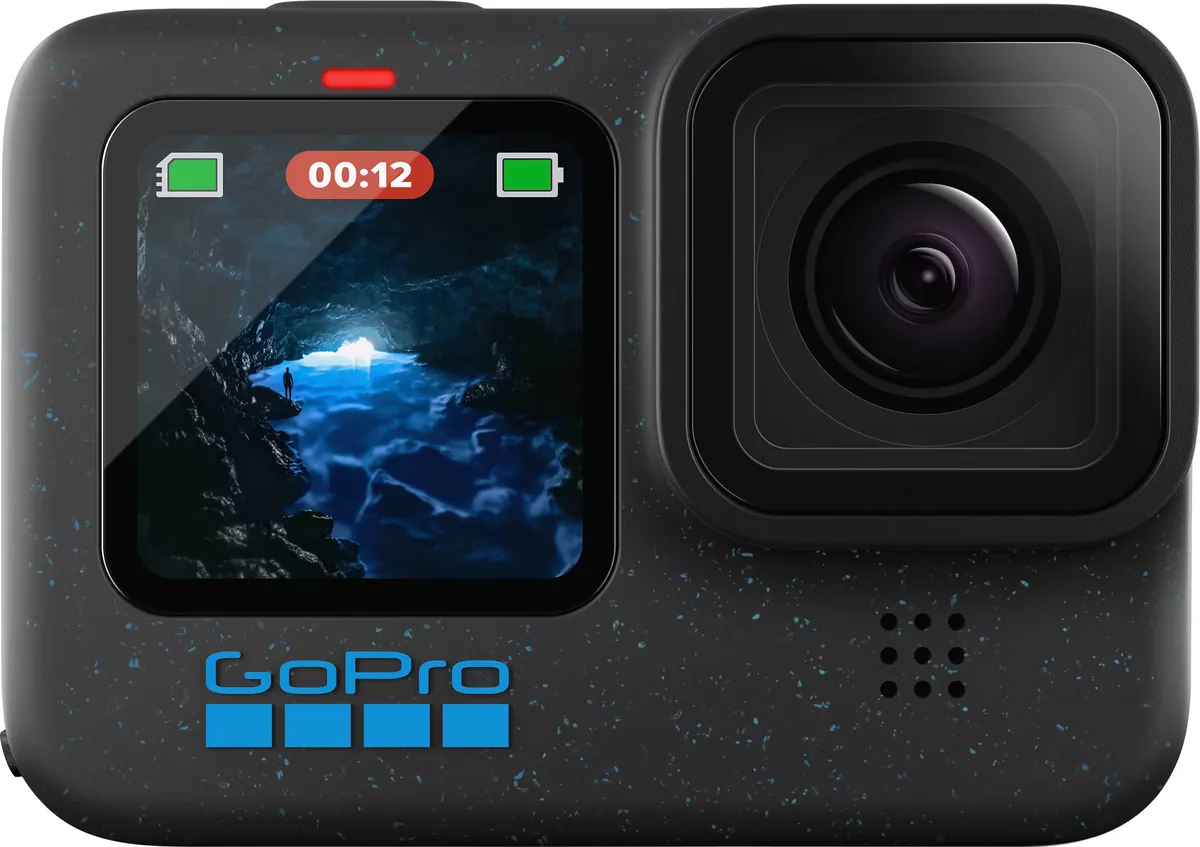
GoPro
GoPro HERO12 Black
Last year's flagship is still in GoPro's line-up, and the gap to the Hero 13 is narrower than the generation number suggests. Same 1/1.9-inch sensor, same 5.3K60 and 4K120, same 10-bit GP-Log, same HyperSmooth 6.0 with full horizon lock. What you give up is the magnetic latch, the HB lens-mod system, roughly 180 mAh of battery — and GPS, which GoPro dropped on this generation and restored on the next. That last one is the deciding spec for anyone who wants speed, altitude or route data burned into the footage; for everyone else the Hero 12 is a cheaper Hero 13 that takes the same mounts. It also carries a 1/4-20 thread in the base, which the Hero 11 did not.
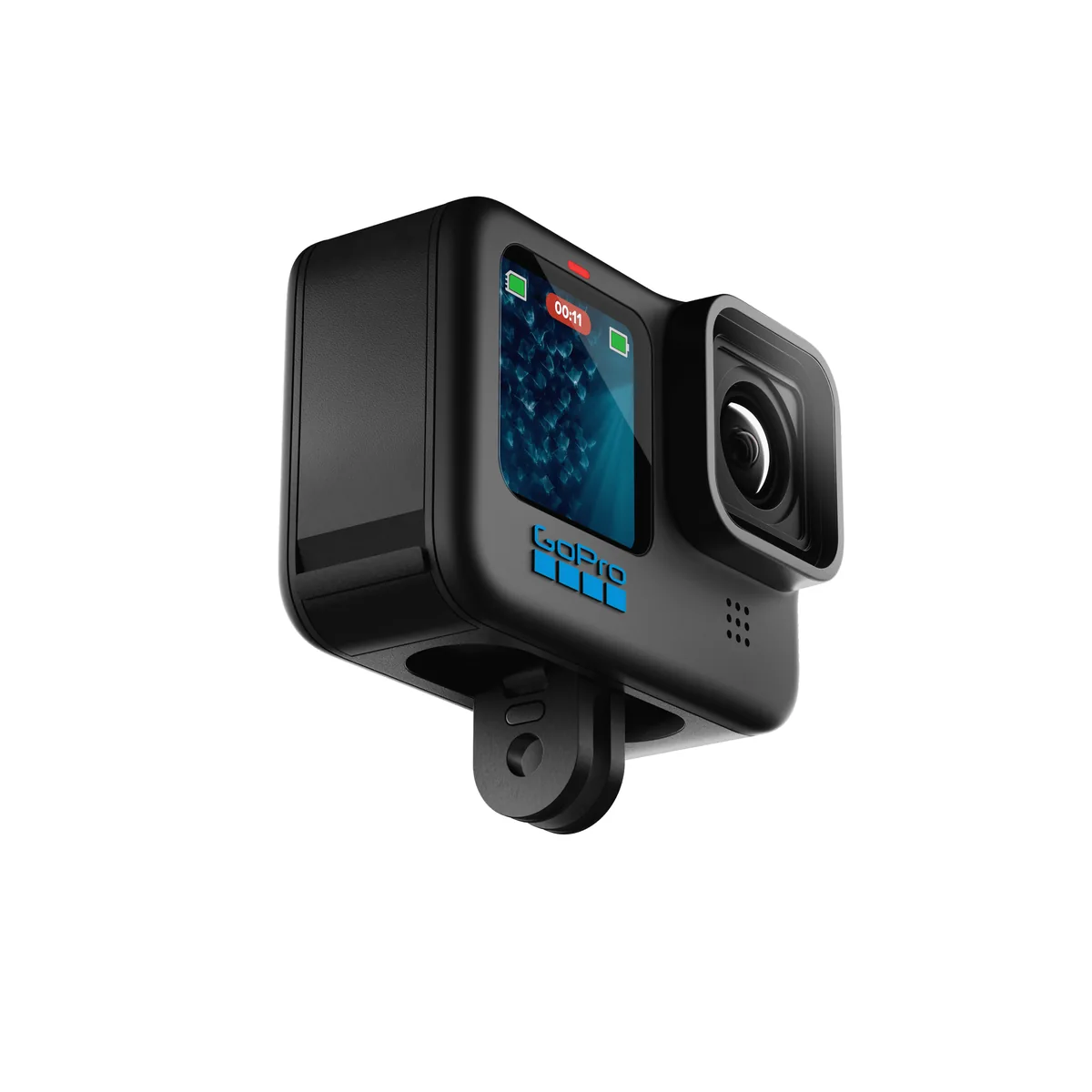
This is the camera that introduced the tall 8:7 sensor readout, and it is the reason the Hero body has barely changed since. Shooting the full 27 MP frame and cropping to 16:9, 9:16 or 4:5 in the edit is a workflow rather than a spec, and it is still the single most useful thing GoPro has added in five years. The Hero 11 keeps GPS, which the Hero 12 dropped, and the older HyperSmooth 5.0 is a hair behind 6.0 without being visibly worse. Where it falls behind is GP-Log, which arrived a generation later, and the 1/4-20 thread, which did not. GoPro no longer lists it, so remaining stock and used cameras are the way to buy one now.
GoPro
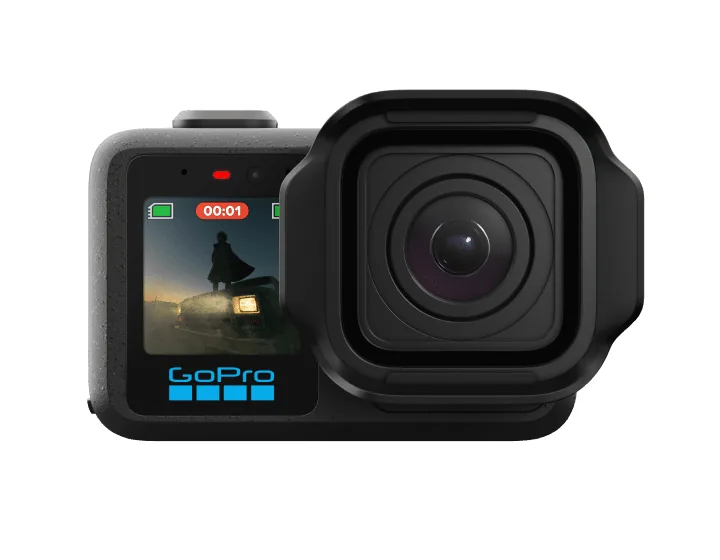
GoPro MISSION 1
GoPro calls the MISSION line cinema cameras, and the marketing is doing some work — this is a rugged, mountable, 20 m-waterproof body with GoPro fingers, a magnetic latch and HyperSmooth, which is an action camera by any reasonable definition. What has actually changed is the class of everything inside: the same 1-inch, 50 MP sensor as the MISSION 1 PRO, more than three times the area of the Hero 13's, with a 240 Mbps ceiling, GP-Log2 with a supplied LUT, 8K at 30 fps, 4K at 120 and 1080p at 240, and a 2150 mAh cell GoPro rates for five hours at 1080p30 in Endurance Mode. What the PRO adds is speed: 8K60, 4K240, 1080p480 and burst slow motion. The cost of either is size and money: at 207 g and 80 mm long it is a different object on a helmet, and $599 is a different budget. If you have been hitting the ceiling of what a Hero can grade to, this is the answer; if you have not, it is a lot of camera to strap to a bike.