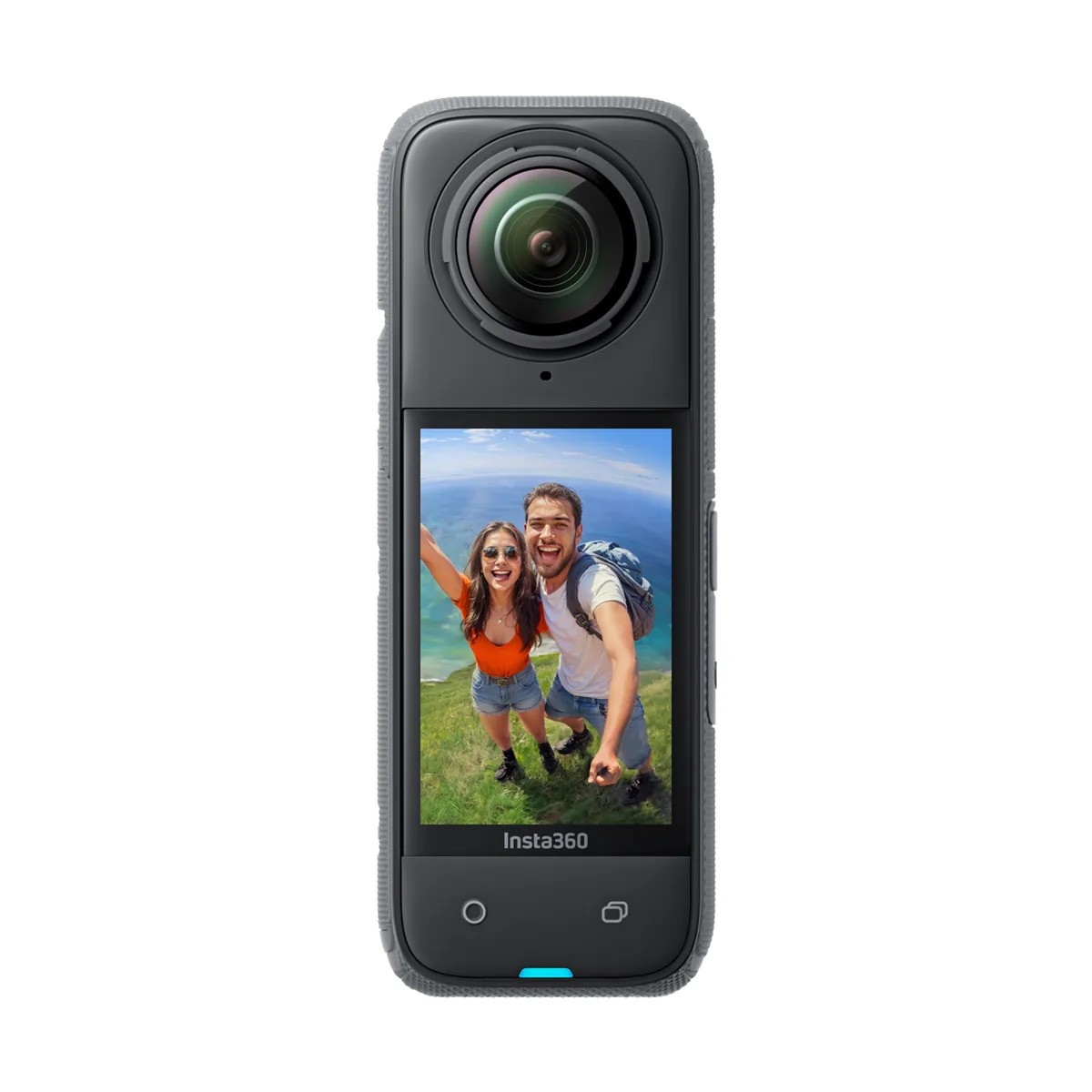
Insta360
Insta360 X4
First of the X-series to shoot 8K, and the model that made spherical capture mainstream on bike handlebars and ski poles. The 200 Mbps ceiling is actually the highest of any X-series camera except the X6 — Insta360 spent the bitrate on holding detail through the stitch. What the X4 does not have is the thing the X5 introduced: its lenses are fixed, and a scratched fisheye is a service job. The sensors are 1/2-inch, less than half the X5's area, which is exactly where the two cameras separate once the light drops. Bought as a daylight camera at its current price, it is a lot of resolution for the money; bought expecting the X5's night performance, it will disappoint.
Sensor area against the rest of the catalogue
Derived from the standard optical-format table rather than copied off a spec sheet, because makers print a fraction that hides it. The table and the arithmetic.
Battery, with the small print
- Maker’s claim
- 1 h 15 min at 8K30 360 video, screen off, Wi-Fi on auto, high bitrate
- Third-party test
- None collected. We publish a tested figure only where a named outlet has run one and stated its conditions.
What a reframed clip is worth
This camera records 7,680 px across a full 360°. A normal 16:9 clip pulled out of it uses only the slice its field of view covers, so at a typical 80° reframe the usable width is about 1,707 px — roughly 1.7K.
7,680 × (80 ÷ 360) = 1,707 px
An estimate. Stitching, supersampling and the projection move it by a few per cent either way. How this works.
Specifications
What the Insta360+ plan gates
~$35.88 a year, which is why the year-one figure on this page is ~$465 rather than ~$429.
- •Cloud storage from 200 GB up (X-series cameras need the Premium tier)
- •Free camera replacement through Insta360 Care / FlexiCare
- •A free extra year of warranty
- •Priority shipping from the Insta360 store
Features
- ●8K30 spherical video
- ●200 Mbps ceiling, the highest of any X-series camera below the X6
- ●Single-lens 4K60 and 4K240 bullet time
- ●Waterproof to 10 m bare, 50 m in the dive case
- ●2400 mAh battery
- ●72 MP spherical stills
- ●Built-in lens-guard mount points
Strengths
- +8K spherical for well under the X5's price
- +200 Mbps holds fast-motion detail better than the bitrate on most rivals
- +Same Insta360 Studio reframing workflow as the current flagships
- +2400 mAh battery matches the X5's
- +Bullet-time at 4K240 is a mode no flat camera can reproduce at all
Drawbacks
- −Lenses are not replaceable — a scratch is permanent, and these lenses scratch
- −1/2-inch sensors, under half the X5's area, and it shows the moment light drops
- −75 minutes at 8K30 against the X5's 135 at 5.7K30
- −No magnetic mount; it is a 1/4-20 thread and an adapter
- −No magnetic mount, so it needs an adapter to use the accessories the newer bodies clip straight onto
What owners say
Summarised from owner discussions and published long-term reviews.
The X4 was the camera that made 8K spherical ordinary, and it is still a lot of resolution for the money. Insta360 spent the bitrate — 200 Mbps, higher than any X-series camera except the X6 — on holding detail through the stitch, and in good light owners are content with the result.
What separates it from the X5 is not resolution but sensor area and lenses. The 1/2-inch sensors are less than half the X5's, which is exactly where the two cameras diverge once the light drops, and the lenses are fixed, so a scratch is a service job. There is a recurring thread asking whether the X4 is really as bad as people say; the consensus answer is that it is fine in daylight and disappointing at dusk.
The other thing owners raise is pace. Between the X4, the X4 Air, the X5 and the X6 arriving in quick succession, more than one owner has asked whether their camera was obsolete within a year of buying it.
What owners like
- +8K spherical at a price well below the current flagships, and in daylight owners are generally happy with it
- +The 200 Mbps ceiling is the highest of any X-series camera below the X6, and it holds fast-motion detail
- +The same reframing workflow and software as the current models
- +A very large stock of cheap accessories, selfie sticks and guards exists for it
Common complaints
- −Lenses are not replaceable, and on a camera whose glass protrudes this is the specification that decides its lifespan
- −The 1/2-inch sensors are less than half the X5's area, and owners asking whether the X4 is 'really that bad' mostly get told it is a daylight-only camera
- −Seventy-five minutes at 8K30 against the X5's much longer 5.7K figure
- −Owners have asked whether their X4 is already obsolete barely a year after buying it, which says something about the release cadence
Questions owners keep asking
Is the X4 still a good buy?
Why is the X5 so much better in low light?
Can the X4's lenses be replaced if I scratch them?
Insta360 X4, head to head
Cameras people look at alongside it
More from Insta360 →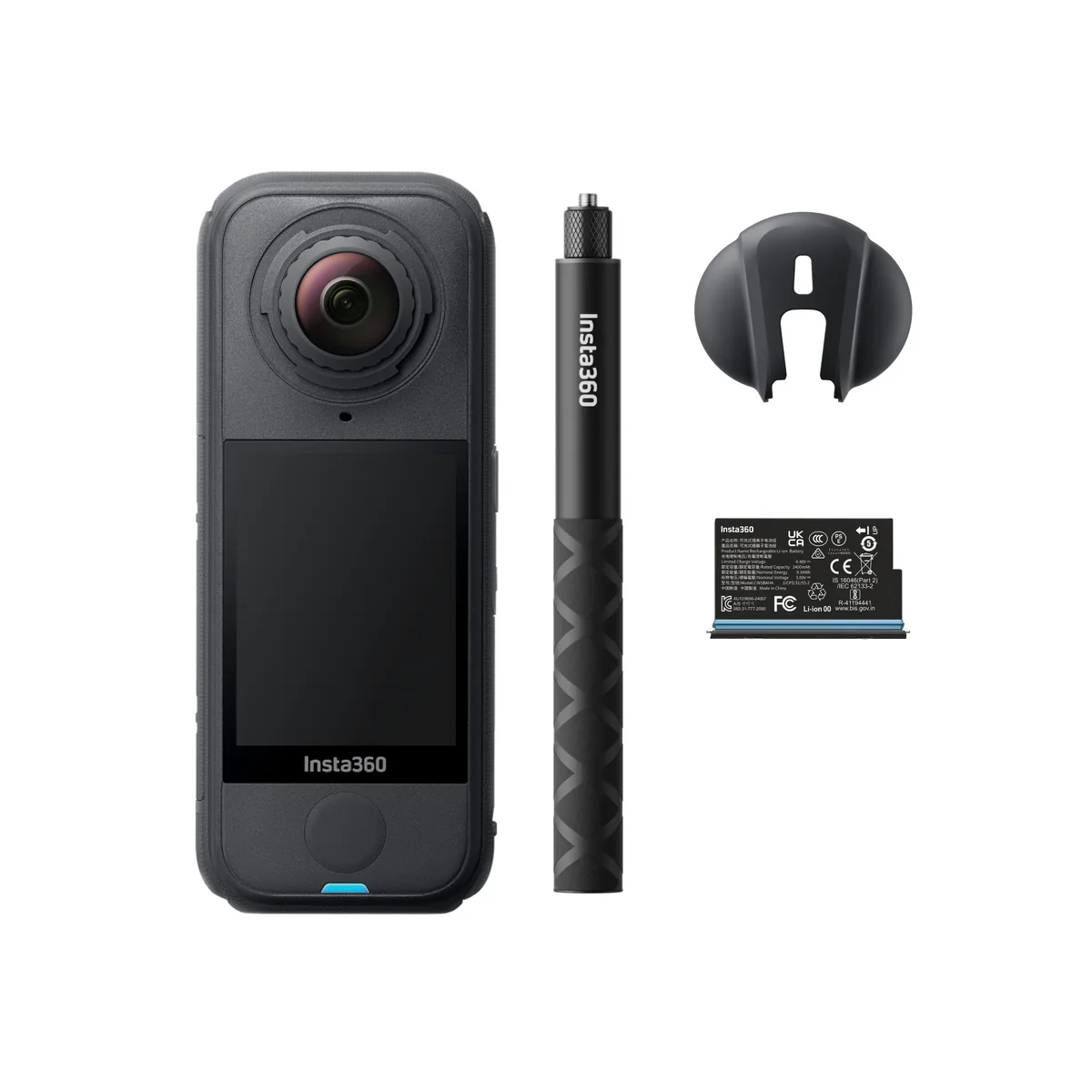
Insta360
Insta360 X4 Air
Lightest 8K 360 camera Insta360 has built, at 165 g — 35 g under the X5 and 31 g under the X6 — and that number is the whole pitch. On a helmet or the end of a selfie stick, thirty grams is the difference between a rig that stays put and one that wobbles. It keeps the things that matter most from the X5: replaceable lenses, 15 m of bare waterproofing, magnetic mounting. The sensors step down to 1/1.8-inch, roughly half the X5's area, and the frame-rate ceiling drops to 4K50 in single-lens mode against the X5's 4K120. Against the X4 it is the better camera in every way except peak bitrate, at a lower price, which makes the older model a hard recommend now.
Insta360
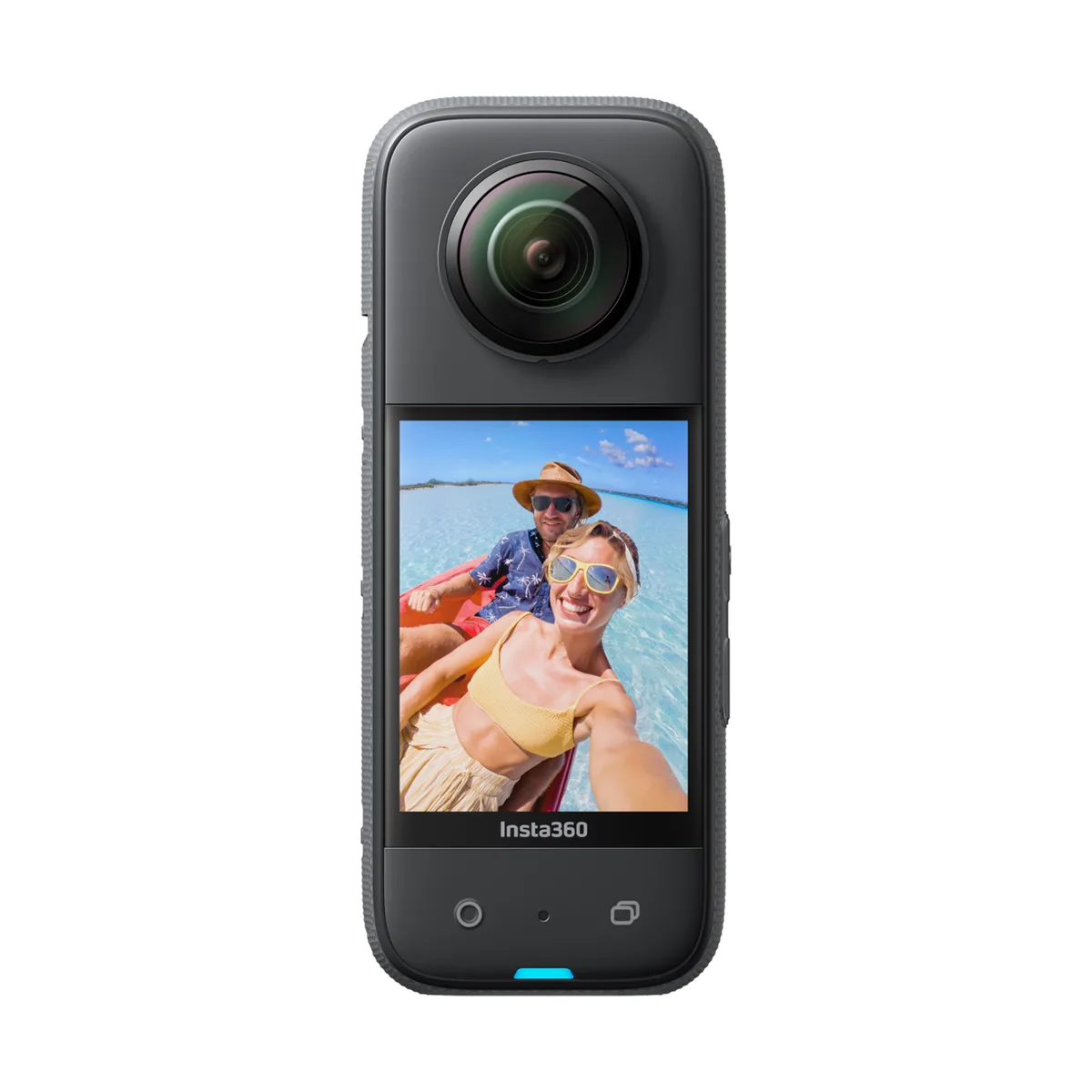
Insta360 X3
Four years old and still on sale, because the entry price into spherical capture has not really moved below it. 5.7K30 is the ceiling — this is the generation before the X-series went 8K — and reframed to a normal 16:9 shot that leaves roughly 1.3K of usable width at a typical field of view, which is the honest number the marketing never quotes. What it does well is exactly what it did in 2022: throw it on a selfie stick, shoot everything, decide where to point later, and let FlowState make the result watchable. The 2.29-inch screen was the first usable one on a 360 camera, and the invisible selfie stick trick still reads as magic to anyone who has not seen it.
Insta360
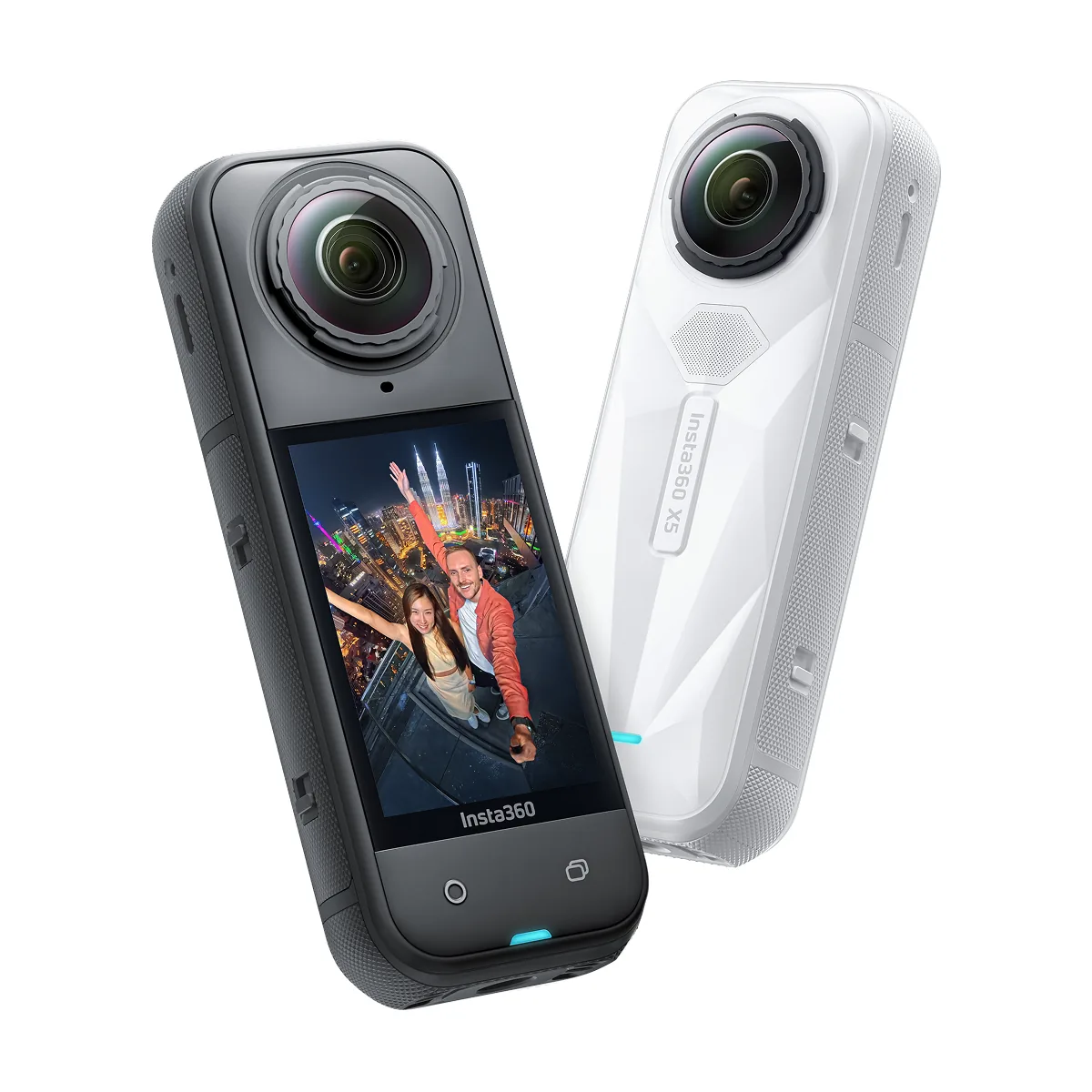
Insta360 X5
Replaceable lenses arrived here first, and they changed the economics of owning a 360 camera. The fisheye glass on any spherical camera sticks out past the body and gets scratched — it is the category's defining failure mode — and on the X5 a scratched lens is a twenty-minute swap with a part you can keep in a bag. Around that, dual 1/1.28-inch sensors with roughly 2.4× the area of the X4's drive 8K30 supersampled down from an 11K capture, and a triple-chip stack runs PureVideo for low light. Fifteen metres of bare waterproofing, 2400 mAh, 135 minutes at 5.7K30. Against the newer X6 it gives up 8K50, 10-bit and 5 m of depth; against everything else, it is still the 360 camera most people should buy.