DJI action and 360 cameras
DJI has 6 cameras in this catalogue, priced from ~$229 to ~$519, across 4 types. The largest sensor in the lineup belongs to the DJI Osmo Pocket 3 at 116 mm², and the cheapest is the DJI Osmo Action 4 at ~$229.
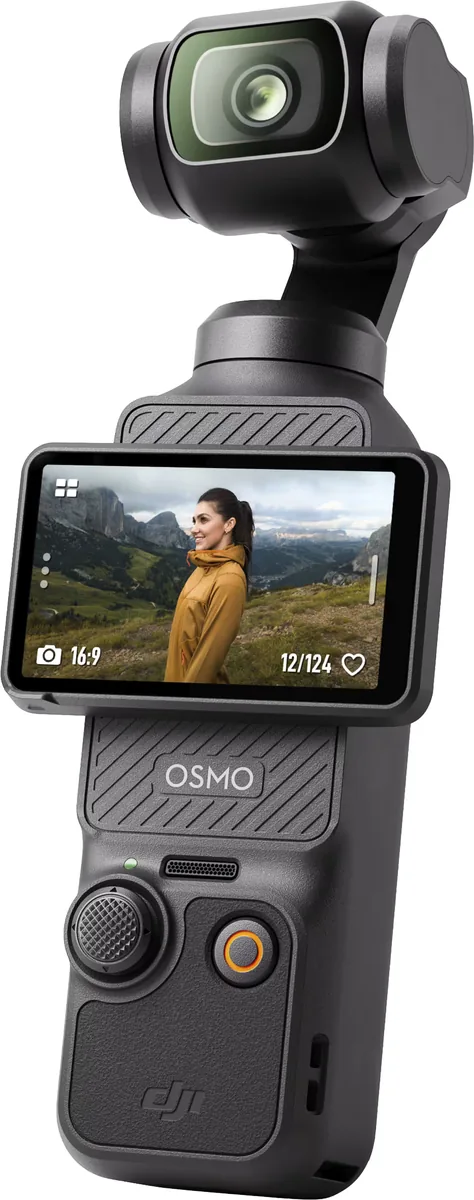
Not an action camera, and it lands in this catalogue because it is the thing people cross-shop against one and then buy instead. The reason is the 1-inch sensor — 116 mm², the largest here — behind a three-axis mechanical gimbal rather than a software crop. Mechanical stabilisation costs nothing in resolution and produces a specific look: a floating, locked-off glide that digital stabilisation approximates but never quite reaches. The rotating 2-inch screen flips to vertical and the camera reconfigures the whole interface, which is why it took over travel vlogging. The trade is everything that makes an action camera an action camera. There is no waterproofing at all, the exposed gimbal is fragile, it is rated only to 0 °C, and nothing mounts to it but a tripod thread.
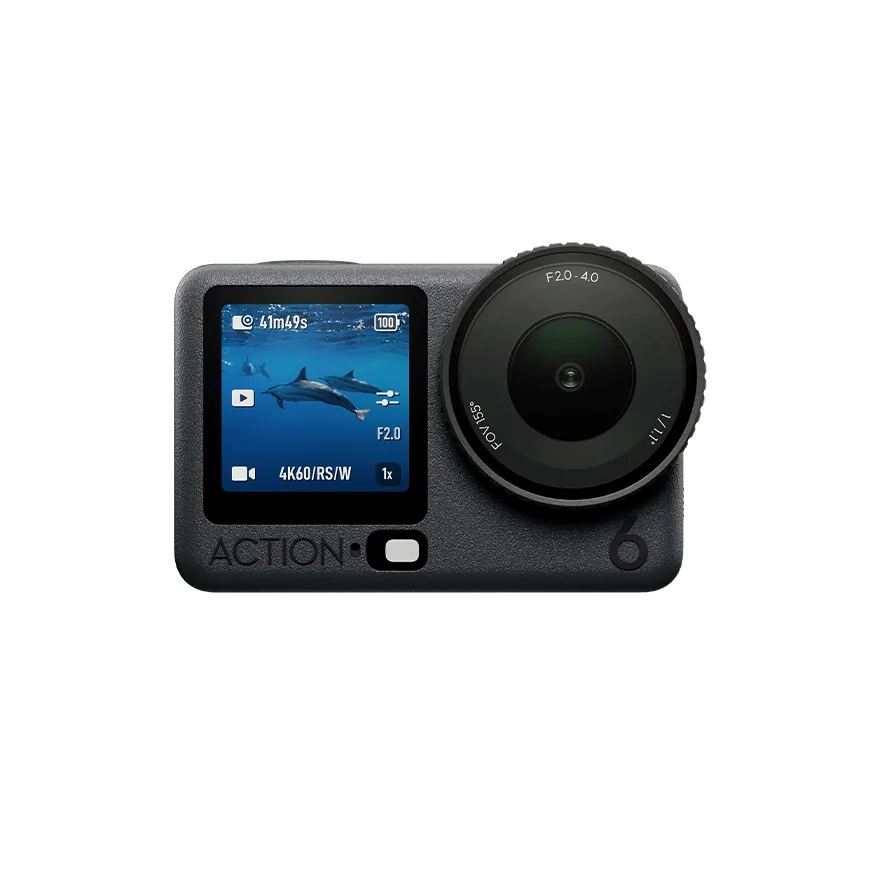
Two firsts arrived on the same body: a variable aperture on an action camera, and a square 1:1 sensor instead of the usual 4:3. The aperture stepping f/2.0 to f/4.0 matters most in bright conditions, where every other action camera has to throw away light with a shutter it cannot slow down or an ND filter you have to remember to bring. The square sensor matters in the edit — the camera measures the full 1:1 frame, so a widescreen crop and a vertical crop come out of one take without either being a stretched afterthought. DJI puts the imaging area at a 4:3 one-inch equivalent; worked off the standard optical-format table the named 1/1.1-inch format gives about 96 mm², still roughly triple a GoPro Hero 13's. Add 8K30, 20 m of bare waterproofing, 64 GB of internal storage and a four-hour battery rating and it is the most complete spec sheet in the category.
DJI
DJI Osmo 360
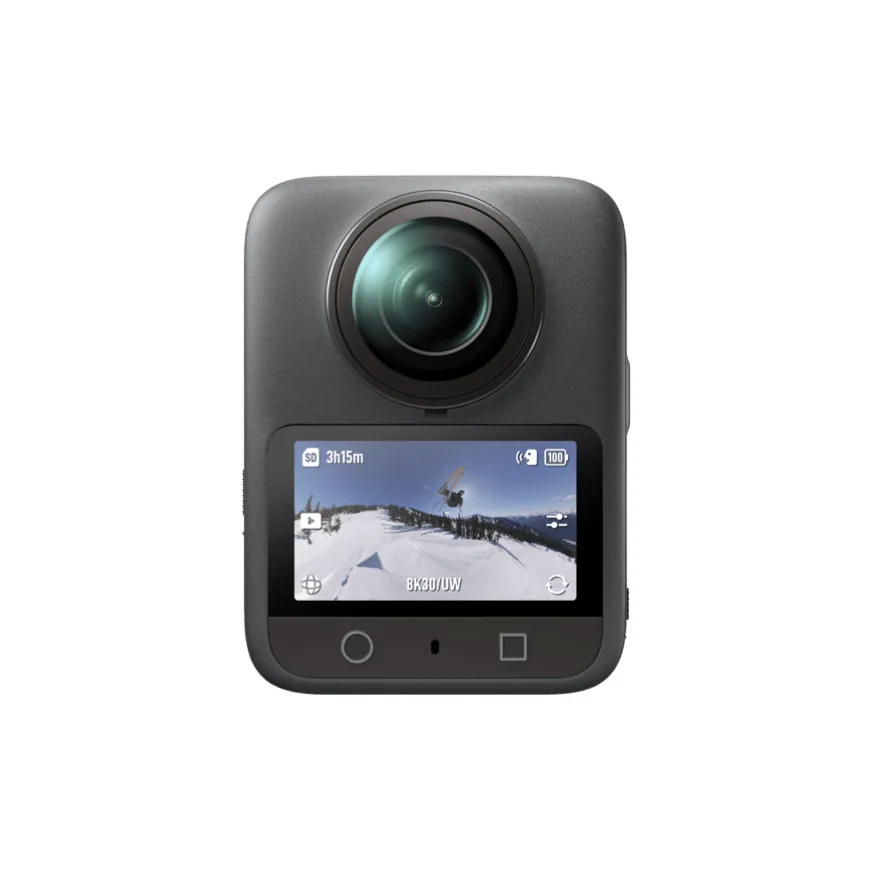
DJI's first 360 camera arrived with the two square 1:1 sensors from the Action 6 programme, which is the most interesting thing about it: a square sensor wastes less of the lens's circular image than a 4:3 one, so more of the light the fisheye collects ends up in the sphere. The result is 8K at 50 fps — the only 360 camera here that gets past 30 at 8K — 170 Mbps, 10-bit across every format, D-Log M, 120 MP panoramas, and a single-lens mode that runs 4K120 with a 155° field of view. It is also the only 360 camera in the catalogue with more than 100 GB of internal storage, which removes the write-speed argument that sinks so many 360 shoots. Against the Insta360 X6 it gives away half the bare waterproof depth, and DJI's reframing app is younger than Insta360's.
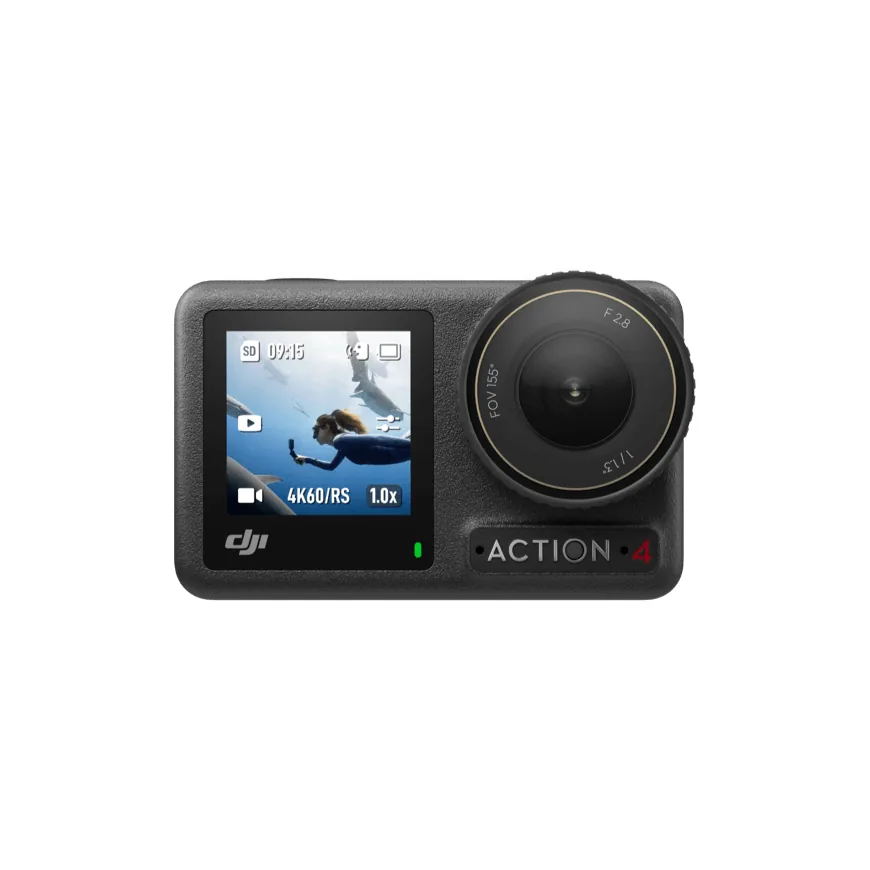
The camera that made a large sensor normal at this price, and it is still on sale two generations later because the fundamentals have not aged. Same 1/1.3-inch chip as the Action 5 Pro, same 4K120, same 10-bit D-Log M, same magnetic mount, 18 m waterproof against the newer model's 20. Where it falls short is the stills sensor readout — 10 MP against 40 — the smaller rear screen, and the absence of internal storage. The 130 Mbps ceiling is actually a touch higher than the Action 5 Pro's. At a street price around $229 it is the cheapest way to get a sensor this size into a waterproof body, and for anyone who mostly shoots video rather than photos the compromises are close to invisible.
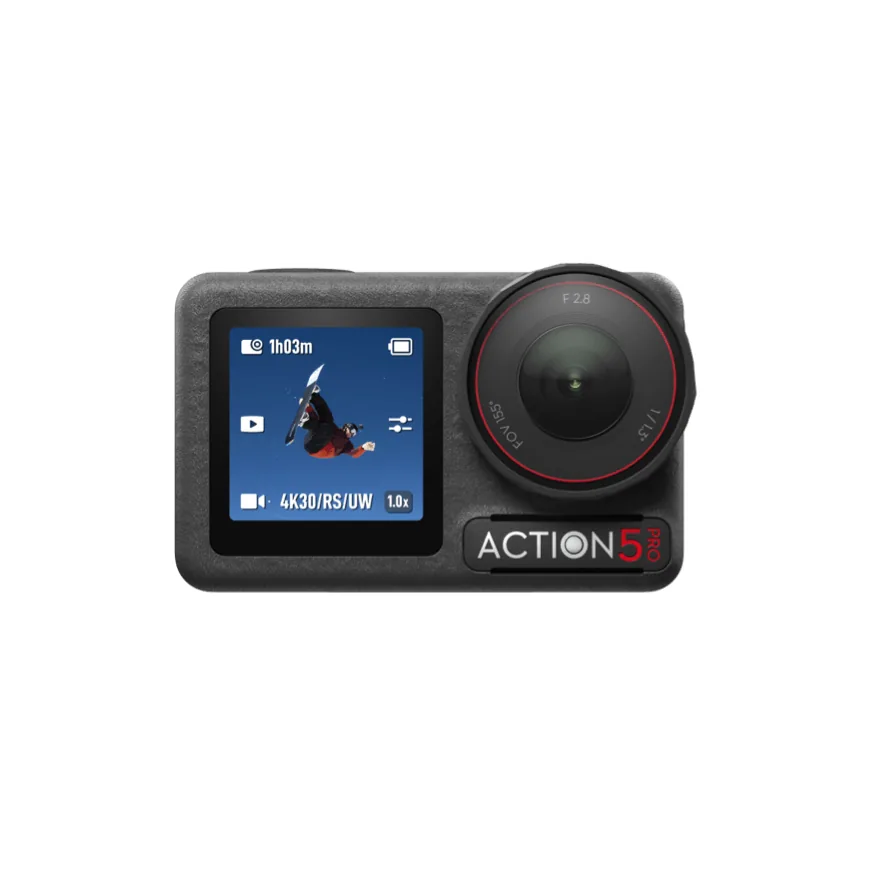
Now that the Action 6 has taken the flagship slot, this is the value argument in the whole category: a 1/1.3-inch sensor with more than twice the area of a GoPro Hero 13's, 20 m of bare waterproofing, 47 GB of internal storage and a genuinely long-running battery, for around three hundred dollars. It gives up the Action 6's variable aperture and square readout and caps at 4K rather than 8K — which matters less than the spec gap suggests, because 4K120 covers almost everything an action camera is actually used for. In an independent four-camera drain test it ran 2 hours 14 minutes, well behind DJI's 1080p24 headline of four hours but comfortably ahead of the Insta360 Ace Pro 2.
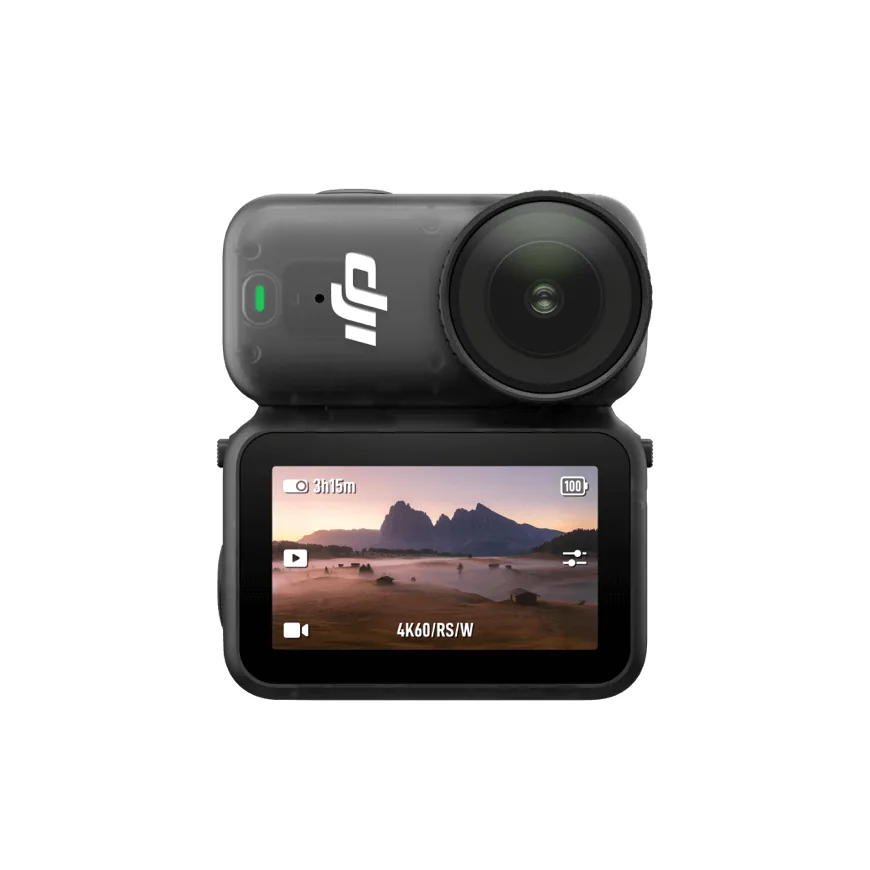
Fifty-two grams, and a 1/1.3-inch sensor inside them — the same size chip DJI puts in a full-size Osmo Action. That is the trick here, and it is why the Nano reads differently from every other tiny camera in the category, all of which shrink the sensor along with the body. It splits in two: the camera module clips onto a magnet under a shirt or on a helmet, and the Vision Dock adds an OLED screen, a second battery and a microSD slot when you want to frame a shot or run long. Alone the module is waterproof to 10 m and lasts about 90 minutes; docked, DJI rates the pair at 200 at 1080p24. What it does not have is full horizon lock — HorizonBalancing corrects tilt, not rotation — and the magnetic pendant is a trust exercise at speed.