GoPro
GoPro HERO11 Black Mini
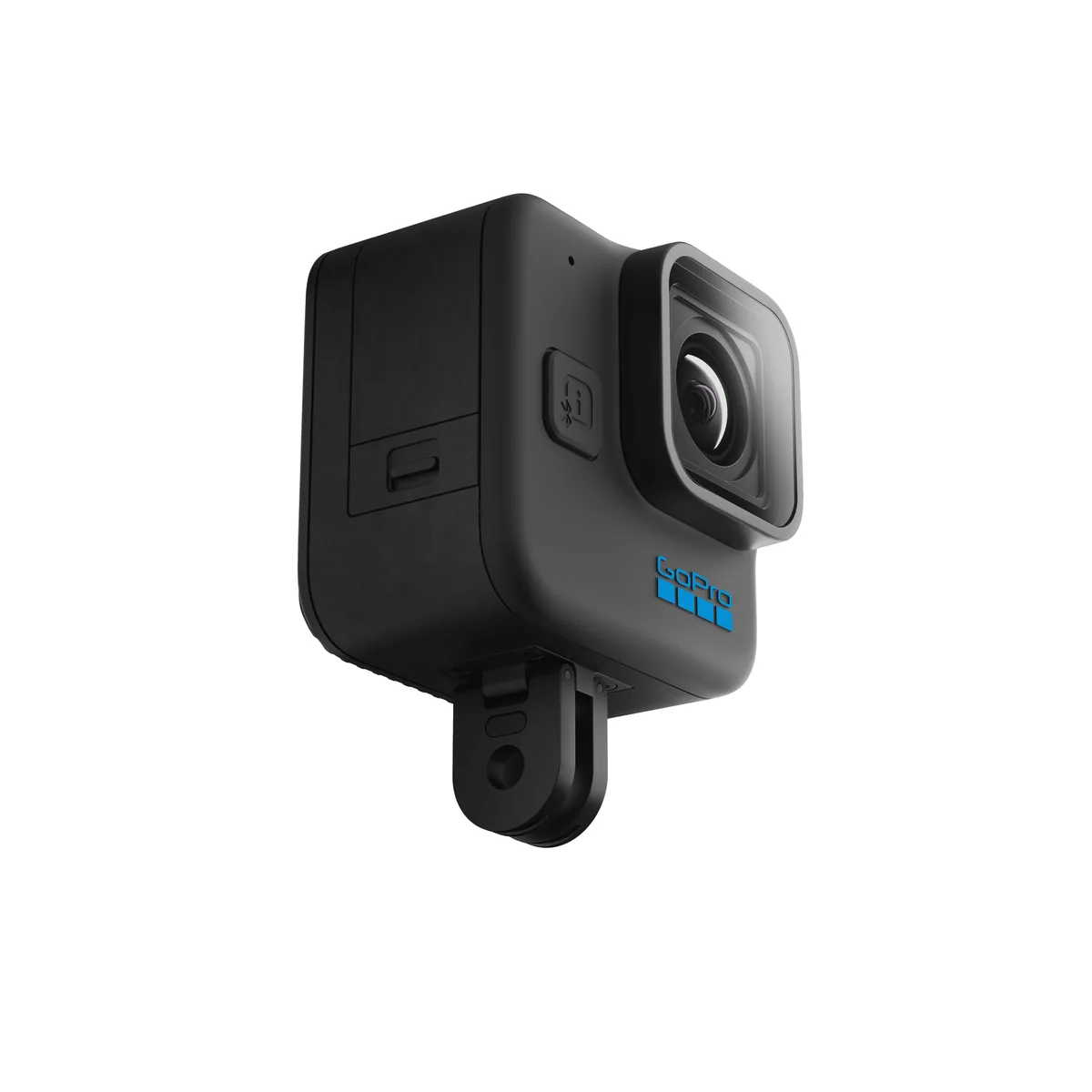
Take a Hero 11, delete the screens, the stereo mics, the GPS and the removable battery, and add a second set of mounting fingers on the back — that is the Mini, and it is a far more coherent product than the subtraction list suggests. One button starts and stops recording. There is no menu to fumble with cold hands, no screen to crack, and two mounting axes so it sits flat against a helmet or a chest harness in either orientation. The imaging is unchanged: the same 5.3K60, the same 8:7 sensor, the same horizon lock. What you lose is any ability to frame a shot or swap a dead battery, which rules it out as anyone's only camera and makes it a very good second one.
Sensor area against the rest of the catalogue
Derived from the standard optical-format table rather than copied off a spec sheet, because makers print a fraction that hides it. The table and the arithmetic.
Battery, with the small print
- Maker’s claim
- 1 h 8 min at 5.3K30 continuous, built-in battery
- Third-party test
- None collected. We publish a tested figure only where a named outlet has run one and stated its conditions.
Specifications
What the GoPro Premium plan gates
~$49.99 a year, which is why the year-one figure on this page is ~$249 rather than ~$199.
- •Unlimited cloud storage and automatic upload for GoPro footage
- •Guaranteed camera replacement, no questions asked
- •Up to 50% off GoPro accessories
Features
- ●Two sets of folding fingers for flat mounting in either orientation
- ●Single-button operation, no menus in the field
- ●Same 5.3K60 and 8:7 sensor readout as the full-size Hero 11
- ●HyperSmooth 5.0 with 360° Horizon Lock
- ●Built-in 1500 mAh battery
Strengths
- +Flagship image quality in a body 24 g lighter and noticeably shorter
- +Nothing to set up in the field — press the button and it records
- +The rear mounting fingers solve the flat-against-a-helmet problem no other GoPro does
- +Cheapest way into GoPro's 8:7 sensor capture
Drawbacks
- −Battery is sealed in, so a long day means a power bank and a cable
- −No screen at all, so framing is guesswork until you review the clip
- −Mono audio only
- −You configure it from the phone app, which is one more thing to have charged
- −No GPS on a camera aimed squarely at athletes, so no speed or route overlays
What owners say
Summarised from owner discussions and published long-term reviews.
Owners describe the Mini as the camera they mount and forget, and mean it as praise. One button, no menus, two sets of mounting fingers so it lies flat on a helmet whichever way round it goes, and the same picture as a full-size Hero 11.
The two complaints are structural rather than fixable. The sealed battery makes it a camera for sessions rather than days, and the small body runs hot — there is a recurring thread asking whether anything can be done about Mini overheating, and the honest answer in the replies is airflow and a lower resolution. As a second angle it is very well liked; as anyone's only camera it is not recommended in the discussion, because there is no way to check a frame before you commit to it.
What owners like
- +The rear mounting fingers are the feature owners rate highest — nothing else in the GoPro line sits flat against a helmet in both orientations
- +One button and no menus is genuinely faster in the cold, and owners who ride in winter keep coming back to that
- +Owners have measured it at around 117 g with both sets of mounting fingers snapped off, which is lighter than any other 5.3K GoPro
- +The image is the full Hero 11: same sensor, same 8:7 capture, same horizon lock
Common complaints
- −Overheating comes up repeatedly and specifically for the Mini — the smaller body has less surface to shed heat through, and owners ask about fixes that do not exist
- −The battery is sealed in, so a long day means a cable and a power bank rather than a spare
- −There is no screen to frame with, so mounting angle is guesswork until you review the clip
- −Mono audio only, and no GPS
Questions owners keep asking
Why does the Mini overheat more than a full-size Hero?
Can I change the battery?
How do I frame a shot with no screen?
GoPro HERO11 Black Mini, head to head
Cameras people look at alongside it
More from GoPro →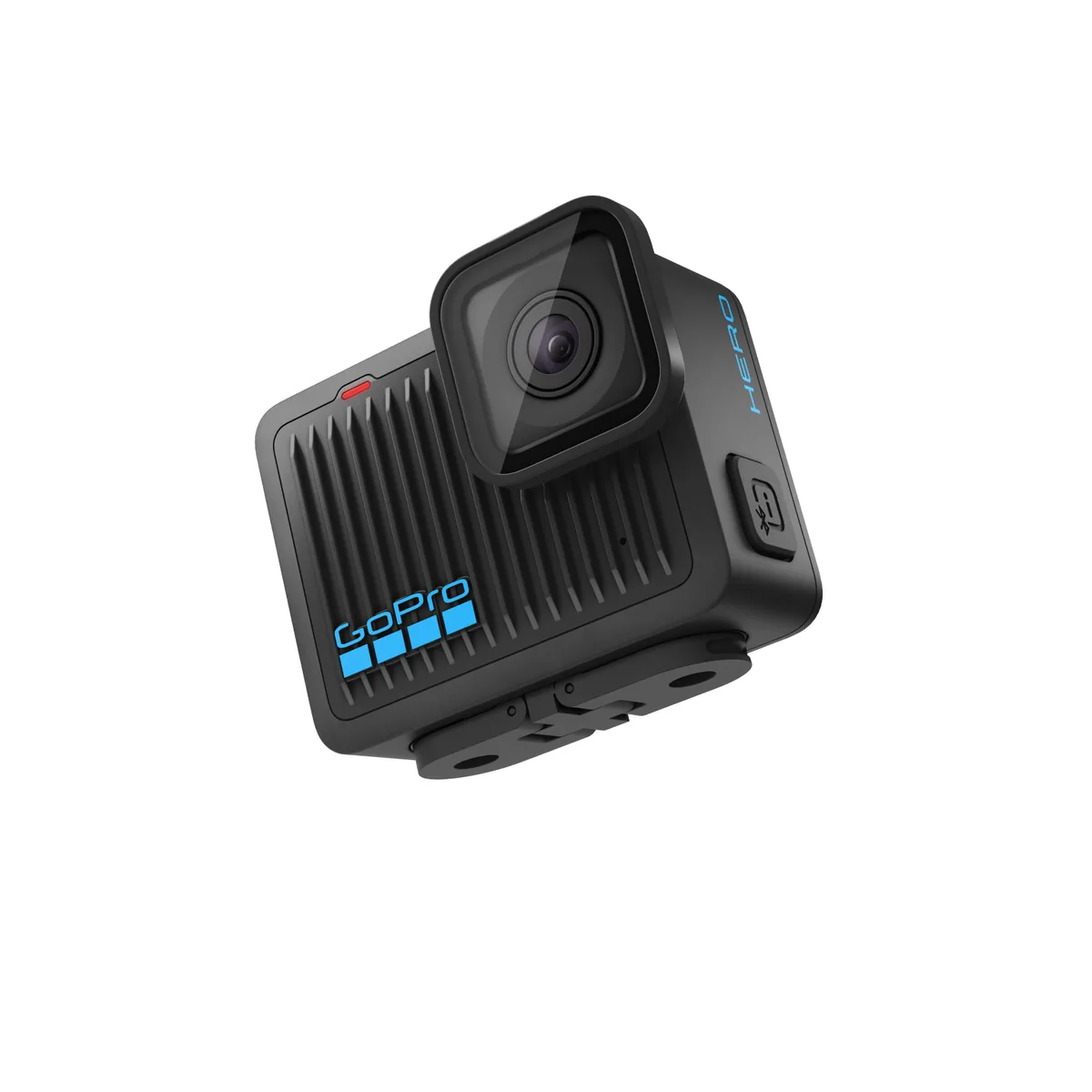
GoPro
GoPro HERO (2024)
Half the weight of a Hero 13 and about a third of the menu depth. This is GoPro's answer to the question of what an action camera looks like when you strip out everything a beginner never touches: 4K30, 12 MP stills, a touchscreen, HyperSmooth, and nothing else. There is no horizon lock, no log profile, no removable battery, no front screen, no GPS and no 60 fps at 4K. The sensor drops to 1/2.3-inch, which is the smallest in the modern GoPro line and about 40 per cent less area than the Hero 13's. In exchange it disappears on a helmet at 86 g and takes every GoPro mount ever made. As a first action camera or a fourth angle it is well judged; as a replacement for a flagship it is not close.
GoPro
GoPro LIT HERO
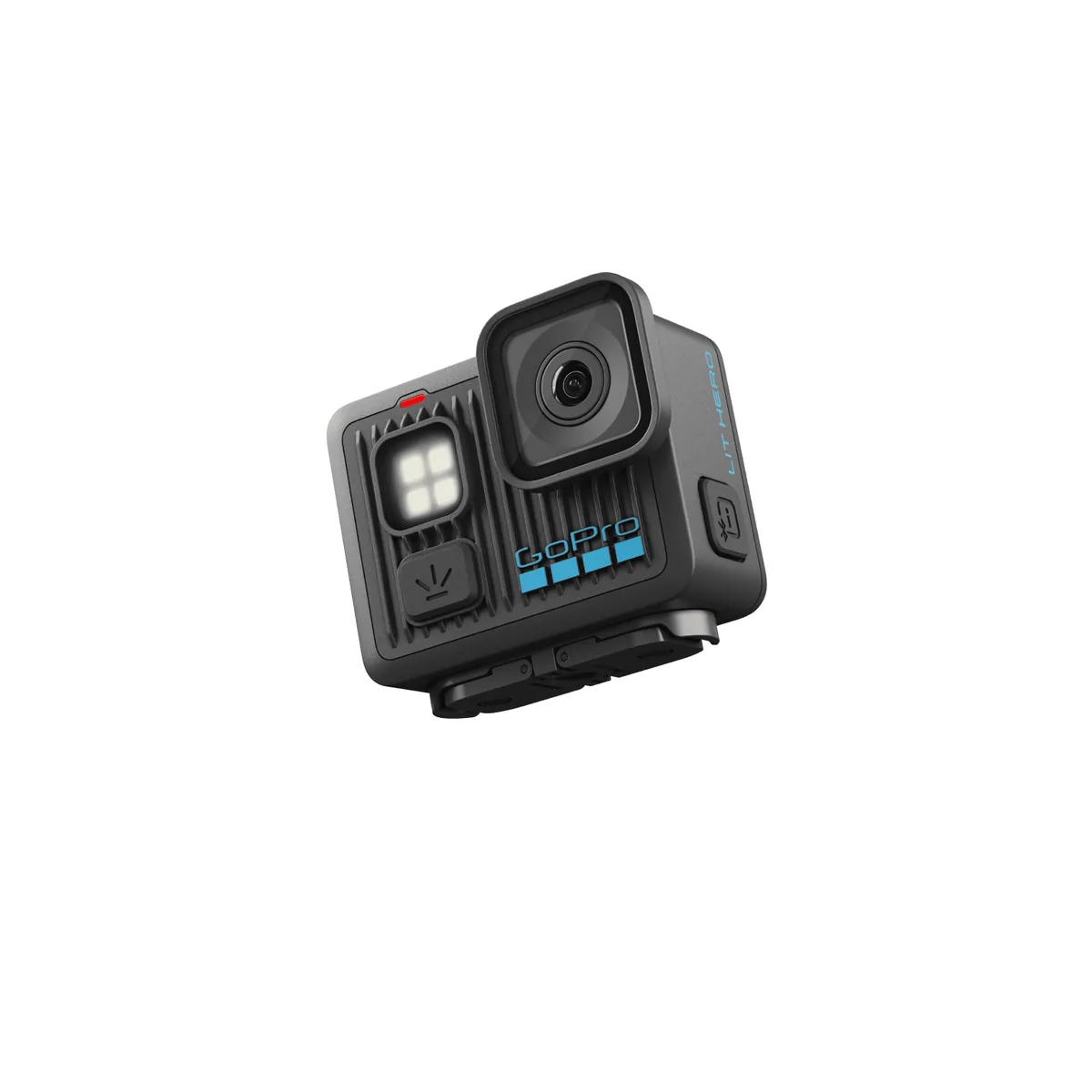
Four LEDs around the lens, and an entire product built to justify them. The LIT HERO is the 2024 HERO body with 4K60 instead of 4K30, a magnetic mount, and a ring light bright enough to be useful at arm's length in a dark bar, a tent, or a night ride. Whether that is worth ninety dollars over the plain HERO depends entirely on whether you shoot after sunset; the sensor is the same small 1/2.3-inch chip, so the light is compensating for a limitation rather than adding a capability. Reviewers have found it the most confusing camera in GoPro's line precisely because it sits above the HERO on price and below the Hero 12 on everything but the LEDs. The bright spot is the 109-minute rating at 4K60, which is better than any full-size Hero manages at that setting.
GoPro
GoPro HERO11 Black
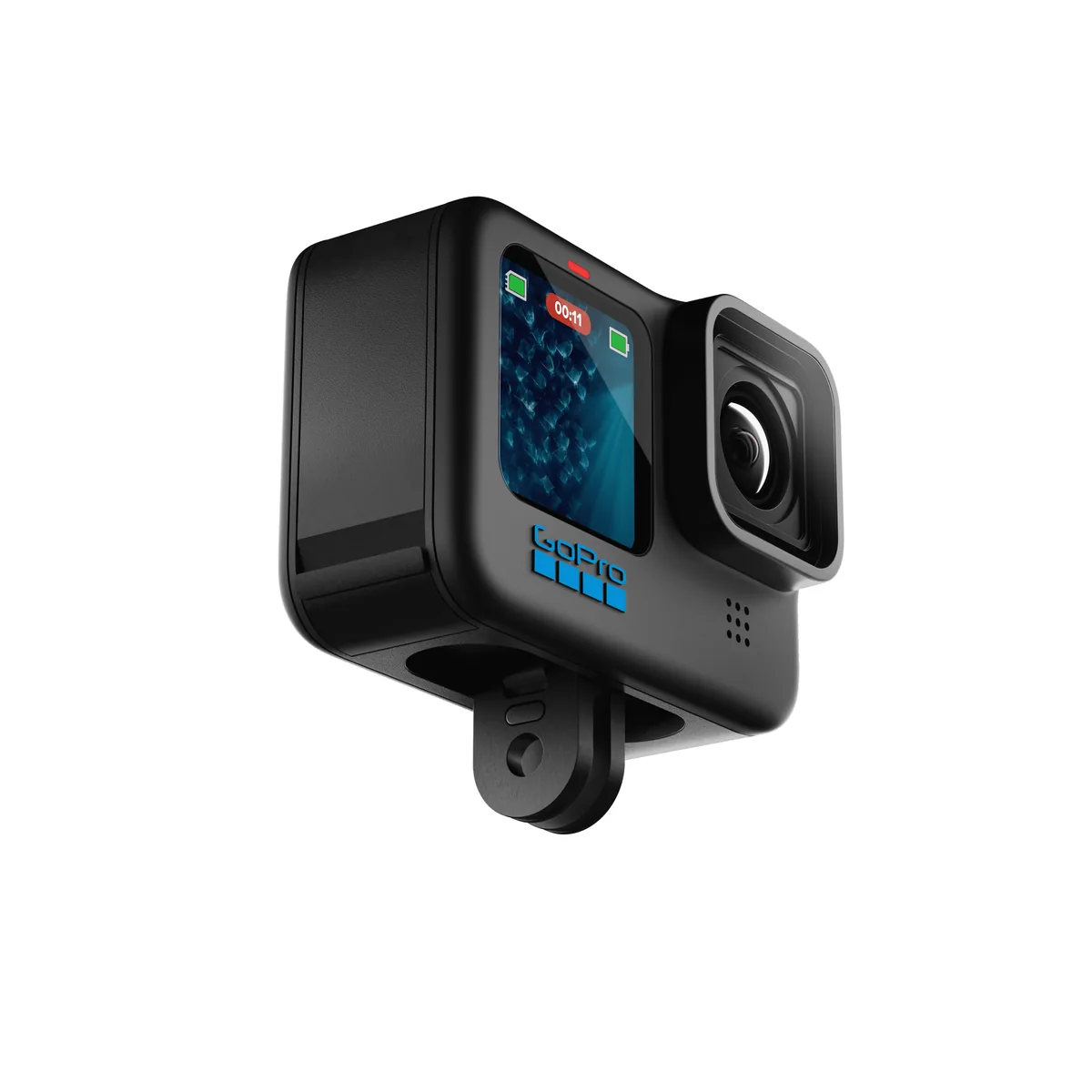
This is the camera that introduced the tall 8:7 sensor readout, and it is the reason the Hero body has barely changed since. Shooting the full 27 MP frame and cropping to 16:9, 9:16 or 4:5 in the edit is a workflow rather than a spec, and it is still the single most useful thing GoPro has added in five years. The Hero 11 keeps GPS, which the Hero 12 dropped, and the older HyperSmooth 5.0 is a hair behind 6.0 without being visibly worse. Where it falls behind is GP-Log, which arrived a generation later, and the 1/4-20 thread, which did not. GoPro still lists it on its own store, and at a street price under $250 it is the cheapest route into 5.3K60 with full horizon lock.