Insta360
Insta360 GO Ultra
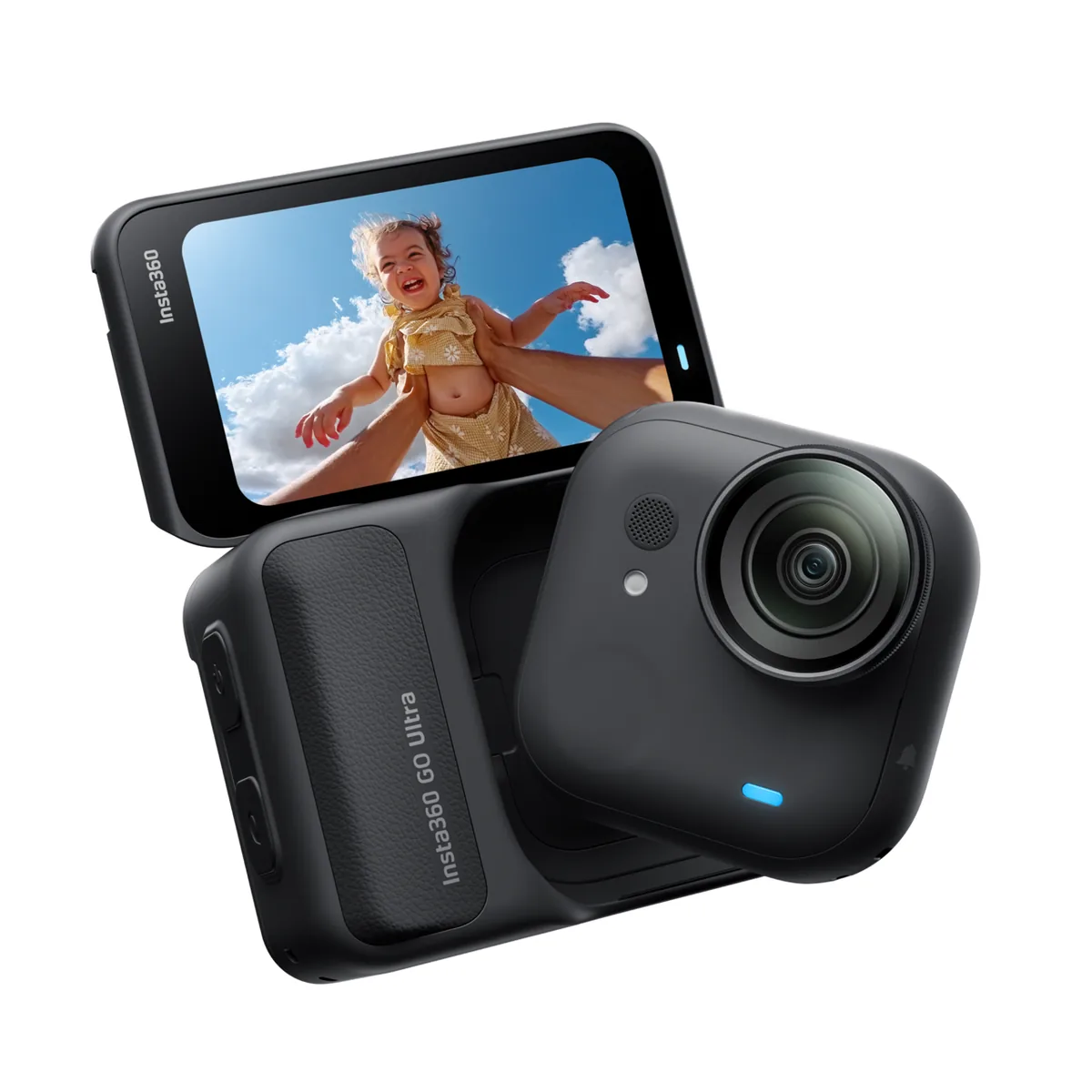
Insta360 put a 1/1.28-inch sensor — the same size as the X5's lenses use — into a 53 g magnetic puck, and then charged more for it than a GoPro Hero 13. That pricing is the single most argued-about thing about this camera, and it is fair: at $449 it is the most expensive non-360 camera in this catalogue, above two flagships that out-spec it on resolution and waterproofing. What it buys is a camera you genuinely forget you are wearing, clipped magnetically under a shirt or on a cap, streaming a live preview to a flip-screen Action Pod you leave in a pocket. The module is waterproof to 10 m; the Action Pod with the screen is not, which limits the whole system around water more than the headline suggests.
Sensor area against the rest of the catalogue
Derived from the standard optical-format table rather than copied off a spec sheet, because makers print a fraction that hides it. The table and the arithmetic.
Battery, with the small print
- Maker’s claim
- 3 h 20 min at camera plus Action Pod, standard video mode
- Third-party test
- None collected. We publish a tested figure only where a named outlet has run one and stated its conditions.
Specifications
What the Insta360+ plan gates
~$23.88 a year, which is why the year-one figure on this page is ~$473 rather than ~$449.
- •Cloud storage from 200 GB up
- •Free camera replacement through Insta360 Care / FlexiCare
- •A free extra year of warranty
- •Priority shipping from the Insta360 store
Features
- ●1/1.28-inch sensor in a 53 g module
- ●4K60 with 2x Clarity Zoom
- ●Magnetic pendant mounting, worn under clothing
- ●Action Pod with a 2.5-inch flip touchscreen and a second battery
- ●PureVideo low-light mode
- ●Camera module waterproof to 10 m
- ●microSD up to 2 TB
Strengths
- +A sensor this size in a 53 g body is genuinely without precedent
- +Magnetic pendant wearing gives angles no mounted camera can reach
- +The Action Pod preview means framing is not guesswork, unlike GoPro's Mini
- +200 minutes with the pod attached is a real all-day figure
Drawbacks
- −$449 — more than a GoPro Hero 13 Black, which out-specs it almost everywhere
- −The Action Pod is not waterproof, so the screen has to stay out of the water
- −4K caps at 60 fps; there is no 4K120 as on the DJI Osmo Nano
- −No internal storage, unlike the Nano's 64 GB or 128 GB
- −Insta360 publishes no battery capacity for the module
What owners say
Summarised from owner discussions and published long-term reviews.
Insta360 put a sensor the size of an X5's lens sensor into a 53 gram magnetic puck, and then priced it above a GoPro Hero 13. Both halves of that sentence run through the discussion. Owners who wear it describe exactly the experience the camera is sold on — clipped under a shirt or on a cap, forgotten about, recording angles a mounted camera cannot reach.
The complaints cluster in two places. Heat is one: there is a thread about the camera stopping after fifteen minutes, which is a short session for something bought to record hands-free. The other is expectation. Several owners have posted that the footage looked worse than they expected, and the replies tend to land on two things — settings, and the gap between sponsored reviews and what the camera actually does.
The practical limit is water. The camera module is rated to ten metres; the Action Pod that carries the screen and the second battery is not, so the system's headline runtime and its waterproofing cannot be used at the same time.
What owners like
- +Owners describe wearing it as genuinely unobtrusive — one long thread is from a self-described introvert who says nobody notices them filming
- +A 1/1.28-inch sensor in a 53 g body has no precedent, and in good light the footage is a clear step up from the GO 3S
- +The Action Pod's flip screen means framing is not guesswork, unlike the screenless tiny cameras
- +Two hundred minutes with the pod attached is a real all-day figure
- +Magnetic pendant mounting reaches angles no clamp does
Common complaints
- −Overheating is reported, including a thread about it stopping after fifteen minutes, which is short for a camera sold on hands-free recording
- −At $449 it is the most expensive non-360 camera here, above two flagships that out-spec it
- −Owners have posted that the video quality is worse than they expected given the sensor, and the answers point at settings and at expectations set by sponsored reviews
- −The Action Pod with the screen is not waterproof, which limits the whole system around water
- −No internal storage, unlike the DJI Osmo Nano it competes with
Questions owners keep asking
Does the GO Ultra overheat?
Is it worth more than a GoPro Hero 13?
Can the whole thing go in water?
Why does my footage look worse than the reviews?
Insta360 GO Ultra, head to head
Cameras people look at alongside it
More from Insta360 →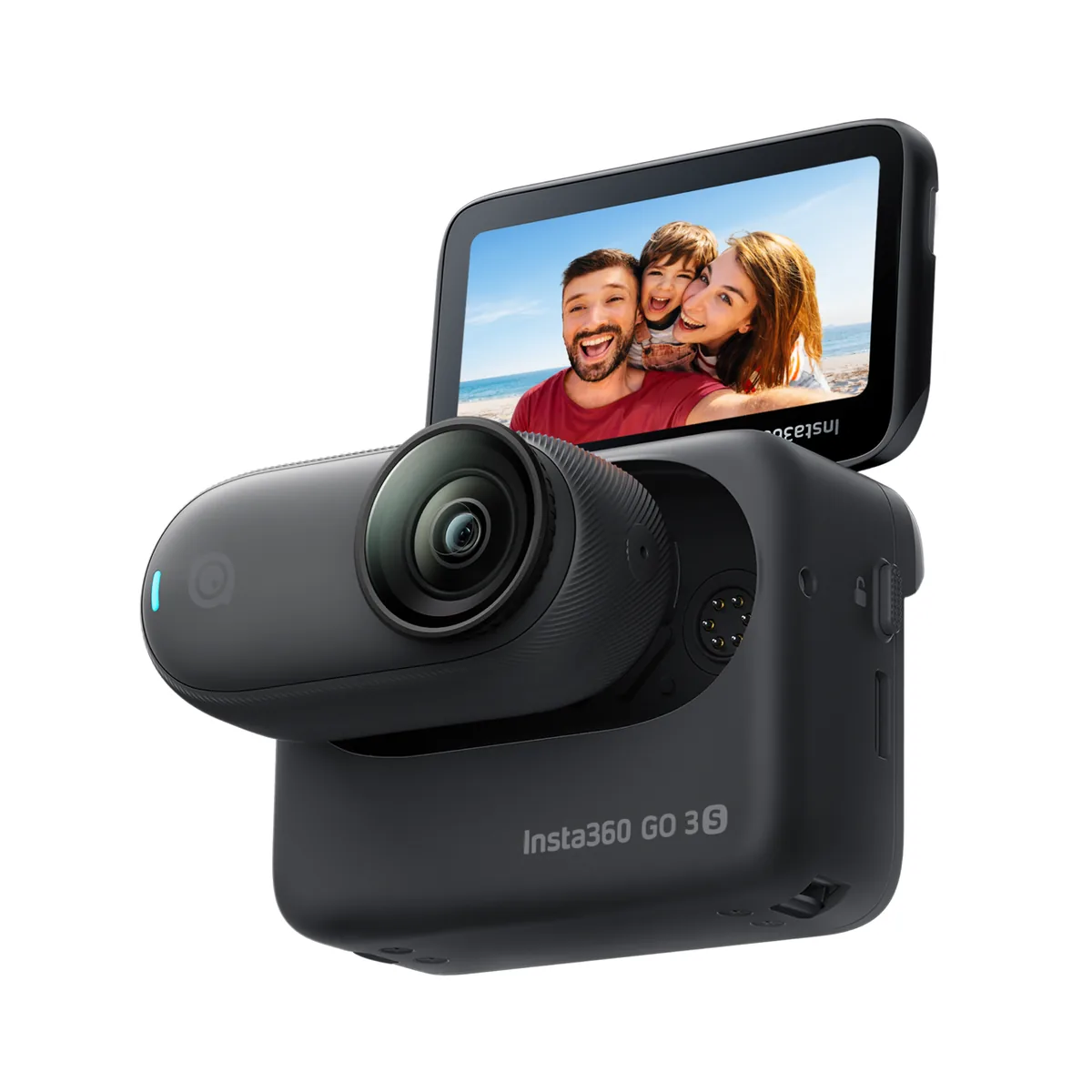
Insta360
Insta360 GO 3S
Thirty-nine grams, which is lighter than most phone cases, and it is still the smallest camera here that shoots real 4K. The GO line's idea has always been that a camera small enough to clip to a cap brim or magnet under a t-shirt gets used in situations where a GoPro stays in a bag, and the 3S is the version where the image finally stopped being the compromise — 4K30 rather than the GO 3's 2.7K, and 10 m of waterproofing rather than 5. The 310 mAh cell in the module runs 38 minutes on its own; everything past that comes from the Action Pod, which carries the screen, the second battery and, importantly, only splash resistance. Now sitting below the GO Ultra in the line, it is the cheaper way into the same wearable idea.
Insta360
Insta360 Ace Pro 2
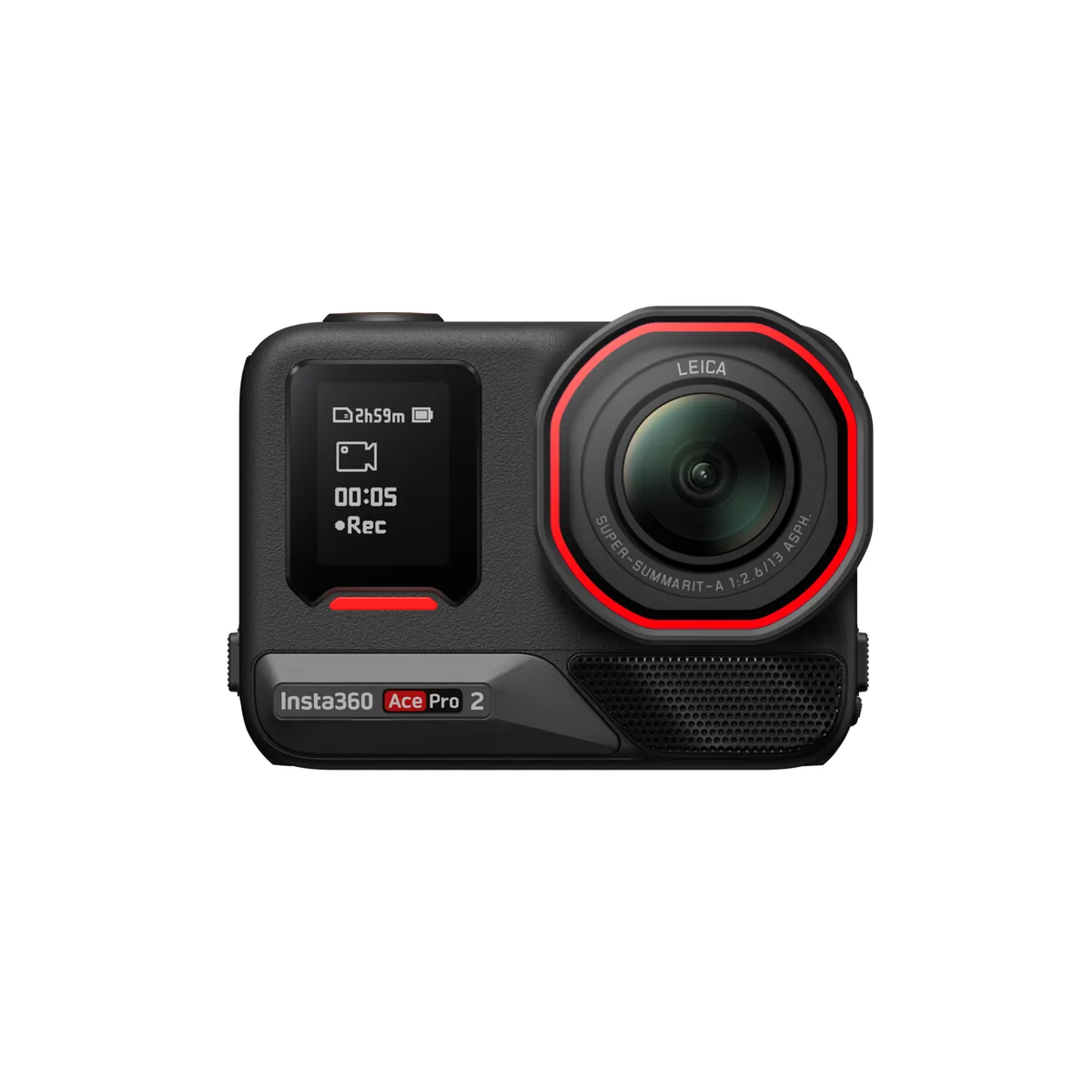
The flip-up screen is the feature that sells it. Every other action camera makes you guess at framing when the camera is facing you or mount a second screen; the Ace Pro 2's 2.5-inch rear panel hinges upward so it can be read from in front of the lens, which is why this is the vlogging pick in a category built around helmets. Behind that sits a Leica-co-engineered f/2.6 lens over a 1/1.3-inch sensor, 8K30, 4K120, a 180 Mbps ceiling and I-Log with a supplied LUT. Waterproofing is 12 m bare, and the dive case takes it to 60 m. The catch is endurance: in an independent four-camera drain test the Ace Pro 2 was first to die at 1 hour 44 minutes, thirty minutes behind the DJI and nearly an hour behind the GoPro, and its 180-minute headline number is quoted at 1080p24 with a power-saving mode enabled.
Insta360
Insta360 X5
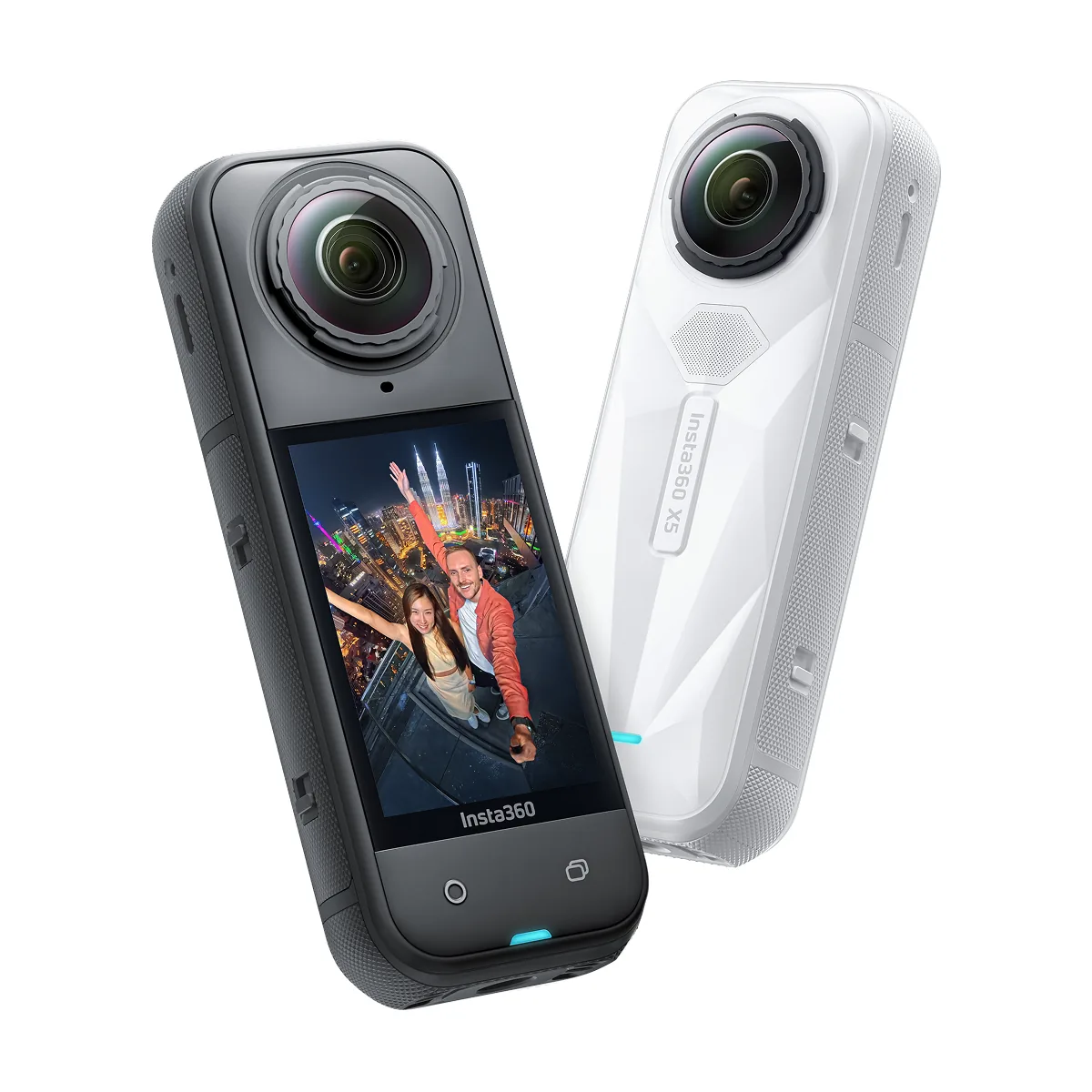
Replaceable lenses arrived here first, and they changed the economics of owning a 360 camera. The fisheye glass on any spherical camera sticks out past the body and gets scratched — it is the category's defining failure mode — and on the X5 a scratched lens is a twenty-minute swap with a part you can keep in a bag. Around that, dual 1/1.28-inch sensors with roughly 2.4× the area of the X4's drive 8K30 supersampled down from an 11K capture, and a triple-chip stack runs PureVideo for low light. Fifteen metres of bare waterproofing, 2400 mAh, 135 minutes at 5.7K30. Against the newer X6 it gives up 8K50, 10-bit and 5 m of depth; against everything else, it is still the 360 camera most people should buy.