Compact and wearable cameras
Cameras small enough that you stop noticing them: clipped to a collar, magneted under a shirt, stuck to a cap brim, or bolted flat to a helmet where a full-size body would stick out. The class used to mean a tiny sensor as well as a tiny body, and that changed recently — two cameras here carry sensors the size of a full-size flagship's in bodies around fifty grams. The trade-offs that remain are heat, which a small sealed body sheds badly, and the split-body design most of them use, where the screen half is not waterproof and the camera half runs a fraction of the advertised battery life on its own.
We track 6 compact and wearable cameras from 3 brands, priced ~$179 to ~$449. The largest sensor of them is in the DJI Osmo Nano at 72 mm², and the least expensive is the GoPro HERO (2024) at ~$179.
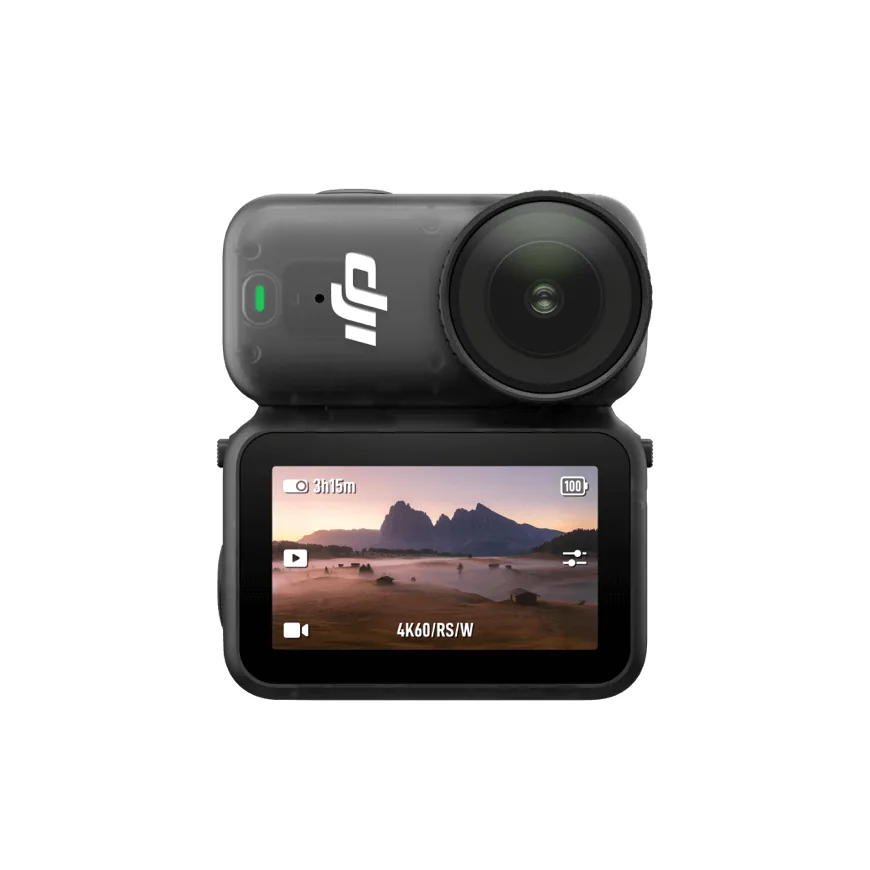
Fifty-two grams, and a 1/1.3-inch sensor inside them — the same size chip DJI puts in a full-size Osmo Action. That is the trick here, and it is why the Nano reads differently from every other tiny camera in the category, all of which shrink the sensor along with the body. It splits in two: the camera module clips onto a magnet under a shirt or on a helmet, and the Vision Dock adds an OLED screen, a second battery and a microSD slot when you want to frame a shot or run long. Alone the module is waterproof to 10 m and lasts about 90 minutes; docked, DJI rates the pair at 200 at 1080p24. What it does not have is full horizon lock — HorizonBalancing corrects tilt, not rotation — and the magnetic pendant is a trust exercise at speed.
Insta360
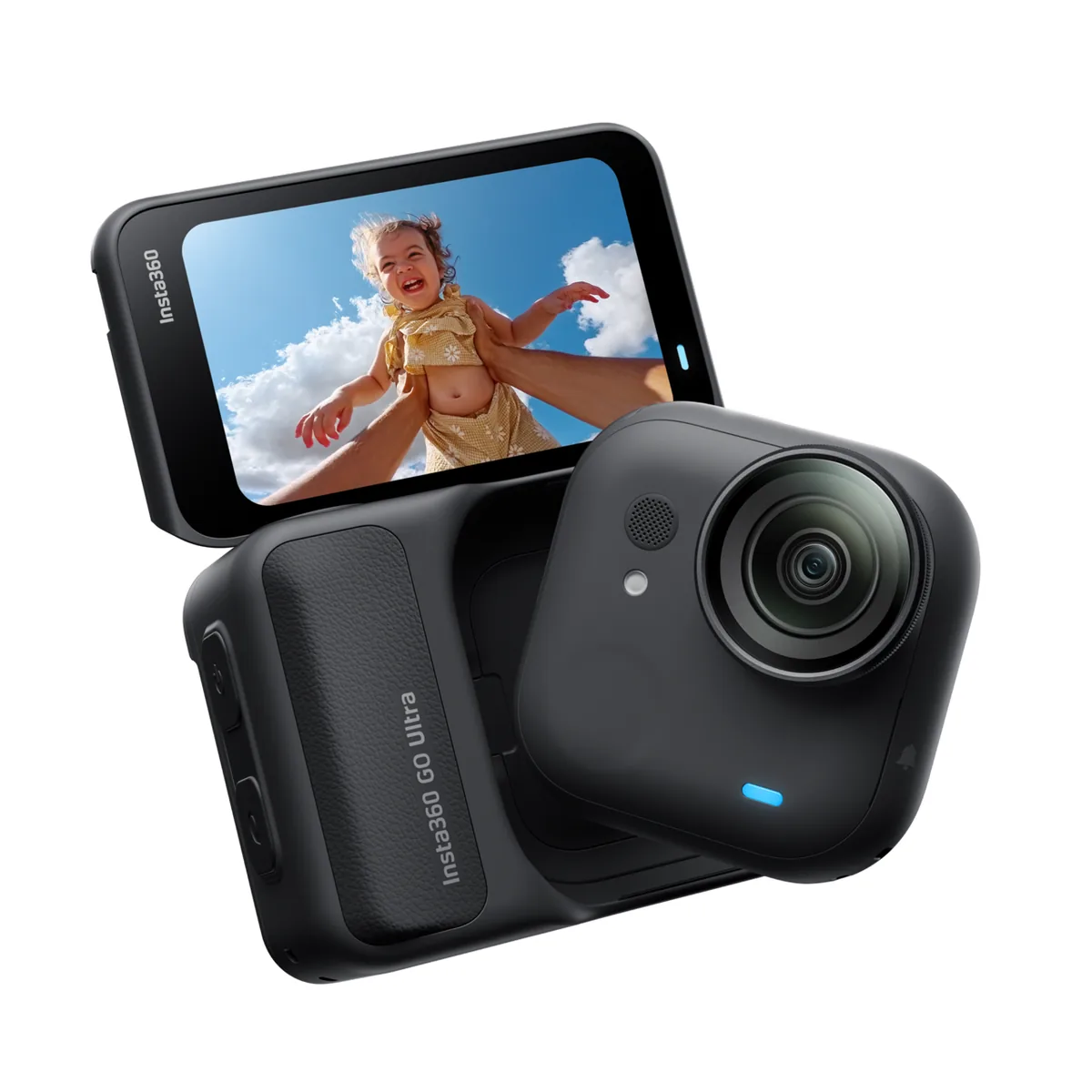
Insta360 GO Ultra
Insta360 put a 1/1.28-inch sensor — the same size as the X5's lenses use — into a 53 g magnetic puck, and then charged more for it than a GoPro Hero 13. That pricing is the single most argued-about thing about this camera, and it is fair: at $449 it is the most expensive non-360 camera in this catalogue, above two flagships that out-spec it on resolution and waterproofing. What it buys is a camera you genuinely forget you are wearing, clipped magnetically under a shirt or on a cap, streaming a live preview to a flip-screen Action Pod you leave in a pocket. The module is waterproof to 10 m; the Action Pod with the screen is not, which limits the whole system around water more than the headline suggests.
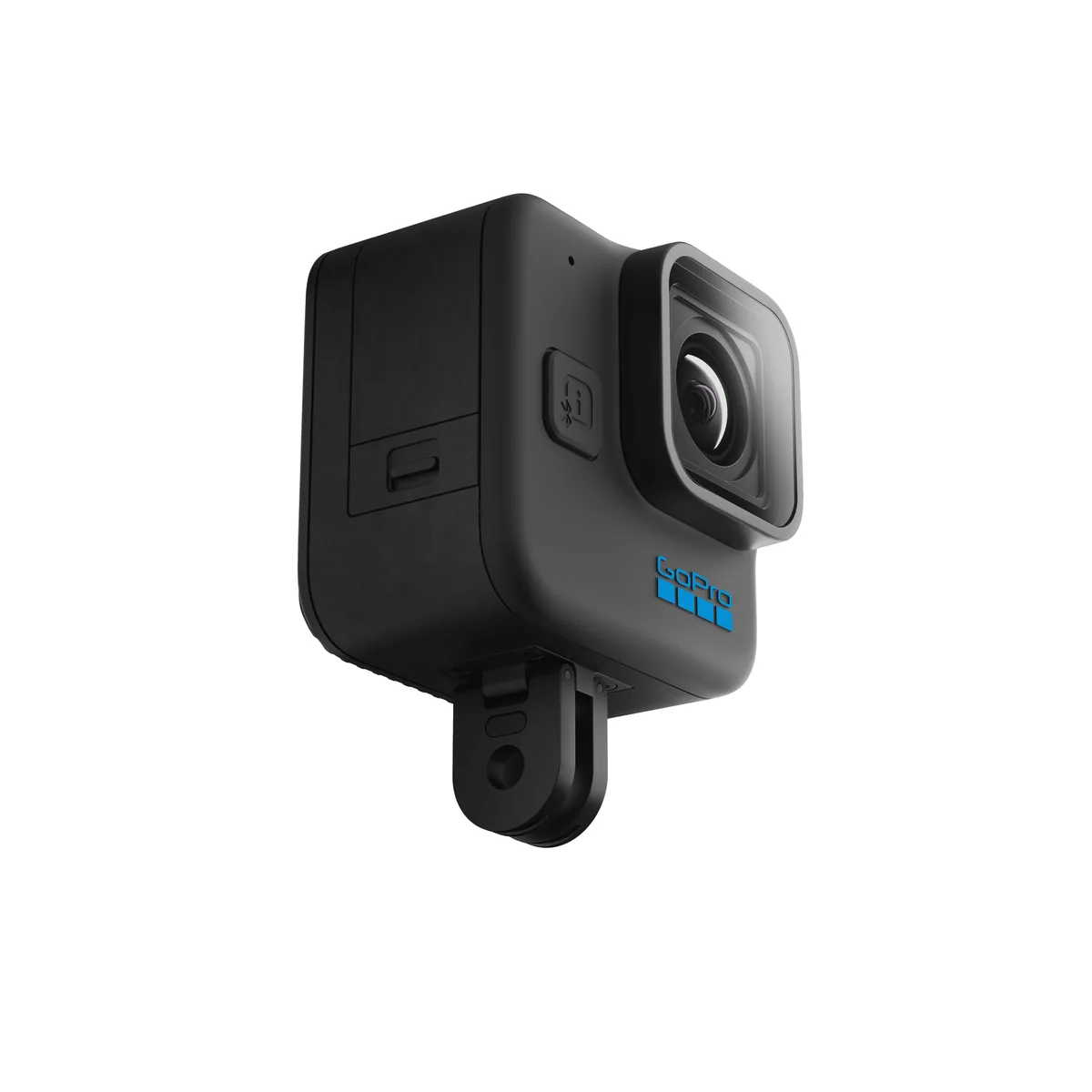
Take a Hero 11, delete the screens, the stereo mics, the GPS and the removable battery, and add a second set of mounting fingers on the back — that is the Mini, and it is a far more coherent product than the subtraction list suggests. One button starts and stops recording. There is no menu to fumble with cold hands, no screen to crack, and two mounting axes so it sits flat against a helmet or a chest harness in either orientation. The imaging is unchanged: the same 5.3K60, the same 8:7 sensor, the same horizon lock. What you lose is any ability to frame a shot or swap a dead battery, which rules it out as anyone's only camera and makes it a very good second one.
GoPro
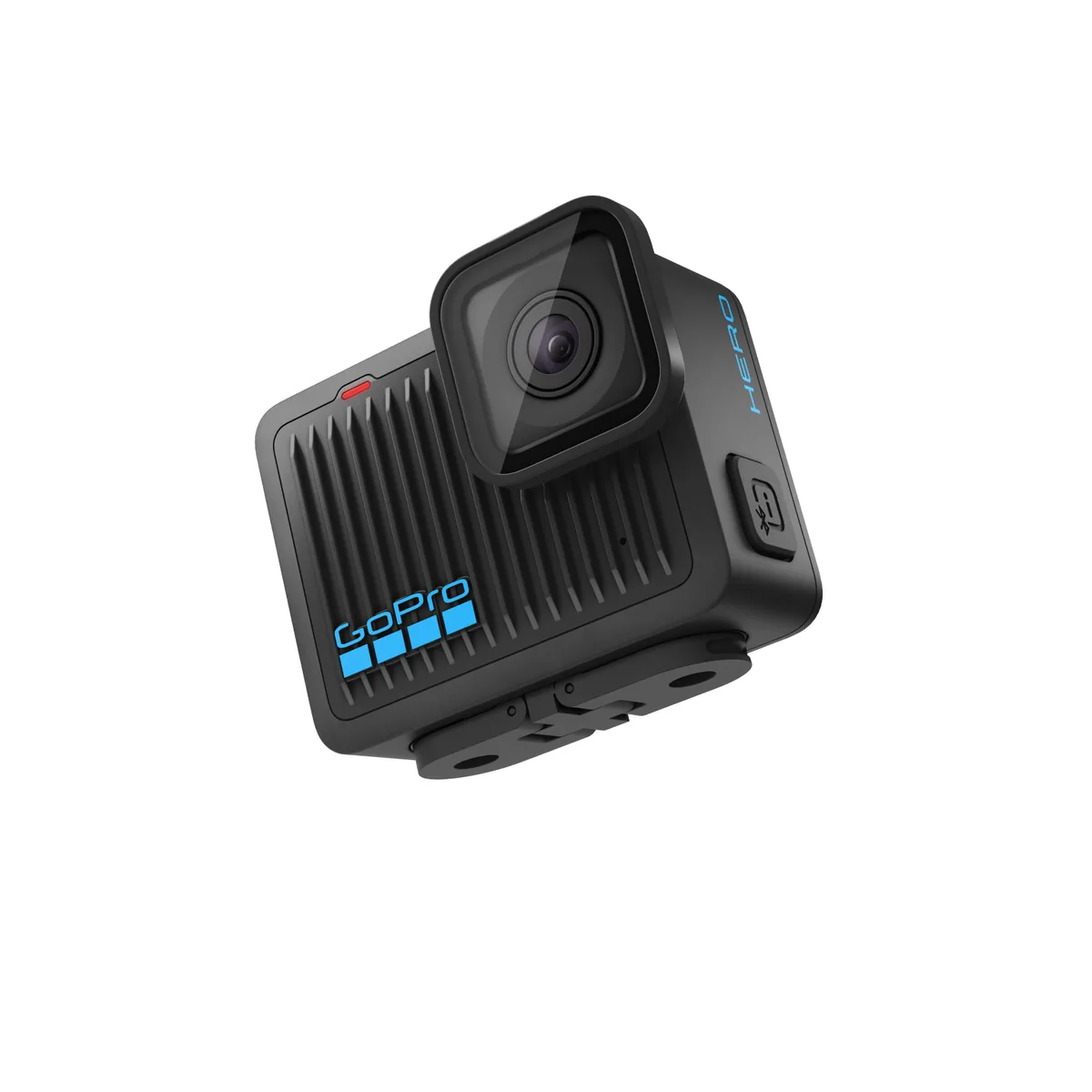
GoPro HERO (2024)
Half the weight of a Hero 13 and about a third of the menu depth. This is GoPro's answer to the question of what an action camera looks like when you strip out everything a beginner never touches: 4K30, 12 MP stills, a touchscreen, HyperSmooth, and nothing else. There is no horizon lock, no log profile, no removable battery, no front screen, no GPS and no 60 fps at 4K. The sensor drops to 1/2.3-inch, which is the smallest in the modern GoPro line and about 40 per cent less area than the Hero 13's. In exchange it disappears on a helmet at 86 g and takes every GoPro mount ever made. As a first action camera or a fourth angle it is well judged; as a replacement for a flagship it is not close.
GoPro
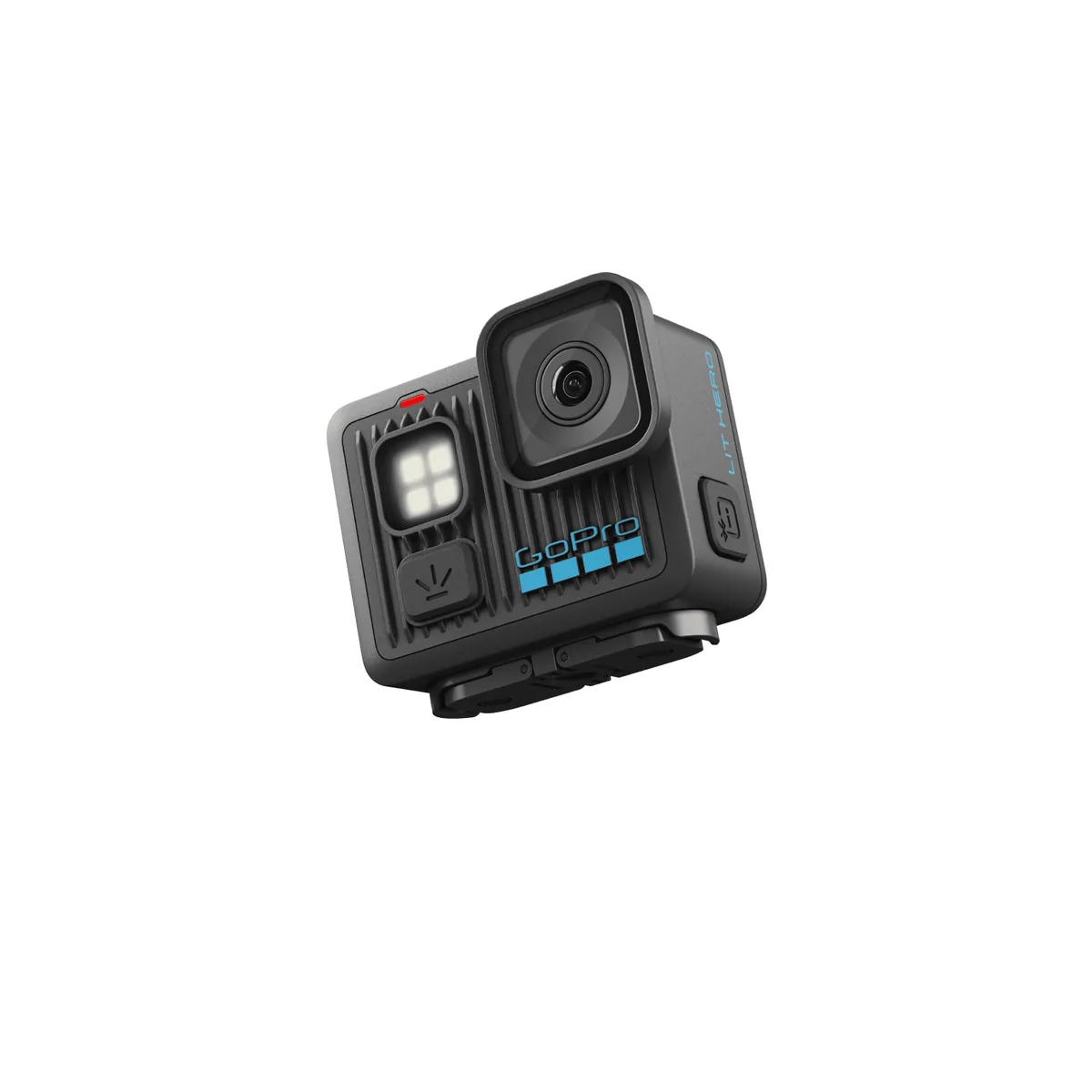
GoPro LIT HERO
Four LEDs around the lens, and an entire product built to justify them. The LIT HERO is the 2024 HERO body with 4K60 instead of 4K30, a magnetic mount, and a ring light bright enough to be useful at arm's length in a dark bar, a tent, or a night ride. Whether that is worth ninety dollars over the plain HERO depends entirely on whether you shoot after sunset; the sensor is the same small 1/2.3-inch chip, so the light is compensating for a limitation rather than adding a capability. Reviewers have found it the most confusing camera in GoPro's line precisely because it sits above the HERO on price and below the Hero 12 on everything but the LEDs. The bright spot is the 109-minute rating at 4K60, which is better than any full-size Hero manages at that setting.
Insta360
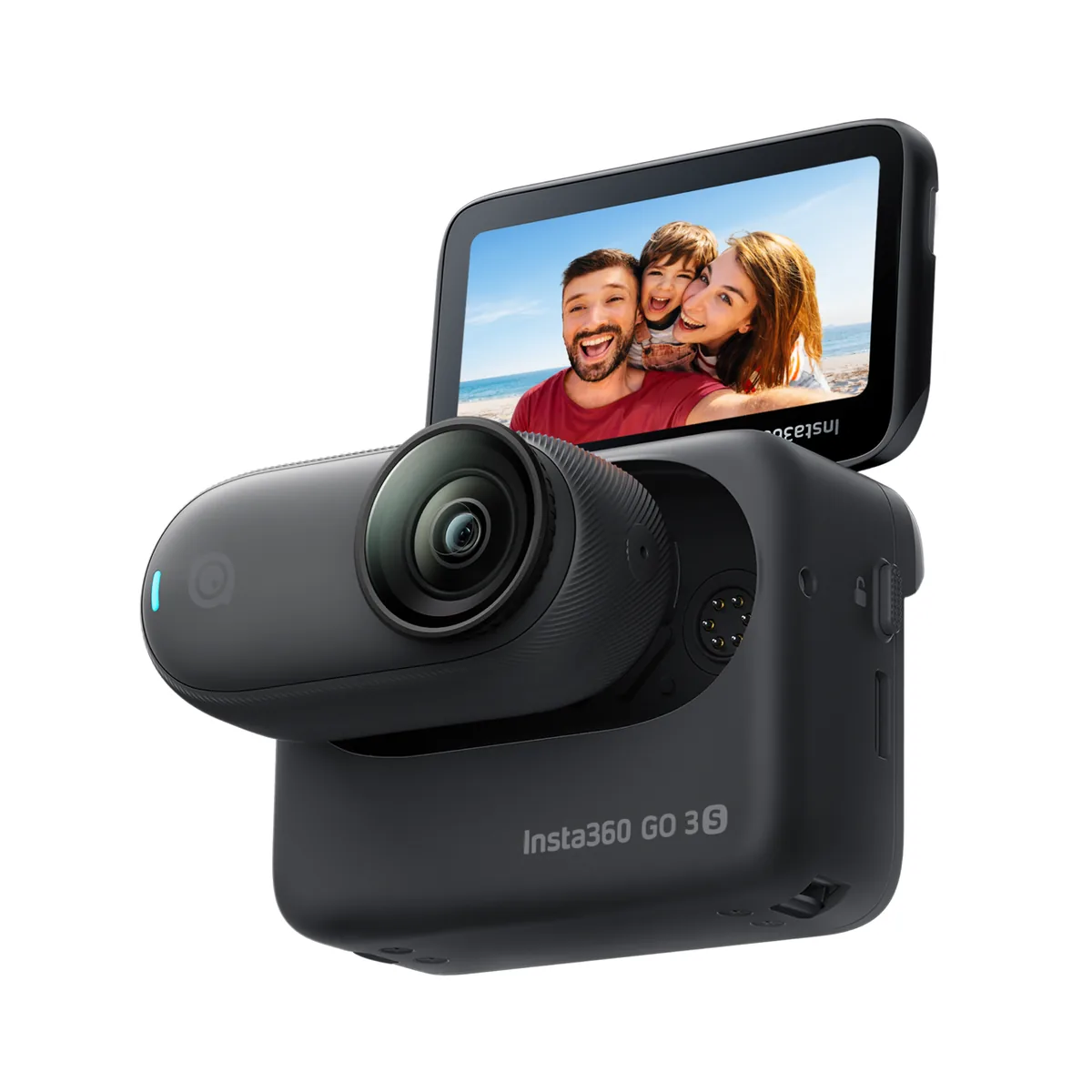
Insta360 GO 3S
Thirty-nine grams, which is lighter than most phone cases, and it is still the smallest camera here that shoots real 4K. The GO line's idea has always been that a camera small enough to clip to a cap brim or magnet under a t-shirt gets used in situations where a GoPro stays in a bag, and the 3S is the version where the image finally stopped being the compromise — 4K30 rather than the GO 3's 2.7K, and 10 m of waterproofing rather than 5. The 310 mAh cell in the module runs 38 minutes on its own; everything past that comes from the Action Pod, which carries the screen, the second battery and, importantly, only splash resistance. Now sitting below the GO Ultra in the line, it is the cheaper way into the same wearable idea.