Kandao
Kandao QooCam 3 Ultra
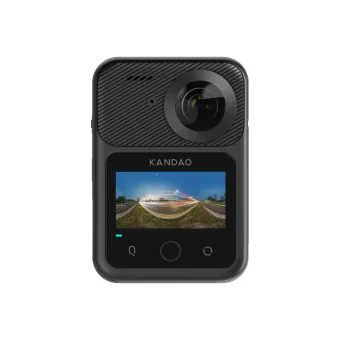
Kandao is the small manufacturer in this category and it competes the only way a small manufacturer can: by shipping specs the big three charge more for. F/1.6 lenses — the fastest glass in the catalogue — over dual 1/1.7-inch sensors, 10-bit HLG and a K-Log profile, 96 MP spherical stills, 150 Mbps, 128 GB of internal storage and built-in GPS, all under the price of an Insta360 X6. The costs are physical and logistical. At 336 g it is by a wide margin the heaviest camera here, nearly double an X6, and at 10 m bare it is the shallowest of the big-sensor 360 cameras. Fifty minutes of 8K 10-bit recording is short. And the software ecosystem around it — reframing, mobile editing, firmware cadence — is thinner than Insta360's, which is the part of the purchase a spec sheet cannot show you.
Sensor area against the rest of the catalogue
Derived from the standard optical-format table rather than copied off a spec sheet, because makers print a fraction that hides it. The table and the arithmetic.
Battery, with the small print
- Maker’s claim
- 50 min at 8K 10-bit 360 recording
- Third-party test
- None collected. We publish a tested figure only where a named outlet has run one and stated its conditions.
What a reframed clip is worth
This camera records 7,680 px across a full 360°. A normal 16:9 clip pulled out of it uses only the slice its field of view covers, so at a typical 80° reframe the usable width is about 1,707 px — roughly 1.7K.
7,680 × (80 ÷ 360) = 1,707 px
An estimate. Stitching, supersampling and the projection move it by a few per cent either way. How this works.
Specifications
Features
- ●F/1.6 lenses, the fastest aperture in this catalogue
- ●8K30 spherical with 10-bit HLG and a K-Log profile
- ●96 MP spherical stills, 14-bit capture
- ●128 GB of internal storage plus microSD to 1 TB
- ●Built-in GPS
- ●Single-lens 4K100 slow motion
- ●IP68 to 10 m with no housing
Strengths
- +F/1.6 is a full stop faster than the X6 and DJI Osmo 360, which is the cheapest way to buy low-light performance
- +10-bit with a real log profile at a price where Insta360 still publishes nothing
- +96 MP stills and 128 GB of internal storage in the same body
- +Built-in GPS, which only the GoPro MAX2 otherwise offers in this class
Drawbacks
- −336 g — nearly double the Insta360 X6, and it is felt on any pole or helmet
- −Fifty minutes of 8K 10-bit recording is the shortest runtime in the 360 class
- −10 m bare waterproofing, half the X6's
- −Lenses are not replaceable
- −Reframing and mobile editing software lag well behind Insta360 Studio
- −A small manufacturer means firmware updates arrive slowly and accessories are hard to find
The strengths and drawbacks above are drawn from the manufacturer’s specifications and published reviews. No body of owner reports for this camera has been read, so nothing here claims to speak for its owners.
What owners say
No owner discussion has been collected for the Kandao QooCam 3 Ultra yet. The pros and cons above come from the manufacturer’s specifications and published reviews. Rather than fill this space with invented sentiment, it stays empty until there is something real to put in it.
Kandao QooCam 3 Ultra, head to head
Cameras people look at alongside it
More from Kandao →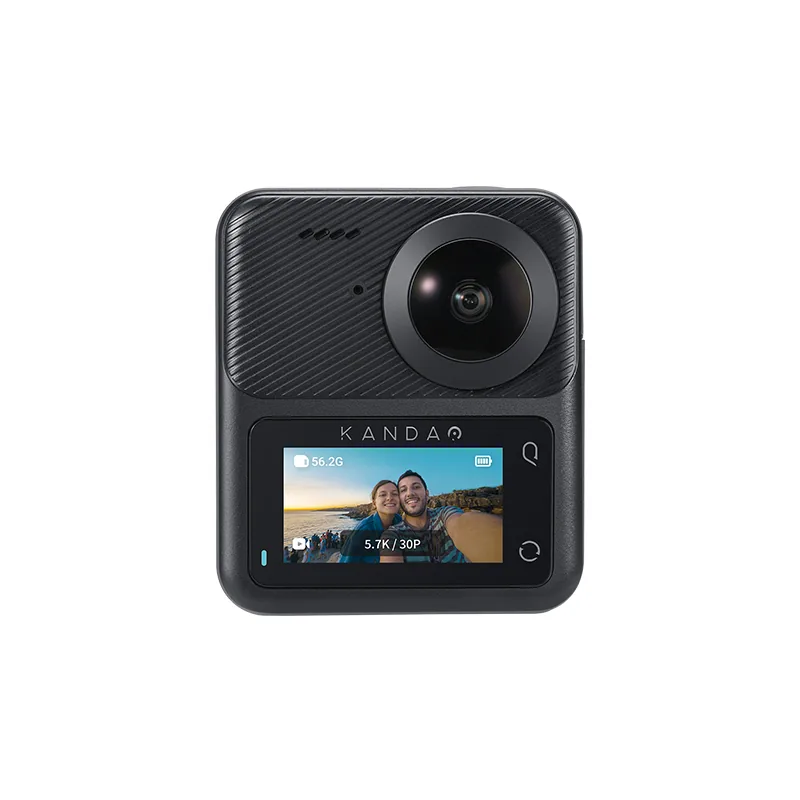
Kandao
Kandao QooCam 3
An odd and rather appealing camera: dual 1/1.55-inch sensors — 65 % more area per lens than the Insta360 X3 it competes with on price — behind the same F/1.6 glass as the Ultra, wrapped in a squat body that looks nothing like an X-series stick. Video caps at 5.7K30, which reframes to roughly 1.3K of usable 16:9, so the resolution ceiling is real. Where it earns its keep is stills: 62 MP spherical photos out of fast lenses and decent-sized sensors make it a credible virtual-tour camera for a third of what a Ricoh Theta X costs. Fifty-eight minutes of recording and no internal storage are the practical limits, and the 1.9-inch screen is small enough to be fiddly.
Insta360
Insta360 X5
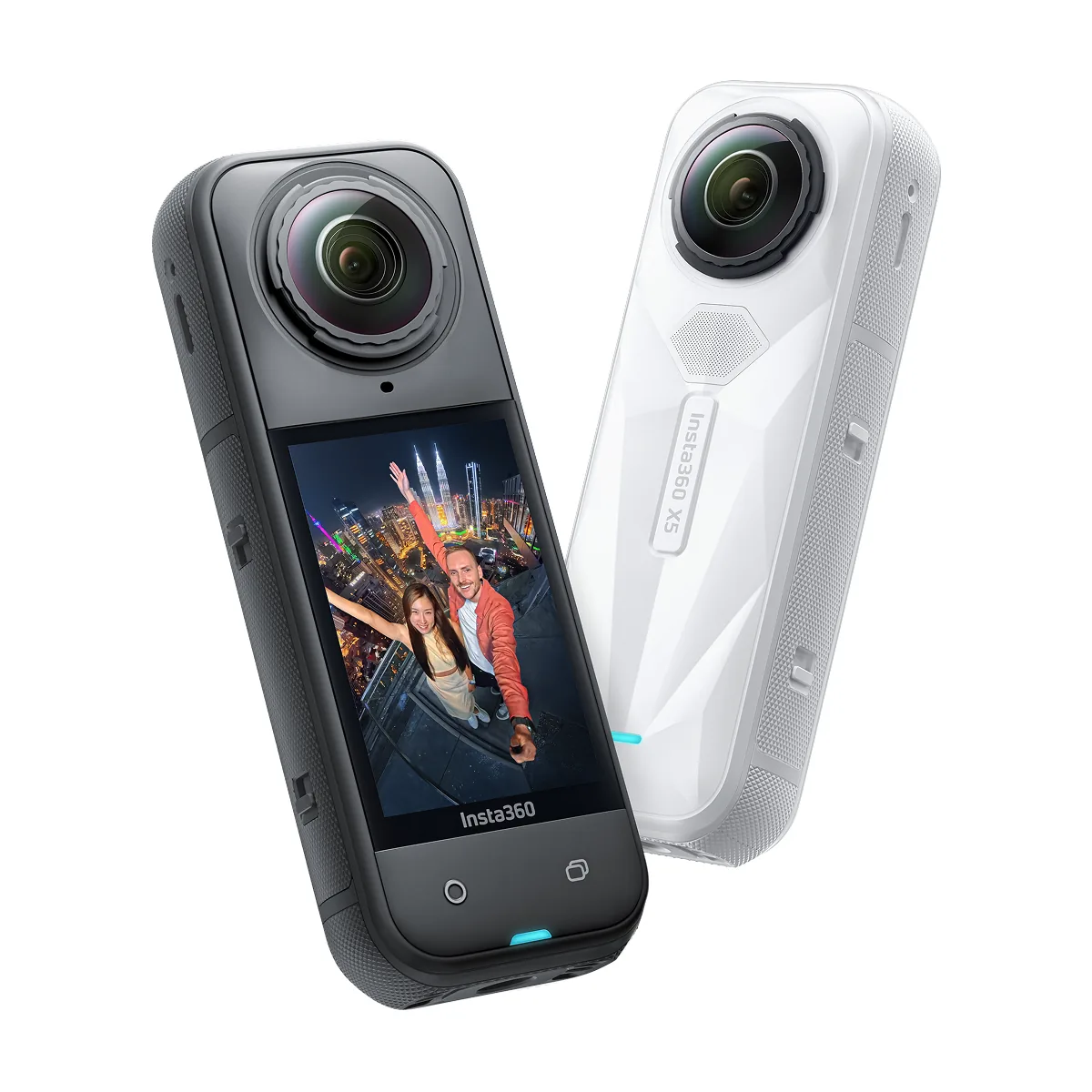
Replaceable lenses arrived here first, and they changed the economics of owning a 360 camera. The fisheye glass on any spherical camera sticks out past the body and gets scratched — it is the category's defining failure mode — and on the X5 a scratched lens is a twenty-minute swap with a part you can keep in a bag. Around that, dual 1/1.28-inch sensors with roughly 2.4× the area of the X4's drive 8K30 supersampled down from an 11K capture, and a triple-chip stack runs PureVideo for low light. Fifteen metres of bare waterproofing, 2400 mAh, 135 minutes at 5.7K30. Against the newer X6 it gives up 8K50, 10-bit and 5 m of depth; against everything else, it is still the 360 camera most people should buy.
GoPro
GoPro MAX2
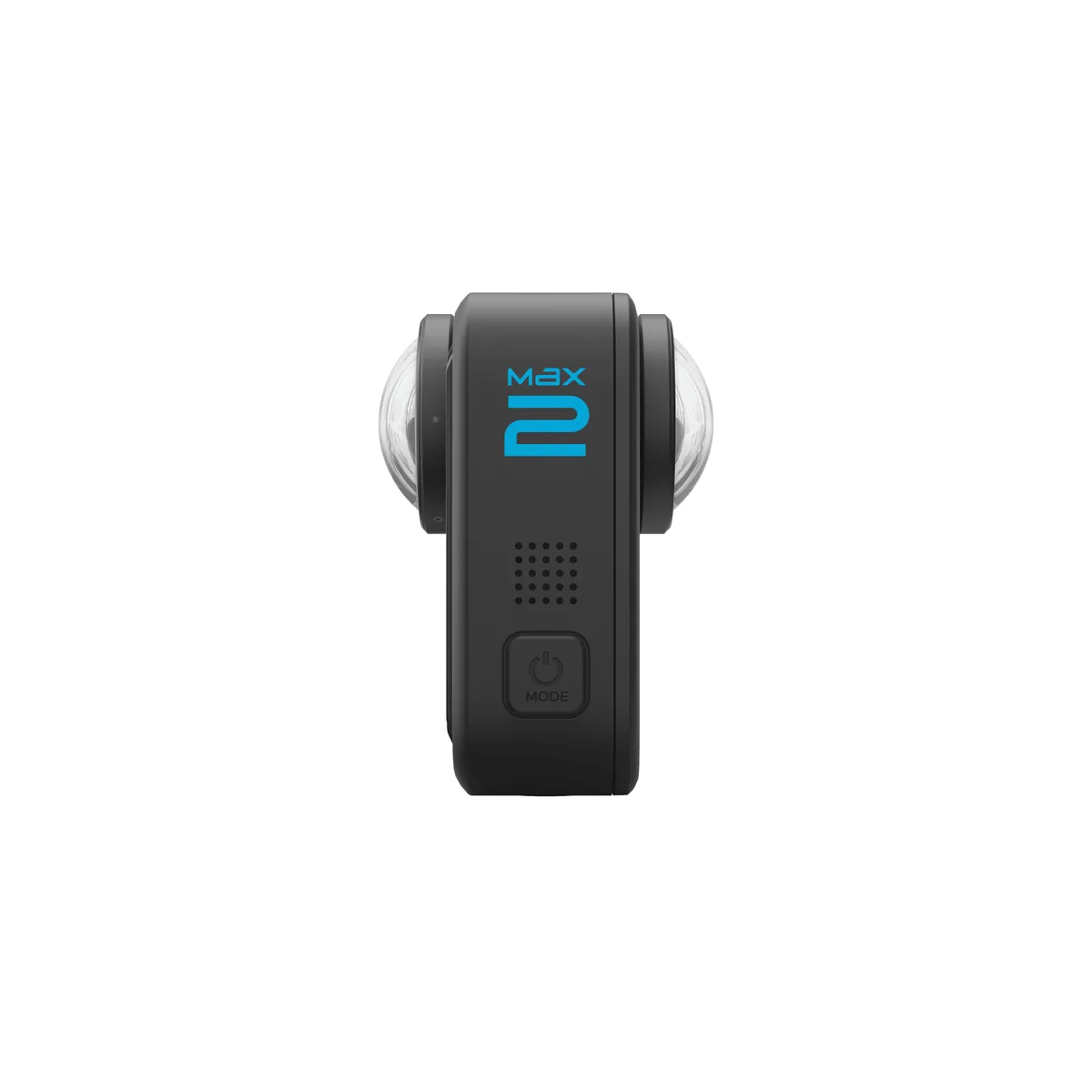
Six years after the first MAX, GoPro finally shipped a successor, and the twist-off lens covers are the headline that matters. Every 360 camera lives or dies on scratched glass — the lenses bulge out past the body by design and there is no guarding them properly — and the MAX2 is the first one where replacing them is a field job rather than a service ticket. Around that sits true 8K spherical at 30 fps with 10-bit colour, a 300 Mbps ceiling that is the highest in the category, GP-Log for grading, and a six-microphone array. It is also the only 360 camera with built-in GPS. The two compromises are real: 5 m of bare waterproofing is the shallowest of any current 360 camera, and 66 minutes at 8K30 is less than half what the Insta360 X6 claims.