GoPro action and 360 cameras
GoPro has 10 cameras in this catalogue, priced from ~$179 to ~$699, across 3 types. The largest sensor in the lineup belongs to the GoPro MISSION 1 PRO at 116 mm², and the cheapest is the GoPro HERO (2024) at ~$179.
GoPro
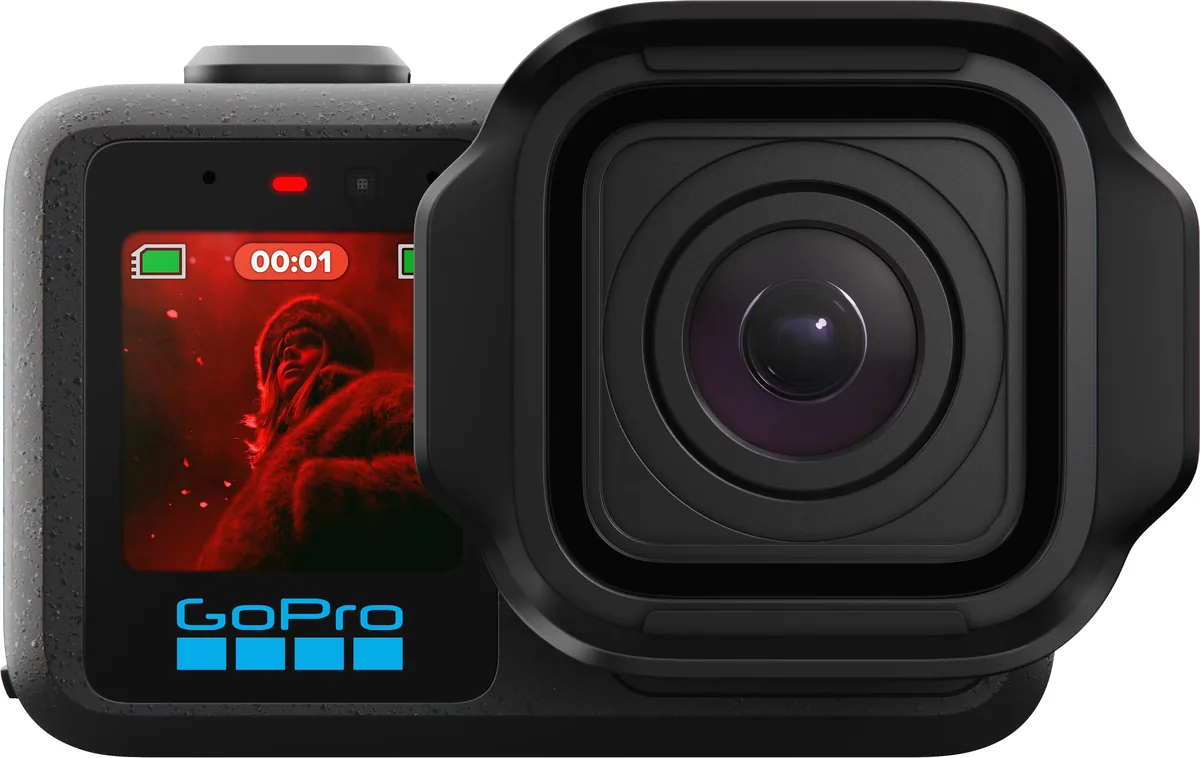
GoPro MISSION 1 PRO
The 1-inch sensor is the whole argument. At 116 mm² it is more than three times the imaging area of a Hero 13's chip, and it is the largest in this catalogue outside the Osmo Pocket 3 — in a body that is still waterproof to 20 m and still takes GoPro fingers. 8K60 open-gate, 4K at 240 fps, 50 MP stills, 240 Mbps and GP-Log2 with a LUT put it squarely between an action camera and a small cine body, which is exactly where GoPro aimed it. Two practical notes: the 2150 mAh battery that runs five hours at 1080p30 on the base MISSION 1 does not go nearly as far feeding an 8K pipeline, and the interchangeable-lens version of this camera is not waterproof at all, so the fixed lens here is a feature rather than a limitation.
GoPro
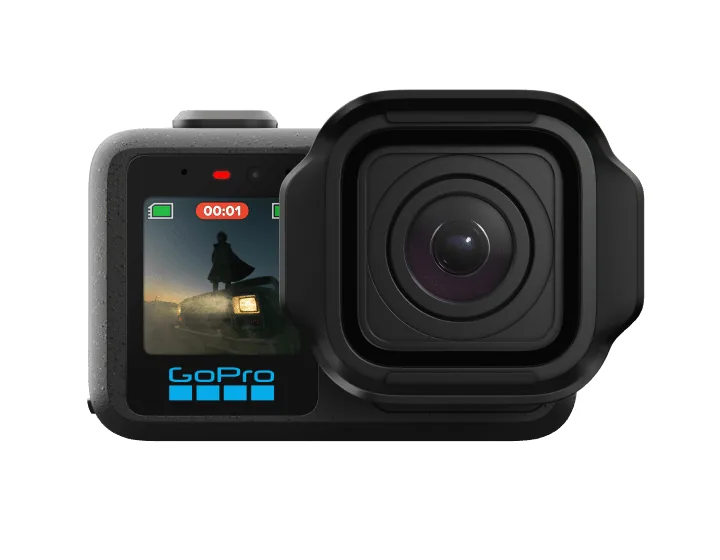
GoPro MISSION 1
GoPro calls the MISSION line cinema cameras, and the marketing is doing some work — this is a rugged, mountable, 20 m-waterproof body with GoPro fingers, a magnetic latch and HyperSmooth, which is an action camera by any reasonable definition. What has actually changed is the class of everything inside: a 1/1.3-inch sensor twice the area of the Hero 13's, a 240 Mbps ceiling, GP-Log2 with a supplied LUT, 4K at 240 fps and 1080p at 480, and a 2150 mAh cell rated for five hours at 1080p30. The cost is size and money: at 207 g and 80 mm long it is a different object on a helmet, and $599 is a different budget. If you have been hitting the ceiling of what a Hero can grade to, this is the answer; if you have not, it is a lot of camera to strap to a bike.
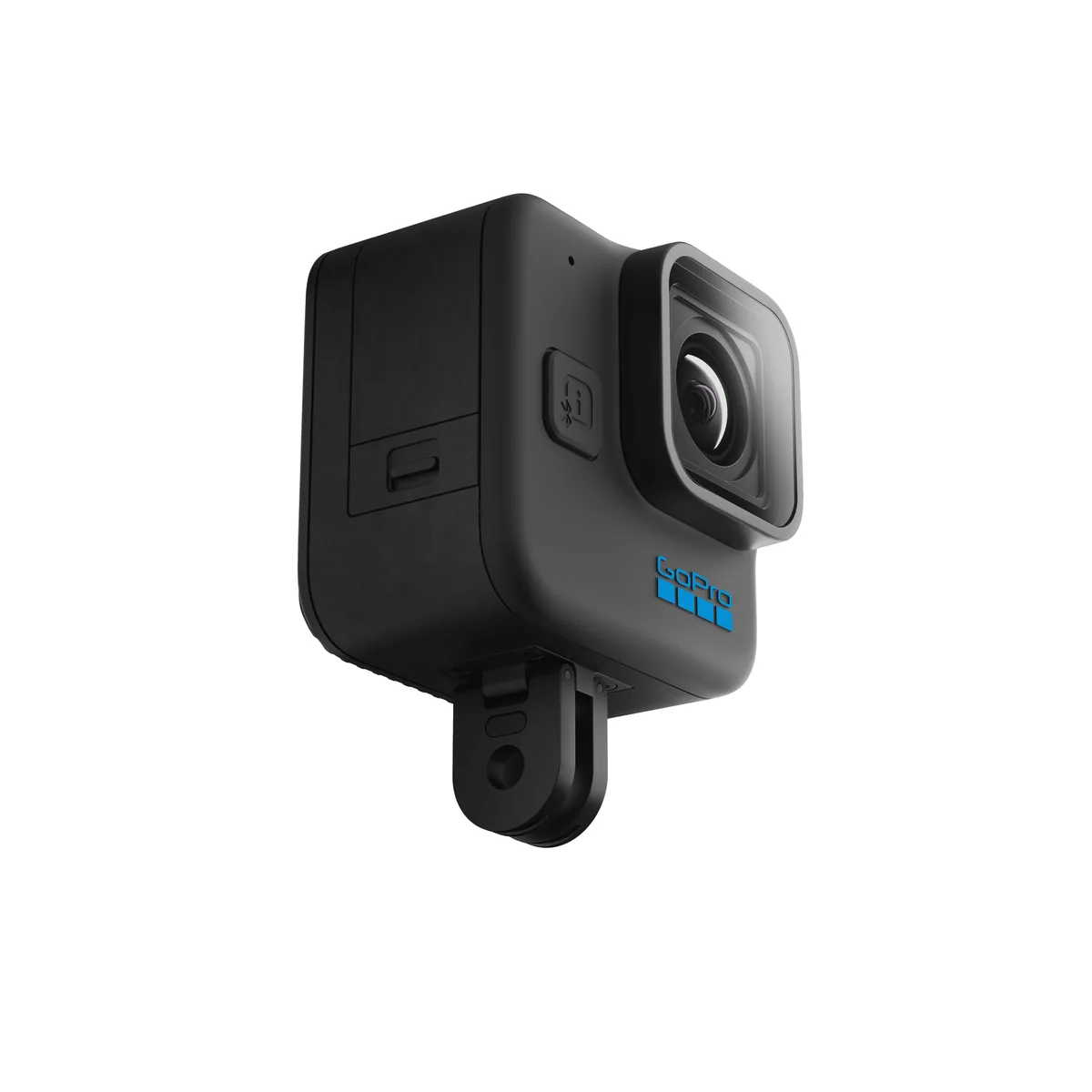
Take a Hero 11, delete the screens, the stereo mics, the GPS and the removable battery, and add a second set of mounting fingers on the back — that is the Mini, and it is a far more coherent product than the subtraction list suggests. One button starts and stops recording. There is no menu to fumble with cold hands, no screen to crack, and two mounting axes so it sits flat against a helmet or a chest harness in either orientation. The imaging is unchanged: the same 5.3K60, the same 8:7 sensor, the same horizon lock. What you lose is any ability to frame a shot or swap a dead battery, which rules it out as anyone's only camera and makes it a very good second one.
GoPro
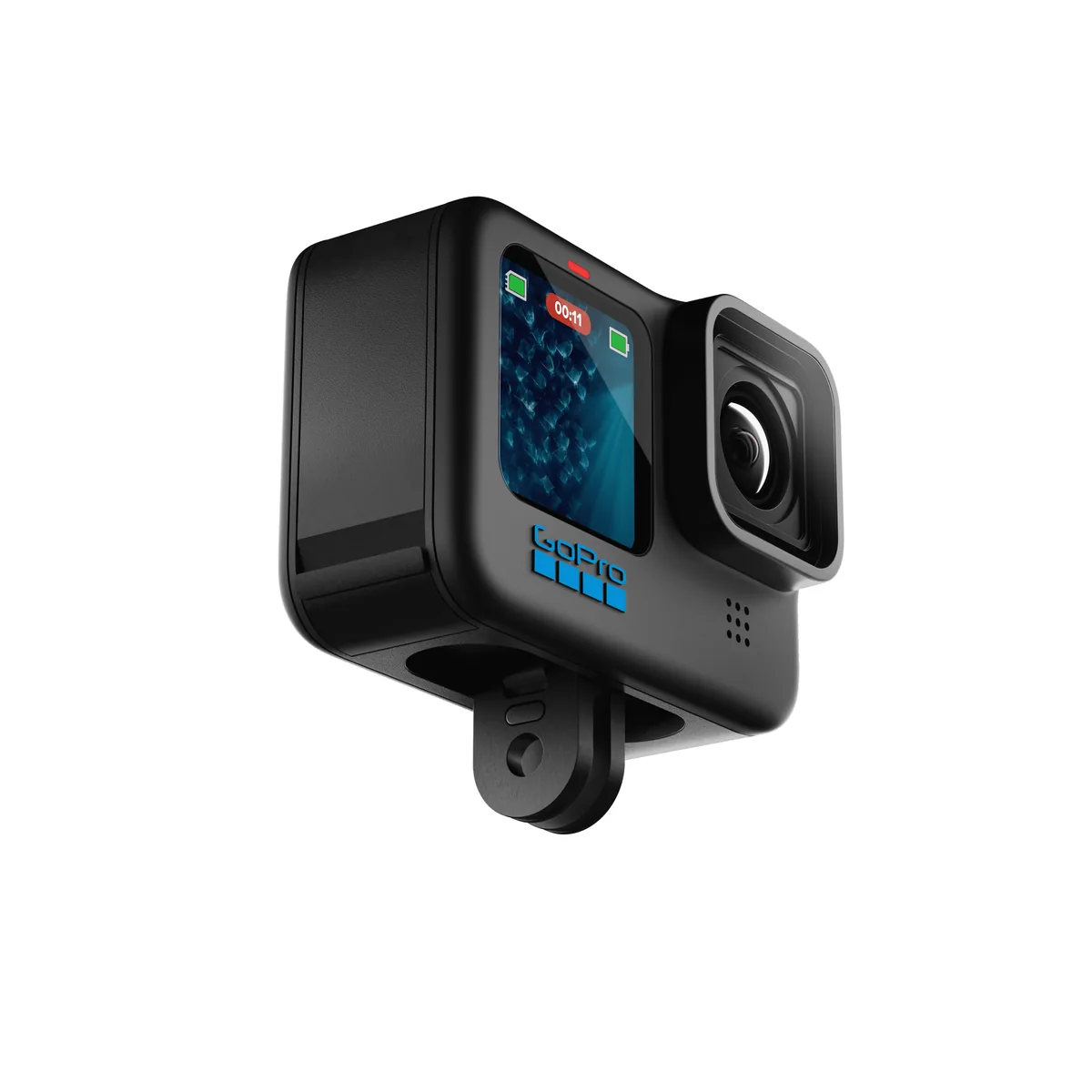
GoPro HERO11 Black
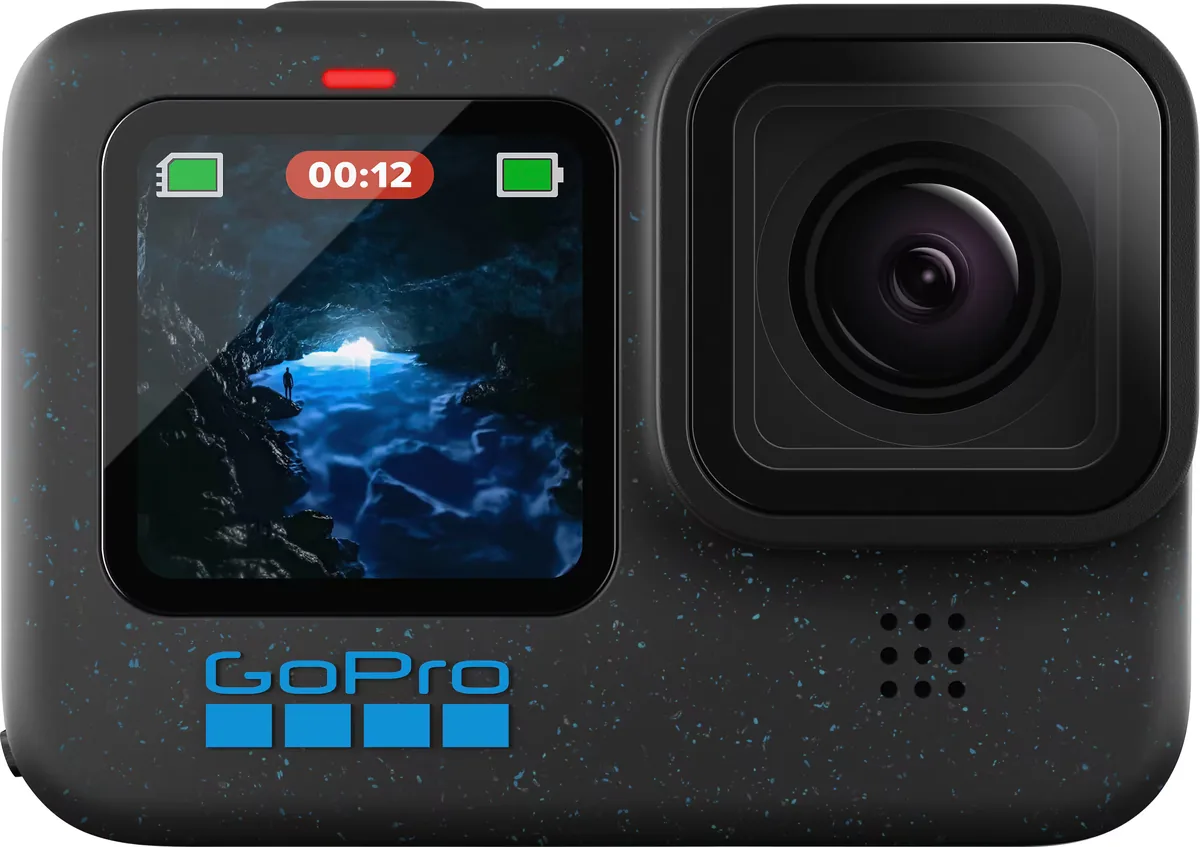
This is the camera that introduced the tall 8:7 sensor readout, and it is the reason the Hero body has barely changed since. Shooting the full 27 MP frame and cropping to 16:9, 9:16 or 4:5 in the edit is a workflow rather than a spec, and it is still the single most useful thing GoPro has added in five years. The Hero 11 keeps GPS, which the Hero 12 dropped, and the older HyperSmooth 5.0 is a hair behind 6.0 without being visibly worse. Where it falls behind is GP-Log, which arrived a generation later, and the 1/4-20 thread, which did not. GoPro still lists it on its own store, and at a street price under $250 it is the cheapest route into 5.3K60 with full horizon lock.
GoPro
GoPro HERO12 Black
Clearance pricing has turned last year's flagship into the value pick of the GoPro line, and the gap to the Hero 13 is narrower than the generation number suggests. Same 1/1.9-inch sensor, same 5.3K60 and 4K120, same 10-bit GP-Log, same HyperSmooth 6.0 with full horizon lock. What you give up is the magnetic latch, the HB lens-mod system, roughly 180 mAh of battery — and GPS, which GoPro dropped on this generation and restored on the next. That last one is the deciding spec for anyone who wants speed, altitude or route data burned into the footage; for everyone else the Hero 12 is a Hero 13 that costs eighty dollars less and takes the same mounts. It also carries a 1/4-20 thread in the base, which the Hero 11 did not.
GoPro
GoPro HERO13 Black
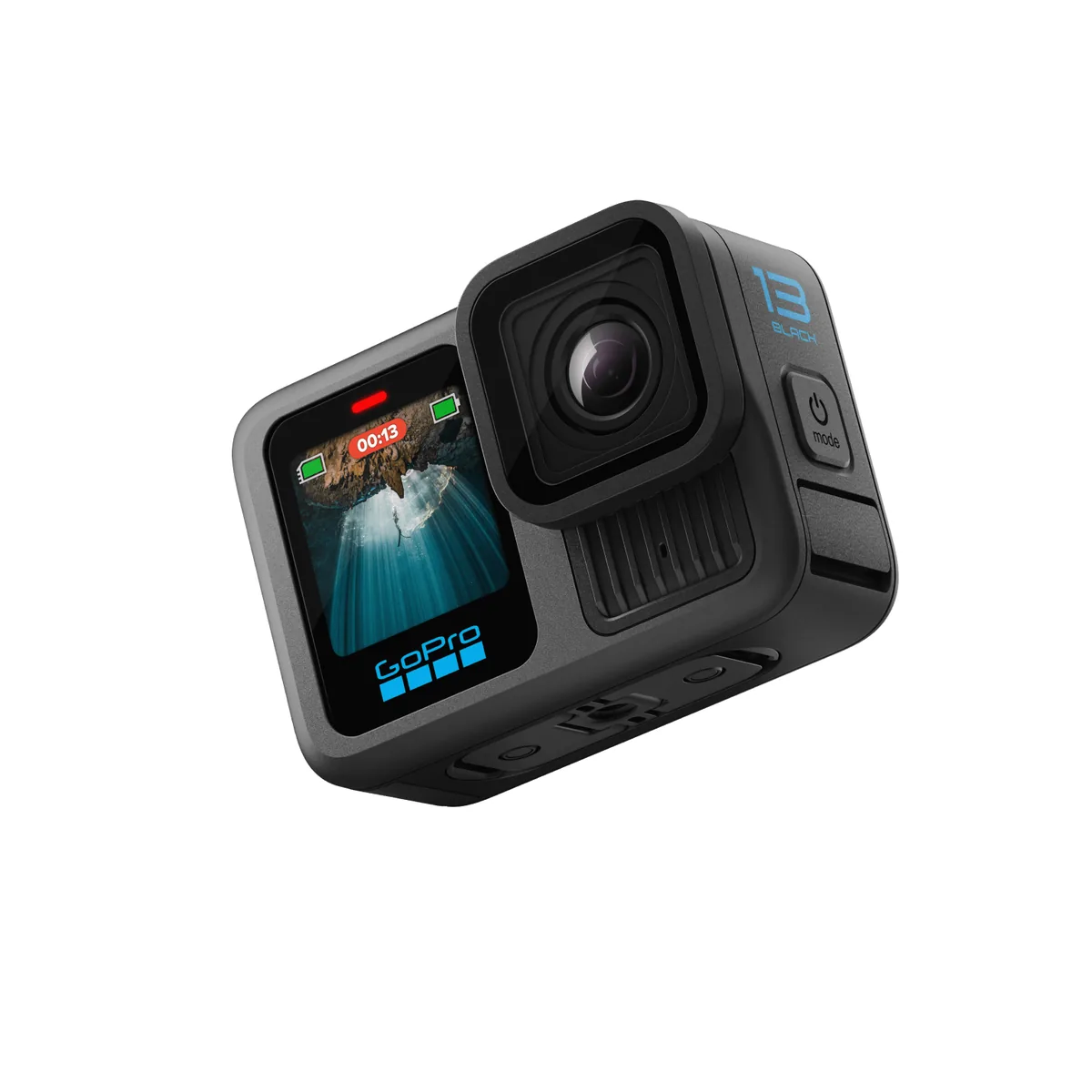
Four generations of the same 1/1.9-inch sensor have gone into this body, and GoPro spent the thirteenth on everything around it instead: a magnetic latch that replaces the fold-out fingers, a 1900 mAh Enduro cell, and the HB-series lens mods the camera recognises and reconfigures itself for. That is the honest shape of the Hero 13. Image quality sits roughly where the Hero 12 left it, the sensor is small next to what DJI and Insta360 now ship, and the stabilisation is still the best in the category by a margin nobody has closed. In a group test that ran four cameras to shutdown side by side, this was the only one that hit its published runtime. The mount ecosystem is the other argument: a decade of GoPro-fingered clamps, chest harnesses, helmet mounts and third-party rigs all still bolt straight on, which is why it stays the default on a motorcycle fairing or a ski helmet even when a rival's spec sheet reads better.
GoPro
GoPro MAX2
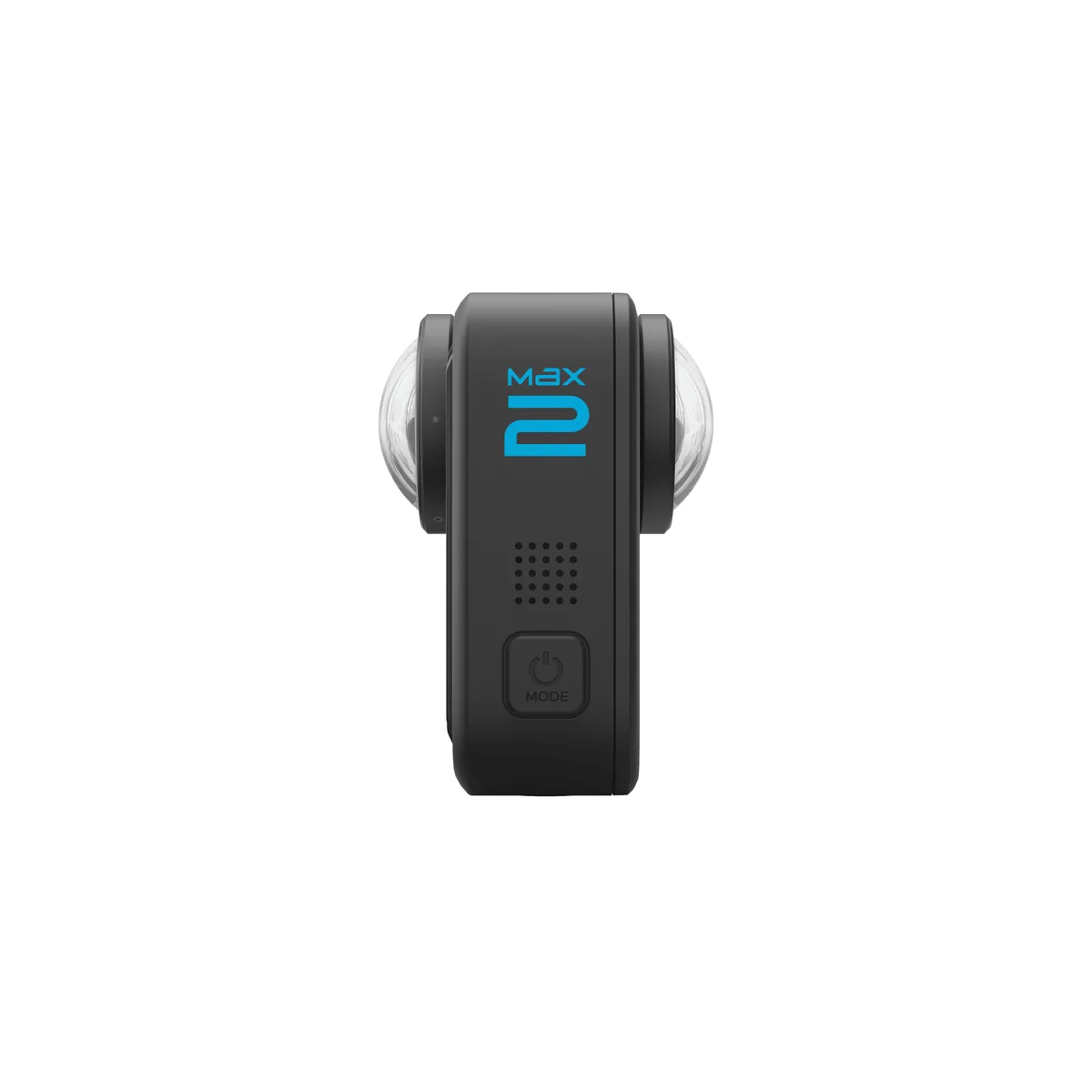
Six years after the first MAX, GoPro finally shipped a successor, and the twist-off lens covers are the headline that matters. Every 360 camera lives or dies on scratched glass — the lenses bulge out past the body by design and there is no guarding them properly — and the MAX2 is the first one where replacing them is a field job rather than a service ticket. Around that sits true 8K spherical at 30 fps with 10-bit colour, a 300 Mbps ceiling that is the highest in the category, GP-Log for grading, and a six-microphone array. It is also the only 360 camera with built-in GPS. The two compromises are real: 5 m of bare waterproofing is the shallowest of any current 360 camera, and 66 minutes at 8K30 is less than half what the Insta360 X6 claims.
GoPro
GoPro HERO (2024)
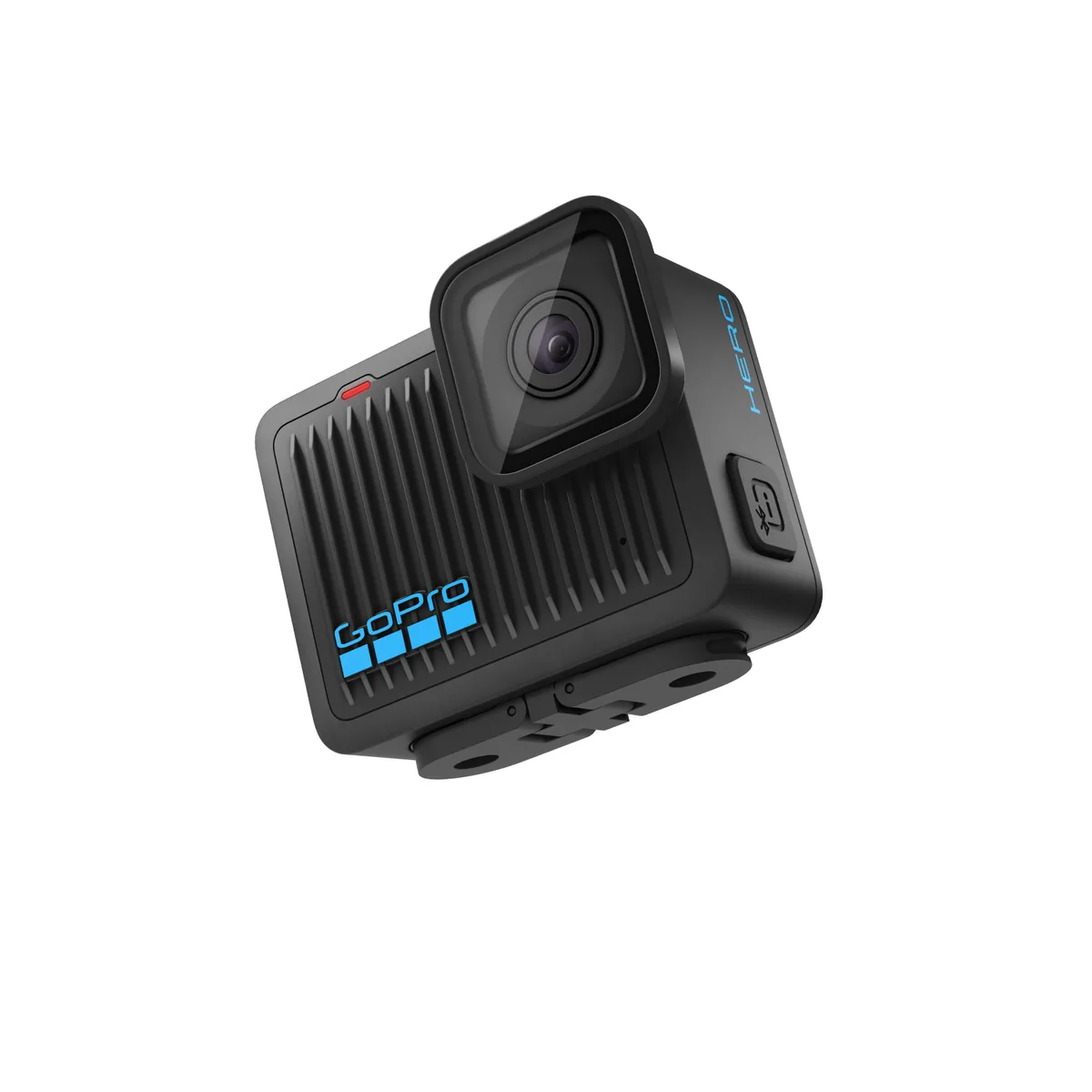
Half the weight of a Hero 13 and about a third of the menu depth. This is GoPro's answer to the question of what an action camera looks like when you strip out everything a beginner never touches: 4K30, 12 MP stills, a touchscreen, HyperSmooth, and nothing else. There is no horizon lock, no log profile, no removable battery, no front screen, no GPS and no 60 fps at 4K. The sensor drops to 1/2.3-inch, which is the smallest in the modern GoPro line and about 40 per cent less area than the Hero 13's. In exchange it disappears on a helmet at 86 g and takes every GoPro mount ever made. As a first action camera or a fourth angle it is well judged; as a replacement for a flagship it is not close.
GoPro
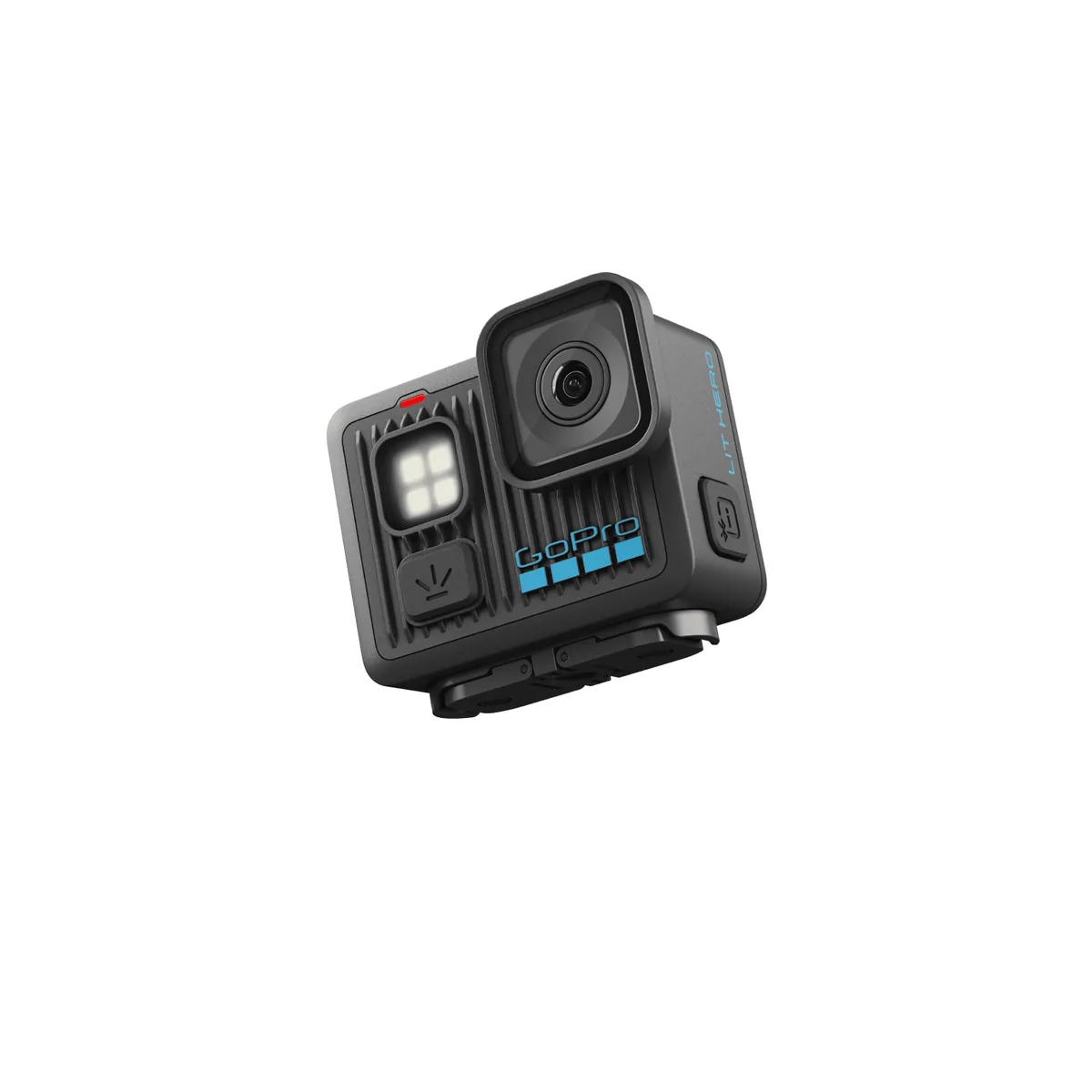
GoPro LIT HERO
Four LEDs around the lens, and an entire product built to justify them. The LIT HERO is the 2024 HERO body with 4K60 instead of 4K30, a magnetic mount, and a ring light bright enough to be useful at arm's length in a dark bar, a tent, or a night ride. Whether that is worth ninety dollars over the plain HERO depends entirely on whether you shoot after sunset; the sensor is the same small 1/2.3-inch chip, so the light is compensating for a limitation rather than adding a capability. Reviewers have found it the most confusing camera in GoPro's line precisely because it sits above the HERO on price and below the Hero 12 on everything but the LEDs. The bright spot is the 109-minute rating at 4K60, which is better than any full-size Hero manages at that setting.
GoPro
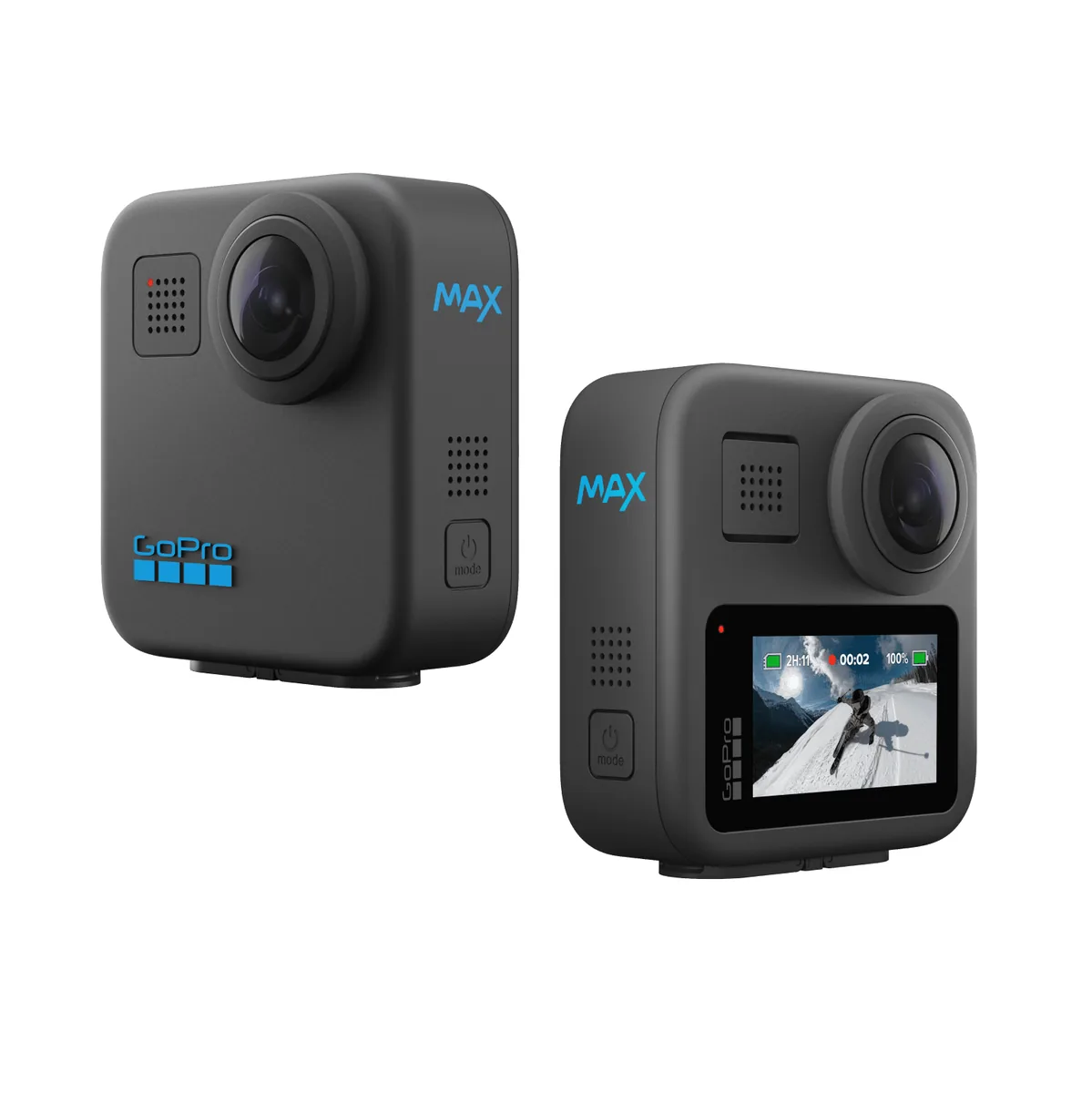
GoPro MAX
A 2019 camera that GoPro quietly refreshed in 2025 with an Enduro battery and a 1/4-20 mount, and which survives because of one thing its successor charges $150 more for: it also works as a normal action camera. Point it forward, pick a digital lens, and the front sensor alone shoots 1440p or 1080p with Max HyperSmooth — historically the most aggressive stabilisation GoPro has ever shipped, because the second lens gives it a bigger picture to steal from. The spherical side is dated: 5.6K30, 8-bit, 78 Mbps, and lenses that cannot be replaced when they scratch. Treat it as a cheap dual-purpose camera with a very good stabilised single-lens mode, not as a current 360 camera.