GoPro LIT HERO vs Insta360 GO Ultra
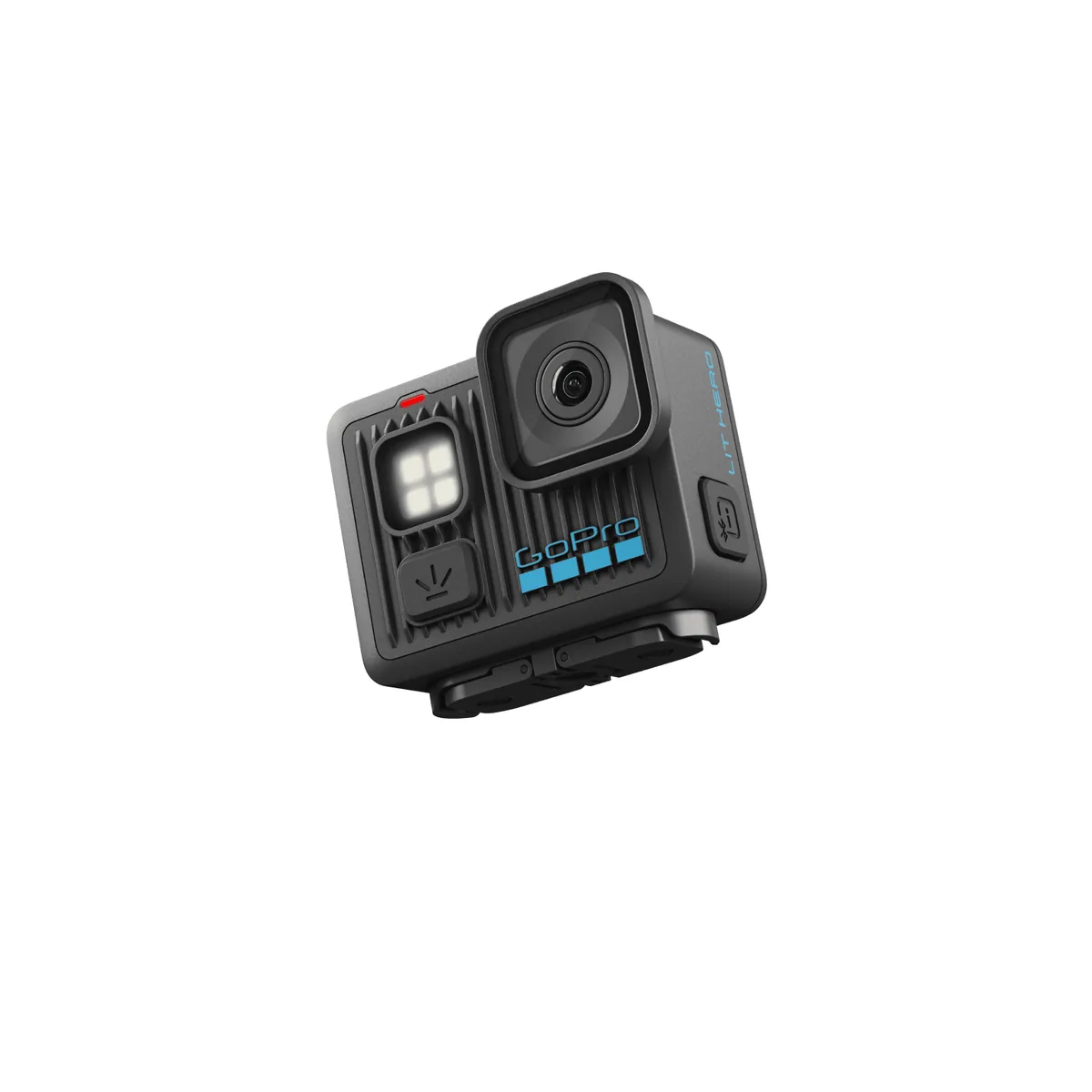
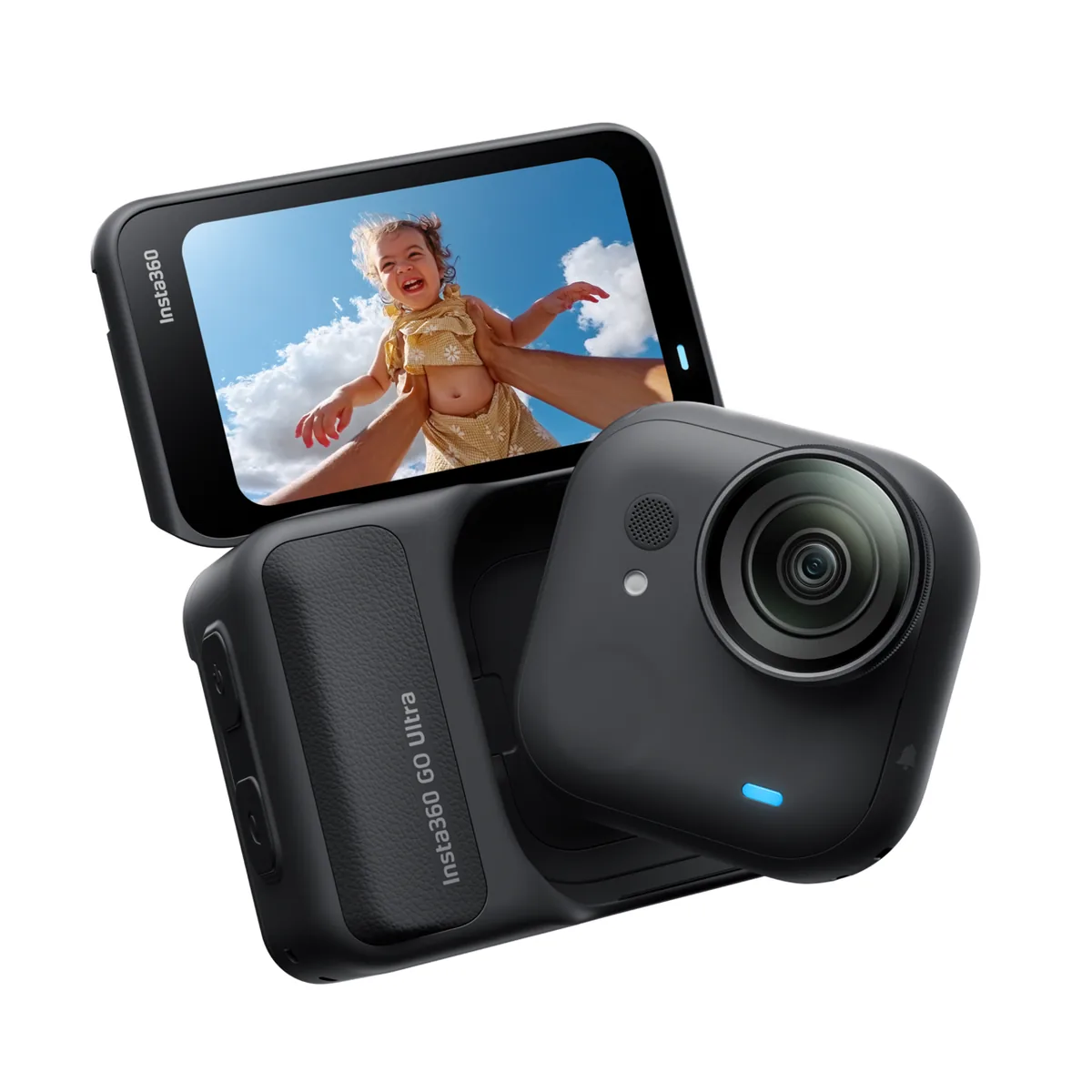
In short: The GoPro LIT HERO costs $180 less; the Insta360 GO Ultra collects light over 72 mm² against 28, which is 2.6× the area; the Insta360 GO Ultra goes 10 m deep with no housing against 5 m; only the Insta360 GO Ultra has horizon lock; the Insta360 GO Ultra claims 3 h 20 min at 1080p24 with Endurance Mode on, Wi-Fi and screen off, camera plus Action Pod (70 minutes on the camera alone).
| Spec | GoPro LIT HERO | Insta360 GO Ultra |
|---|---|---|
| Approx. price | ~$269 | ~$449 |
| Year-one cost | ~$329 with the plan | ~$473 with the plan |
| Type | Compact / mini | Compact / mini |
| Sensor size | 1/2.3-inch | 1/1.28-inch |
| Sensor area | 28 mm² | 72 mm² |
| Max resolution | 4K @ 60fps | 4K @ 60fps |
| Reframed resolution | n/a — already flat | n/a — already flat |
| Max fps at 4K | 60 | 60 |
| Max fps at 1080p | 120 | 240 |
| Max bitrate | Not published | 180 Mbps |
| Colour depth | 8-bit | Not published |
| Log profile | None | None |
| Stabilisation | HyperSmooth, applied in the Quik app rather than in camera | FlowState |
| Horizon lock | None | 360° (full) |
| Aperture | Not published | f/2.85 |
| Waterproof | 5 m bare | 10 m bare |
| Claimed runtime | 1 h 40 min at 4K60 with the light off; GoPro says over 100 minutes, and over 75 with the light on High | 3 h 20 min at 1080p24 with Endurance Mode on, Wi-Fi and screen off, camera plus Action Pod (70 minutes on the camera alone) |
| Tested runtime | No third-party test collected | No third-party test collected |
| Battery | 1255 mAh | 500 mAh |
| Cold rating | 14°F | -4°F |
| Weight | 93 g | 53 g |
| Screens | 1.76-inch rear touch | 2.5-inch flip touch on the Action Pod |
| Mount | Magnetic quick-release + GoPro folding fingers | Magnetic pendant + magnetic quick-release |
| Replaceable lenses | No | No |
| GPS | No | No |
| Voice control | No | Yes |
| Storage | microSD | microSD |
| Subscription | GoPro Premium, ~$59.99/yr | Insta360+, ~$23.88/yr |
| Released | 2025 | 2025 |
A highlighted cell is the outright better figure in that row, and only where one direction is unambiguously better. Weight, field of view and battery capacity are left neutral because the better direction depends entirely on what you are shooting.
Strengths and drawbacks
GoPro LIT HERO
- +The LEDs are genuinely bright enough to light a face at arm's length
- +Over 100 minutes at 4K60 with the light off, by GoPro's own figure
- +Magnetic mount is quicker than the folding fingers and still accepts them
- +93 g, so it goes where a flagship would be too heavy
- −Costs more than the HERO and less capable than the Hero 12 — an awkward middle
- −Small 1/2.3-inch sensor, so the light is patching over weak low-light performance
- −No horizon lock and no log profile
- −Battery is sealed; the LEDs eat into the runtime when you use them
- −Stabilisation is applied afterwards in the Quik app; clips straight off the card are not stabilised
Insta360 GO Ultra
- +A sensor this size in a 53 g body is genuinely without precedent
- +Magnetic pendant wearing gives angles no mounted camera can reach
- +The Action Pod preview means framing is not guesswork, unlike GoPro's Mini
- +200 minutes with the pod attached is a real all-day figure
- −$449 — more than a GoPro Hero 13 Black, which out-specs it almost everywhere
- −The Action Pod is not waterproof, so the screen has to stay out of the water
- −4K caps at 60 fps; there is no 4K120 as on the DJI Osmo Nano
- −No internal storage, unlike the Nano's 64 GB or 128 GB
- −The 200-minute figure needs the Action Pod, Endurance Mode and 1080p24; the camera alone is rated at 70 minutes