DJI Osmo Action 6 vs Insta360 Ace Pro 2
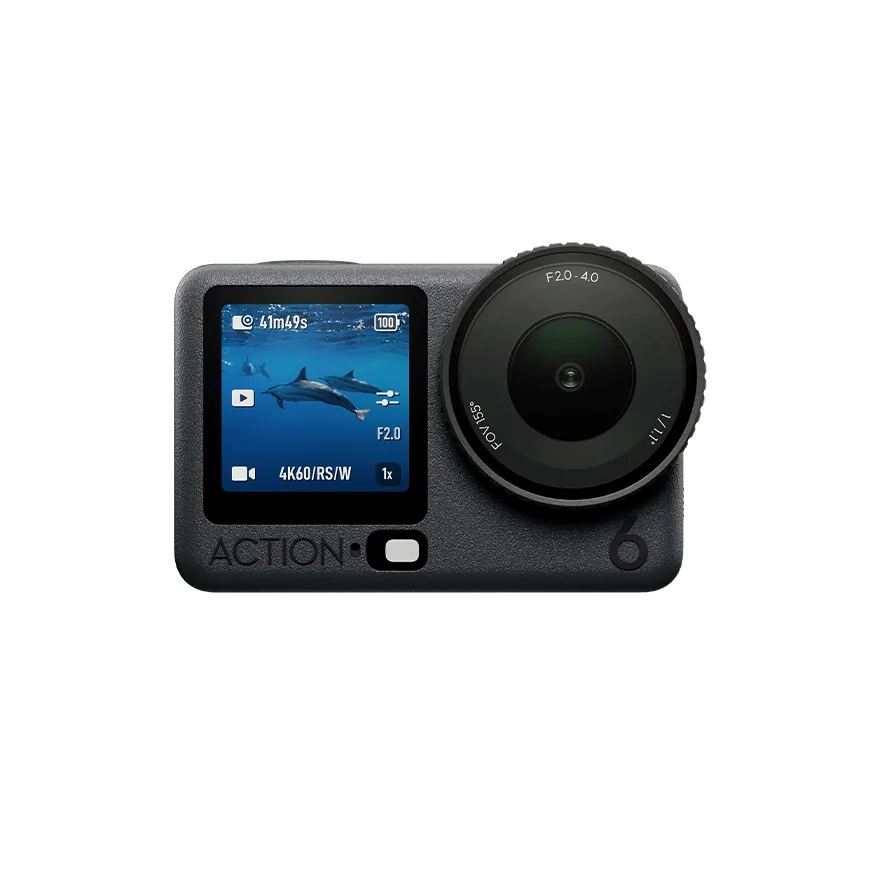
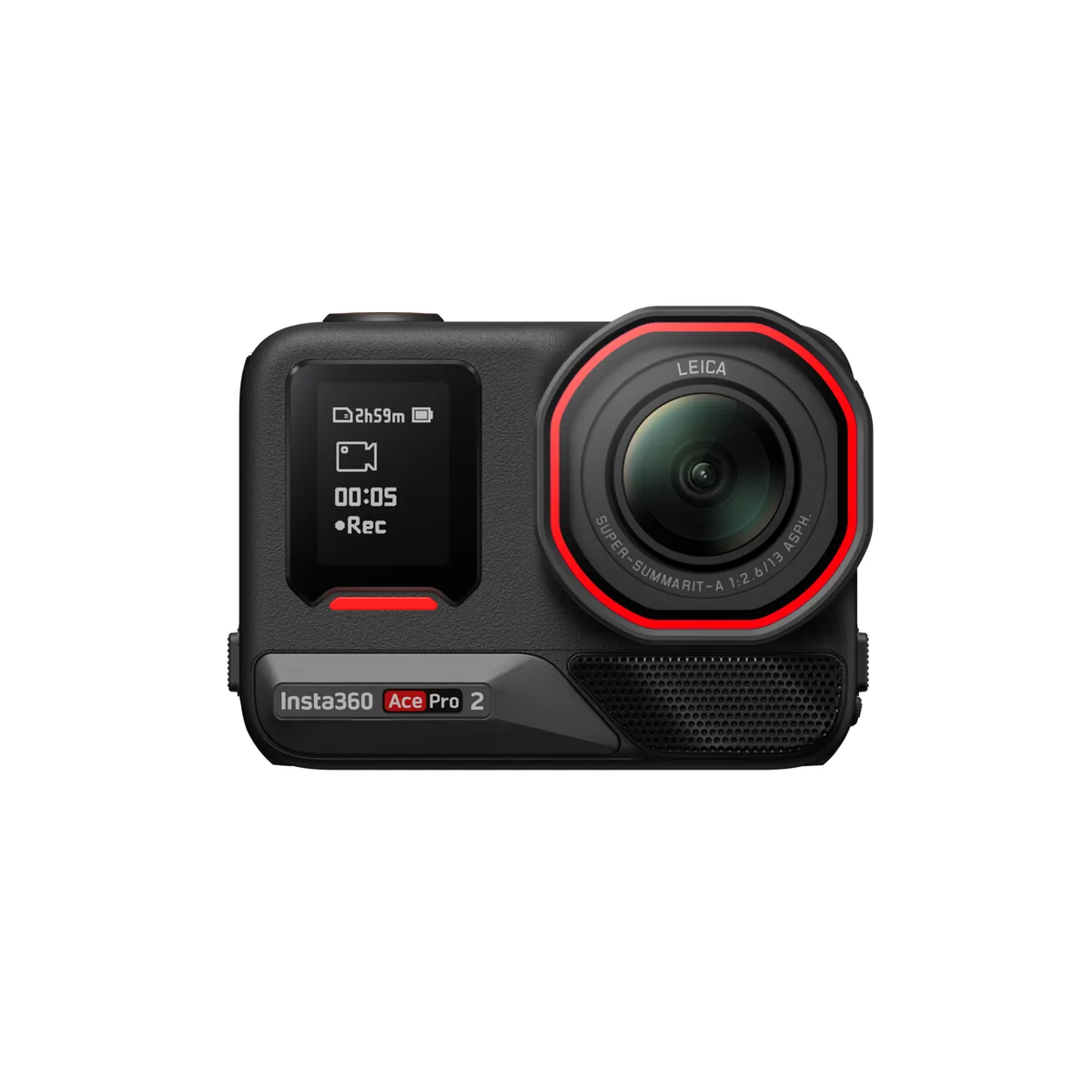
In short: The DJI Osmo Action 6 costs $20 less; the DJI Osmo Action 6 collects light over 96 mm² against 72, which is 1.3× the area; the DJI Osmo Action 6 goes 20 m deep with no housing against 12 m; the DJI Osmo Action 6 records 10-bit colour; the Insta360 Ace Pro 2 puts features behind a ~$23.88/yr plan, which makes its first year ~$423; the DJI Osmo Action 6 claims 4 h at 1080p24 with RockSteady on.
| Spec | DJI Osmo Action 6 | Insta360 Ace Pro 2 |
|---|---|---|
| Approx. price | ~$379 | ~$399 |
| Year-one cost | ~$379 | ~$423 with the plan |
| Type | Flagship action | Flagship action |
| Sensor size | 1/1.1-inch square | 1/1.3-inch |
| Sensor area | 96 mm² | 72 mm² |
| Max resolution | 8K @ 30fps | 8K @ 30fps |
| Reframed resolution | n/a — already flat | n/a — already flat |
| Max fps at 4K | 120 | 120 |
| Max fps at 1080p | 240 | 240 |
| Max bitrate | 120 Mbps | 180 Mbps |
| Colour depth | 10-bit | Not published |
| Log profile | D-Log M | I-Log |
| Stabilisation | RockSteady 3.0+ | FlowState |
| Horizon lock | 360° (full) | 360° (full) |
| Aperture | f/2 | f/2.6 |
| Waterproof | 20 m bare, 60 m cased | 12 m bare, 60 m cased |
| Claimed runtime | 4 h at 1080p24 with RockSteady on | 3 h at 1080p24 with Endurance Mode on |
| Tested runtime | No third-party test collected | 1 h 44 min (road.cc action camera group test) |
| Battery | 1950 mAh | 1800 mAh |
| Cold rating | -4°F | -4°F |
| Weight | 149 g | 182 g |
| Screens | 1.46-inch front + 2.5-inch rear touch | Front status display + 2.5-inch flip-up rear touch |
| Mount | Magnetic quick-release | Magnetic quick-release |
| Replaceable lenses | Yes | Yes |
| GPS | No | No |
| Voice control | Yes | Yes |
| Storage | microSD + 64 GB internal | microSD |
| Subscription | None | Insta360+, ~$23.88/yr |
| Released | 2025 | 2024 |
A highlighted cell is the outright better figure in that row, and only where one direction is unambiguously better. Weight, field of view and battery capacity are left neutral because the better direction depends entirely on what you are shooting.
Strengths and drawbacks
DJI Osmo Action 6
- +Variable aperture solves the one problem no other action camera can: too much light
- +Square sensor makes vertical and landscape cuts from the same file without cropping into nothing
- +Roughly triple the sensor area of a GoPro Hero 13, which is visible the moment the sun goes down
- +20 m bare waterproofing and a −20 °C rating with no housing
- +64 GB built in, so a forgotten microSD card is not a dead day
- +Four-hour battery rating is the longest here, even allowing for the 1080p24 setting it is quoted at
- −No GPS, so there is no speed or altitude overlay without a phone
- −Mounting is magnetic-only; GoPro-fingered accessories need an adapter
- −8K caps at 30 fps and the 120 Mbps ceiling is low for that resolution
- −Four hours is quoted at 1080p24 — at 8K it is a fraction of that
- −The magnetic latch is the only mount on the body; there is no 1/4-20 thread
Insta360 Ace Pro 2
- +Only flagship here with a screen that flips to face the lens — vlogging stops being guesswork
- +8K30 at 180 Mbps out of a 1/1.3-inch sensor, a resolution GoPro's Hero line does not reach
- +12 m of bare waterproofing sits between GoPro's 10 and DJI's 20
- +I-Log with a supplied LUT makes grading straightforward rather than a guessing game
- +50 MP stills are the highest of any non-360 camera here
- −Worst battery life of the flagships — first to die in a same-conditions four-camera test, by half an hour
- −Insta360 does not publish a colour bit depth for this camera, unlike the X6
- −182 g and 38 mm deep, the chunkiest of the flagship action cameras
- −The hinged screen is another moving part in a category that punishes them
- −No GPS