Campark
Campark V40
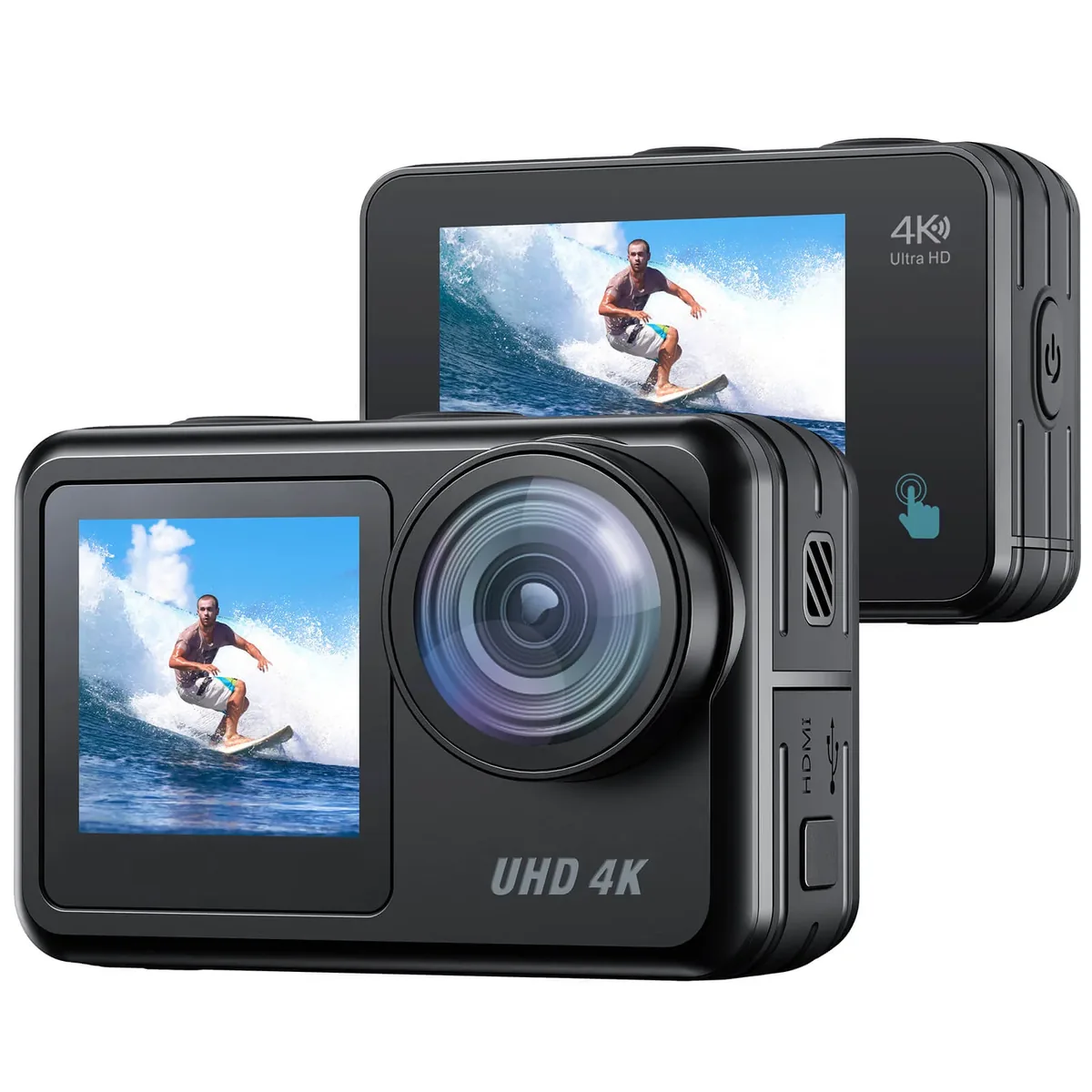
Cheapest dual-screen camera in the catalogue, and the front display is the only reason to pick it over Campark's own X30. At $69 it does the basics: native 4K30, 20 MP stills, 10 m of bare waterproofing — which several cameras three times the price do not offer — and a 40 m case for anything deeper. Everything about the image is what the price implies, and the list of things it does not have is long: no horizon lock, no log profile, no published bitrate, no 4K slow motion. It is a camera for a pool, a first bike, or a second angle on a trip, and nothing about it pretends otherwise once you get past the packaging.
Sensor area against the rest of the catalogue
Derived from the standard optical-format table rather than copied off a spec sheet, because makers print a fraction that hides it. The table and the arithmetic.
Specifications
Features
- ●Native 4K30 and 20 MP stills
- ●Dual screens, front and rear
- ●Waterproof to 10 m bare, 40 m in the case
- ●1350 mAh batteries
- ●GoPro folding-finger mount
Strengths
- +10 m of bare waterproofing at $69, which several pricier cameras do not have
- +A front screen at a price where nothing else offers one
- +GoPro folding fingers, so nothing has to be bought twice to mount it
- +Two batteries in the box, which cameras at four times the price do not include
Drawbacks
- −4K30 only, with no slow motion above 1080p60
- −No horizon lock and basic electronic stabilisation
- −Campark publishes no weight, bitrate or sensor model
- −Image quality falls apart quickly indoors or at dusk
- −microSD support is capped well below what long recordings need
The strengths and drawbacks above are drawn from the manufacturer’s specifications and published reviews. No body of owner reports for this camera has been read, so nothing here claims to speak for its owners.
What owners say
No owner discussion has been collected for the Campark V40 yet. The pros and cons above come from the manufacturer’s specifications and published reviews. Rather than fill this space with invented sentiment, it stays empty until there is something real to put in it.
Campark V40, head to head
Cameras people look at alongside it
More from Campark →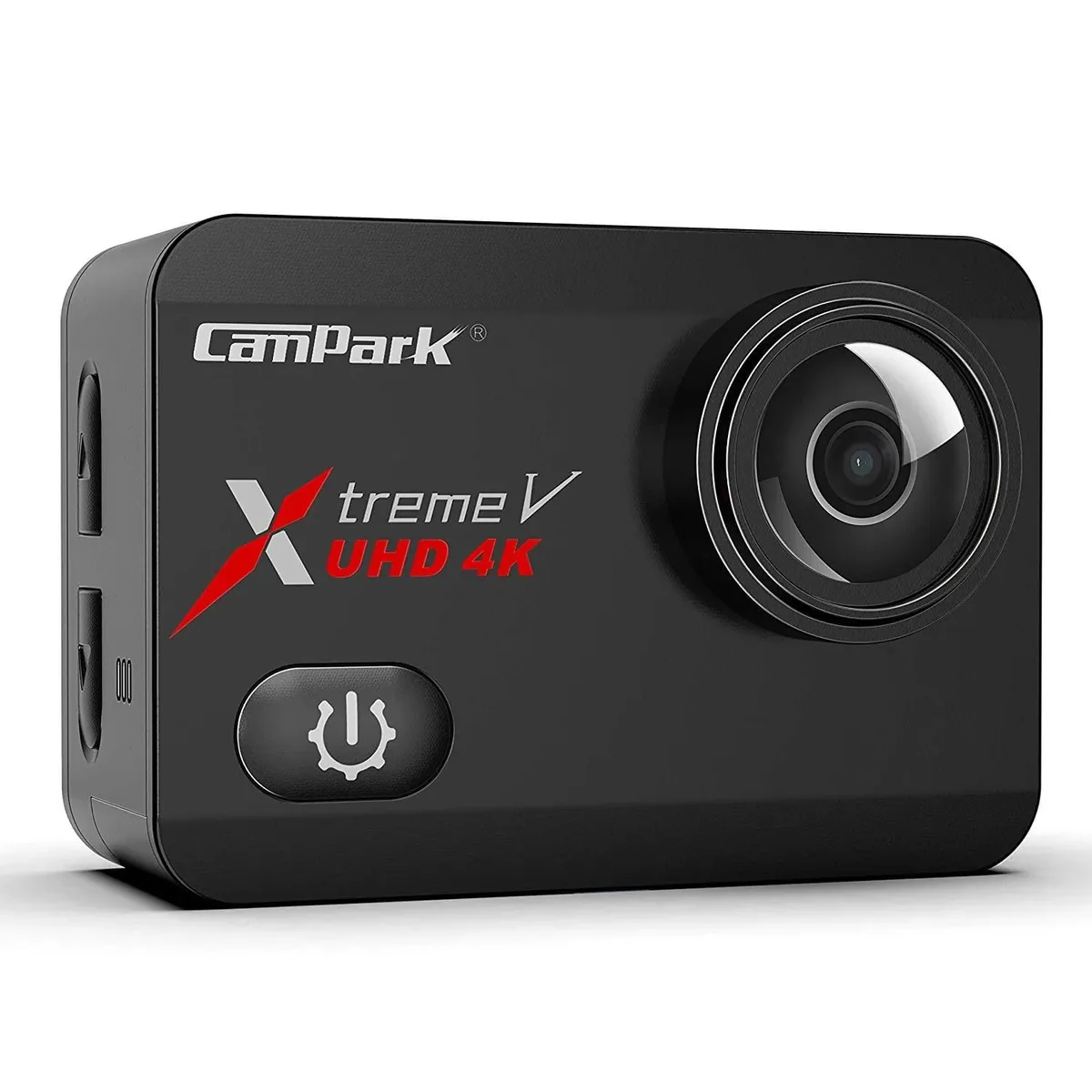
Campark
Campark X30
Sold as a 4K60 camera, and the spec sheet on Campark's own site quietly says otherwise: native 4K is 3840×2160 at 30 fps, and the 60 fps mode runs at 3200×1800 — upscaled to look like 4K in the file. That is worth knowing, because it is a pattern across the sub-$100 tier rather than one brand's failing, and it is the reason this catalogue records a native resolution and frame rate rather than the box copy. What you get for $89 is a competent daylight camera with a touchscreen, two batteries, a 40 m case and standard GoPro mounting. Electronic stabilisation cannot run alongside distortion correction, so you pick one. The card ceiling is 64 GB, which is low.
AKASO
AKASO EK7000 Pro
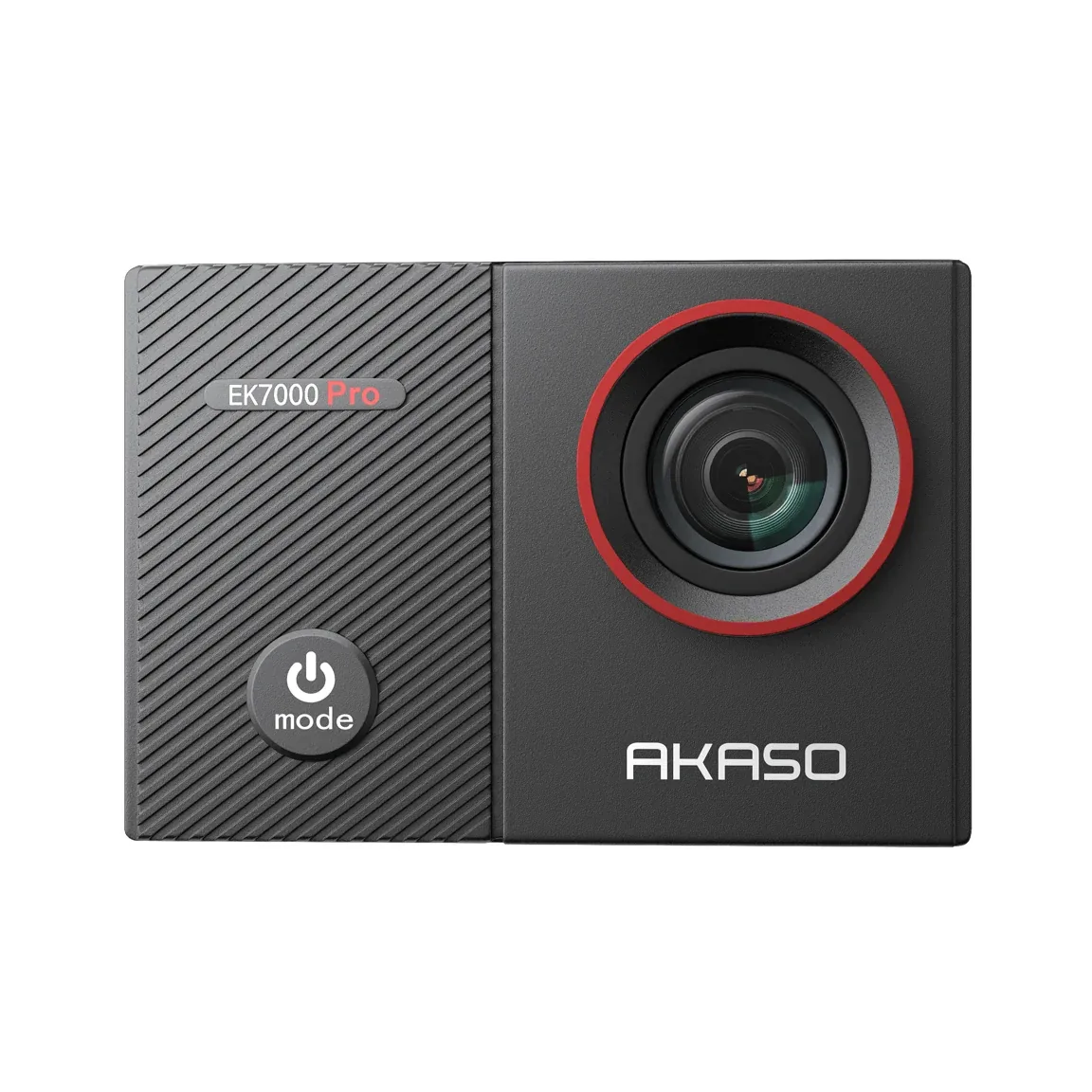
The cheapest camera in this catalogue, and it has been AKASO's volume seller for years by being exactly what a first action camera needs to be: 4K30, a touchscreen, a waterproof case, a remote, a mountain of plastic mounts and a price that makes the decision easy. It is also where every corner has been cut. There is no bare waterproofing, no horizon lock, no USB-C, no published weight or runtime, and stabilisation that only works below 4K. The realistic use is a kid's first camera, a snorkelling trip, or a second angle nobody will grade. Anyone planning to actually edit the footage should read the GoPro HERO row instead and find the extra ninety dollars.
AKASO
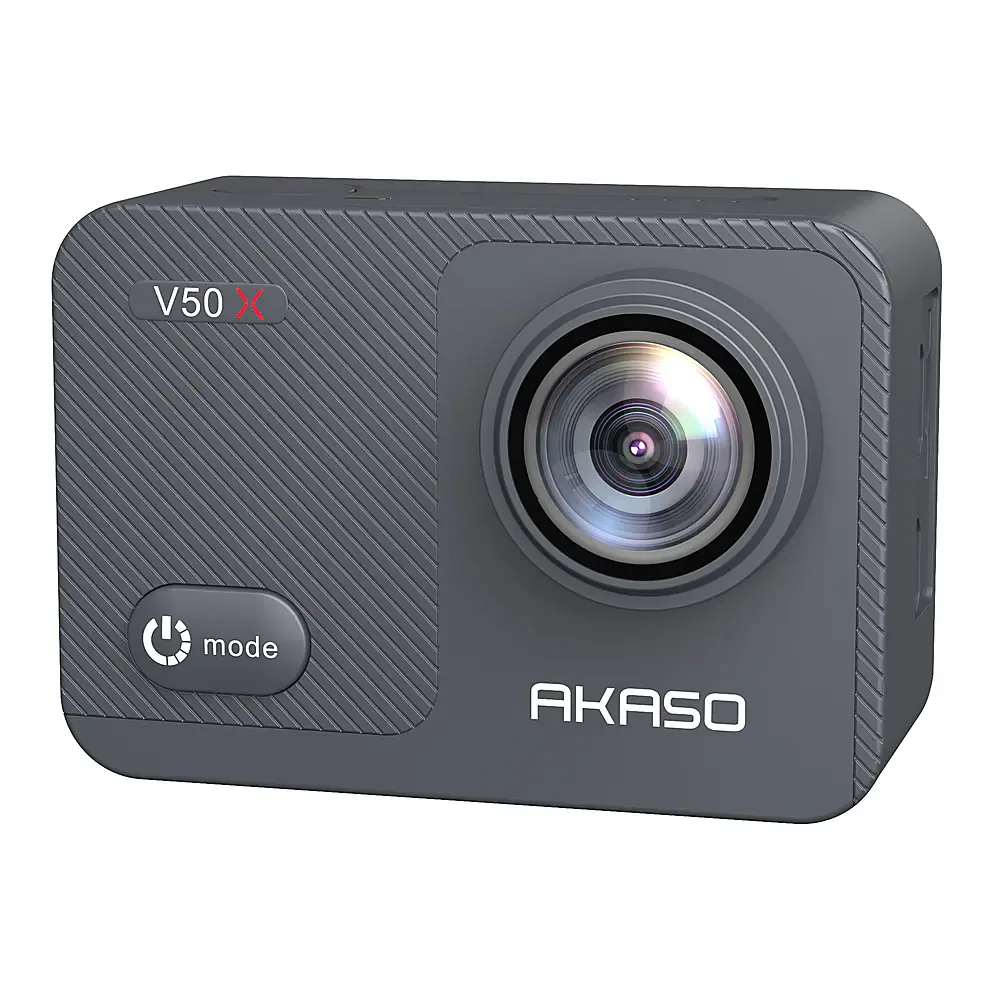
AKASO V50X
Under a hundred dollars with a touchscreen, electronic stabilisation, 4K30 and a 40 m case, which is roughly the floor of what is worth buying at all in this category. The honest framing is that this is a snorkelling and holiday camera: put it in the case, take it in the water, and accept that the footage will look like $99 the moment the light drops or the mount vibrates. Against the V50 Elite it loses 4K60 and voice control for fifty dollars. Against a GoPro HERO at $179 it loses on image quality, stabilisation, and the fact that the GoPro needs no case at all — which is the comparison most people should actually run before the price tag decides it.