AKASO
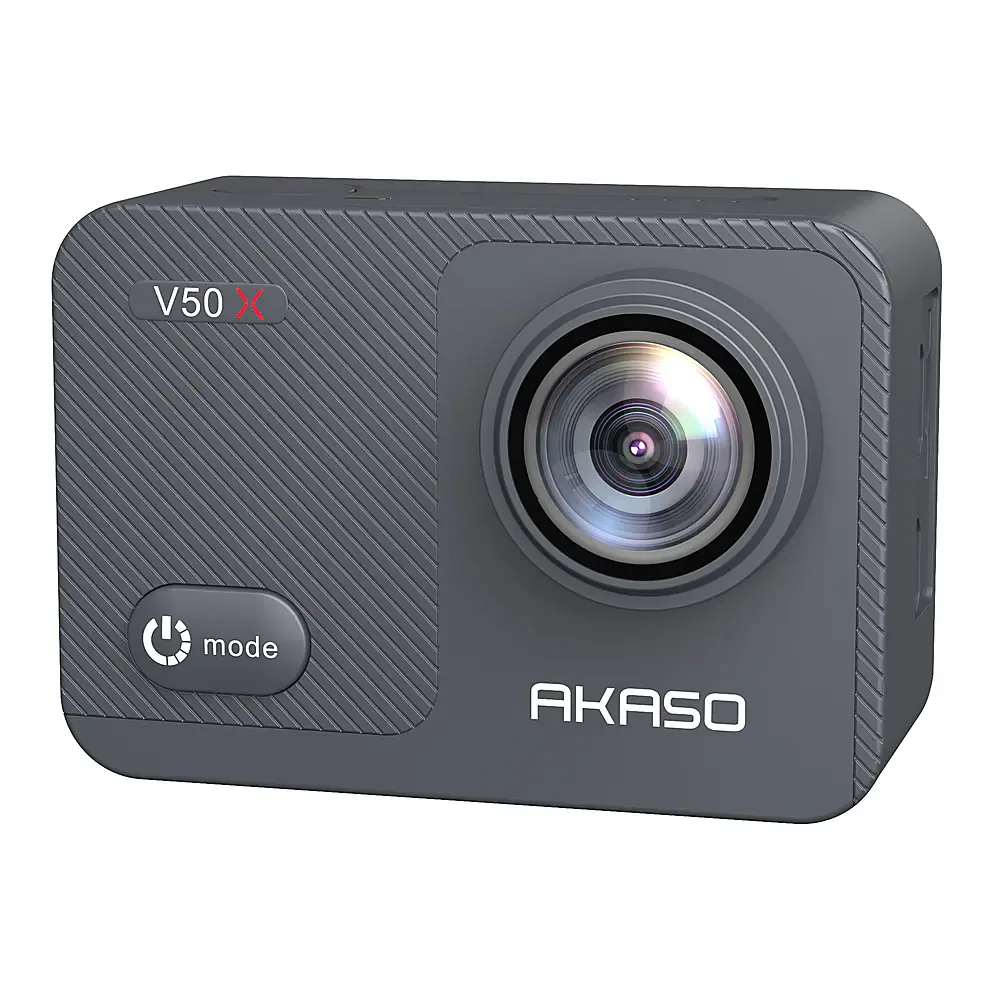
AKASO V50X
Under a hundred dollars with a touchscreen, electronic stabilisation, 4K30 and a 40 m case, which is roughly the floor of what is worth buying at all in this category. The honest framing is that this is a snorkelling and holiday camera: put it in the case, take it in the water, and accept that the footage will look like $99 the moment the light drops or the mount vibrates. Against the V50 Elite it loses 4K60 and voice control for fifty dollars. Against a GoPro HERO at $179 it loses on image quality, stabilisation, and the fact that the GoPro needs no case at all — which is the comparison most people should actually run before the price tag decides it.
Sensor area against the rest of the catalogue
Derived from the standard optical-format table rather than copied off a spec sheet, because makers print a fraction that hides it. The table and the arithmetic.
Specifications
Features
- ●4K30 and 20 MP stills
- ●2.0-inch rear touchscreen
- ●Electronic image stabilisation
- ●Supplied case rated to 40 m
- ●4x digital zoom
- ●GoPro folding-finger mount
Strengths
- +Touchscreen, 4K and a 40 m case for under a hundred dollars
- +Takes standard GoPro mounts, so the whole accessory market is open
- +Simple enough to hand to someone who has never used an action camera
- +A 2-inch touchscreen rather than the button-and-guesswork interface most sub-$100 cameras ship with
Drawbacks
- −No bare waterproofing — the case is doing all the work
- −4K30 only, and stabilisation that gives up on vibration
- −AKASO publishes no weight, bitrate or runtime figure
- −A GoPro HERO at $179 is a better camera in every measurable way
What owners say
Summarised from owner discussions and published long-term reviews.
A camera people name rather than recommend. In the recurring threads where someone asks for an action camera around $100 for cycling, driving or a holiday, the V50X appears next to the Brave 7 LE and the EK7000 — and the replies usually attach the same warning to all three, which is that the image quality and stabilisation are what the price implies.
The things it does have are worth something. A touchscreen at this price is not universal, the 40 metre case makes water use straightforward, and the GoPro-compatible mount means the vast aftermarket works with it.
Owners who have used one describe specific footage problems that have their own troubleshooting threads. The honest framing from the discussion is that this is a camera for a pool, a holiday or a first try, and that anyone who cares how the footage looks should read the GoPro HERO entry and find the extra eighty dollars.
What owners like
- +It comes up in budget shortlists alongside the Brave 7 and the EK7000 as one of the few sub-$100 cameras people actually name
- +A touchscreen at this price makes settings changes possible without the phone app
- +The supplied 40 metre case makes it a reasonable snorkelling and pool camera
- +Takes standard GoPro folding-finger mounts, so the whole accessory market is open
Common complaints
- −Owners report visible artefacts and glitches in the footage that have their own help threads
- −Electronic stabilisation is weak enough that owners shopping this tier list it as a reason to spend more
- −No bare waterproofing at all — the case is mandatory near water
- −AKASO publishes no weight, bitrate or runtime figure for it, which makes it impossible to compare properly
Questions owners keep asking
Is the V50X waterproof on its own?
V50X or the GoPro HERO?
What do the specs not tell me?
AKASO V50X, head to head
Cameras people look at alongside it
More from AKASO →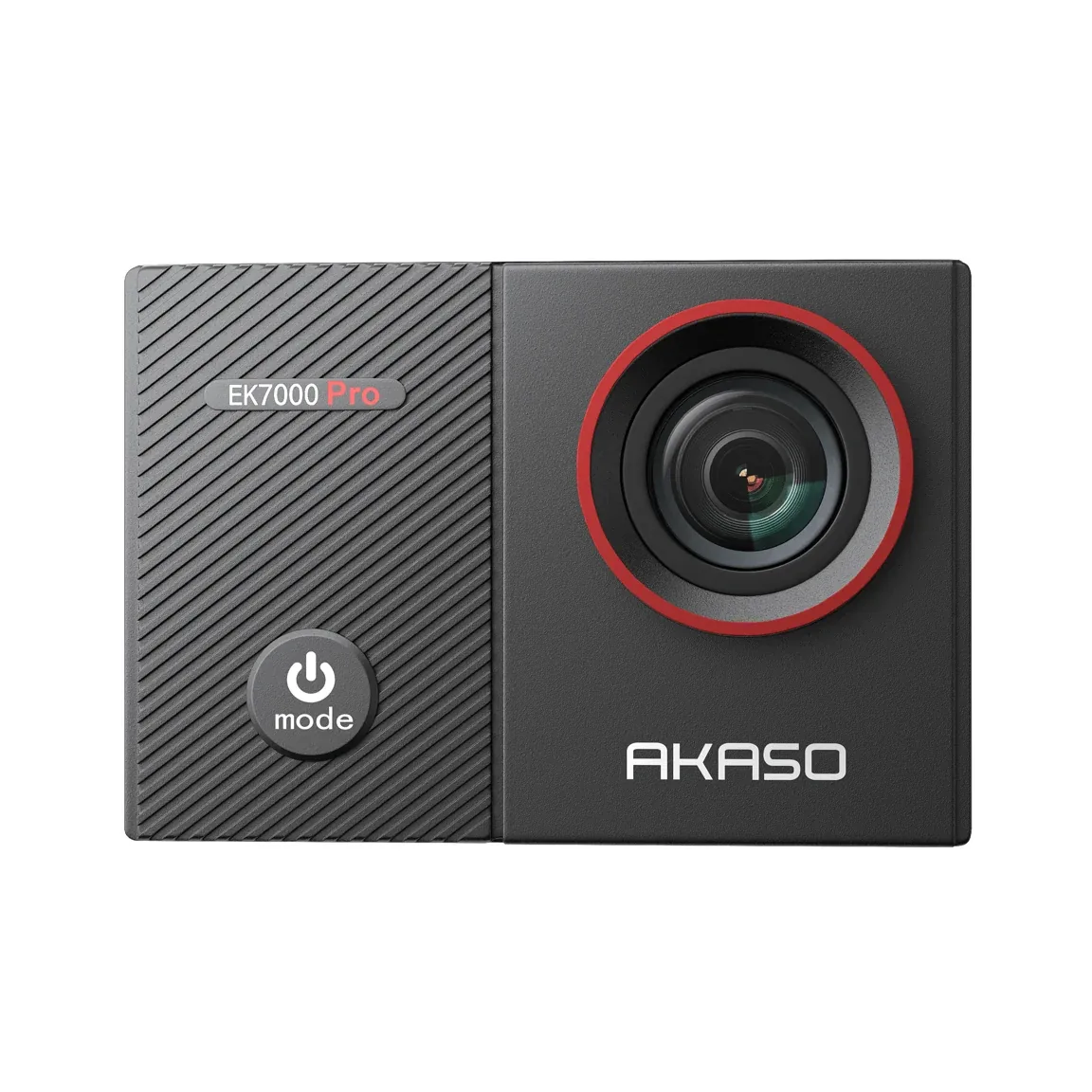
AKASO
AKASO EK7000 Pro
The cheapest camera in this catalogue, and it has been AKASO's volume seller for years by being exactly what a first action camera needs to be: 4K30, a touchscreen, a waterproof case, a remote, a mountain of plastic mounts and a price that makes the decision easy. It is also where every corner has been cut. There is no bare waterproofing, no horizon lock, no USB-C, no published weight or runtime, and stabilisation that only works below 4K. The realistic use is a kid's first camera, a snorkelling trip, or a second angle nobody will grade. Anyone planning to actually edit the footage should read the GoPro HERO row instead and find the extra ninety dollars.
AKASO
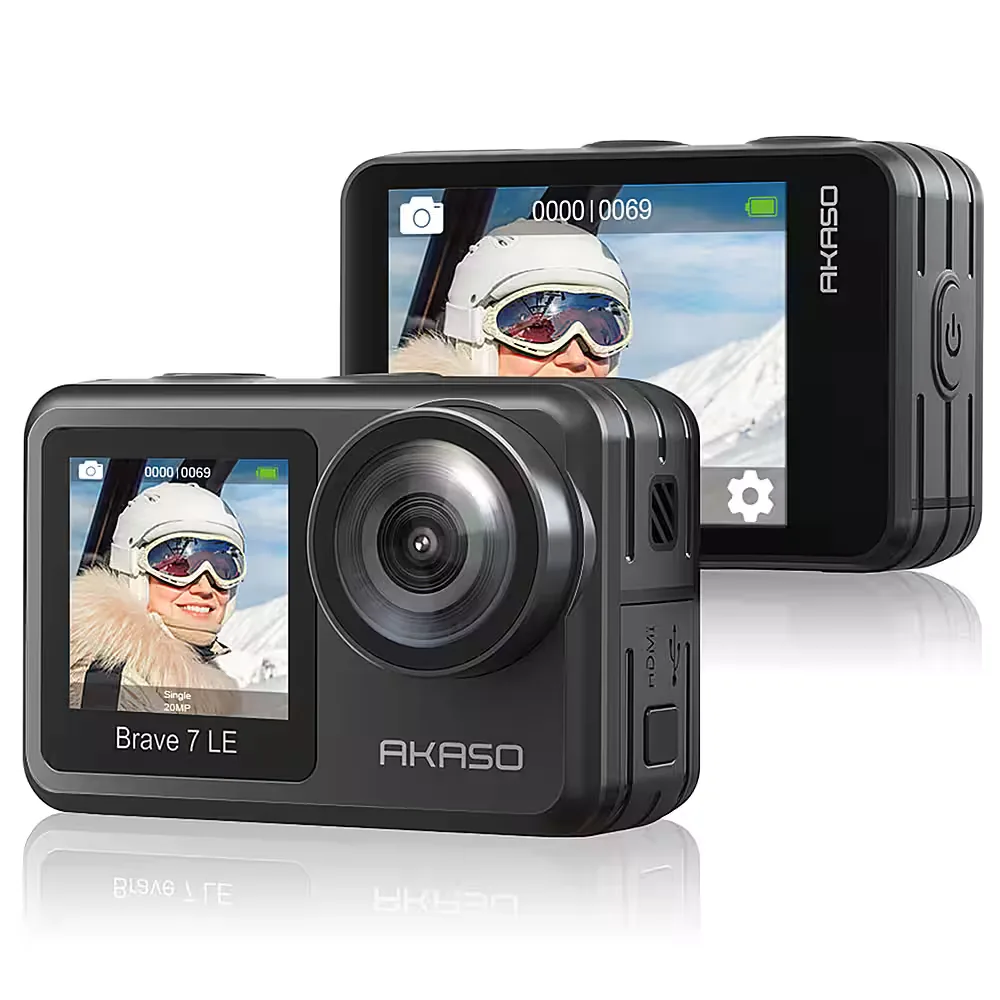
AKASO Brave 7 LE
Six years old and still selling, because a dual-screen 4K camera with an external microphone jack under $150 does not otherwise exist. The front screen is the reason people buy it: at this price nothing else lets you frame yourself, and the mic input means a lav or shotgun can replace the tinny built-in audio that ruins most budget footage. What you accept is a 4K ceiling of 30 fps, so no slow motion above 1080p, and an IPX7 rating that means splashes rather than swimming — the 40 m case is not optional if it is going near water. Treat it as a cheap talking-head and travel camera rather than a sports one.
AKASO
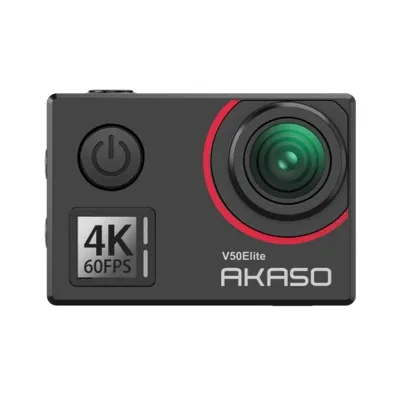
AKASO V50 Elite
AKASO's long-running budget workhorse, and the cheapest camera in this catalogue that shoots 4K at 60 fps rather than 30 — which, on a bike or a board, is the difference between footage you can slow down and footage you cannot. Voice control is unusual at the price too. Everything else is what $149 buys in 2026: a 1/2.3-inch sensor, electronic stabilisation that smooths a walk and not much more, no bare waterproofing at all so the supplied 40 m case does all the work, and a camera design that has not changed since 2019. AKASO does not publish a weight, a bitrate or a runtime for it, which tells you something about the documentation standard across the budget tier.