AKASO
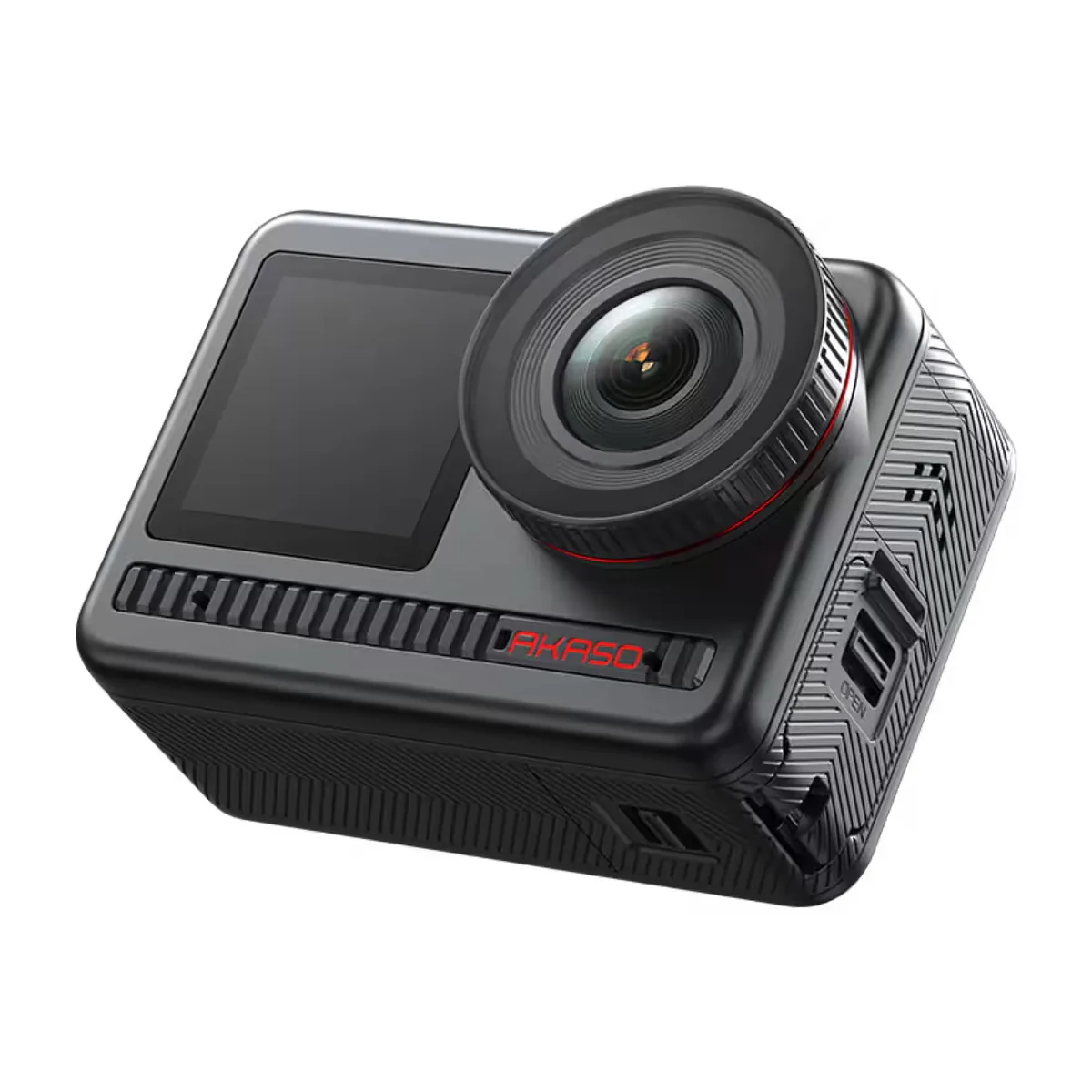
AKASO Brave 8
AKASO's flagship, and the one model in its line with a 1/2-inch sensor rather than the 1/2.3-inch chip the rest of the range shares. Two colour screens, 4K60, 48 MP stills, 10 m of bare waterproofing and two 1550 mAh batteries in the box put it on paper somewhere near a mid-range DJI. In use the gap shows where budget cameras always show it: stabilisation that copes with walking but not with vibration, a noticeably slower interface, and no horizon lock, which is the single feature that makes handlebar and helmet footage watchable. Priced at $279 it sits awkwardly close to a DJI Osmo Action 4 with more than twice the sensor area, which is the comparison to make before buying.
Sensor area against the rest of the catalogue
Derived from the standard optical-format table rather than copied off a spec sheet, because makers print a fraction that hides it. The table and the arithmetic.
Battery, with the small print
- Maker’s claim
- 1 h 30 min at 4K60 continuous
- Third-party test
- None collected. We publish a tested figure only where a named outlet has run one and stated its conditions.
Specifications
Features
- ●1/2-inch sensor, the largest in AKASO's line
- ●4K60 video and 48 MP stills
- ●Dual colour screens
- ●Waterproof to 10 m bare, 40 m in the case
- ●Two 1550 mAh batteries included
- ●Standard GoPro folding-finger mount
Strengths
- +10 m of bare waterproofing is unusual at this price — most budget cameras need the case
- +Two batteries and a full mount kit are in the box, which the big brands charge extra for
- +Takes standard GoPro folding-finger accessories
- +Largest sensor AKASO fits to anything, and the difference from the Lite is visible
Drawbacks
- −No horizon lock, so any rotation of the mount shows up in the footage
- −Stabilisation handles walking but breaks down on vibration
- −$279 puts it against a DJI Osmo Action 4 with more than double the sensor area
- −AKASO publishes no bitrate, bit depth or cold rating
- −No log profile and no published bit depth, so the footage grades poorly
The strengths and drawbacks above are drawn from the manufacturer’s specifications and published reviews. No body of owner reports for this camera has been read, so nothing here claims to speak for its owners.
What owners say
No owner discussion has been collected for the AKASO Brave 8 yet. The pros and cons above come from the manufacturer’s specifications and published reviews. Rather than fill this space with invented sentiment, it stays empty until there is something real to put in it.
AKASO Brave 8, head to head
Cameras people look at alongside it
More from AKASO →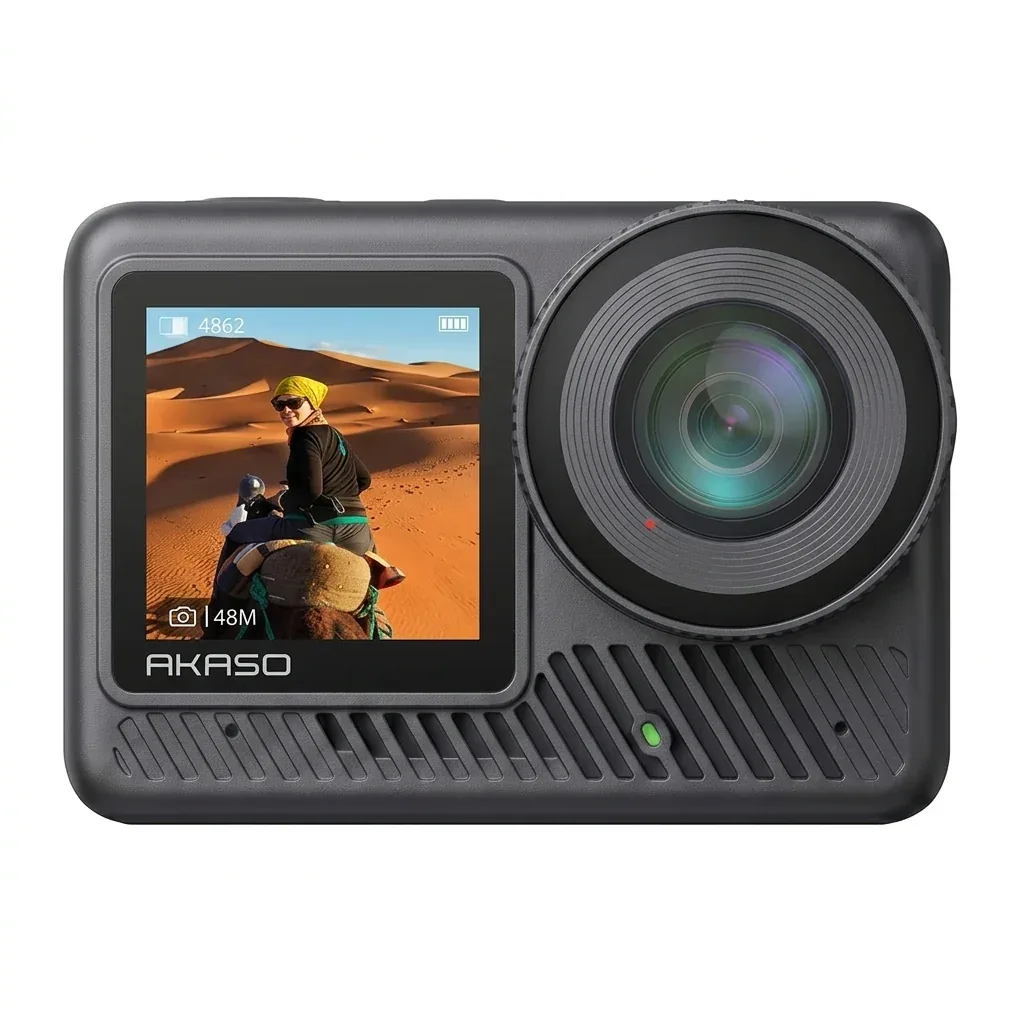
AKASO
AKASO Brave 8 Lite
Drop the front screen and the 1/2-inch sensor from the Brave 8, keep the 4K60, the 48 MP stills, the two 1550 mAh batteries and the 10 m bare waterproofing, and take eighty dollars off. That is a reasonable trade at $199, and the wristband remote AKASO ships instead of the front screen is arguably more useful on a helmet than a screen you cannot see anyway. The sensor drops to the 1/2.3-inch chip most budget cameras use, so low light is where this gives up first. What it is genuinely good at is being the camera you take somewhere you would not take a $400 one: two batteries, a full mount kit, a case rated to 40 m, and nothing to cry about if it comes off a handlebar.
AKASO
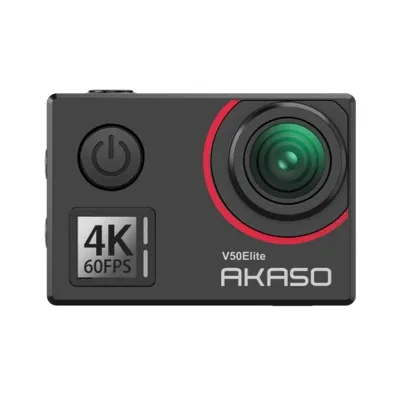
AKASO V50 Elite
AKASO's long-running budget workhorse, and the cheapest camera in this catalogue that shoots 4K at 60 fps rather than 30 — which, on a bike or a board, is the difference between footage you can slow down and footage you cannot. Voice control is unusual at the price too. Everything else is what $149 buys in 2026: a 1/2.3-inch sensor, electronic stabilisation that smooths a walk and not much more, no bare waterproofing at all so the supplied 40 m case does all the work, and a camera design that has not changed since 2019. AKASO does not publish a weight, a bitrate or a runtime for it, which tells you something about the documentation standard across the budget tier.
AKASO
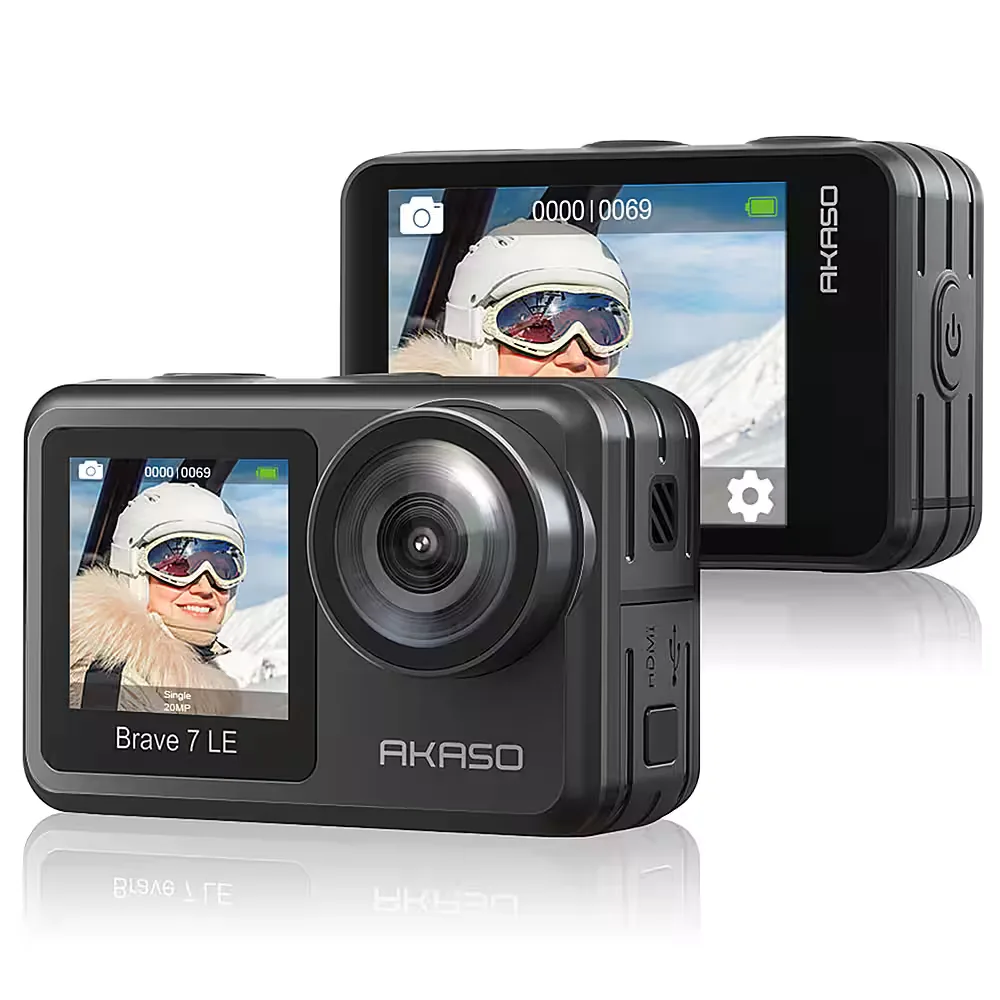
AKASO Brave 7 LE
Six years old and still selling, because a dual-screen 4K camera with an external microphone jack under $150 does not otherwise exist. The front screen is the reason people buy it: at this price nothing else lets you frame yourself, and the mic input means a lav or shotgun can replace the tinny built-in audio that ruins most budget footage. What you accept is a 4K ceiling of 30 fps, so no slow motion above 1080p, and an IPX7 rating that means splashes rather than swimming — the 40 m case is not optional if it is going near water. Treat it as a cheap talking-head and travel camera rather than a sports one.