DJI Osmo 360 vs Insta360 X5
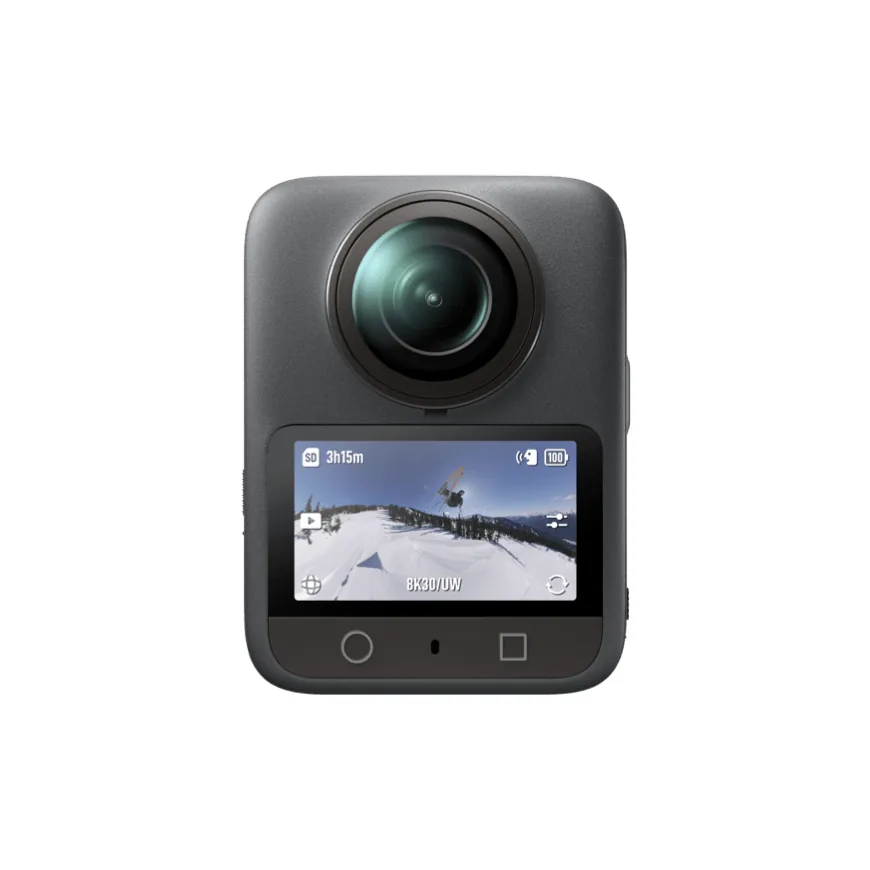
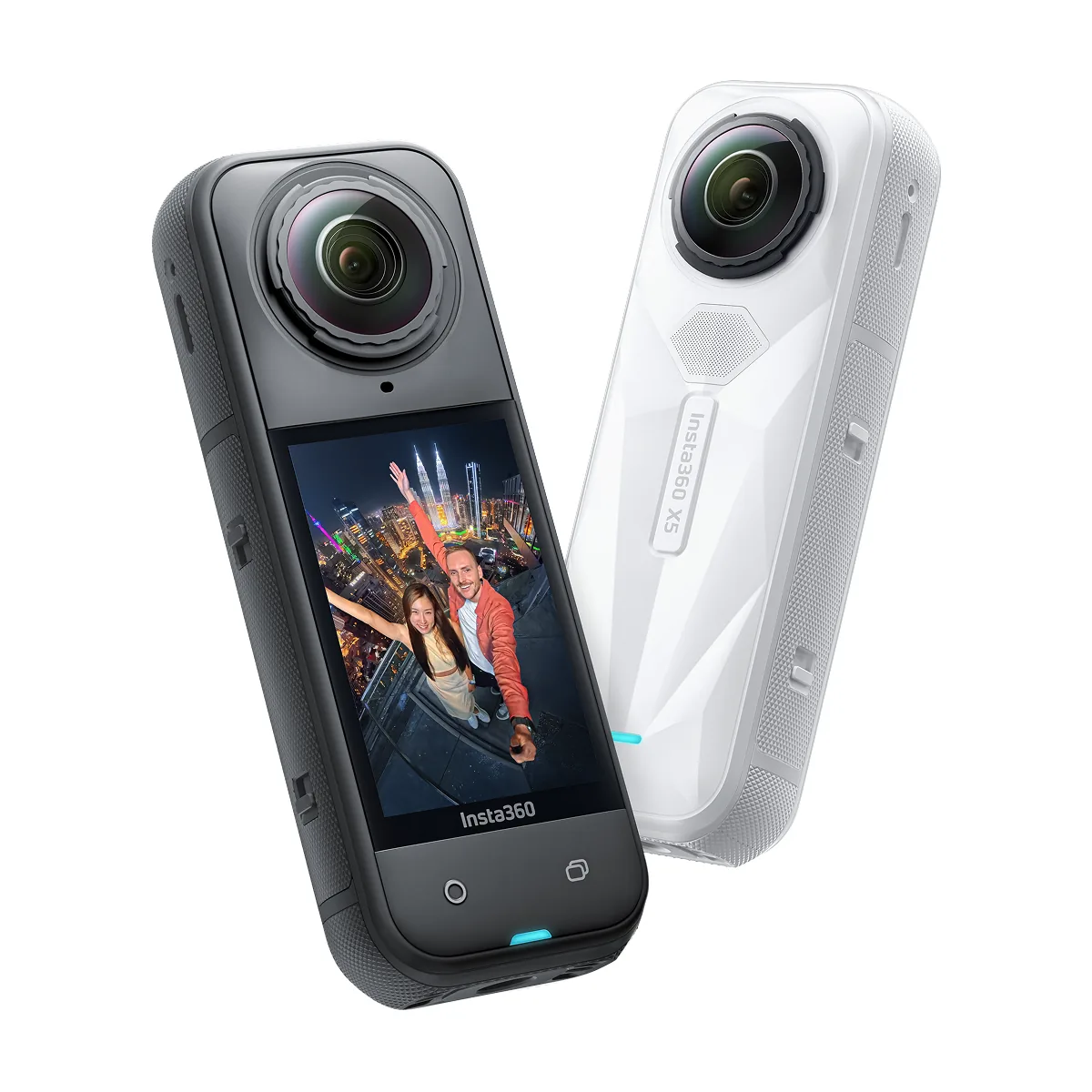
In short: The DJI Osmo 360 collects light over 96 mm² per lens against 72, which is 1.3× the area; the Insta360 X5 goes 15 m deep with no housing against 10 m; the DJI Osmo 360 records 10-bit colour; the Insta360 X5 puts features behind a ~$35.88/yr plan, which makes its first year ~$585; the Insta360 X5 claims 2 h 15 min at 5.7K30 360 video, Wi-Fi on auto, standard bitrate.
| Spec | DJI Osmo 360 | Insta360 X5 |
|---|---|---|
| Approx. price | ~$549 | ~$549 |
| Year-one cost | ~$549 | ~$585 with the plan |
| Type | 360 | 360 |
| Sensor size | 2 × 1/1.1-inch square | 2 × 1/1.28-inch |
| Sensor area | 96 mm² per lens | 72 mm² per lens |
| Max resolution | 8K 360 @ 50fps | 8K 360 @ 30fps |
| Reframed resolution | ≈1.7K (estimated) | ≈1.7K (estimated) |
| Max fps at 4K | 120 | 120 |
| Max fps at 1080p | — | 120 |
| Max bitrate | 170 Mbps | 180 Mbps |
| Colour depth | 10-bit | Not published |
| Log profile | D-Log M | I-Log |
| Stabilisation | RockSteady 3.0 + HorizonSteady | FlowState |
| Horizon lock | 360° (full) | 360° (full) |
| Aperture | f/1.9 | f/2 |
| Waterproof | 10 m bare, 60 m cased | 15 m bare, 60 m cased |
| Claimed runtime | 1 h 40 min at 8K30 panoramic, lab conditions at 25 °C | 2 h 15 min at 5.7K30 360 video, Wi-Fi on auto, standard bitrate |
| Tested runtime | No third-party test collected | No third-party test collected |
| Battery | 1950 mAh | 2400 mAh |
| Cold rating | -4°F | -4°F |
| Weight | 183 g | 200 g |
| Screens | 2.0-inch rear touch | 2.5-inch rear touch |
| Mount | Magnetic quick-release + 1/4-20 | Magnetic quick-release + 1/4-20 |
| Replaceable lenses | No | Yes |
| GPS | No | No |
| Voice control | Yes | Yes |
| Storage | microSD + 105 GB internal | microSD |
| Subscription | None | Insta360+, ~$35.88/yr |
| Released | 2025 | 2025 |
A highlighted cell is the outright better figure in that row, and only where one direction is unambiguously better. Weight, field of view and battery capacity are left neutral because the better direction depends entirely on what you are shooting.
Strengths and drawbacks
DJI Osmo 360
- +8K at 50 fps rather than 30, which among the 360 cameras here only the Insta360 X6 matches
- +105 GB of internal storage removes the microSD write-speed failure mode entirely
- +10-bit on every format plus D-Log M for grading
- +Doubles as a 4K120 single-lens camera with a proper wide field of view
- +120 MP panoramas, level with the Insta360 X6 for the highest-resolution stills here
- −10 m bare waterproofing, half the Insta360 X6's
- −100 minutes at 8K30 is quoted under 25 °C lab conditions and drops in cold
- −No GPS
- −DJI's 360 reframing tools are newer and less capable than Insta360 Studio
- −The lenses protrude and are not user-replaceable, unlike those on the Insta360 X5 and X6 and the GoPro MAX2; DJI sells clip-on protectors instead and says they are not for use underwater
Insta360 X5
- +Replaceable lenses turn the category's worst failure mode into a cheap part swap
- +Big sensor jump over the X4 — the low-light difference is not subtle
- +15 m bare waterproofing, 5 m deeper than the X4 and triple the GoPro MAX2
- +Insta360 Studio's reframing and AI tracking are the best in the category
- +Now sells well below the X6 while keeping most of what matters
- −8K caps at 30 fps, so reframed slow motion means dropping to 5.7K or 4K
- −Insta360 publishes no colour bit depth for it — only the X6 gets that spec
- −No internal storage, so a slow microSD card is a real failure risk at 8K
- −200 g, heavier than the X6 and the X4 Air