SJCAM
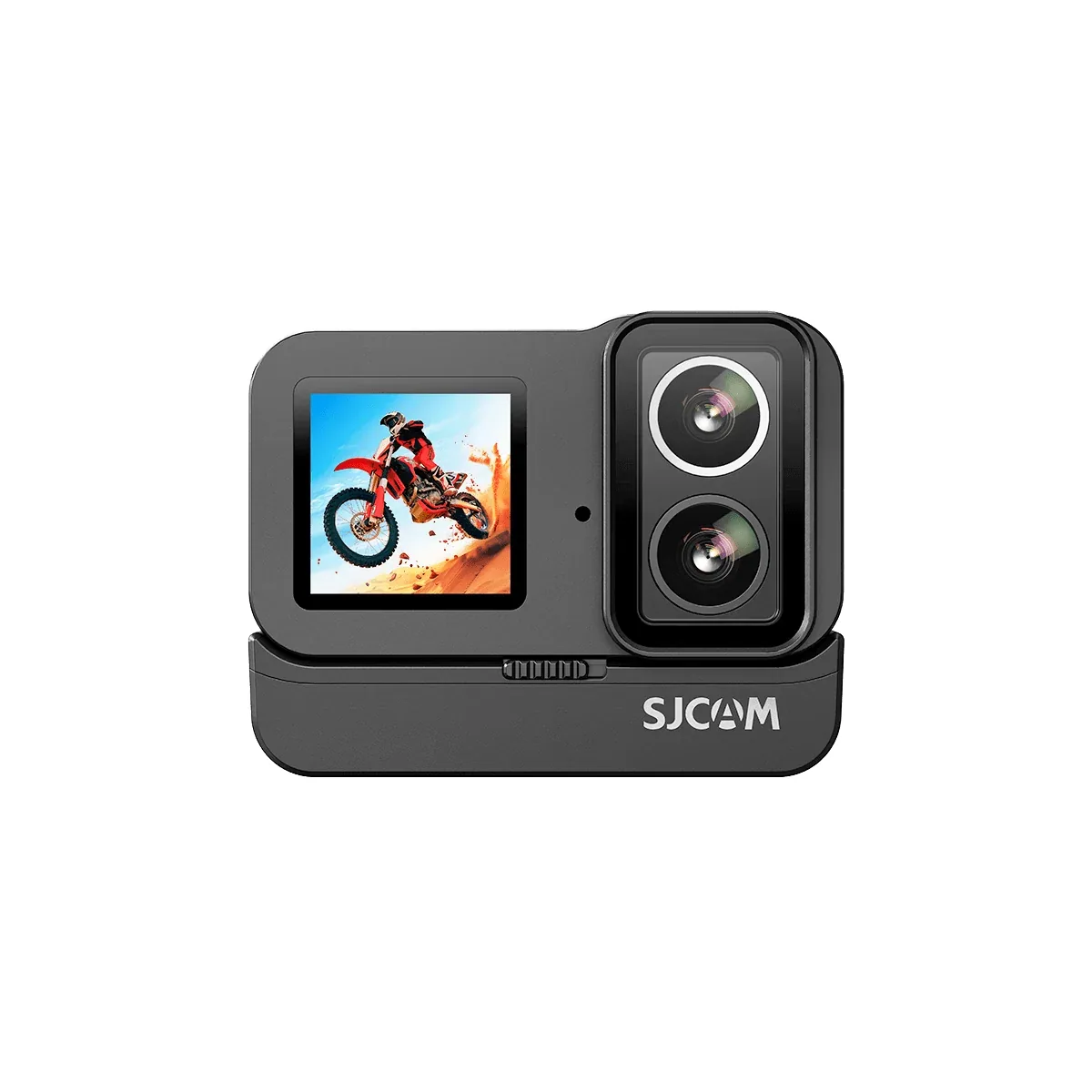
SJCAM SJ20 Dual Lens
Two lenses on the front, and neither of them is for 360 capture. One is an f/2.0 daylight lens; the other is an f/1.3 night lens, and the camera switches between them. It is the only camera in this catalogue that solves low light with optics rather than a bigger sensor or noise reduction, and for night riding or filming from a car that is a genuinely different answer. The cost shows up everywhere else: 4K stops at 30 fps, the bitrate is 25 Mbps — the lowest here by a factor of five, and low enough that fast motion visibly falls apart — and there is no horizon lock. It did surprise on endurance, running 2 hours 17 minutes in an independent four-camera drain test, third of four and ahead of a camera costing twice as much.
Sensor area against the rest of the catalogue
Derived from the standard optical-format table rather than copied off a spec sheet, because makers print a fraction that hides it. The table and the arithmetic.
Specifications
Features
- ●Two lenses: f/2.0 for day and f/1.3 for night, switched in software
- ●4K30 with 20 MP HDR stills
- ●Dual screens and dual batteries
- ●Six-axis gyro stabilisation
- ●8x zoom and a 135° field of view
- ●Case rated to 40 m
Strengths
- +The f/1.3 night lens is a real optical answer to low light, not noise reduction
- +Outlasted the Insta360 Ace Pro 2 by more than half an hour in a same-conditions drain test
- +Dual screens and dual batteries as standard
- +Mounts on the GoPro fingers every clamp and harness is built around
Drawbacks
- −25 Mbps ceiling — a fifth of the flagships, and fast motion smears at it
- −4K caps at 30 fps and there is no horizon lock
- −No bare waterproofing; the 40 m case is mandatory near water
- −SJCAM publishes no battery capacity or weight
The strengths and drawbacks above are drawn from the manufacturer’s specifications and published reviews. No body of owner reports for this camera has been read, so nothing here claims to speak for its owners.
What owners say
No owner discussion has been collected for the SJCAM SJ20 Dual Lens yet. The pros and cons above come from the manufacturer’s specifications and published reviews. Rather than fill this space with invented sentiment, it stays empty until there is something real to put in it.
SJCAM SJ20 Dual Lens, head to head
Cameras people look at alongside it
More from SJCAM →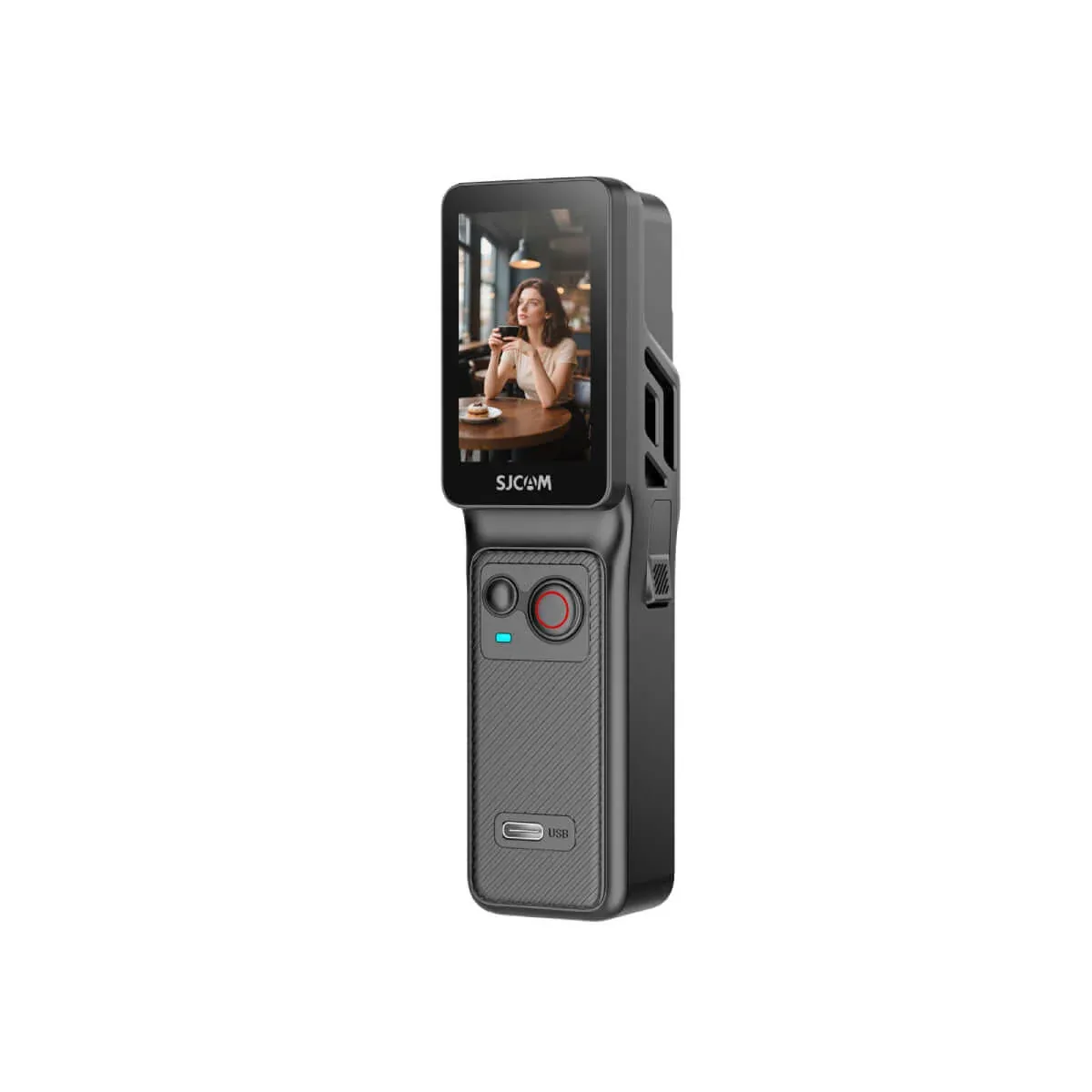
SJCAM
SJCAM C400
A 54 g camera module that drops into a handle carrying a 3000 mAh battery and a big rotating screen — the same split-body idea as the DJI Osmo Nano and Insta360 GO Ultra, executed at half their price. Seven hours and seventeen minutes at 4K30 with the handle attached is the number SJCAM leads with, and nothing else here approaches it. What it does not have is the sensor those two carry: 1/2.3-inch against their 1/1.3-inch and 1/1.28-inch, roughly a quarter of the imaging area, which is the whole difference in low light. Nor is there bare waterproofing. Read this as a very long-running vlogging camera rather than a small flagship.
SJCAM
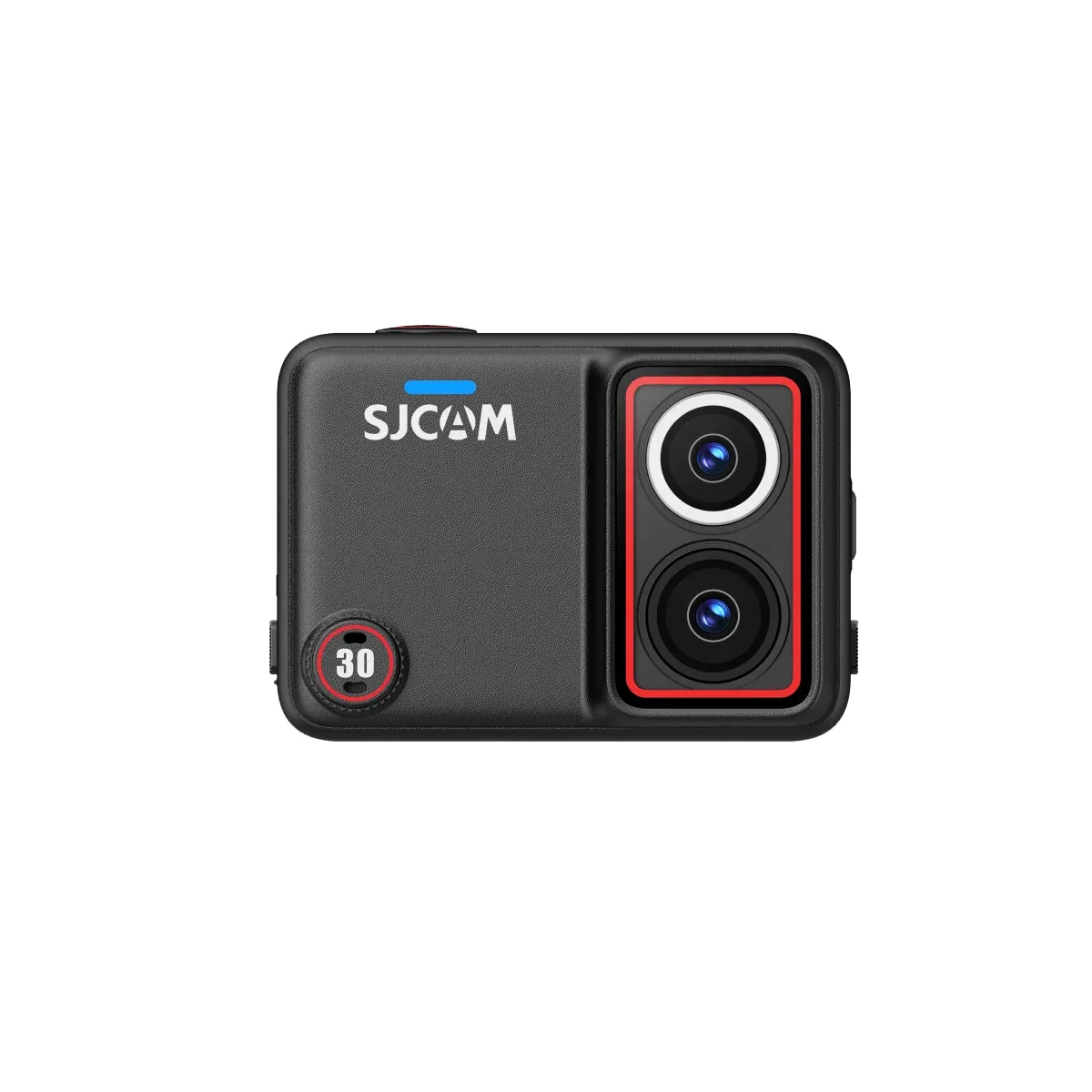
SJCAM SJ30
SJCAM carried the SJ20's two-lens idea forward and gave each lens its own imaging chip and processing path, which is a more serious piece of engineering than the price suggests. The headline is 8K, and the honest reading of it is 8K at 20 fps — below the 24 fps that reads as motion, so it is a stills-adjacent mode rather than a usable video one; 4K60 is the real ceiling. What is unambiguously good is endurance: a 2000 mAh internal cell plus a 4200 mAh power handle gives a claimed seven hours at 4K30, which is longer than anything else here by a wide margin. Horizon lock is the 45-degree kind, which corrects lean but not rotation.
SJCAM
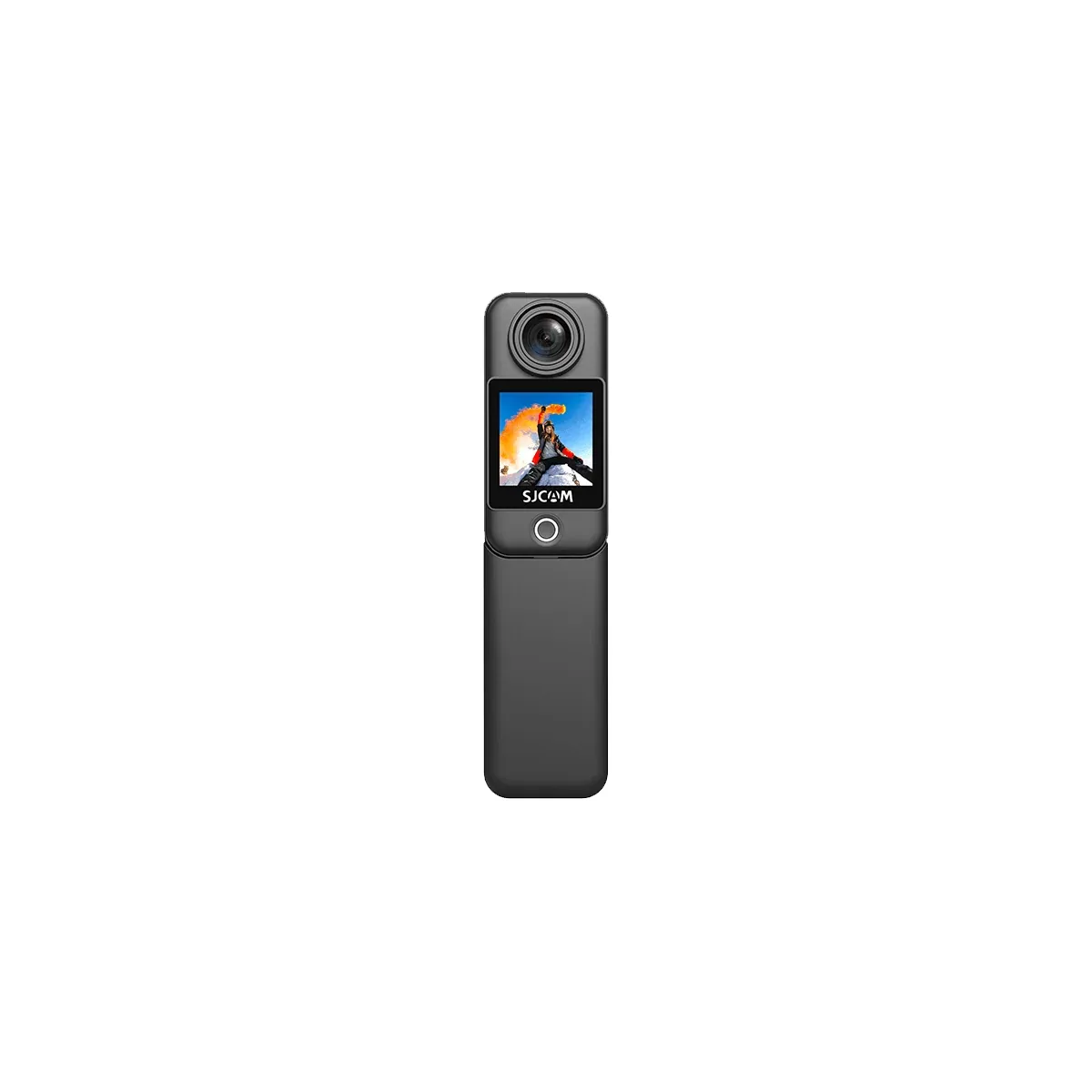
SJCAM C300
A pocket-shaped body rather than a GoPro-shaped one, and the whole design is organised around recording for hours: a 1000 mAh camera battery that clips into a 2800 mAh grip, for a claimed six hours at 4K30. That makes it a body-cam and vlogging tool more than a sports camera, which is how SJCAM markets it. Dual touch screens, six-axis gyro stabilisation, a 30 m case. The limits are the usual ones at $159 — 4K30 with no horizon lock, no bare waterproofing, and no published bitrate — plus a form factor that does not sit as well on a helmet as a standard action-camera body does.